Despite having world-class scientists, engineers and space technology firms, Europe’s commercial space sector continues to fall behind the United States and China. Martin Halliwell of NewSpace Capital argues that political fragmentation, regulatory inertia and decision-making by committee are stifling innovation, driving entrepreneurs away and weakening the bloc’s strategic position in a space economy that underpins security, growth and long-term stability
There are areas of the space economy in which Europe leads the world. It’s not surprising: the continent is blessed with some of the world’s top research institutions, which have flourished, sometimes for centuries, in cultures of curiosity, free expression and scientific inquiry. The point is that with regard to space, Europe isn’t short on talent. That raises the question why Europe lags so far behind the United States and China in what’s been called the new ‘space race’ – and why the gap is widening.
Modern Europe, as readers of this publication will know, is the world’s most successful peace project. After centuries of more-or-less constant infighting, culminating in the horrors of the mid-20th century, Europe said ‘never again’. It’s partly because of this that its ‘complex institutional framework’, as McKinsey & Co. has called it, is geared more towards collaboration and fairness than competition and efficiency. Over the years, laws and regulation have accreted and bureaucracy has expanded. The result is a situation where the bodies that coordinate policy, disperse funds to agencies, and allocate those funds to programmes in individual countries aren’t able to support European space in the way that they must.
For contrast, we need only look across the Atlantic to the United States. Largely freed from red tape and regulatory hurdles, a sufficiently creative and ambitious entrepreneur can have an idea and make it a reality without hindrance. In space, they can rethink even highly complex technology from the ground up, producing prototypes and iterating at speed, so that within a matter of years, something that seemed like a moonshot becomes a taken-for-granted part of life. This isn’t an academic point, but almost exactly what Elon Musk did with SpaceX when he rebuilt aerospace from scratch, integrated vertically to quicken development, and iterated aggressively until the technology was mature. That just isn’t possible in Europe.
There’s no reason why Europe couldn’t produce its own Elon Musk, its own SpaceX, or simply a far greater number of talented entrepreneurs and successful companies. But if those entrepreneurs have to fight tooth and nail to receive investment; if they struggle to get listened to by the big space and defence agencies; if they’re crowded out by the big establishment primes and their teams of lobbyists; then they’re much less likely to reach their potential. More likely is that they leave Europe for a country where they don’t have to deal with bottlenecks or bureaucracy.
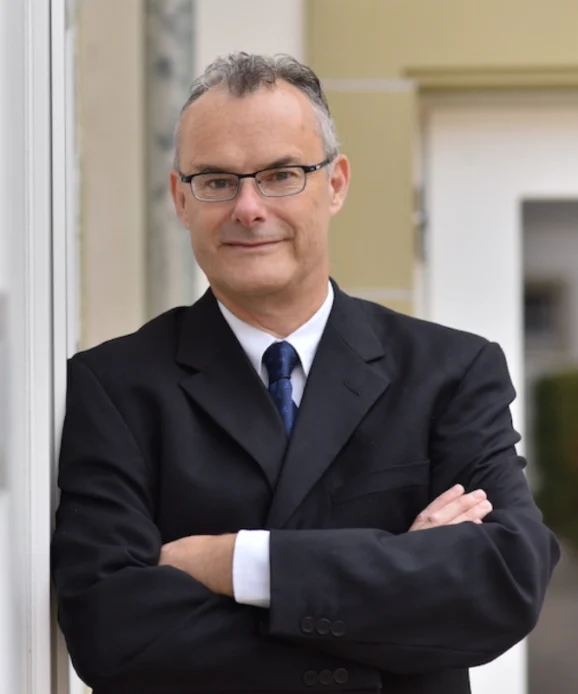
Anotherissue, as anyone who has worked in a successful business knows, is that you can’t do everything by committee. You need to know who is responsible for what, who makes the final decision. In Europe, it remains a mystery who would take charge of a commercial satellite providing intelligence or surveillance for military purposes. We can be sure that China and Russia do not have this problem – and they continue to test Western satellites ‘weekly’, according to the Head of the UK’s Space Command.
The irony is that the leading companies developing the kind of technology that would protect those satellites are European. Advanced materials is one of those highly specialised areas in which Europe is a major player globally. But for the reasons outlined above, companies working in this field, like companies in other areas, are held back from fulfilling their potential – or at least delayed. The culture that prevailed after the world wars, which put cooperation and fairness first, must now be replaced by one that is a little more hard-headed and conscious of the very genuine risks the continent faces, the role space has to play in confronting them, and the need to foster a more competitive and dynamic environment so that space companies can thrive.
This is the key to catching up with the U.S and China, to boosting economic growth, and to ensuring peace on the continent. Space is the spine of the world economy. Europe must set aside politics, cut red tape, relax roles, bring down obstacles, and simplify the complex institutional framework.
READ MORE: ‘Europe tightens grip on strategic space data as dependence on U.S tech comes under scrutiny’. An Italian space-technology firm has partnered with Bologna-based Cubbit to create a sovereign European cloud infrastructure for Earth-observation data, as concerns mount over the continent’s reliance on U.S technology and the security of critical space information.
Do you have news to share or expertise to contribute? The European welcomes insights from business leaders and sector specialists. Get in touch with our editorial team to find out more.
Main image: Zelch Csaba/Pexels