With the EU Deforestation Regulation taking effect on 30 December 2025, companies sourcing coffee and cocoa face a steep learning curve. Andreas Kratz of Fairtrade International and Nanne Tolsma of Satelligence explain how their partnership is helping smallholder farmers collect the data, meet the rules, and build more sustainable supply chains
The EU Deforestation Regulation’s (EUDR) will come into effect on 30 December 2025, and, for companies behind in their readiness plans, the best thing to do is get started now.
Passed in 2022, the EUDR’s important goal is to minimise deforestation and forest degradation associated with products placed on the EU market. The law, the first-of-its-kind, requires companies to prove products are deforestation-free, meaning they are produced on land that has not been deforested after 31 December 2020.
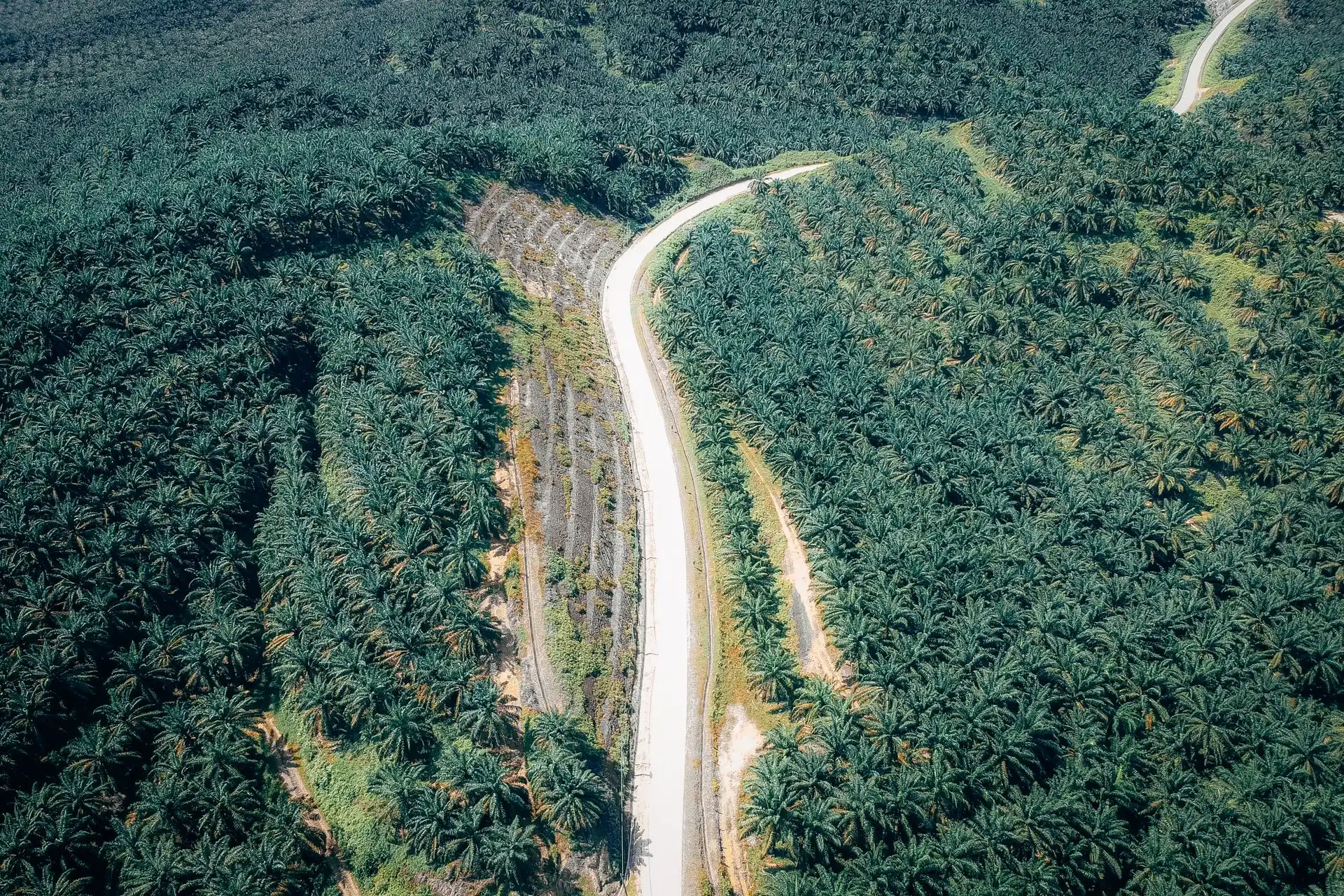
This begins with the collection of geolocation data that gets transferred to a NatureTech firm like Satelligence, which uses satellite imagery and artificial intelligence to monitor deforestation activity in and around farms, providing data on forest cover changes.
Satelligence develops a highly accurate forest and commodity baseline that distinguishes forest from land uses like agroforestry coffee and full sun coffee to be able to detect deforestation more accurately.
The products grown on deforested plots are exactly what the EUDR wants to keep out of the European market.
For producers of rubber, timber, palm oil, and cattle, four of the seven products covered under the regulation, many farms are significantly larger than the typical smallholder farmer plot. For example, many palm oil farms in Indonesia are large plantations. These large enterprises tend to be better equipped to provide the information required by the EUDR.
For coffee and cocoa, it’s a different story. Most of the world’s supply is grown on small-scale family farms, in many cases organised into local cooperatives. Some cooperatives are large, experienced, and professional and already have the geolocation data points for every one of their farmer members. For others, however, getting up to speed on new technologies and new requirements from Europe is not so easy.
That’s where the Fairtrade-Satelligence partnership comes in. Satelligence’s mapping visualisation and risk reports show cooperatives exactly which plots are near deforested areas, or even which plots may have had deforestation take place on them.
With this information, cooperatives can assess potential issues whether that means correcting a mistaken data point or developing an action plan.
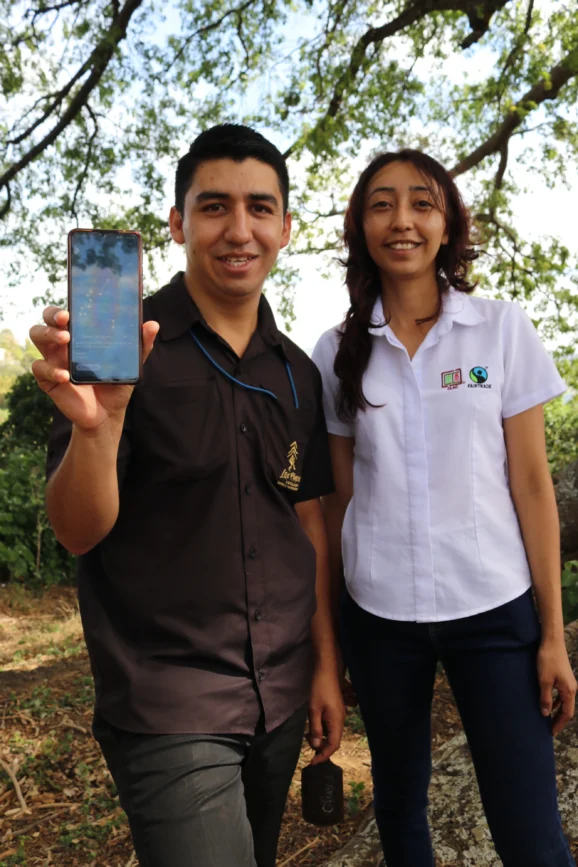
We recognise that farmers often struggle to collect geolocation data because of high costs, technical complexity, inadequate infrastructure – such as unreliable internet, for example – and the disconnect between EU regulations and the daily realities of farming.
Accurate data is vital, but difficult to collect. Plot boundaries, latitudinal and longitudinal coordinates, and any relevant geographic identifiers are likely to present inaccuracies initially, but the most important thing is simply to get started.
A farmer’s focus should be on providing what they are able to and leave the analysis to those with the means and expertise.
The role of an analyst is not only to crunch numbers and share results, but to also poke holes and identify what’s missing in the data to eventually make suggestions and improve the quality at a later stage.
When it comes to EUDR readiness for smallholder farmers, the starting point is to understand their risk profile. From there, an exchange process helps meet the regulation’s requirements and equips coffee and cocoa supply chain actors with the evidence they need to prove their products are deforestation-free.
It’s a process of continuous improvement, with farmers building knowledge and capacity along the way.
The Fairtrade–Satelligence approach stands out because of Fairtrade’s unique structure: producers hold 50% of decision-making power.
They are represented by three producer networks, covering almost 1,900 organisations of farmers and workers across Africa and the Middle East, Asia and the Pacific, and Latin America and the Caribbean.
These producer networks provide hands-on support to cooperatives to become stronger and more professional, which takes time and resources. In fact, Fairtrade’s on the ground staff are providing suggestions on how to take complete measurements (of both smaller and larger farms) and are sharing information on the best conditions for mobile access to Geographic Information Systems.
This is a journey that we are on together. Once this work is complete, it will not only assist farmers with the EUDR readiness but also offer secondary benefits; monitoring forests helps to grow coffee and cocoa in a more sustainable manner as both crops are shade crops. In other words, better deforestation data can lead to better cocoa and coffee for the long term.
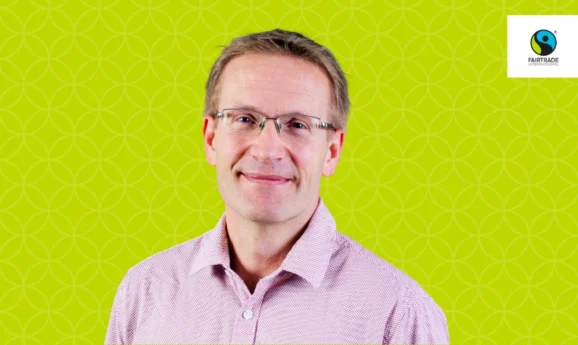

Andreas Kratz is the Director Global Products, Programmes & Policy and the Director of Standards & Pricing at Fairtrade International. Nanne Tolsma is the Director of Business Development at Satelligence.
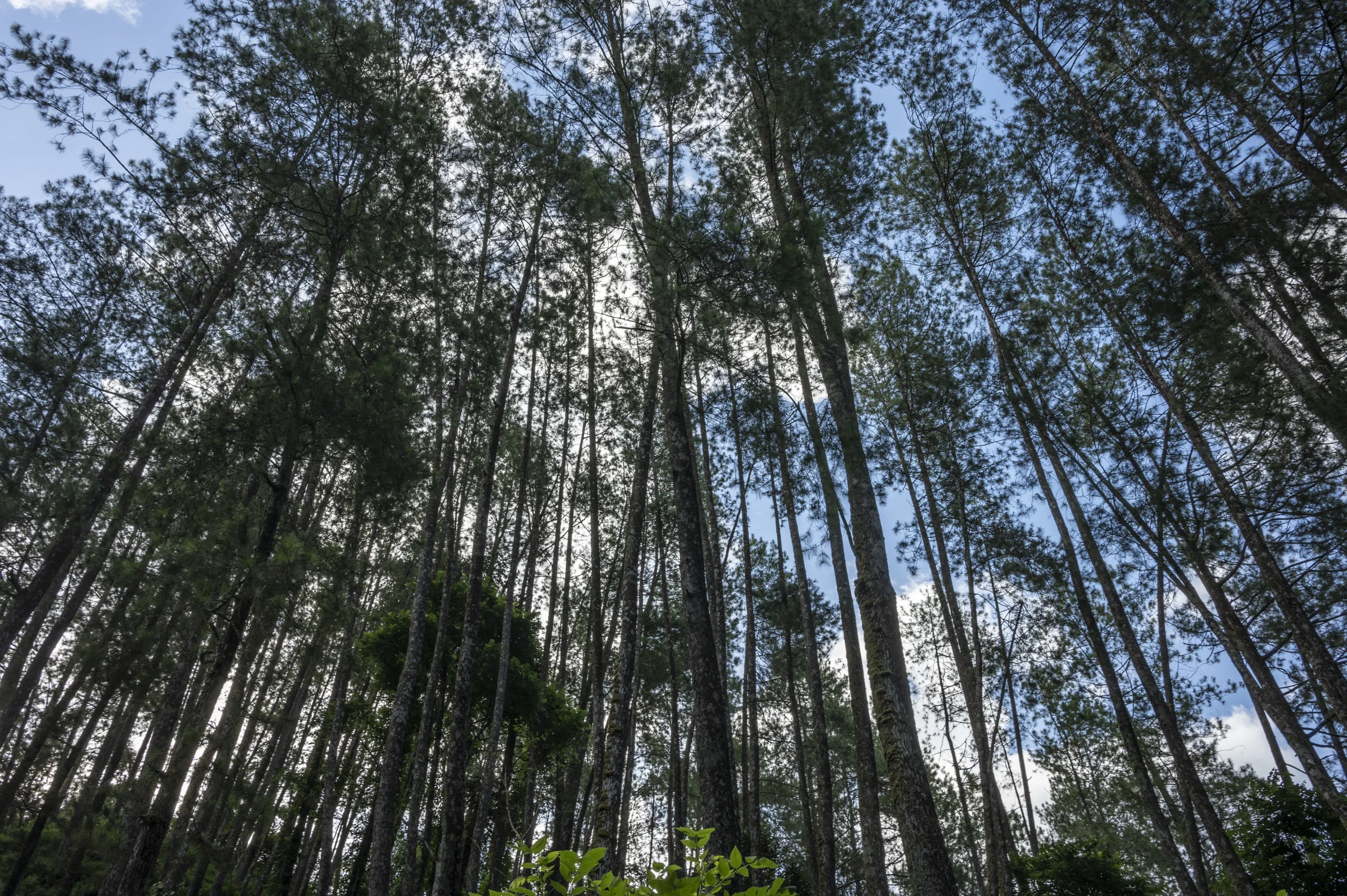
Main image: Fairtrade is a strong partner in protecting forests and deforestation. Photo, courtesy Fairtrade