Launched in 2014 as a modest cars-and-coffee gathering, the Bicester Scramble has grown into one of the most distinctive events in the British motoring calendar. Held on a former RAF airfield turned engineering enclave, the 2025 spring edition brings out everything from 100-year-old Fords to million-pound Ferraris—with a Spitfire, naturally, to keep things quintessentially British. The European’s motoring editor, Mark G Whitchurch, reports
There are more efficient ways to arrive at a car show than flying in by Spitfire, but few that get the same reaction. On Sunday morning, 27 April, under unusually sharp spring skies, a two-seater version of Britain’s most famous fighter aircraft swept low over Bicester Motion, dipped its wings in salute, then dropped neatly onto the runway and taxied into a waiting line of Aston Martins. It was, as someone nearby said, “all very quintessentially British”.
Held four times a year at Bicester Motion—a 444-acre former RAF base on the edge of Oxford—the Bicester Scramble is part car meet, part engineering showcase, part living archive. And it’s grown into one of the most cherished dates in the British motoring calendar. The cars are part of it, of course—from priceless classics to electric prototypes—but what really sets it apart is the setting: a preserved wartime airfield, now home to restoration workshops, race prep outfits and specialist engineers. McLaren has a satellite office here. Hagerty Insurance has a Clubhouse. There’s even co-working space if you want to send emails surrounded by Bentleys.
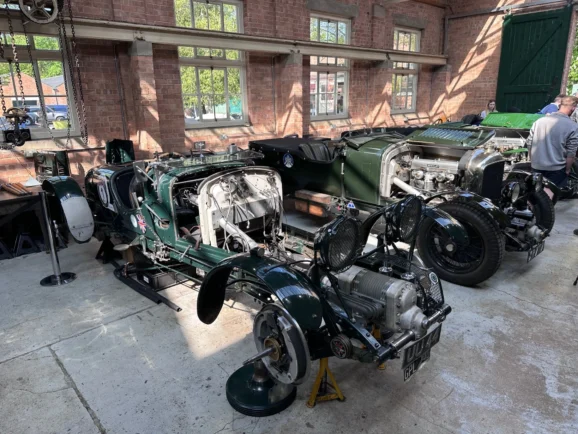
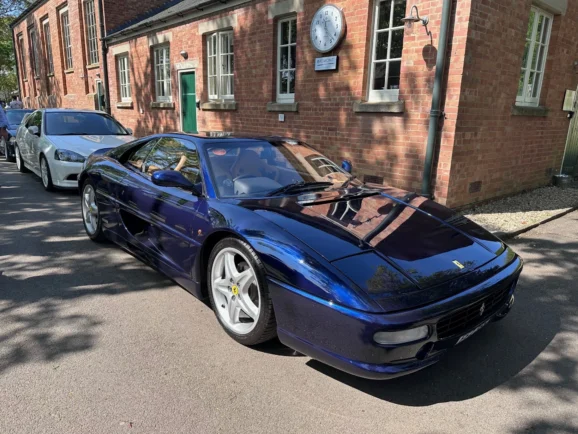
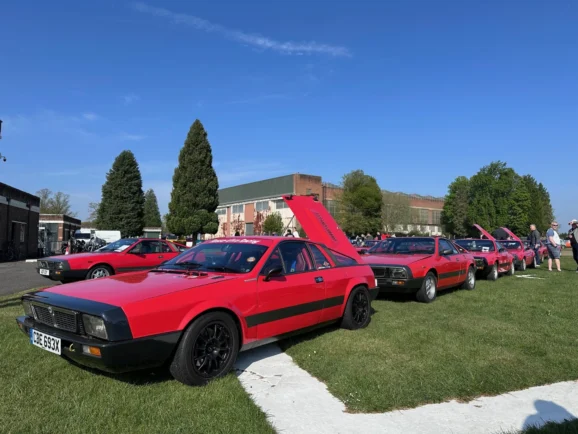
Photos 1-3: Kingsbury workshop display showing vintage Bentleys in various states of rebuild; The author’s personal favourite: a Ferrari 355 GTB in Tour de France blue; Line-up of red Lancia Montecarlos gleaming in the Oxfordshire sun. All Mark Whitchurch / The European
It’s not a museum. It just happens to be full of cars that belong in one—and the people who know how to keep them alive.
The April Scramble always feels like the most anticipated of the year. The winter rebuilds are finished, the cars are running, and there’s a sense of everything reawakening. This year, the weather held, and the event delivered. British car culture came out in force.
Across the grass airfield, classic and modern sports cars of every shape and era were parked with the usual combination of casual precision and quiet pride. People milled, coffee in hand, chatting, admiring, comparing. And then came the Spitfire. After a low and spectacular flypast, the pilot landed and calmly parked the aircraft in a hangar among a display of Aston Martins. As one does.
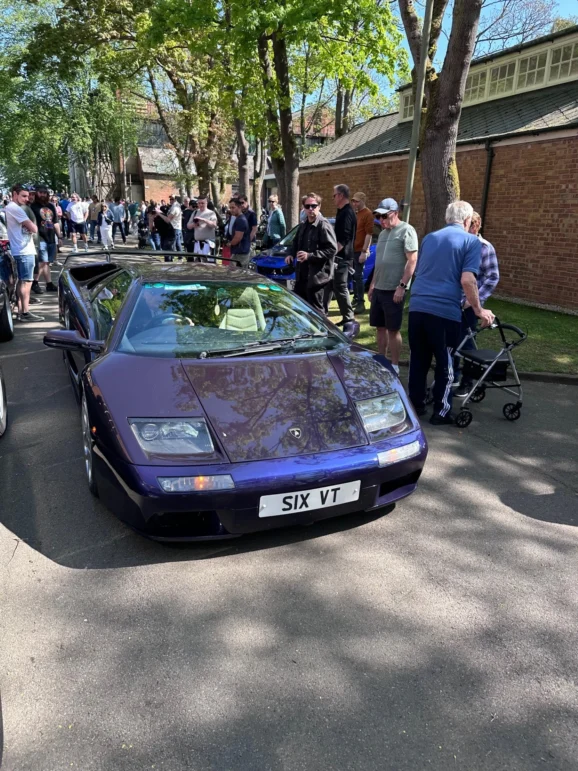
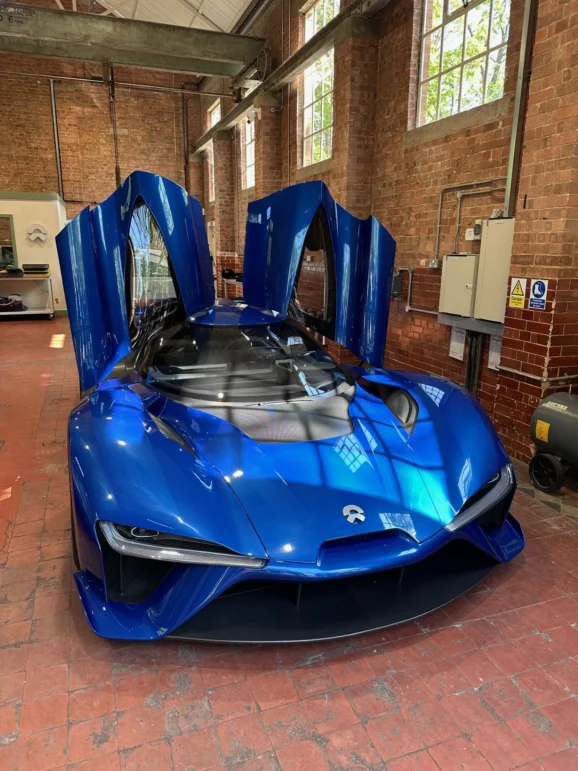
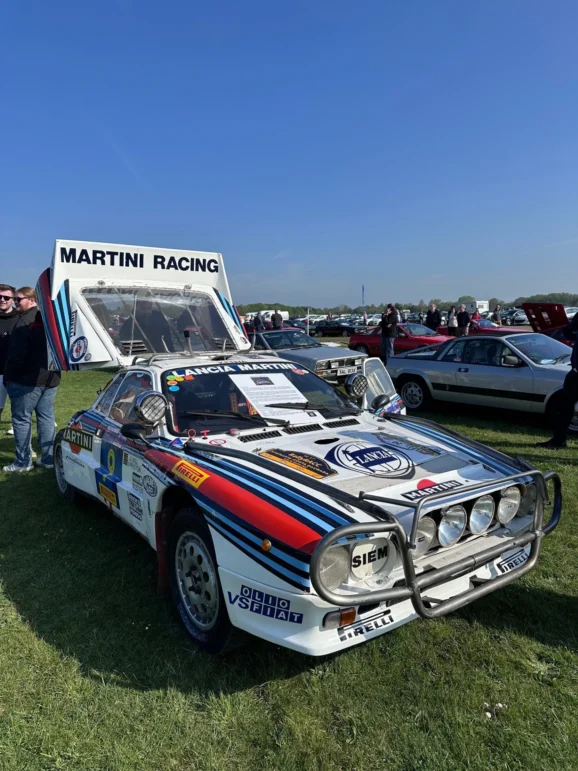

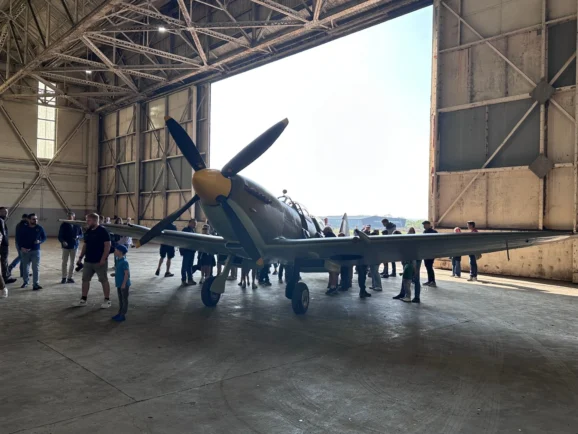
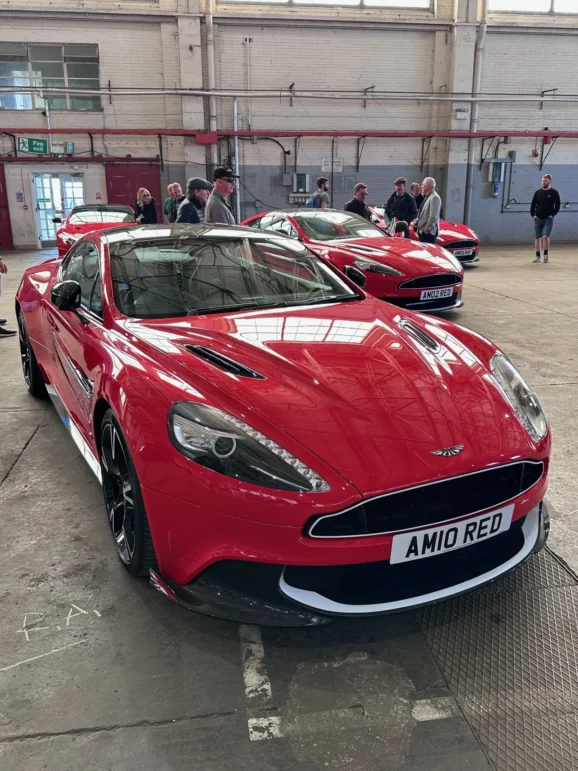
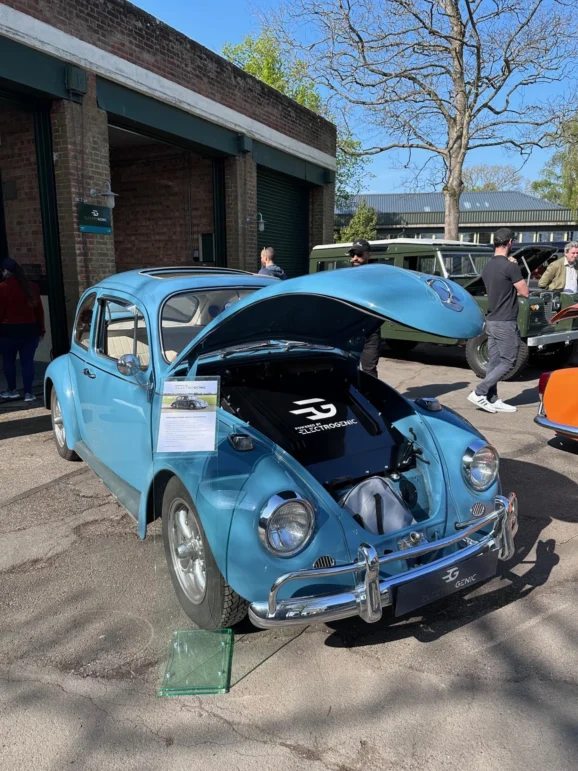
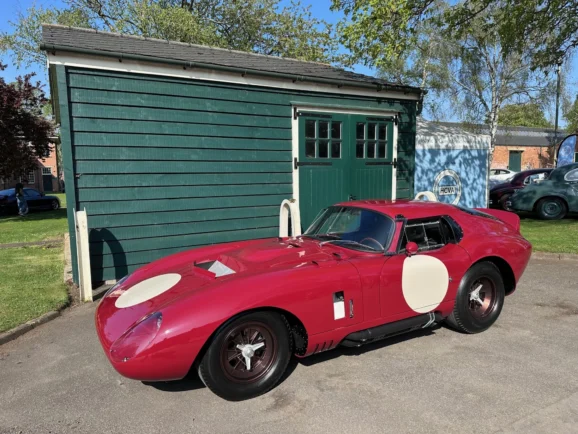
Photos 4-11: Lamborghini Diablo VT in rich metallic purple; Electric hypercar from NIO with dramatic butterfly doors; Lancia 037 Group B rally legend in Martini livery, bonnet proudly lifted; Early 1960s Mini parked inside the main hangar alongside a wartime US truck; Spitfire aircraft on display drew crowds throughout the day; Modern Aston Martins showcased alongside heritage models in Building 123; A classic Beetle converted by Electrogenic to all-electric power; Stunning AC Cobra Daytona Coupe replica by Hawk Cars. All Mark Whitchurch / The European
Such is the popularity of the Scramble now that manufacturers are actively involved. Aston Martin used the opportunity to highlight its RAF and Concorde heritage with a display of special edition models. The Red Arrows and Concorde cars stood proudly in the sunshine, carefully arranged and quietly admired.
The Lancia Montecarlo Owners’ Club put on one of the day’s standout displays—a rare and well-organised sweep of the cult 1970s Italian classic, colour-matched and bookended by a Group 2 Lancia 037 rally car. The 037, loosely based on the Montecarlo silhouette, lent the whole lineup a dramatic edge. Few expected to see so many of these cars together, and the attention it drew was deserved.
Lancaster Insurance brought their ‘Pride of Ownership’ cars, including a beautifully kept 1960 Morris Mini owned by Jamie Garrett. Still in the same family since 1965, the car was immaculate and entirely original. It had accompanied the family on a grand tour of France and Italy, and wore its story with charm. As a self-confessed Mini obsessive, I couldn’t resist spending time with it.
Modernising classic cars, and in particular electric conversions, continues to divide opinion. “It’s like ripping the heart out,” said one spectator, eyeing a silent, converted car rolling past. And yet, there’s a case to be made—especially for lower-value classics where engine rebuilds can cost more than the car is worth. Electrogenic showcased their answer with a Volkswagen Beetle fitted with a 110bhp drop-in electric motor. Performance would be significantly improved over the original, and the charm of the Beetle remains intact. It’s not the answer for everything but for the right car, it makes sense.
Elsewhere across the site, the variety continued. Cars appeared to be casually parked, but in truth the placement was considered. Under mature trees and against the original sheds and huts of the former RAF base, rare cars looked right at home. An AC Cobra Daytona, race-spec V8 and all, looked perfectly at ease beside a weathered shiplap hut. Nearby, a 100-year-old Ford Model T reminded visitors just how far motoring has come. A BMW E30 M3 with proper touring car presence offered something from a different part of the spectrum. It’s that mix—vintage to modern, revered to obscure—that defines the Scramble.
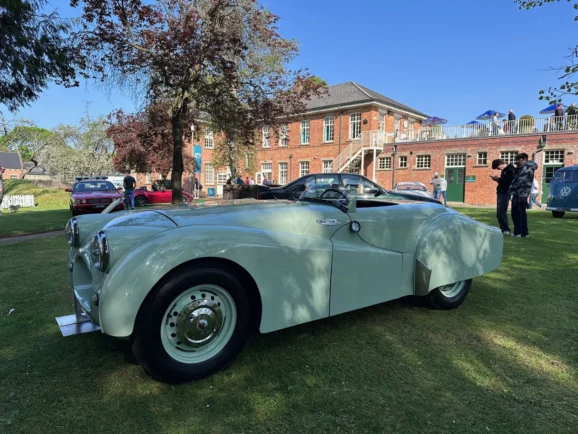
The British Motor Museum added to the sense of occasion by bringing out one of its treasures: the 1953 Triumph TR2 Jabbeke prototype. This sleek, pale-green roadster achieved 124.889mph in Belgium in period. Today it looked serene and timeless, perfectly suited to its surroundings.
And it wasn’t all cars. Artist David Burk displayed large-scale oil and acrylic paintings of modern Formula One scenes. We particularly enjoyed his signature works which contain subtle, hidden circuit maps woven into the brushwork. It’s confident, detailed work; motorsport seen through a lens of quiet precision rather than spectacle.
Some of the most interesting cars were those a little off-centre. One highlight was an Austin Metro ‘Frazer’ Tickford, lovingly restored in bronze paint with a full 1980s body kit. Inside, lavish cream leather gave a strong hint of Aston Martin—complete with period-correct electric gadgets. It was wonderfully niche and proudly executed.
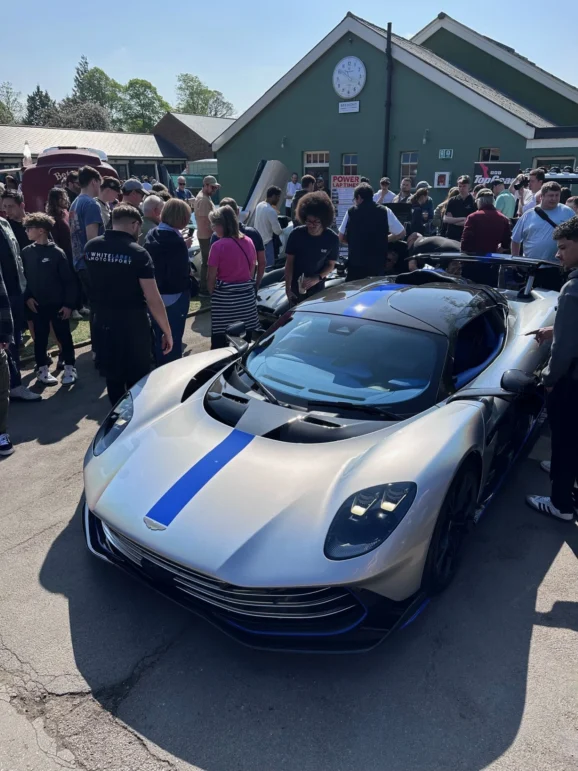
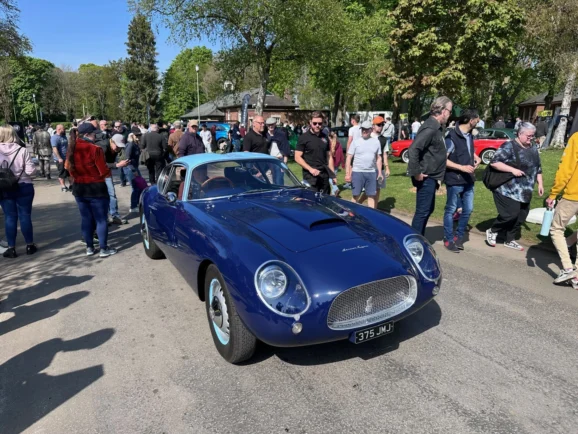
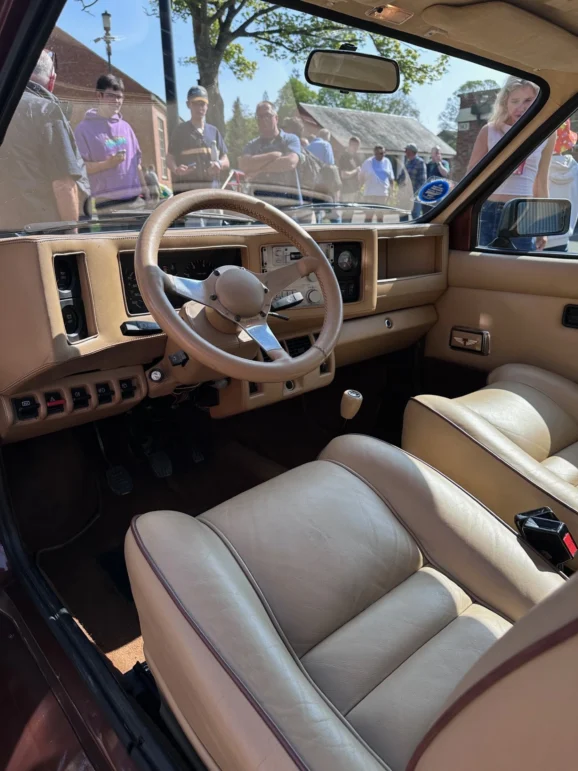
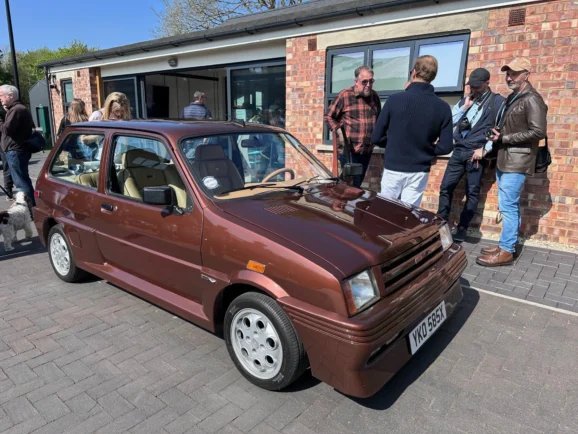
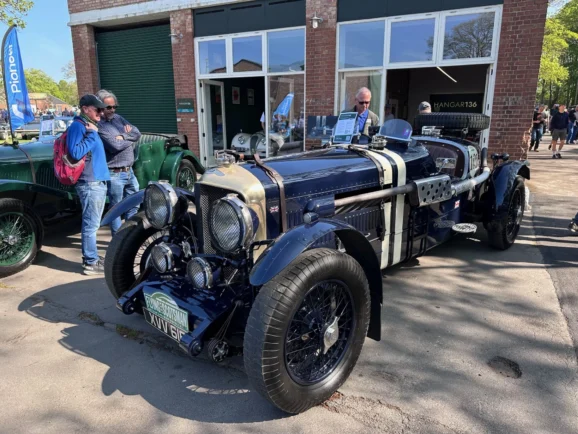
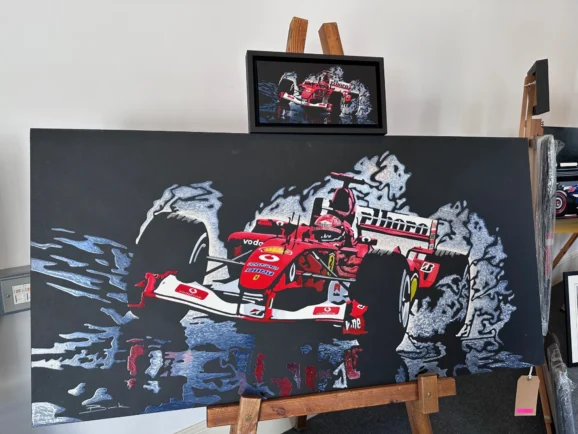
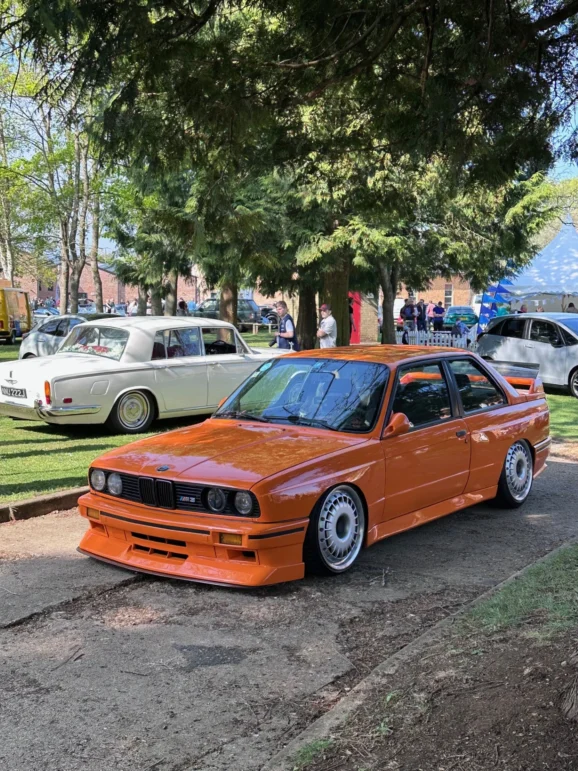
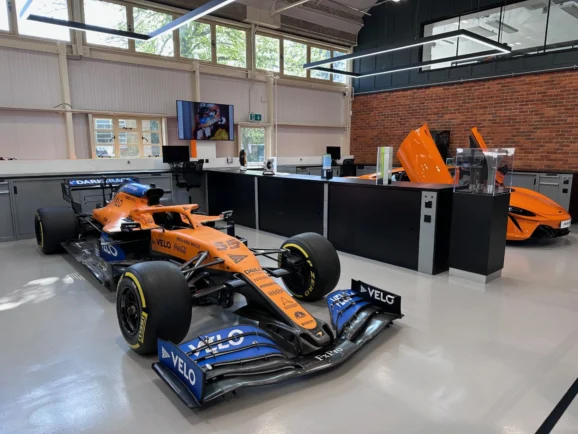
Photos 12-20: Crowds gather around the Aston Martin Valhalla concept hypercar; The Zagato-bodied Bristol 406S prototype among the day’s rarest sights; Immaculate tan interior of the Frazer Tickford Metro, complete with 80s gadgetry; Frazer Tickford Metro in near-perfect original condition; Racing Green Engineering Bentley outside Hangar 136; Motorsport-themed pop art featuring a Ferrari F1 car, displayed in the gallery; E30-generation BMW M3 in searing orange drew admiring glances; E30-generation BMW M3 in searing orange drew admiring glances; The McLaren ‘shed’ – a workshop showroom featuring road and race machines. All Mark Whitchurch / The European
Though largely a static show, Bicester never stays quiet for long. Throughout the day, engines were started at random and crowds formed instinctively. The biggest gathering was around the electric McMurtry Spéirling, which drew a mix of curiosity and admiration. Its downforce is generated by a fan system—hence the unusual whooshing sound—and it currently holds the Goodwood Festival of Speed record. Unusual? Yes. Effective? Undeniably.
Top Gear magazine brought a popular stand, handing out hats and copies alongside a display of the Aston Martin Valhalla. The Hagerty Clubhouse was another strong presence, offering drinks, merchandise and a gentle showcase of the company’s insurance and auction arms. The building also serves as a co-working space during the week, for those who like to work in the presence of classics.
For petrol heads like me, temptation was everywhere. Racing Green Engineering’s Vintage Bentley, recreated to exacting standards, was for sale at Hangar 136 for £284,995. Across the way, a GTO Engineering Ferrari 250 GT SWB—said to be valued close to £1 million—was parked without fanfare in the general display area. No sign, no velvet rope—just parked. Again, very Bicester.
Some of the permanent residents opened their doors too. Kingsbury Racing Shop, specialists in vintage Bentley restoration, were a highlight. Their vaulted workshop, flooded with light from original skylights, was lined with historically significant machines. The space took on a new atmosphere when an Edwardian aero-engined special was fired up—filling the room with mechanical rhythm, heat and the unmistakable scent of old oil.
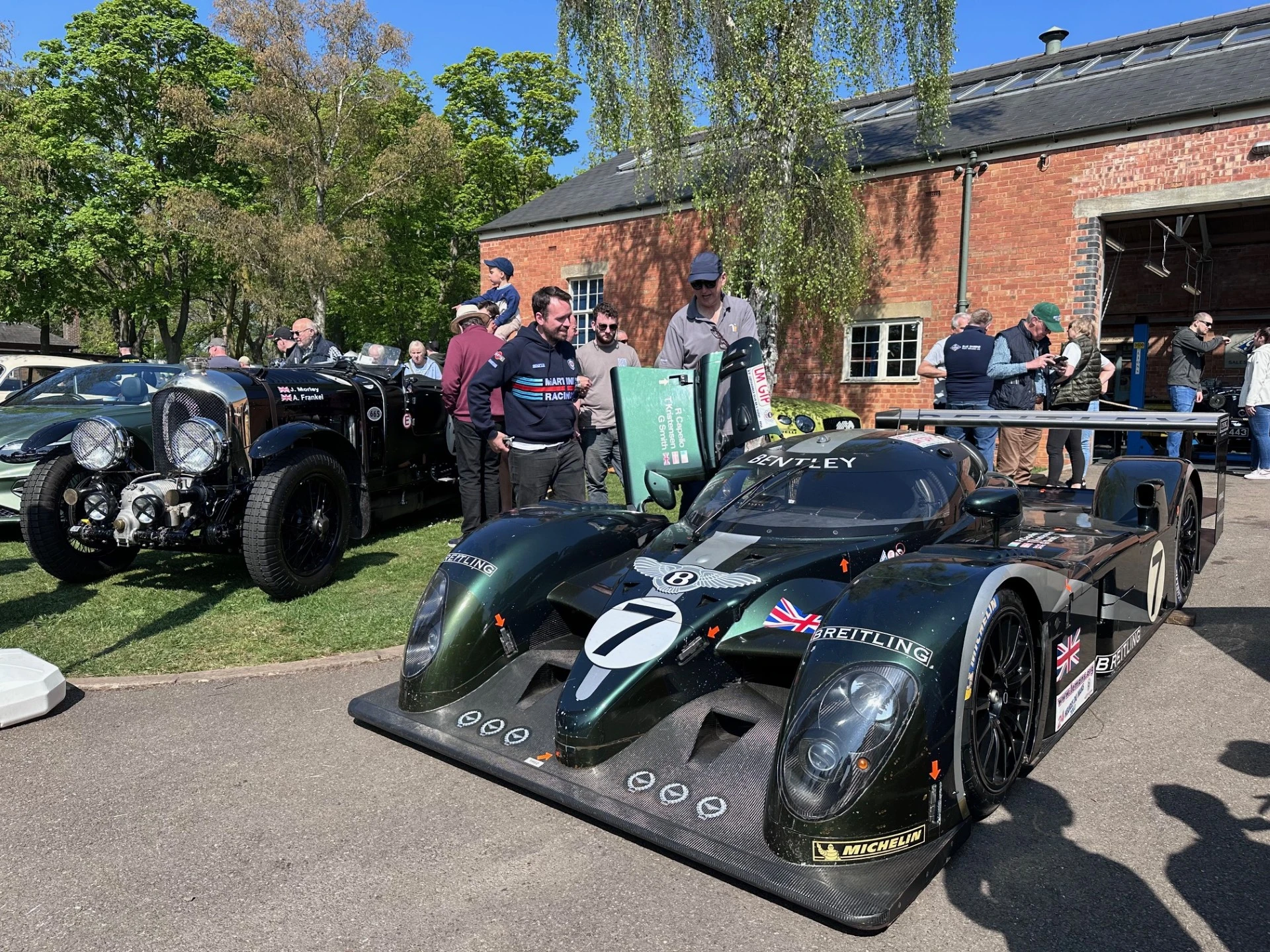
One of the most effective displays came courtesy of The Intercooler, who paired a vintage Bentley with a 21st-century Speed 8 Le Mans car for a film shoot. The visual contrast—history towing the future—captured the day’s theme perfectly.
Among the electric cars on display, the NIO EP9 was the most quietly outrageous. Billed as the world’s fastest electric car, it was tucked away inside a shed—odd, given that its striking blue paint deserved full sunlight. Capable of 313kph and 0–100kph in just 2.7 seconds, it looked calm but contained.
As the afternoon mellowed, a few cars began to move. Some were late arrivals, others heading home early. A two-tone blue Bristol Zagato from the 1960s cruised slowly past—its double-bubble roofline drawing plenty of attention. Soon after, a purple Lamborghini Diablo rolled by, its design still unashamedly theatrical after all these years.
And my car of the show? A late-’90s Ferrari 355 in Tour de France blue, with an open-gated manual and tan carbon-fibre bucket seats—just beautiful, and apparently one of only two in the UK in that spec. It wasn’t for sale, which was probably just as well given what I ended up spending at Bicester Village, the designer outlet just down the road. That particular dream stayed parked.

Mark G. Whitchurch is a seasoned motoring journalist whose work—covering road tests, launch reports, scenic drives, major races, and event reviews—has appeared in The Observer, Daily Telegraph, Bristol Evening Post, Classic & Sports Car Magazine, Mini Magazine, Classic Car Weekly, AutoCar Magazine, and the Western Daily Press, among others. He won the Tourism Malaysia Regional Travel Writer of the Year in 2003 and is a member of The Guild of Motoring Writers.
Main Image: Bentley Speed 8 Le Mans racer next to a supercharged 1930s Bentley.
Photo: Mark Whitchurch / The European