The film industry has made visible progress on representation, but the balance of power has barely shifted. As The European’s Women, Work and Enterprise correspondent Elle Lorenzoni writes, ownership, not visibility, is what ultimately determines who benefits
In 2017, Michaela Coel was on the phone with a senior Netflix executive, negotiating the rights to I May Destroy You — a show she had written and would go on to star in. She asked to retain five per cent of the copyright. There was silence on the line. Then: “It’s not how we do things here. Nobody does that, it’s not a big deal.” Speaking to Vulture magazine, Coel replied that if it wasn’t a big deal, she’d really like to have it. The number was walked back. To two per cent. Then one per cent. Then half a percent. Before the executive rang off to run the numbers up the chain, she said: “Michaela? I just want you to know I’m really proud of you. You’re doing the right thing.”
Coel walked away from the deal entirely.
The BBC gave her everything she had asked for: creative control, a production seat and the rights to her own work. What the executive called “the right thing” was, in contractual terms, surrender. “I finally realised,” Coel said, “I’m not crazy. This is crazy.”
That exchange is worth holding, not as an anecdote about one woman’s principled stand but as a clear illustration of how power operates in the entertainment industry, and why more women on screen has not meant more women who own what they are building.
In 2024, 54 of the top 100 highest-grossing films featured a woman or girl in a leading or co-leading role — the highest proportion ever recorded. Women also made gains in writers’ rooms, in producing credits, and at every level of production. And yet, according to think-tank the USC Annenberg Inclusion Initiative, women accounted for just 21.7 per cent of directors, 12.9 per cent of writers, and 27 per cent of producers across those same films — a producer figure that has moved by only four percentage points in seventeen years.
Gains in visibility but stasis in control.
Power in film does not live on screen but in the ownership of intellectual property — the rights to the story itself. It lives in back-end participation, the share of value that accumulates long after a project is released. In 2024, U.S studios alone spent US$14.54 billion on high-budget productions. UK film and high-end television production spend reached £5.6 billion in the same year.
The question is whether the women who create that value share in what it generates.
Most actresses — even those who conceive, develop, and carry a project — enter it under work-for-hire structures. They are compensated for their labour, often generously. But they relinquish ownership of the underlying asset. No back-end, no equity, no claim on what the work becomes.
This is the actress trap: high visibility, limited financial participation. And its mechanics are not accidental.
Negotiating power does not arrive with the idea. It accrues — and for most women in entertainment, it arrives only after visibility has been established, after the audience has been built and the value demonstrated. Women are routinely required to prove value before being permitted to negotiate the terms on which that value is retained. Fame becomes a substitute for equity, keeping actresses at the centre of the story while positioning them at the margins of what it earns.
The Misadventures of Awkward Black Girl, which launched on YouTube in 2011, was a viral series Issa Rae created, wrote, and starred in — work that caught HBO’s attention and led directly to Insecure. She had already built the audience. She had already proven the concept. But Insecure, for all that it was unmistakably her creative vision, was not hers to own. The characters, the sequels, the spinoff possibilities — those belonged to HBO. She had built the asset. The network retained it. “The only downside is you don’t own the things that you make,” Rae said. “That is for sure the next era of my journey — how I own my sh—t. But that takes capital. That takes a boost.”
Only after five acclaimed seasons did that leverage crystallise into something contractually meaningful: an eight-figure overall deal with WarnerMedia through her company Hoorae, followed by a first-look deal with Paramount. Rather than a straight line to power, the trajectory has been a long negotiation conducted from a position built on work she did not own but created.
Coel’s refusal sits differently next to this. She walked away before building a track record within the system — at the precise moment when her leverage was real but fragile, and before the proof of concept could be absorbed and monetised by someone else. The cost was significant but the alternative was higher.
The streaming platforms that arrived promising to democratise access did not dismantle the studio system’s ownership logic. Instead, they replicated it at scale. They expanded who is seen. They adopted the language of inclusion. The contract structures underneath remained unchanged. More diverse faces; the same terms.
When creators cannot retain meaningful stakes in what they build, fewer risks are taken on work outside established commercial templates. The range of stories reaching audiences narrows, not because the talent is not there but because the incentives favour those who already control distribution, financing and rights. Over time, that does not just shape who benefits from success but also shapes what success looks like in the first place.
What Michaela Coel understood on that phone call — and what the executive’s misplaced pride confirmed — is that the moment of negotiation is the moment of truth. After that, the leverage shifts. The proof of concept belongs to someone else. The audience is built on someone else’s platform. The asset appreciates in someone else’s column.
Visibility is a spotlight. It moves, shifts, and fades.
Ownership, however, is a structure. It compounds quietly, long after the attention has moved on.
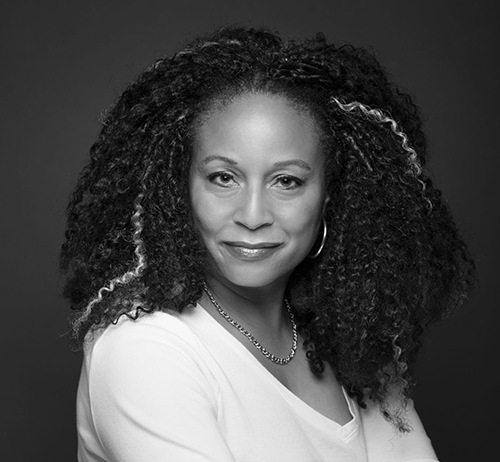
Elle Lorenzoni is an entrepreneur whose work spans media, law, and communications. She holds a BA in Rhetoric from the University of California, Berkeley, a Juris Doctor from Loyola University Chicago School of Law, and an LL.M. from the University of Fribourg in Switzerland. Her early career began at the William Morris Agency in Los Angeles, where she worked as a television literary assistant before going on to develop her own ventures, including Planning Pretty Picnics and The Spoken World. As Women, Work and Enterprise Correspondent for The European, she writes on female entrepreneurship, workplace culture, and leadership, with a focus on how power operates in professional environments and how it shapes women’s opportunities, decisions, and outcomes.
READ MORE: ‘Solving Britain’s male misogyny crisis starts at home‘. British schools are facing a surge in misogyny among boys, but the deeper problem lies beyond the classroom. According to Dr Stephen Whitehead, the issue will only continue to escalate as long as parents fail to challenge harmful attitudes at home, or even quietly endorse them.
Do you have news to share or expertise to contribute? The European welcomes insights from business leaders and sector specialists. Get in touch with our editorial team to find out more.
Main Image: Filipe Braggio/Pexels