Disabled people are often told their concerns have been “raised through departmental channels”. It sounds polite and reassuring, but for many it exposes a system that keeps their lived experience at a distance from the political decisions that affect their lives, writes Matthew Kayne
Being told your concerns have been “raised through departmental channels” sounds reassuring. For many disabled people, it is a sign that the system is keeping them away from real power.
There is a particular kind of message that disabled people receive from the state.
It is polite, carefully structured and empathetic in tone but procedural in substance. It thanks you for your patience, apologises for delay and explains that your concerns have been “raised through departmental channels”. It reassures you that a response will follow.
And then it ends.
Recently, I received a response via a caseworker acting on behalf of MP Sarah Sackman. It explained that it would not be possible to arrange a meeting with the Prime Minister or the Health Secretary, despite my request following serious failures in wheelchair provision that had already affected my health. It confirmed that my concerns had been escalated through official channels and closed with courtesy and reassurance.
On paper, this is a standard constituency reply. In practice, it reveals how power operates in relation to disabled people in the UK.
What that response communicates is distance from decision-making itself.
For many disabled people engaging with health, social care, transport or accessibility services, this pattern is familiar. You raise an issue, it is acknowledged and passed upward through layers of bureaucracy. By the time it reaches those with the authority to act, urgency has already been diluted into process.
This is not an accident but how the system intrinsically functions.
Design, though, is not neutral. When lived experience is routed through intermediaries, people are kept separate from where decisions are made. We are told our concerns matter and that they are being looked into, but we are rarely engaged at the level where policy is shaped.
That matters profoundly because disability is not an abstract policy category but a lived reality with time-sensitive consequences. Delays in care assessments can alter long-term outcomes. Inaccessible transport limits independence. Fragmented services create avoidable crises. Each delay is not simply administrative; it is personal, material, and often irreversible.
Yet within the system as it stands, urgency is translated into process, and process by its nature inevitably slows the pace at which problems are addressed.
There is also a deeper issue here about accountability. When concerns move through multiple channels, responsibility becomes diffuse. A caseworker can say they have raised a matter, a department can say it is under review, and yet a minister may never directly encounter the lived reality behind the request.
The result is a gap between experience and authority — not just between citizens and government but between lived experience and political power. It is in that gap that frustration grows and where trust begins to weaken, because at a certain point, repeated reassurance without resolution starts to feel indistinguishable from inaction.
To be clear, this is not about individual MPs or their staff. Constituency teams work under pressure and act as essential intermediaries between the public and complex national systems. Their role is real, important and often difficult.
But we cannot ignore the structural reality those offices operate within. A system that relies heavily on filtering rather than direct engagement inevitably creates distance, and distance in governance has consequences.
When disabled people are consistently required to navigate multiple layers before their concerns reach decision-makers, it sends an implicit message: access to power is conditional, mediated and delayed.
And delay is likewise not neutral. For disabled people, delay can mean loss of independence, deterioration in health or increased reliance on already stretched services. It can mean the difference between stability and crisis.
In that context, phrases like “We will raise this through departmental channels” stop feeling like reassurance and begin to act as symbols of how the system prioritises process over immediacy.
It becomes difficult to avoid the conclusion that this system is failing to meet the needs of the people it is meant to serve, not through a single breakdown but through the accumulated distance between decision-making and lived experience.
Failure in this context is not always dramatic. It is often quiet, indicated by delay, deferral and procedural reassurance without structural change. It is a system that acknowledges problems but does not always resolve them at the pace required by those experiencing them.
The question, then, is not whether government listens but, rather, whether listening at a distance is enough.
In my view, it is not.
If disability policy is to be meaningful, lived experience cannot remain filtered through layers of bureaucracy before reaching decision-makers. Disabled people must be present where decisions are made — involved at the point of design rather than consulted after the fact.
That requires structural change: fewer layers between citizens and ministers, embedding disabled leadership within policymaking environments and ensuring that urgency is not lost in translation between experience and executive action.
It also requires recognising that communication is not the same as change. Acknowledgement is not the same as action, and reassurance is not the same as resolution.
The challenge facing government is not a lack of awareness but a lack of proximity between awareness and authority. Until that gap is addressed, disabled people will continue to receive carefully worded responses that affirm concern but defer action.
And more and more, that will no longer feel acceptable.
A system that continually says “We have raised this” without changing outcomes is not listening effectively but is merely managing expectation.
And for those living with the consequences of delay, that is not enough.
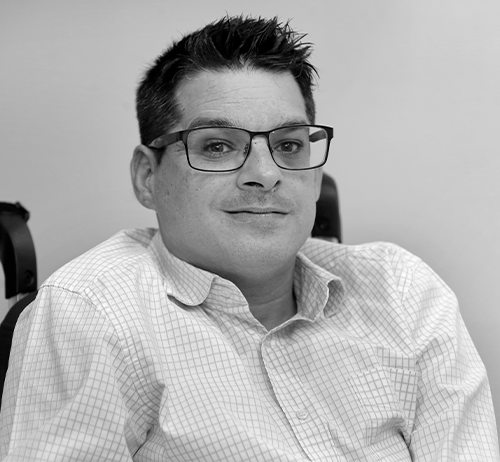
Matthew Kayne is a broadcaster, political campaigner and disability rights advocate who has turned personal challenges into platforms for change. He is the founder and owner of Sugar Kayne Radio, a DAB and online station dedicated to uplifting music and meaningful conversations, and the leader of a national petition calling for reform of the UK’s wheelchair service. Living with cerebral palsy and a survivor of bladder cancer, Matthew channels his lived experience into advocacy, broadcasting, and songwriting. His long-term ambition is to bring this experience into politics as an MP, championing disability rights, healthcare access, and workplace inclusion.
READ MORE: ‘Why disabled people need peer support more than ever‘. From care and healthcare to transport, advocacy and everyday survival, peer support gives disabled people the practical guidance, solidarity and confidence to navigate systems that too often fail them, writes Matthew Kayne.
Do you have news to share or expertise to contribute? The European welcomes insights from business leaders and sector specialists. Get in touch with our editorial team to find out more.
Main Image: Kampus Production/Pexels