France’s volunteer lifeboat crews carry out more than half of offshore rescues, yet their role sits at the heart of a growing argument about state responsibility, public funding and national tradition. Laura Mac-Daniel examines how France’s sea rescue model balances civic duty with state oversight, and why a new UNESCO push is seeking to recast it as a living cultural inheritance
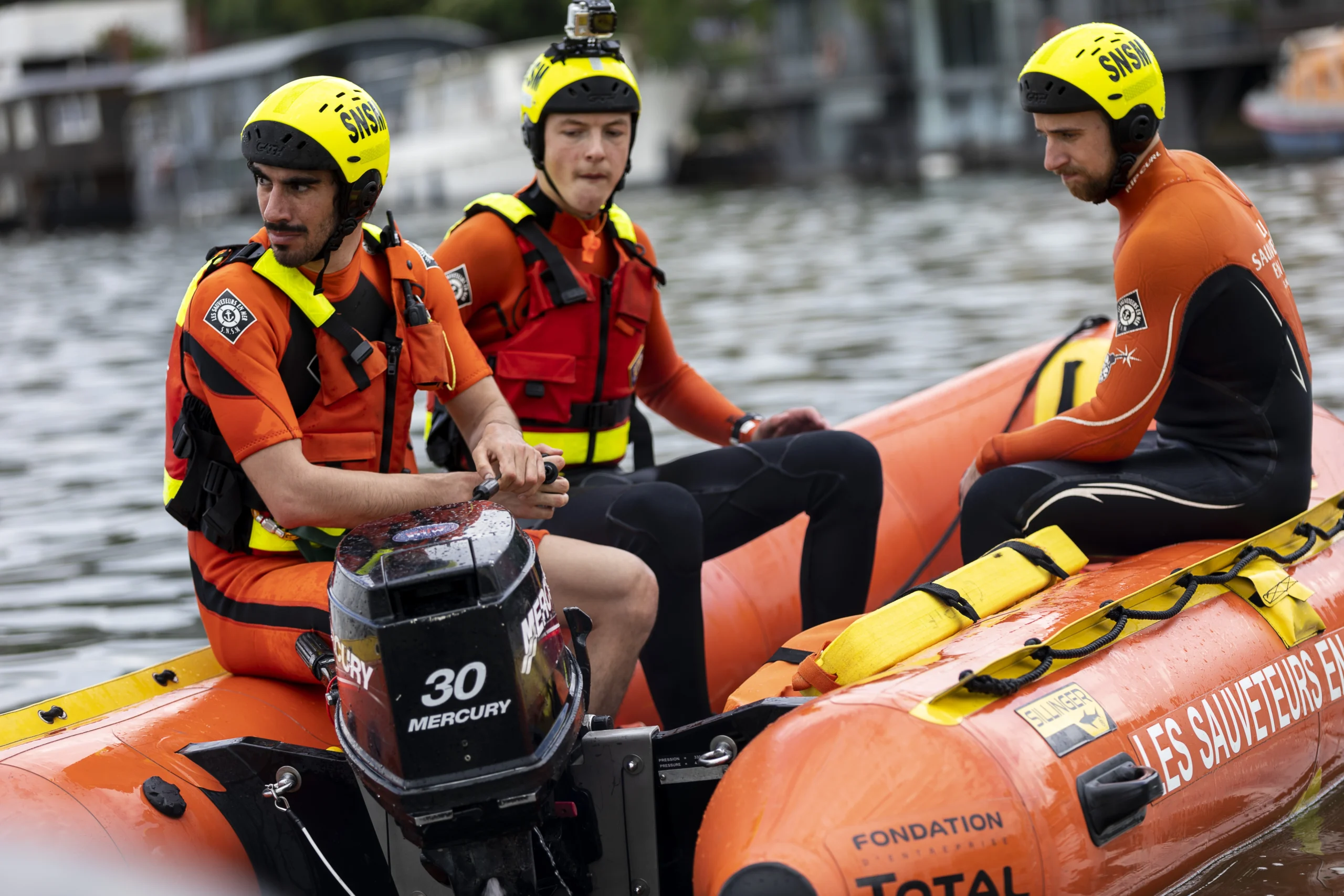
Saveria Morazzani, a former paid lifeguard in France, was blunt about the extent to which volunteers now underpin rescues at sea. According to the SNSM – the Société Nationale de Sauvetage en Mer, or National Sea Rescue Society – its volunteers carry out more than 50 per cent of offshore rescue operations when French rescue authorities deploy a boat.
“Citizens’ safety should primarily be a concern of the government… People with a strong sense of civic awareness are simply making up for the lack of investment from the government,” she told me.
Morazzani is not an outlier. According to a 2025 national survey, 78 per cent of French citizens believe that charities “play a role that neither the State nor businesses are able to fulfill.”
Yet the case of sea rescue is peculiar, and the aftermath of a tragedy revealed a more complex picture where volunteers instead shy away from excessive state involvement to maintain an autonomy deeply rooted in tradition.
On June 7, 2019, Yann Chagnolleau, Alain Guibert and Dimitri Moulic died at sea while attempting to rescue a fisherman caught in a storm off the French Atlantic coast. They did not hesitate to face, together with four other crew members, dangerous meteorological conditions to save a fellow’s life. These experienced sailors were members of the French National Sea Rescue Society, a non-profit organization of 10,000 volunteers and 130 employees engaged in the mission to provide immediate and free assistance to people in distress at sea.
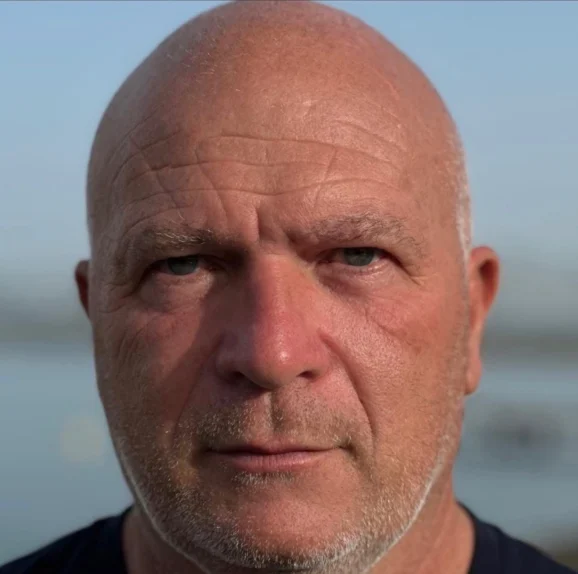
“We have to be on the lifeboat in under ten minutes,” Tony Viacara, a renowned French underwater photographer who followed in his father’s footsteps by volunteering for the organisation, said. “So, we drop whatever we’re doing.”
Acting under the coordination of the Regional Operating Surveillance and Rescue Centers, the association accounts for more than 50 percent of interventions at sea in France. With volunteers offering 1.2 million hours of their time evaluated at 60.3 million euros in 2024, such contribution is both significant and a challenge, if one considers the widely shared policy across Europe that volunteering should complement and not replace the work of paid staff.
France is not alone in relying heavily on volunteers for sea rescue. What sets it apart is the degree of government involvement in funding the system.
From volunteers’ rigorous training to the continuous upgrade of a maritime fleet, sea rescue organisations require a substantial budget to save lives.
“It’s primarily the building and maintaining of the boats, the life jackets, the various bits of kits, the helmets… Everything that volunteers would need to go to sea safely,” Kate Eardley, Head of Global Drowning Prevention for the Royal National Lifeboat Institution (RNLI), one of the biggest maritime search and rescue entities in the United Kingdom and Ireland, and longtime partner of the National Sea Rescue Society across the Channel, told me.
Thanks to a strong army of fundraising volunteers, the RNLI does not rely on government aid for their ongoing activities, with the exception of “very small grants for international work,” according to Eardley.
I spoke to Dr Philine van Overbeeke, Research Fellow at the Gradel Institute of Charity, New College, University of Oxford, about the differing levels of state involvement in sea rescue systems. “I think it partly depends on the country that you’re in, on how involved the government is in public services in general,” she told me.
The contrast is visible elsewhere in Europe. The Swedish Sea Rescue Society, for example, handles nearly 90 per cent of sea rescue in Sweden without government funding. In France, by contrast, 26 per cent of the SNSM’s 2024 funding came from the state, with 74 per cent from private sources.
These differences in welfare culture also shape how closely the state oversees essential services. In the weeks after the deaths of Chagnolleau, Guibert and Moulic, the French government launched a joint parliamentary fact-finding mission into the SNSM and how it operates. Published on 22 October 2019, the resulting report examined core questions around volunteer safety, fundraising and the organisation’s long-term financial stability.
It also brought a more fundamental issue into view: whether the SNSM should remain a volunteer-led independent association or be turned into a state-run service staffed by paid professionals.
“The current temptation to move towards state control isn’t desirable,” said Thierry Coquil, director of maritime affairs. “Volunteers themselves don’t support the idea.”
Coquil said the strength of the SNSM relies on its independence, far from the logic of financial optimisation prevailing in state-owned organisations that would disrupt the very dynamics of volunteering.
Yet, with half of the French population believing that it is up to the State and local authorities to fund charities, the quest for autonomy seems out of reach. What could help is a change in public’s perception of sea rescue and volunteers’ engagement as a whole.
Around 13 million French citizens are involved in volunteering, an altruistic, unpaid commitment that benefits others. It encompasses a wide range of activities, including civilian assistance in emergencies.
For Dr. van Overbeeke, the value of volunteering goes beyond numbers or money. She defines it as an act “broadly embedded within our communities” that “keeps us connected.” The recent actions taken by the SNSM and French National Association of Coastline’s Elected Representatives echo this perspective.
In January 2025, both associations launched a national survey to study lifesavers’ working practices and traditions across hundreds of rescue stations in France. Their long term goal is to inscribe sea rescue on the UNESCO list of Intangible Cultural Heritage — a set of practices and knowledge inherited from our ancestors — to raise national and international awareness of the unique spirit of solidarity among volunteers risking their lives for others.
“When the sea is rough, you need courage to go and get people,” Viacara said. “And at the same time forget that you’re putting your own life in danger, because you have families and children behind.”
Rooted in the long-standing marine duty to help those in distress at sea, this moral principle, passed down from generation to generation, is a fundamental rule of the Law of the Sea, a body of international practices and treaties setting out the rights and duties of states across oceans and seas.
Since the foundation of the first French rescue station in 1825, the SNSM has maintained its vocation to follow the historic solidarity of seafarers by providing volunteer assistance to those in need. In a context of decreased engagement and commitment, the worldwide recognition of this unique legacy would not only honor the sacrifices made by lifesavers but also perpetuate their values reaching far beyond economic concerns: “We do not do it for the money,” Viacara added. “We do it to save lives.”

Laura Mac-Daniel, PhD, is a scientist-turned-freelance writer based in France. She writes about science findings and social trends through the eyes of a researcher. As a freelance writer, she has contributed to The Scientist Magazine with an award-winning story on the way immune cells move through the body. Laura earned her PhD in Immunology from Pasteur Institute/Paris Diderot University and was previously a postdoctoral fellow at Loyola University Chicago. She is currently enrolled in the UCSD Science Communication Program.
READ MORE: ‘A New Year wake-up call on water safety‘. As a new year begins, Ed Accura challenges one of the most comfortable assumptions we make around water: that someone else is responsible for keeping us alive. Drawing on his work in water safety and inclusion, he argues that survival depends on a shared system of awareness, skills and accountability, with the individual placed firmly at its centre.
Do you have news to share or expertise to contribute? The European welcomes insights from business leaders and sector specialists. Get in touch with our editorial team to find out more.
Main image: SNSM volunteers aboard an inflatable rescue boat in France. The organisation’s crews carry out more than half of offshore rescue operations when French rescue authorities deploy a boat. (Shutterstock)