The European Commission’s new Gender Equality Strategy is ambitious and wide-ranging, but as women surge ahead of men in education and a widening gender divide emerges across politics and institutions, its framework may be struggling to keep pace with Europe’s changing social realities, says Dr Stephen Whitehead
On 5 March, just days before International Women’s Day, the European Commission unveiled its Gender Equality Strategy for 2026–2030. Presented by Executive Vice-President Roxana Mînzatu and Commissioner for Equality Hadja Lahbib, the strategy outlines 30 measures intended to embed gender equality across European life, from employment and health to cyberviolence, AI risks and reproductive rights.
It is a substantial policy document. Yet one question remains: is this the right strategy for the gender landscape that exists in 2026, or for one that existed a decade ago?
The strategy rests on a premise that has guided gender policy for a generation — that women remain structurally disadvantaged relative to men, and that closing this gap requires targeted support, legal protection and institutional reform.
Much of that remains valid. Across the European Union, official figures show that the gender pay gap still sits at around 13 per cent according to European Commission data. At the same time, campaigners and researchers continue to warn that violence against women, including the rapidly expanding frontier of online abuse, remains a serious and persistent harm. In the field of medicine and public health, meanwhile, studies repeatedly note that women’s health has historically been under-researched and underfunded.
Yet the broader framing of women as the consistently disadvantaged party is increasingly complicated by evidence emerging in several domains — particularly those from which the leadership class of the next two decades will emerge.
Across the EU, young women now significantly outpace young men in educational attainment. Women aged 25–34 are more likely than their male peers to hold tertiary qualifications. In professions such as medicine, law, academia and communications, women form the majority of new entrants.
In the UK, women account for roughly 57 per cent of university students. In the United States, women earn close to 60 per cent of master’s degrees.
A significant share of the leadership class of the 2040s is currently sitting in lecture theatres — and in many fields it is increasingly female. That shift is not a problem in itself. It is, however, a structural transformation that demands a strategic response different from the one the Commission has outlined.
The Commission deserves credit for at least one evolution in its thinking. For the first time, the strategy explicitly recognises men and boys as “key actors and beneficiaries” of gender equality and introduces a “Boys in HEAL” initiative intended to encourage more males to enter health, education and related sectors — a counterpart to programmes such as Girls Go STEM.
This acknowledgement matters. Occupational segregation can disadvantage both sexes, and addressing it requires engagement with both men and women.
The strategy also recognises that online disinformation and anti-gender narratives are reshaping how young men understand their place in society. The pathway that can run from social media algorithms to political disengagement presents a genuine risk to social cohesion.
Recognising the issue, however, is only the beginning. The “Boys in HEAL” initiative occupies only a small section of a lengthy strategy document. There is no comparable structural programme addressing the growing cohort of young men who are not failing dramatically but who are quietly falling behind in educational outcomes, labour market performance and their sense of institutional belonging.
According to the European Institute for Gender Equality, it could take around 50 years for the EU to reach full gender equality at the current pace of change. That figure has been widely quoted since the strategy’s launch.
Yet aggregate metrics can conceal as much as they reveal. Progress in pay, leadership representation and political participation may indeed take decades. In education, however, the gender gap has already shifted direction in many countries.
A single index of equality struggles to capture these diverging trajectories.
What is largely absent from the Commission’s framework is engagement with the emerging “gender divergence” dynamic — the possibility that men and women in advanced economies are no longer simply unequal but increasingly following different social and institutional pathways.
The pattern is visible in education, employment pathways, relationship patterns and political attitudes.
Voting data in several European countries shows widening gender gaps among younger voters. Young women increasingly lean towards progressive politics, while young men are more likely to support populist or anti-establishment movements. This is more than a political curiosity. It reflects differing experiences of modern institutions and raises questions about whether those institutions are speaking effectively to both groups.
Within organisations these dynamics will become more visible as younger cohorts enter professional life. In sectors where women already constitute clear majorities, workplace cultures are evolving. Many younger women prioritise equality, sustainability and inclusive governance. Younger men represent a more internally divided cohort, with some strongly supportive of these priorities and others sceptical about the pace or framing of institutional change.
If disengagement among young men persists, it is unlikely simply to disappear. It may, instead, migrate to different organisations, different political allegiances and different online communities.
The greater risk is mutual alienation, and mutual alienation is precisely what a gender equality strategy should aim to prevent.
Another issue largely absent from the strategy is the relationship between gender dynamics and Europe’s fertility crisis.
Across the EU, fertility rates remain well below replacement levels. In countries such as Italy, Spain and Germany they hover between roughly 1.2 and 1.5 children per woman. The age of first childbirth continues to rise across much of the continent.
Highly educated women are increasingly delaying or forgoing motherhood, citing factors ranging from partnership compatibility to workplace structures that remain difficult to reconcile with caregiving.
These trends intersect directly with organisational life. Career trajectories, leadership pipelines and workplace expectations all shape decisions about family formation.
The Commission’s strategy acknowledges fertility primarily through the lens of reproductive rights. However, it pays far less attention to its broader sociological and organisational implications.
None of this diminishes the importance of the strategy’s central commitments. Measures addressing violence against women, pay transparency, women’s health and reproductive rights remain necessary and overdue. The EU also plays a crucial role in defending those gains in member states where women’s rights face political pressure.
Yet a strategy designed to guide policy for the next five years must do more than defend existing ground. It must also anticipate the terrain ahead.
That terrain is increasingly shaped by diverging trajectories among different groups of men and women.
The intellectual framework guiding much gender policy today was shaped in the 1990s and early 2000s. Closing the gap between a structurally dominant male cohort and a structurally disadvantaged female one was the central challenge of that era.
That work remains unfinished, but it is no longer the only challenge.
Europe now stands at a demographic and organisational crossroads. The generation entering professional life is the most educated in history — yet also one of the most internally divided.
The EU’s Gender Equality Strategy 2026–2030 is a serious document produced by serious policymakers. But seriousness does not automatically guarantee adequacy.
The question it ultimately leaves unresolved is not simply how Europe closes the inequalities of the past, but how it manages the divergences emerging in the present.
Gender divergence is not destiny, but it is data. And policy that refuses to recognise it fully risks solving yesterday’s problems while tomorrow’s quietly take shape.

Dr Stephen Whitehead is a gender sociologist and author recognised for his work on gender, leadership and organisational culture. Formerly at Keele University, he has lived in Asia since 2009 and has written 20 books translated into 17 languages. He is based in Thailand and is co-founder of Cerafyna Technologies.
READ MORE: ‘The new gender divide is already reshaping Europe’s future leaders‘. Across the developed world, women are overtaking men in higher education. The long-term consequences will reach far beyond universities, reshaping leadership pipelines, workplace culture and the next generation of decision-makers, says Dr Stephen Whitehead.
Do you have news to share or expertise to contribute? The European welcomes insights from business leaders and sector specialists. Get in touch with our editorial team to find out more.
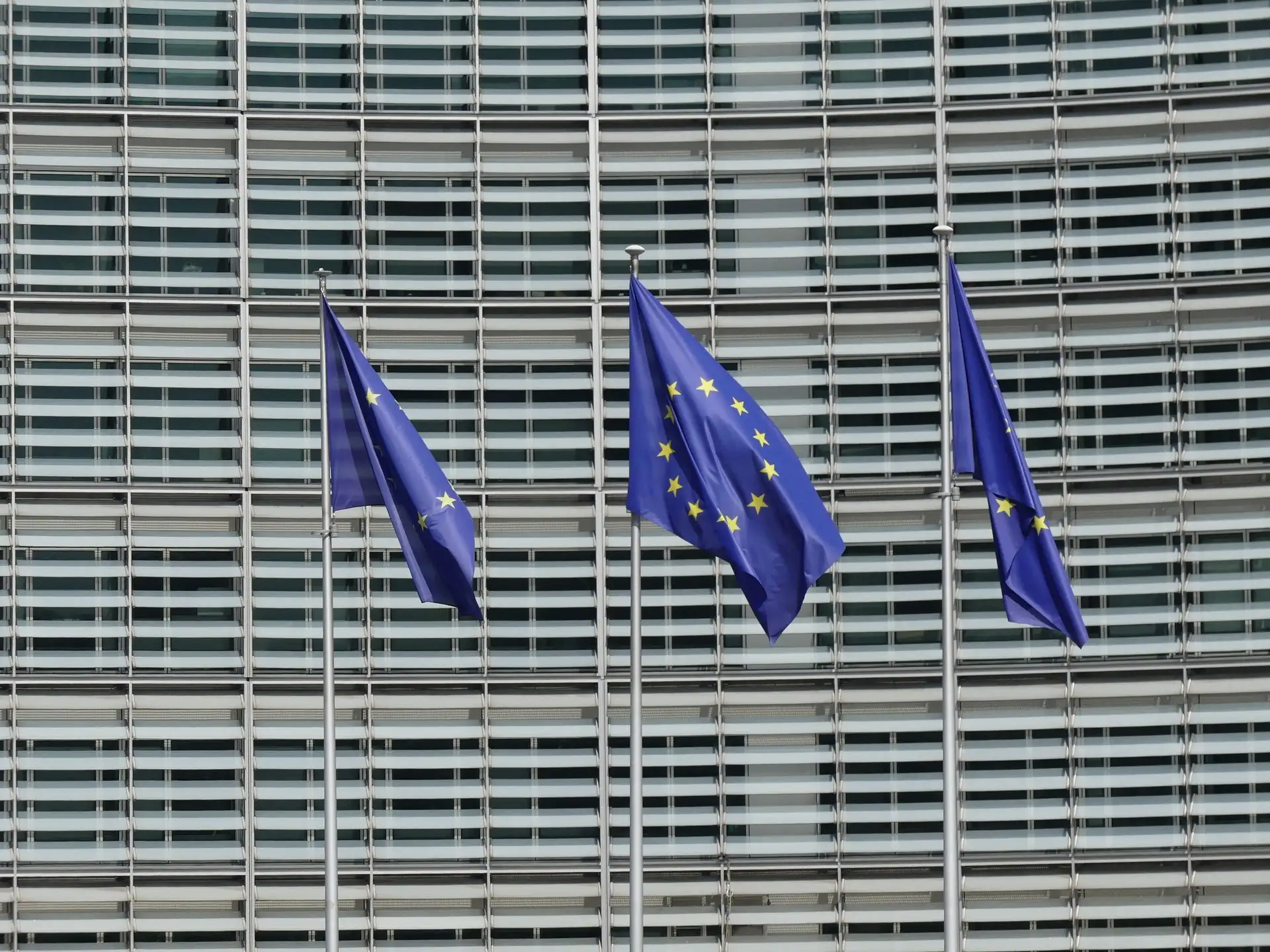
Main image: NoName_13/Pixabay