A major heathland fire was a sobering reminder to New Forest resident Lee Ness of just how easily we overlook the remarkable places on our own doorstep
A recent fire in the New Forest made me realise how easy it is to take something for granted simply because it has always been there.
Britain has no shortage of places celebrated for their landscapes. There are the mountains of Wales, the lochs and Highlands of Scotland, Cornwall’s coastline and the Lake District. The North Coast 500 has become a road trip in its own right, while Ireland’s Wild Atlantic Way attracts visitors from around the world.
Since retiring, we have been making plans to see many of them ourselves.
Yet there is one remarkable landscape that rarely seems to command quite the same attention: the New Forest in southern England. Perhaps my own reason for overlooking it is the simplest. We live here.
The fire that recently swept across part of the Forest was therefore a reminder of what sits on our doorstep – and of how precious it is.
A landscape under threat
Like much of Europe, Britain has been experiencing periods of unusually hot, dry weather. The familiar green of the countryside has, in places, given way to shades of beige and brown, creating conditions in which fire can spread with alarming speed.
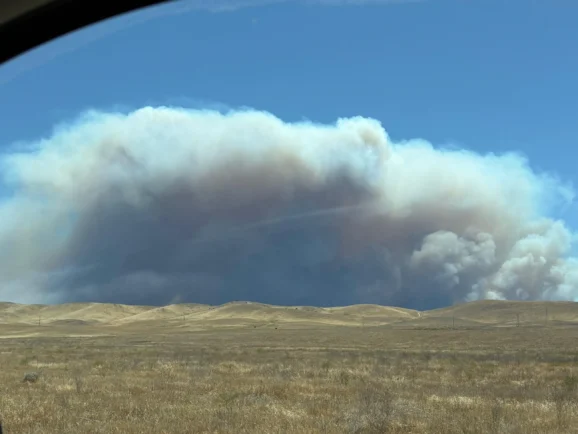
In the New Forest, a vehicle fire beside one of the main roads through the area is believed to have ignited surrounding vegetation.
The resulting wildfire eventually covered about 1.6 sq km, or 400 acres.
That may sound modest alongside the enormous wildfires seen in parts of California, Canada and southern Europe, but Britain is a densely populated country and the New Forest contains habitats of international importance.
Firefighters tackling the blaze faced the additional challenge of getting sufficient water into the area, with a high-pressure hose reportedly running for miles to provide the supply needed.
The New Forest National Park Authority has emphasised the importance of its internationally protected heathland, a habitat that is exceptionally rare globally.
Thankfully, the fire was brought under control, with the livestock that roam freely across the Forest believed to have escaped serious harm. Nevertheless, the forest itself may reportedly take decades to recover.
For those of us who live here, however, the sight of such a familiar landscape burning was sobering.
Not so new after all
The name itself is one of those wonderful British historical quirks. The “New” Forest dates back almost 1,000 years.
William the Conqueror established it as a royal hunting forest in around 1079, although people had been shaping this landscape for thousands of years before his arrival. Bronze Age communities cleared areas for agriculture and grazing, helping to create the mixture of heathland, grassland and woodland that characterises the Forest today.
Some of its ancient woodland contains oak and beech trees hundreds of years old. Elsewhere, later forestry introduced commercially useful species including conifers.
It is this combination that makes travelling through the New Forest so distinctive.
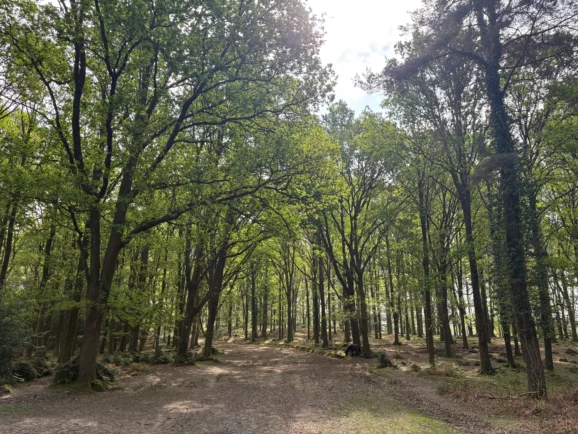
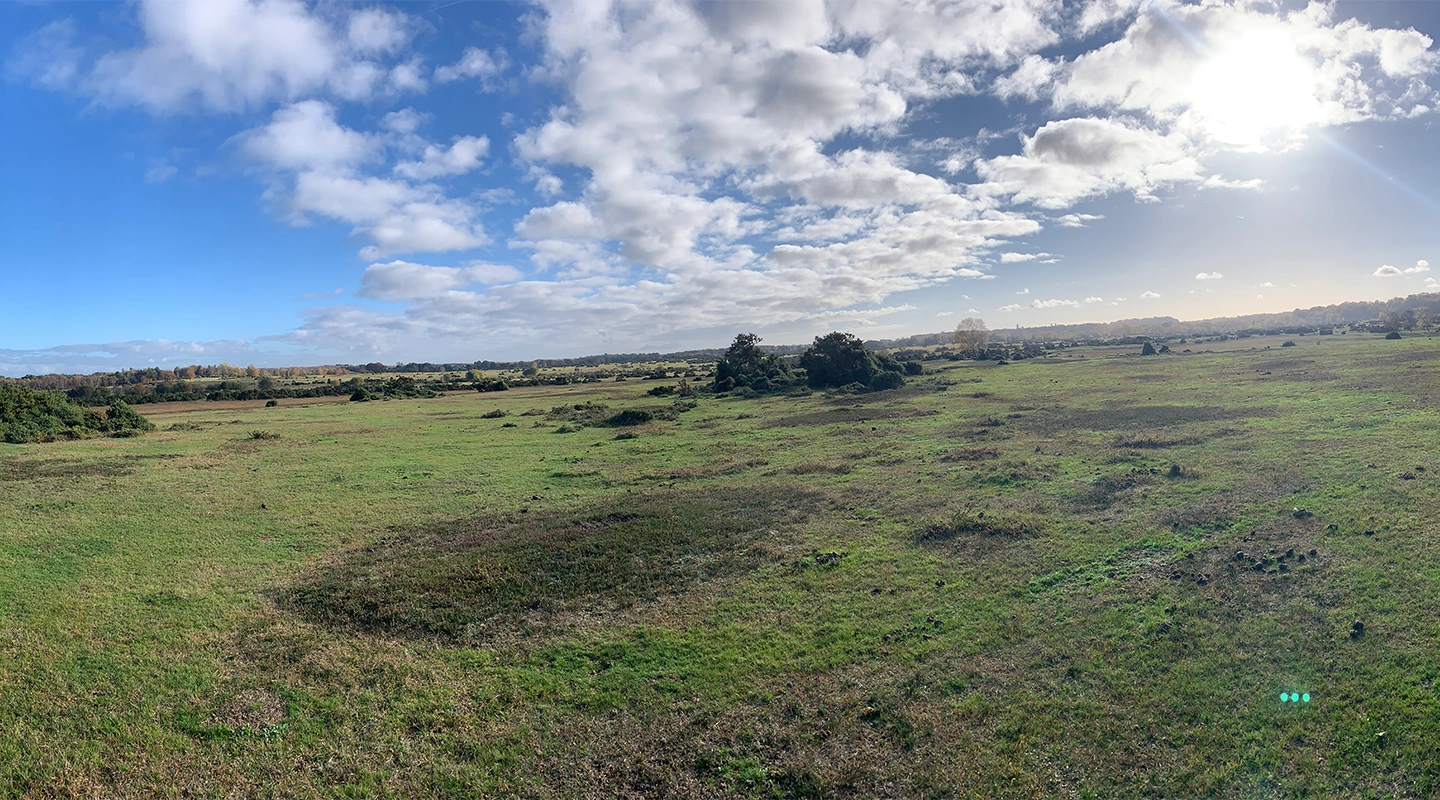
One moment you can be beneath a canopy of ancient trees; the next you emerge on to open heathland stretching towards the horizon. Paths and tracks criss-cross the landscape, sometimes marking abrupt transitions between woodland and open ground.
Then there are the animals.
Where the animals have right of way
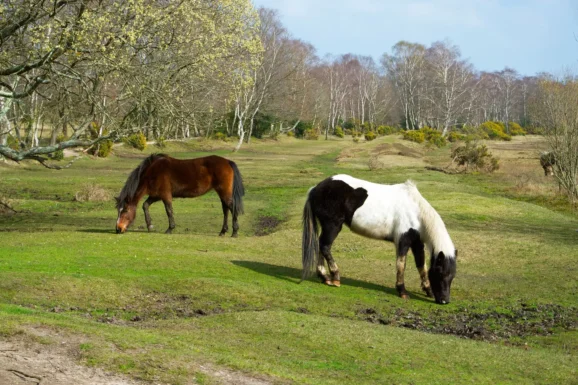
The New Forest covers roughly 219 square miles and its roads are punctuated by cattle grids for a very good reason. Thousands of ponies, cattle and donkeys roam freely across the Forest.
As wild as they are, they are not strictly wild animals in the sense that many belong to local people known as commoners, who possess historic rights to turn livestock out on to the Forest.
It creates one of the great pleasures – and occasional frustrations – of travelling here.
The speed limit on many Forest roads is 40mph, and drivers quickly discover why.
Ponies can change direction without warning and wander across the road. Cattle occasionally have their own ideas about where the highway begins and the grazing ends.
The donkeys are another matter entirely.
They appear to regard motorists as a mild inconvenience. A donkey may stroll slowly along the road with a queue forming behind it or simply stop in the carriageway and remain utterly unmoved by the increasingly impatient drivers waiting to pass.
There is little point becoming annoyed; the animals were here long before the cars.
Get out of the car
One of the best ways to experience the New Forest is also one of the simplest: park up and walk.
Small Forestry England car parks are scattered throughout the area, many giving immediate access to footpaths and trails. Some of the greatest pleasures come without an admission ticket or itinerary. Pick a car park, put on a decent pair of shoes and start walking.
You can find yourself crossing open heath, entering dense woodland and passing grazing ponies within the space of an hour.
And, naturally, a good walk deserves a good pub afterwards. There are dozens throughout the area, many of them traditional country pubs serving local food and beer. Our favourite is the Royal Oak at Fritham, partly because getting there feels like part of the experience.
The pub sits at the end of a long road close to the Fritham car park, from where a network of walks leads through heathland and woodland. Our usual choice is a five-mile loop – long enough to work up the appropriate thirst and appetite before returning to the pub.
The Royal Oak has made something of a speciality of the traditional ploughman’s lunch, offering numerous variations and making considerable use of locally produced food.
On a warm summer weekend it can become extremely busy, which tells its own story.
Beyond the walking trails
There is plenty more to the New Forest than walking and pubs. Beaulieu is one of its best-known attractions, home to the National Motor Museum as well as the historic Beaulieu estate and abbey.
At Bolderwood, visitors can explore woodland trails and, with a little luck, see deer from the viewing platform.
Rhinefield Ornamental Drive offers another side of the Forest, passing beneath towering trees planted during the Victorian era and providing access to some particularly beautiful woodland walks.
Then there is Burley.
The village has enthusiastically embraced its long association with witches, folklore and the supernatural. Today its shops, stories and local legends have made it one of the Forest’s more unusual stops – and certainly one of the hardest places to leave without buying something involving a witch.
When the pigs arrive
Perhaps nothing illustrates the survival of the New Forest’s ancient traditions better than pannage. Each autumn, pigs are turned out into the Forest during a period traditionally known as ‘Pannage’, or ‘The Common of Mast’. They have an important job.
Acorns can be poisonous when eaten in quantity by ponies and cattle, while pigs can consume them safely. Allowing pigs to forage therefore helps remove large quantities of fallen acorns while giving the animals access to a rich seasonal food source.
It is a centuries-old practice that continues today.
For visitors, the sight of pigs wandering beneath the trees alongside ponies, cattle and donkeys is another reminder that the New Forest is not simply a preserved landscape.
It is a living, working place in which traditions stretching back generations remain part of everyday life.
The place on our doorstep
Perhaps that is why the recent fire struck such a chord. We naturally dream about the places we have yet to visit. We plan journeys to mountains, coastlines and distant countries while becoming accustomed to the extraordinary things that surround us every day.
It’s true that New Forest does not have Britain’s highest mountains or its wildest coastline, but it is blessed with ancient woodland, vast heathland, thousands of free-roaming animals, centuries-old traditions, beautiful villages, excellent walking and some very good pubs.
And it is within relatively easy reach of London.
Living here has probably made us guilty of overlooking all of that. Sometimes it takes the threat of losing something to remind you just how fortunate you are to have it.

Lee Ness is a freelance writer and author with a background in sport and travel. Over the course of his career he has written extensively on destinations across Europe and beyond, combining practical insight with clear and engaging storytelling. He is the author of five novels and a non-fiction book, and continues to balance his journalism with long-form writing projects.
READ MORE: Double Dutch: the ultimate twin-city break in Holland. Swapping a planned motorhome route for bullet-trains, Uber bikes, and canal boats, Lee Ness takes a two-city tour through the dynamic urban landscapes of Rotterdam and Amsterdam.
Do you have news to share or expertise to contribute? The European welcomes insights from business leaders and sector specialists. Get in touch with our editorial team to find out more.
Main image: The New Forest’s sweeping heathland and open plains are home to thousands of free-roaming ponies, cattle and donkeys, and centuries-old commoning traditions. Credit: Lee Ness