Separated by barely 10 miles but worlds apart in character, the islands of Sardinia and Corsica offer two distinctly different Mediterranean experiences – and being so close, there’s no need to choose between them, discovers Deb Lyon
Unable to agree on whether to visit Sardinia or Corsica this year, we decided to split the difference and explore both. Barely 10 miles separate the two islands, but they offer highly distinct cultures and each has much to offer, not only in the obvious such as language and food, but also in terrain, economy and geopolitics.
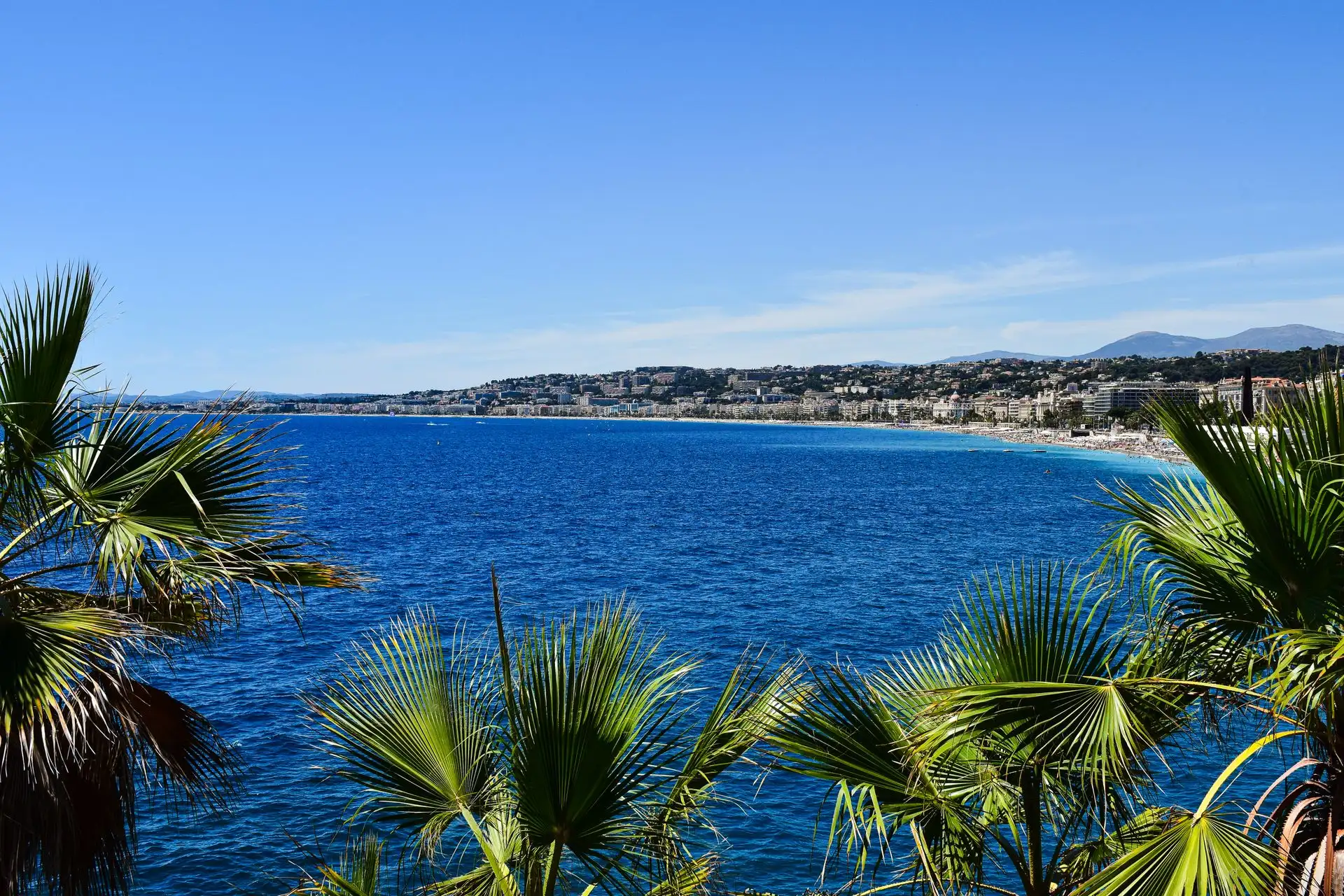
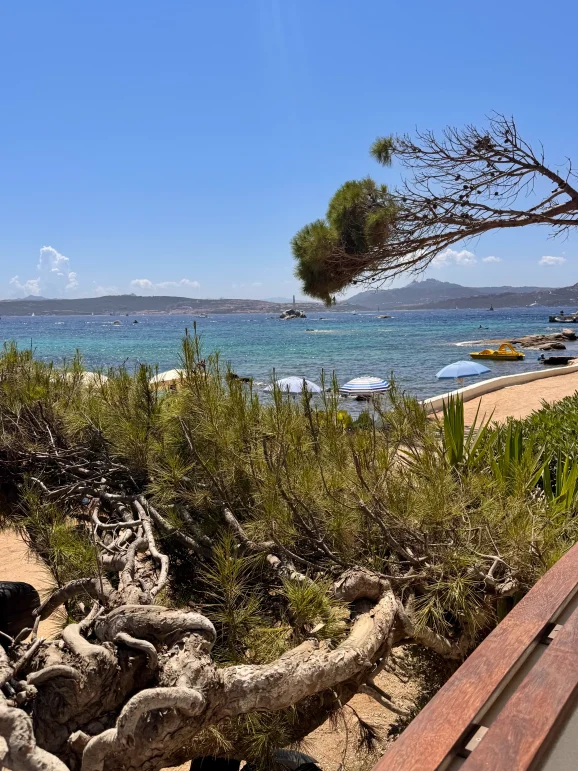
Coming from Nice, France, we arrived at Olbia Airport, one of Sardinia’s main hubs, descending over the emerald waters and white beaches of the Sardinian coast. Our first port of call, literally, was Porto Cervo where we picked up our boat to cruise the two islands.
About half an hour’s drive from the airport, Porto Cervo is an exclusive resort on the northeast coast of Sardinia, created from scratch in the 1960s by the Aga Khan and a select group of investors. It’s the centre of the beautiful Costa Smeralda and renowned as a luxury playground for billionaires.
It is, in part, that, but it’s more, too. Porto Cervo was designed around the existing landscape, with rules intended to protect rather than overwhelm it. That original idea is easy to overlook amid all the luxury.
Visually, it’s fascinating, designed by architects such as Luigi Vietti, Jacques Couelle and Michele Busiri Vici in the ‘stile smeraldino’ (emerald style), which draws on the Sardinian landscape. The buildings mix Moorish, Mediterranean and traditional rustic elements with pastel colours and white walls, following the contours of the rocks and coastal vegetation.
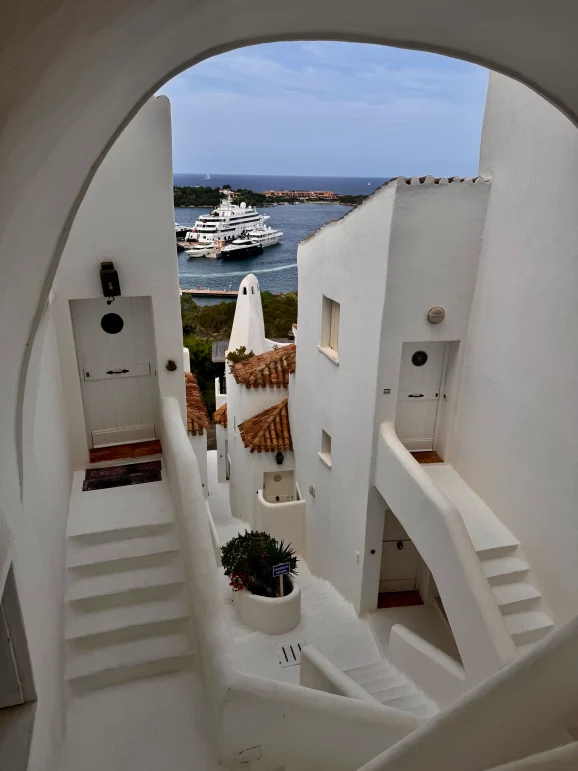
What’s very clear, as you wander the winding alleys and lively squares of the village centre, is that no expense or attention to detail was spared in its conception. The architecture sits low in your eyeline with stone walls, terracotta-tiled roofs and arches framing the sea. You could – almost – be in a traditional Sardinian fishing village, were it not for the Gucci, Prada and Hermes shops on every corner.
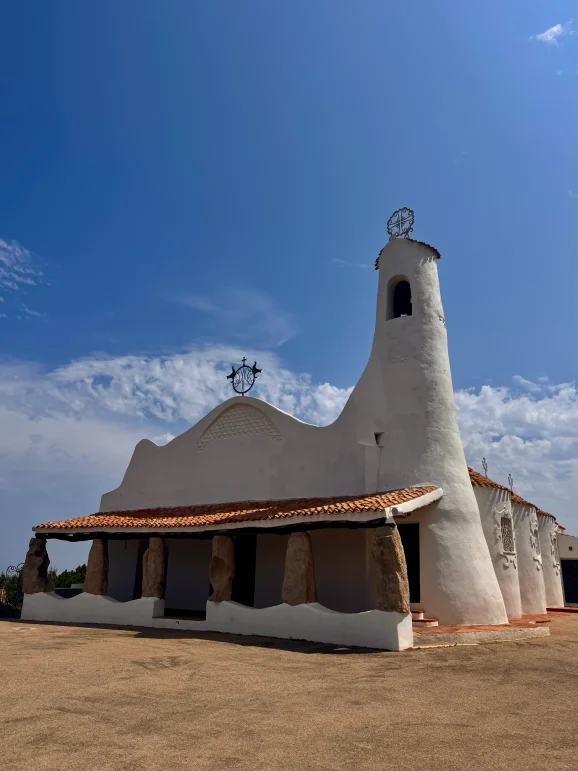
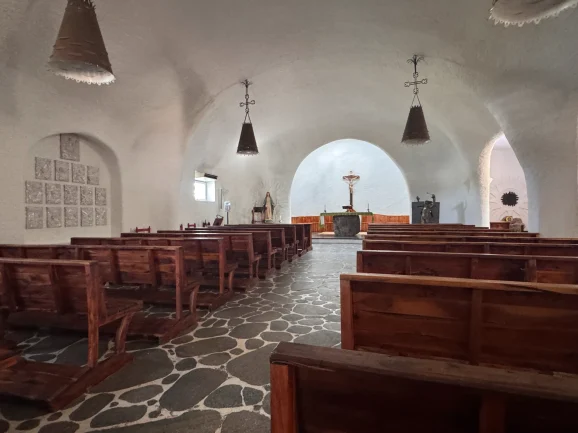
The highlight of Porto Cervo is without doubt the Stella Maris Church, watching over the coastline a short stroll away from the village centre. The soft lines of its whitewashed stone exterior feel almost hewn by hand. An iron cross rises above the simple, cone-shaped bell tower. Through the carved bronze doorway, the interior is equally understated, despite being graced by an El Greco. It is a serene and sacred place, and it’s hard to believe the church has stood here for only half a century.
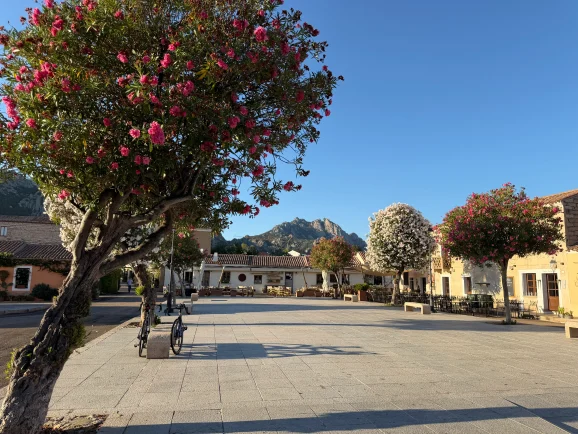
A final place we enjoyed on our whistle-stop Sardinian tour was the village of San Pantaleo. Located about 15km inland from the Costa Smeralda, this traditional Galluran village is framed by the towering peaks of the Cugnana mountain range. It’s famous for its bohemian atmosphere and known as ‘the village of painters’. Art shops, galleries and craft studios abound, yet San Pantaleo still feels distinctly local. To eat, try Agave restaurant at the La Suera hotel for Sardinian dishes with a modern twist, or, for a more relaxed choice, try any of the wine bars around the main square, which are perfect for people-watching. Bar Tabbachi has great local wines and the staff are helpful with recommendations.
Having only scratched the surface of Sardinia, it was already time to head to Corsica on our boat, stopping en route at La Maddalena National Park. This archipelago, made up of seven main islands and around 50 islets, is located off the northeastern coast of Sardinia. Its turquoise waters and beaches make it well worth a stop if you’re cruising the islands. We stopped at Punta Tegge, a peninsula on the west coast, dominated by a 19th-century fortress and surrounded by pretty beaches, where we ate at Zi Anto, a family-run restaurant serving excellent grilled fish.
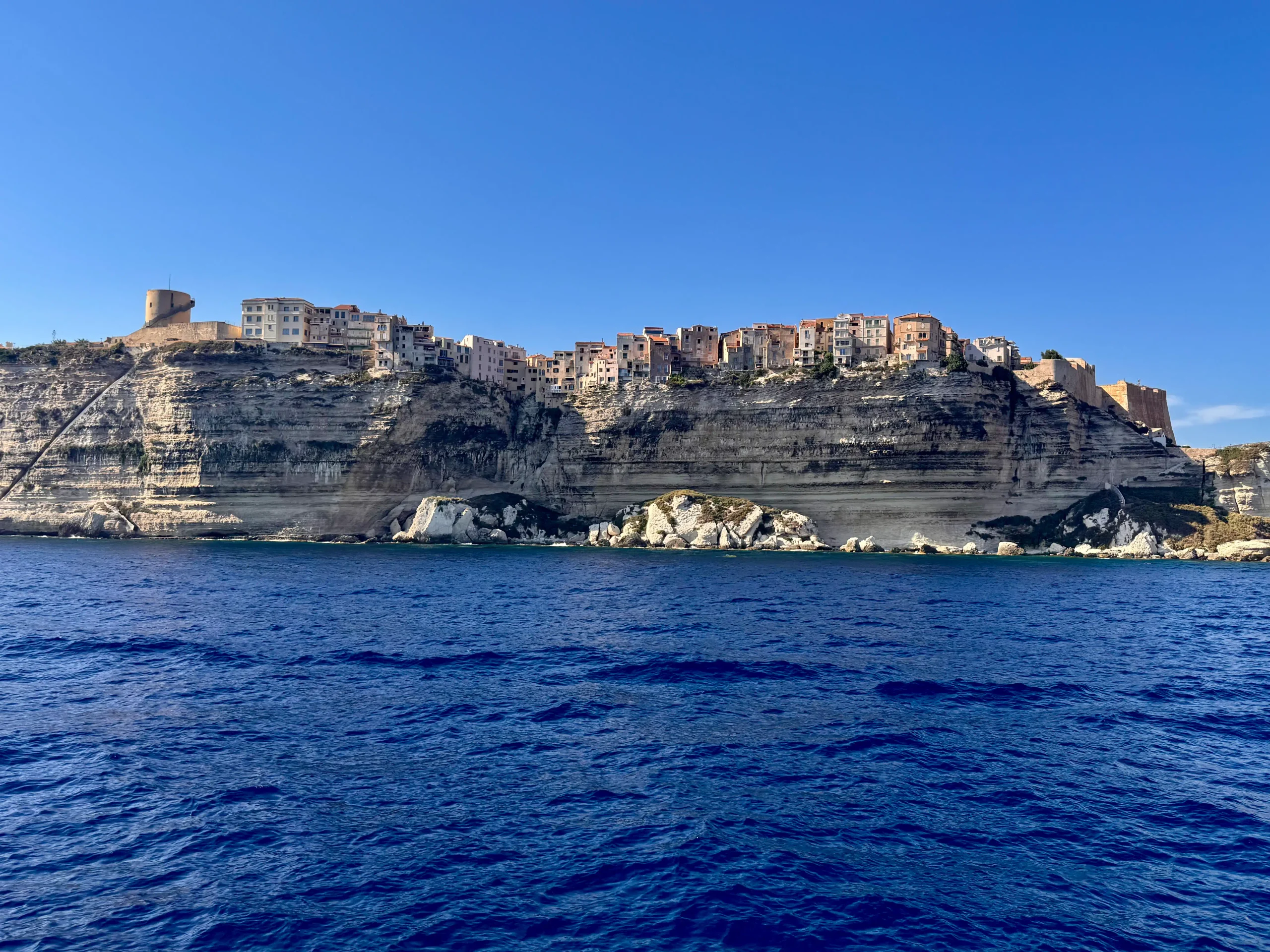
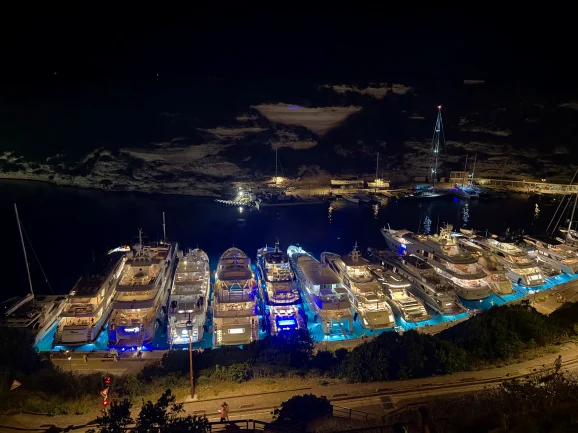
From there, it was back on the boat to cross the straits and head round the southern tip of Corsica into Bonifacio. The coastline is dramatic, with chalk-white limestone headlands carved into unusual shapes by the Tyrrhenian Sea. The colourful upper town, perched precariously on the edge of the cliffs, comes into view before you reach the harbour itself.
Entrance by boat is by far the most memorable way to reach Bonifacio. It sits on a deep ravine more reminiscent of a Norwegian fjord than a French port, almost hidden from the sea until you are upon it, with cliffs rising on either side. As the French poet Paul Valéry wrote, “I know nothing more striking than the entrance to Bonifacio.” It’s something never to be forgotten.
Bonifacio is split into two distinct parts, the upper town (haute ville) within the medieval citadel on top of the cliffs, and the bustling harbour below. It’s a short but steep stroll between the two. Within the citadel is a maze of medieval cobbled streets and winding alleys, all easily explored in a few hours. It’s best to get there early. Bonifacio is always beautiful, but it is at its most beautiful before the world wakes. And then you can enjoy your coffee and croissant watching everyone else puff their way up the hill.
The city has changed hands several times in the course of history, ruled by the Genoese, Pisans and French, and these influences are all in evidence as you stroll the citadel walls, marked by generations of towers, fortifications and bastions. Napoleon, Corsica’s most famous son, spent time here during the early months of 1793 while commanding a battalion of volunteers. A plaque on Rue des Deux-Empereurs commemorates his stay.
Another of Bonifacio’s most famous sites is the King of Aragon stairway, with 189 steep steps cut at a 45-degree incline into the cliffside. Legend has it the king’s troops carved them in one single night during the siege of 1420, but it’s considerably more likely they were built over a much longer period by Franciscan monks to reach a freshwater well below. Whatever the truth, the stairway runs directly down towards the sea from the town. Hard hats are compulsory, provided at the ticket booth, as are closed-toe shoes.
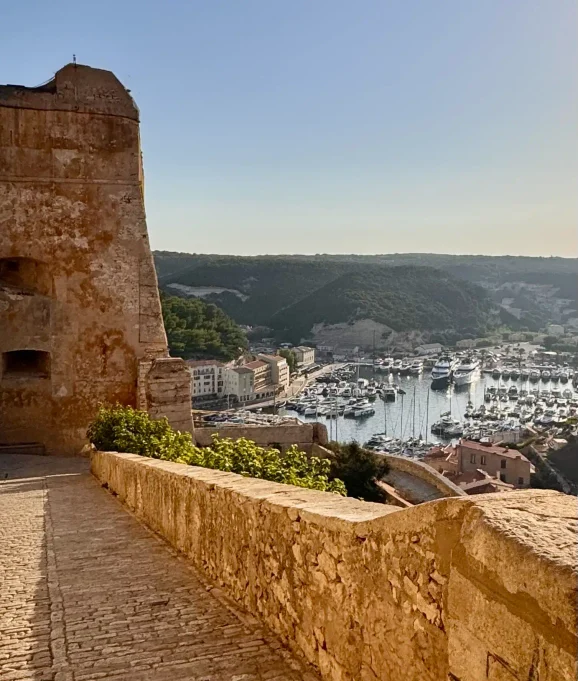
If you fancy a less terrifying leg stretch, there’s a fantastic 6km walk from Bonifacio to the Pertusato Lighthouse along the limestone cliff tops, winding through coastal ‘maquis’ vegetation, the dense scrubland that covers much of Corsica. After the citadel’s narrow streets, the sea breeze along the cliff tops provides a welcome contrast. The excellent tourist office can help with routes and general guidance for all things ‘bonifaciennes’.
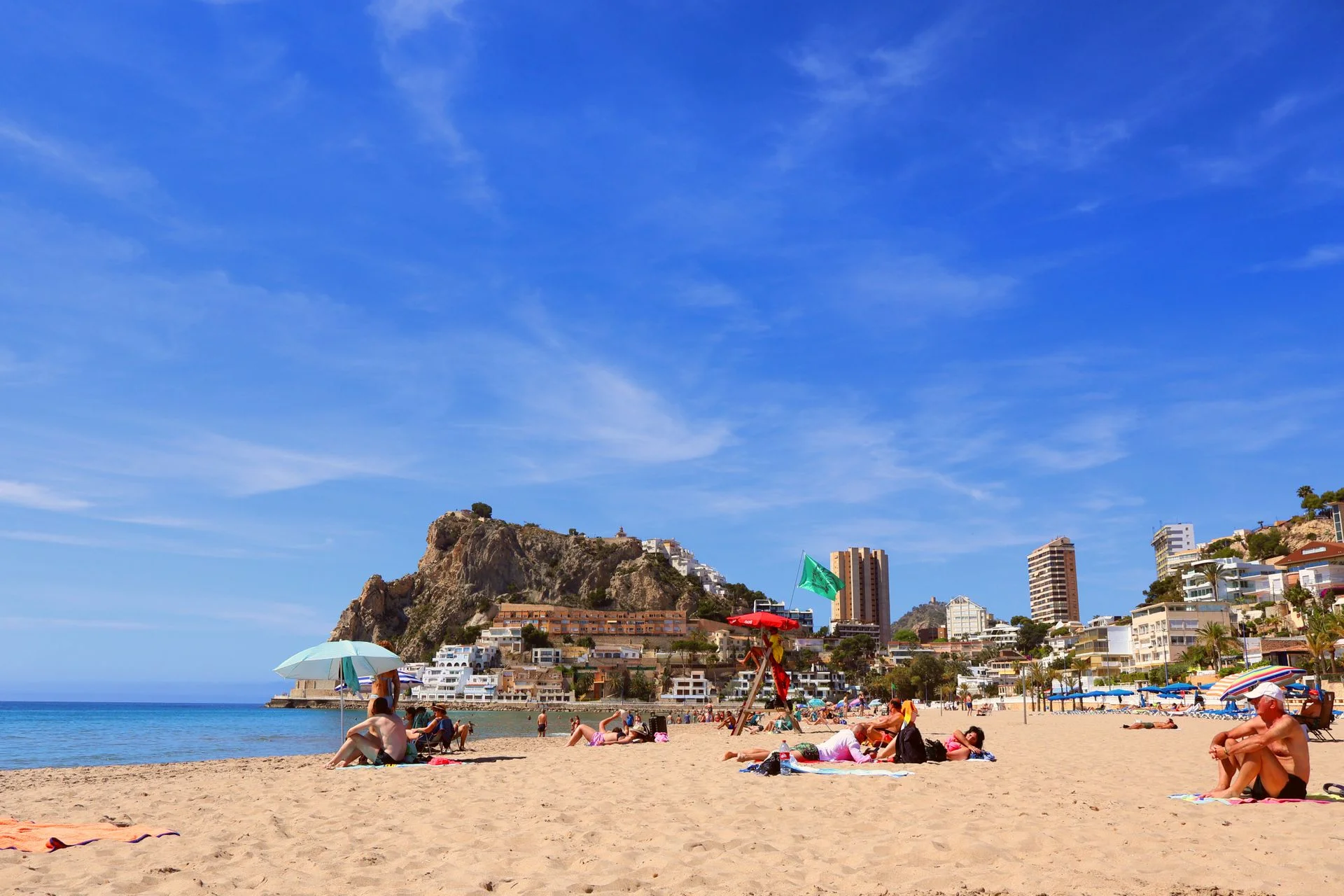
Reluctantly, we left Bonifacio to head to our final stop, Ajaccio – the capital of Corsica and birthplace of Napoleon, who features heavily everywhere you look. Ajaccio is a city of two halves and almost looks to have been built on two levels: the beautiful lower old town around the harbour, and the concrete towers of the new town, built to accommodate the demographic boom of the 1960s. Ajaccio is particularly famed for its sandy beaches within the confines of the city itself, ideal for morning bathing or an afternoon snooze in the sun, and its 15th-century citadel, now open to the public as a community space.
We stuck to the old town using the tourist office map to guide us. From the palm-tree-lined harbour dotted with pastel-hued buildings, you’re quickly into the heart of it. The obvious starting point is the Maison Bonaparte, where Napoleon’s mother, Letizia, a Corsican noblewoman, felt her first birth pangs at mass before returning home to give birth – according to a later legend, on a carpet. It’s a quirky place to visit and worth an hour of your time.
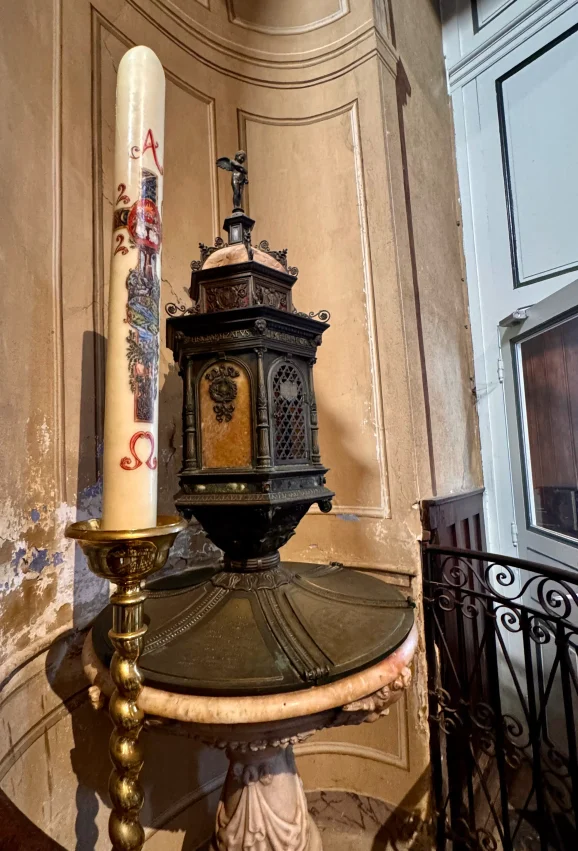
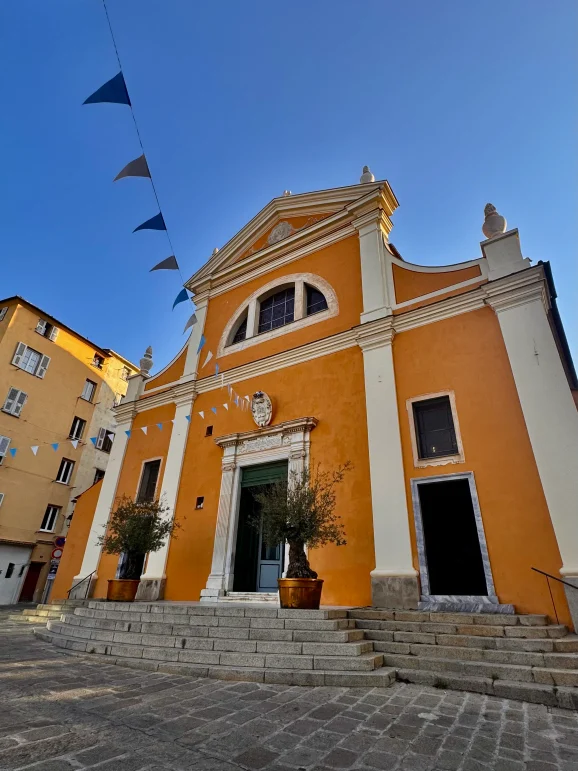
Around the corner, at beautiful Ajaccio Cathedral, you can see the marble font where Napoleon was baptised, as well as a lovely Delacroix painting. Indeed, on his deathbed, showing his fondness for his place of birth, Napoleon said, “If they forbid my corpse, as they have forbidden my body, a small piece of land in which to be laid, I desire to be buried with my ancestors in Ajaccio Cathedral.”
Although Napoleon is everywhere in Ajaccio, the sales pitch doesn’t feel overdone or tacky. The city is quiet, humble, comfortable in its own skin. Nowhere is that clearer than the Rue Cardinal Fesch, a charming pedestrian street lined by cafes, boutiques and craft shops. A particular favourite was Bartleby’s book and coffee shop, combining two of my favourite pastimes under one roof.
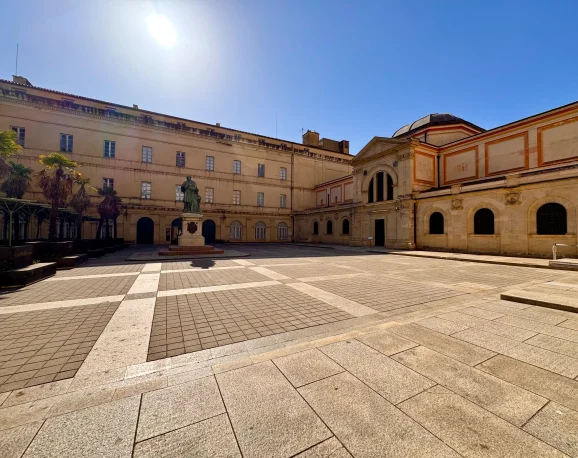
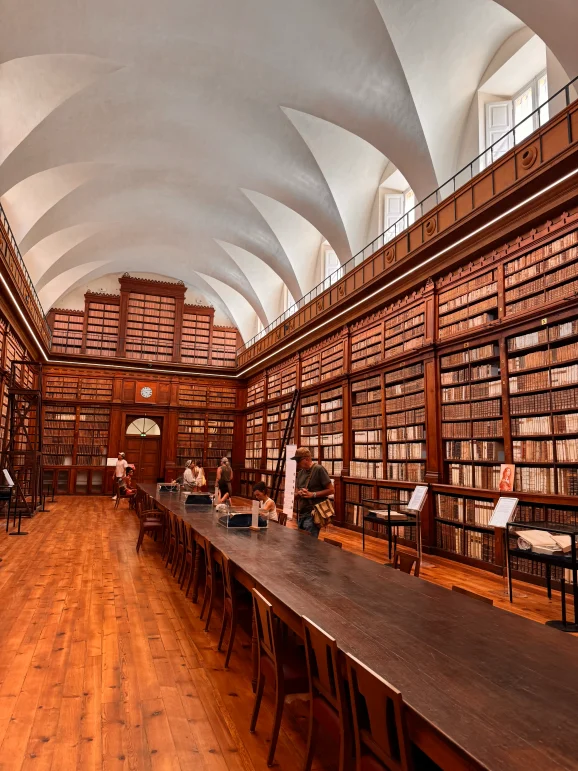
On the same road, alongside the excellent Palais Fesch-Musée des Beaux-Arts, which holds the most significant collection of Italian paintings in France outside the Louvre, is the Bibliothèque Fesch, the municipal library of Ajaccio. Its historic collection of around 20,000 books is housed in a stunning 19th-century wooden library. It feels like something from a film set or a literary fever dream. Even better, it’s free to enter. Don’t miss it.
Time had flown by pleasantly in beautiful Ajaccio, and before we knew it, it was our own time to leave the boat and fly back to Nice. The airport lies just 5km from the city and Air Corsica offers direct, daily flights to Nice that take about 50 minutes, as well as other European destinations.
Looking back, it was the contrasts between two islands so close in geography that struck me most. Corsica feels rockier, wilder and less developed for tourism; Sardinia has a milder terrain, sweeping beaches and more of the infrastructure visitors expect.
With both retaining strong identities of their own, it feels impossible to choose one above the other. All I can say for sure is that both will linger long in my memory.
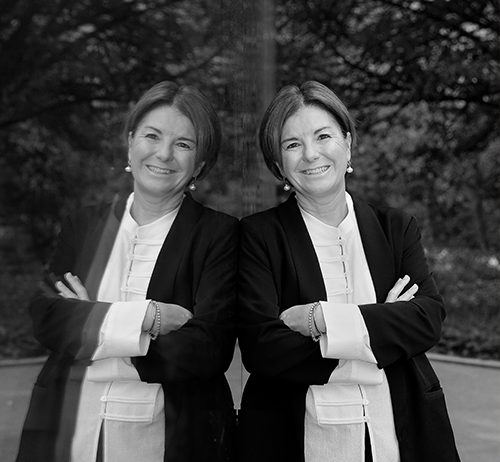
Deborah Lyon is a writer, editor and hospitality entrepreneur based in the Lake District. She left London two decades ago to restore a derelict Victorian estate near Windermere, now The Heaning — a five-acre collection of self-catering properties rooted in local craftsmanship and Cumbrian heritage. Alongside running the estate, she writes about landscape, place and belonging, drawing inspiration from the fells and literary traditions that surround her. Her first novel, the acclaimed children’s book Timewaif & The Roman Road, was praised for its evocation of Roman Cumbria and its “human stories told with tenderness and truth”. She is also the author of Lake District Unlocked, a family travel guide to the region’s hidden landmarks.
READ MORE: This French city could be the ultimate European weekend break. Deb Lyon explores Nice, where art, food and the light that captivated Matisse make the Côte d’Azur capital an irresistible city break.
Do you have news to share or expertise to contribute? The European welcomes insights from business leaders and sector specialists. Get in touch with our editorial team to find out more.
Main Image: Bonifacio seen from the sea, where Corsica’s fortified upper town rises above the white limestone cliffs. Credit: Supplied