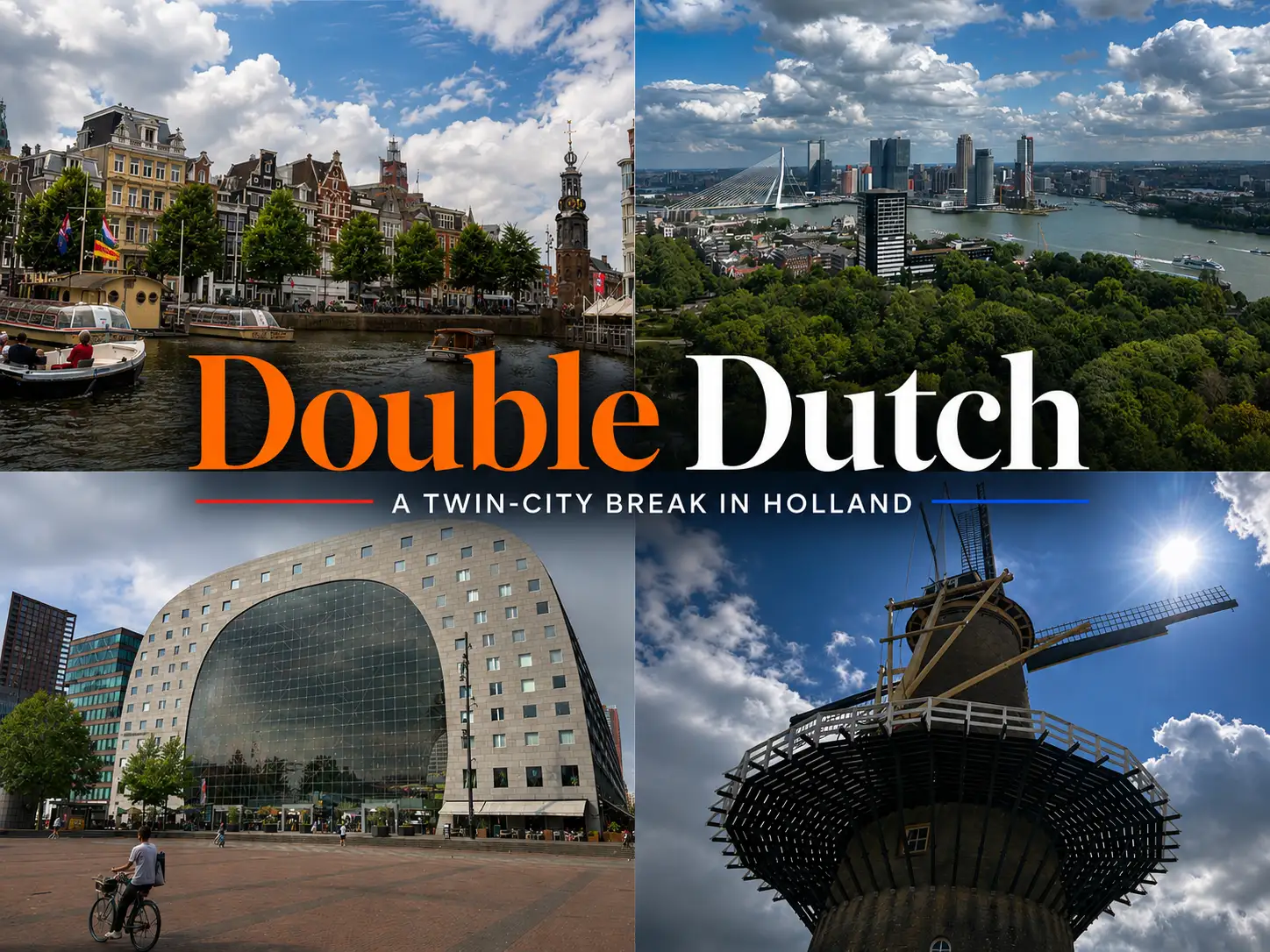
Swapping a planned motorhome route for bullet-trains, Uber bikes, and canal boats, Lee Ness takes a two-city tour through the dynamic urban landscapes of Rotterdam and Amsterdam
When we first retired and began planning our European travels, the Netherlands was an obvious early choice. For UK motorhomers, it is virtually on our doorstep – easily reached via short cross-Channel ferries to France, direct crossings into Hook of Holland, or the Channel Tunnel. Beyond its proximity, the Netherlands is widely regarded as one of the most motorhome-friendly countries in Europe. Compact, flat, and remarkably well-organised, its short driving distances make it easy to hop between historic towns, coastal national parks, and bustling cities without spending hours behind the wheel.
Geographically, it is a fascinating nation – nearly a third of the country sits below sea level, kept dry by a centuries-old network of dikes, windmills, and engineering marvels. It is also a land defined by efficiency and seamless infrastructure. English is spoken fluently by almost everyone, the roads are exceptionally well-maintained, and the country’s famous cycling networks weave through every town and countryside route, making local exploration on two wheels a joy.
We had initially drawn up a classic, loose motorhome route: entering the country to visit The Hague, meandering up to Amsterdam, perhaps heading east toward Arnhem, and eventually driving north through Zwolle toward the coast via Groningen. Rotterdam wasn’t on that itinerary at all, other than as a potential port of arrival.
However, one of the greatest joys of retirement is spontaneity. When our eldest son flew into Rotterdam as the team medic for the US Masters Hockey Championship, we adjusted our plans on the fly and decided to head over to meet him. Leaving the motorhome set up as our base, we opted to experience the country’s public transport systems firsthand for this twin-city detour.
Travel & Accommodation
The train services in Europe are usually excellent, and this extends to the Eurostar from the UK. Three hours and twenty-eight minutes from London St Pancras to Rotterdam Centraal for around £200 each way, depending on timing. The stations and trains in The Netherlands are clean, spacious, and the information is presented seamlessly in multiple languages. This includes real-time arrival summaries displaying connecting trains to major hubs like The Hague and Schiphol Airport, complete with departure times and platform numbers. Trains are simple and convenient: just scan on and scan off with your card.
We decided to grab Uber bikes and test the famous Dutch approach to cycling for our four-mile trip to the hockey tournament. It is safe to say that when it comes to cycle infrastructure, the Netherlands really knows what it is doing:
- Cyclists are prioritised over other traffic: Traffic light sensors detect incoming bikes and actively shorten green lights for private cars to keep cyclists moving.
- Extensive cycle lanes: Dedicated lanes are everywhere. In busier urban areas, they are physically segregated from the main roadway.
- Rain-sensing signals: Smart traffic lights detect rain and adjust light cycles so cyclists spend less time waiting in bad weather.
Unlocking the bikes just a couple of hundred metres from where we were staying, we rode directly to the venue – a wonderful way to see parts of the city tourists usually miss.
For our stay, we chose the citizenM hotel to be near our son. It proved to be an exceptionally stylish, modern choice. Our room was compact without feeling small, utilising clever design where no space was wasted. We enjoyed a view directly over the Oudehaven harbour and Het Witte Huis (The White House). The double bed spanned the full width of the room against the window, accompanied by a glass-enclosed ensuite shower and toilet, an open wardrobe, and a streamlined sink area. It managed to feel cosy rather than cramped. It was also tech-forward, with room elements managed via an in-room iPad – from adjusting blackout blinds and ambient lighting schemes to controlling the TV. Downstairs, the foyer was bright and contemporary, the staff were welcoming, and the lounge and restaurant offered a great space to relax.
Located steps from Blaak Metro Station and the underground Rotterdam Blaak train station, it sat right across from the iconic Markthal food market and just half a mile from the city centre.
Rotterdam
We had two days in Rotterdam sandwiching our day trip to Amsterdam – just enough time to take in the highlights without feeling rushed. While it wasn’t originally high on our itinerary, the city proved to be a wonderful surprise. It serves as an ideal, relaxed base for exploring busier tourist heavyweights like The Hague and Amsterdam, allowing you to easily adjust your pace while enjoying the best of the Netherlands.
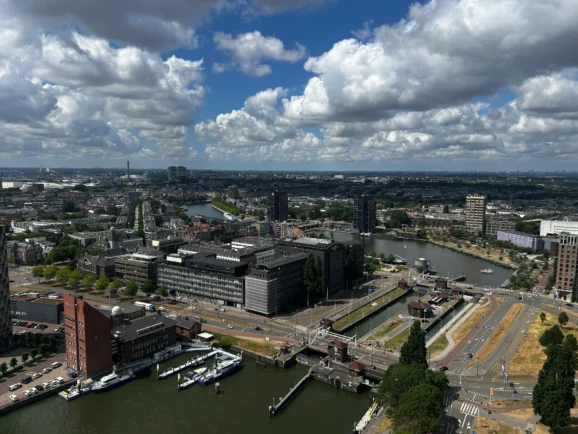
We took the opportunity to visit the Euromast Tower for a panoramic perspective of the city skyline. The main viewing platform sits at 185 metres, and taking the rotating Euroscoop elevator to the top is well worth the €18.50 ticket price. The views are incredible, though there is also an intermediate platform at 112 metres for €13.50. High above the city, the tower’s restaurant offers various dining options if you fancy a bite with a view.
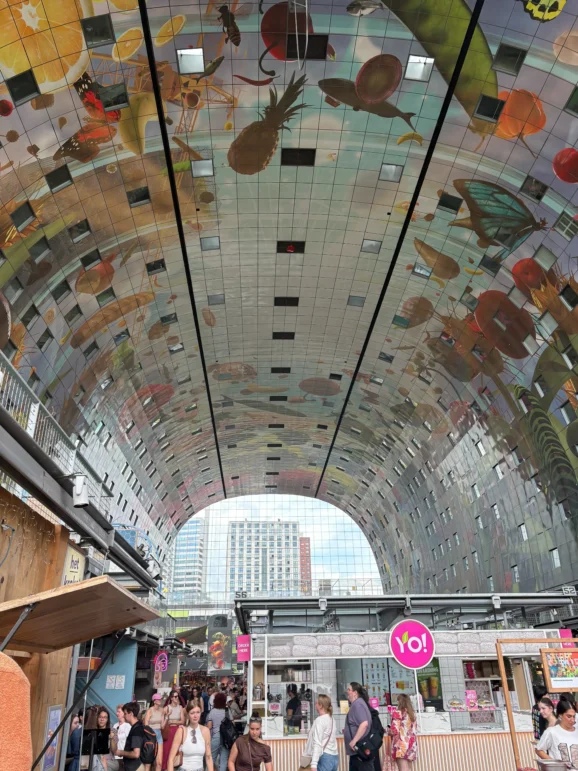
A short walk from the hotel brings you to the magnificent market hall (Markthal) on the main Binnenrotte square. It is worth visiting for much more than just food. While stalls cater to every budget and cuisine imaginable, the building’s architecture is the real showstopper. The structure arches high over the bustling stalls, its interior ceiling decorated in a giant, vibrant artwork depicting fresh produce, flowers, and food.
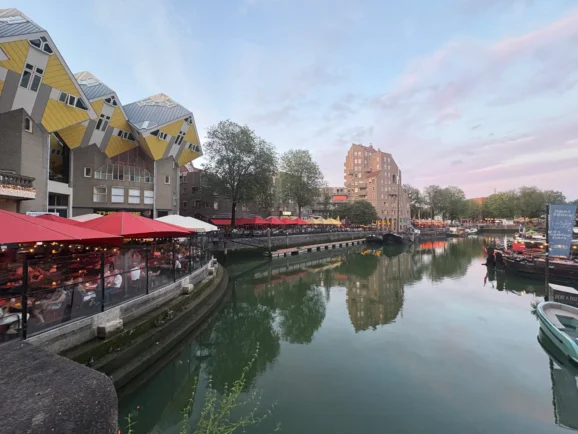
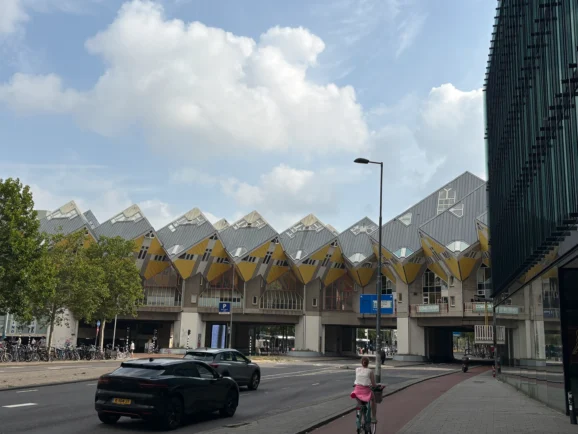
Another landmark visible right from our hotel was the famous Cube Houses (Kubuswoningen), tilted at 45 degrees over the Blaak metro station. While you can pay to tour a ‘show cube’ to see how residents navigate angled walls, the exterior design alone is a striking piece of public art.
Other noteworthy sights around the city include:
- Watertoren (Water Tower): Located in Rotterdam’s De Esch neighbourhood, built in 1871–1873. Standing 48 metres tall, it now houses the cosy De Watertoren cafe and restaurant.
- Laurenskerk Tower: St. Lawrence Church is the only remaining medieval building in Rotterdam. Those feeling brave and fit enough can tackle the 365 steps up the tower for panoramic views.
- Fenix Museum: Situated along the waterfront, it is impressive to admire from the outside even if you aren’t visiting the exhibitions inside.
- Rotterdam Public Transport Museum (ROVM): A great spot for transport enthusiasts featuring historic local trams and trains.
Amsterdam
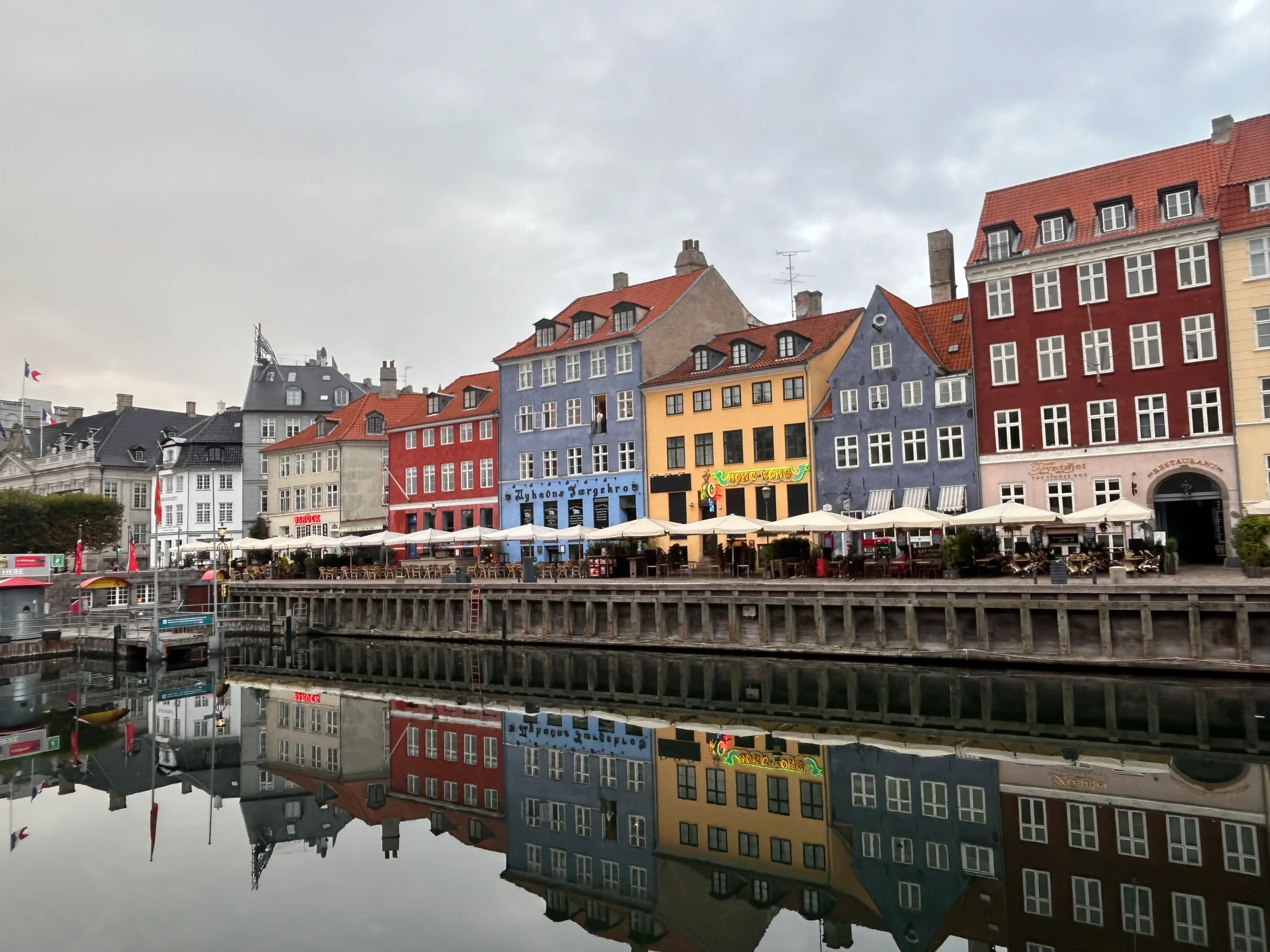
On arrival in Amsterdam, we kicked things off by booking a canal tour with Lovely Cruises Open Boat Tour. Gliding through the waterways was a fantastic way to orient ourselves, and our guide shared plenty of fascinating local history:
- Taxed by the Facade: Amsterdam’s signature tall, narrow canal houses exist because 17th-century property taxes were calculated on front width rather than overall plot size.
- Top-Floor Hoists: Almost every building features a beam and pulley hook at the top gable to hoist bulky goods into upper windows. With Amsterdam sitting roughly 6 feet below sea level, keeping merchandise stored high off the street was essential – a practice widely cited as the origin of the phrase “high and dry.”
- Forward Lean: Houses were intentionally built tilting slightly forward so hoisted cargo wouldn’t smash into lower-floor windows on its way up.
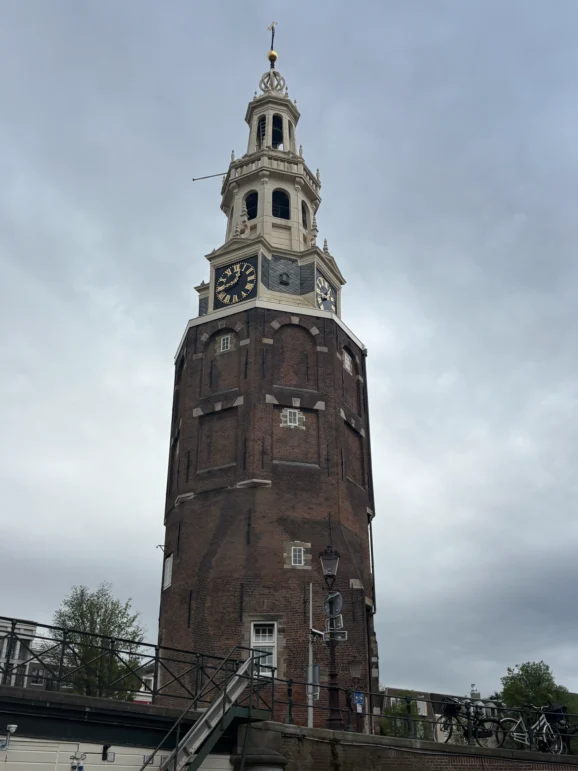
- “Silly Jack” Clock Tower: The 48-metre Montelbaanstoren clock tower earned the local nickname Malle Jaap (“Silly Jack”) because its clock mechanism was historically erratic, chiming at random hours or refusing to ring at all.
- Water Control: To keep the below-sea-level canals stable and prevent flooding, a complex network of dark wooden locks regulates water levels throughout the city.
- Pub Bikes (Kroegfietsen): With roughly 1.4 million bicycles for a population of 900,000, many residents own a second, beat-up “pub bike” for evening trips. The unwritten rule: the heavy-duty lock should always be worth more than the bike itself!
- Dredging the Canals: City workers fish nearly 15,000 abandoned or fallen bicycles out of Amsterdam’s canals every year.
- Seven Arches in Line: At the intersection of Reguliersgracht and Herengracht, you can look through the arches of seven consecutive stone bridges perfectly aligned in a single row.
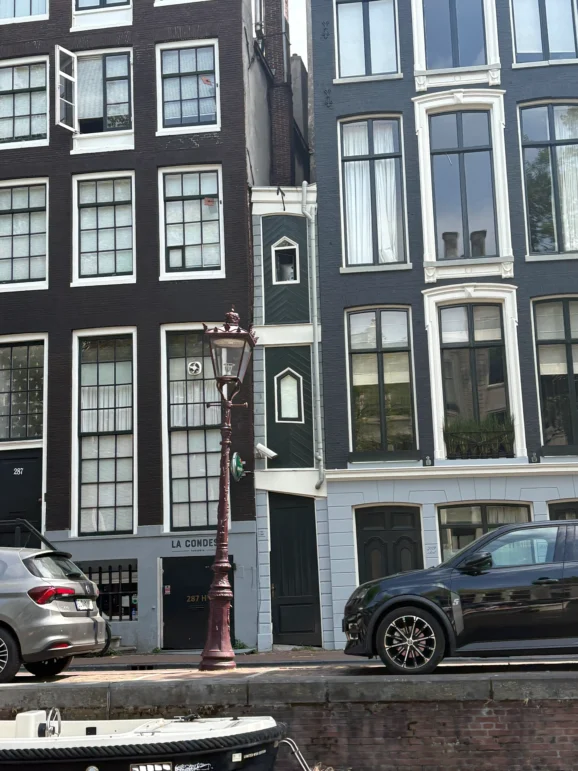
- Narrowest House: While several buildings claim the title, Singel 7 features a front facade measuring just 1.01 metres (3 feet 3 inches) wide.
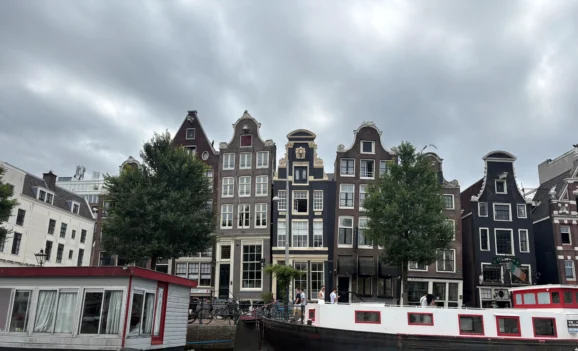
- The “Dancing Houses”: Because older structures were built on wooden piles driven into marshy ground, shifting foundations over the centuries have left many neighbouring buildings leaning gently against one another.
A cautionary tip while exploring: if you want a cup of coffee, don’t walk into a coffeeshop – those are legal cannabis dispensaries. For actual coffee and pastries, look for a café or koffiehuis.
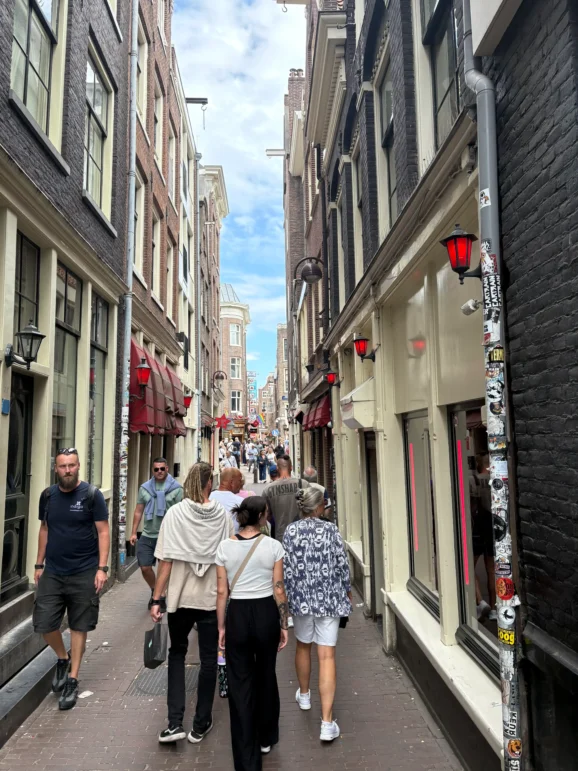
Amsterdam is also home to the world’s most famous Red Light District (De Wallen). Passing through earlier in the day meant things were quiet, but the setup was clear: a mix of novelty shops, shows, and theatre venues alongside the signature glass doors and red-lit windows where sex workers operate.
Eating and Drinking
Rotterdam
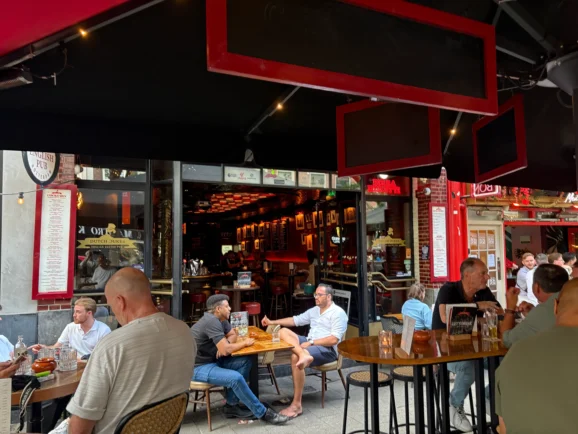
After travelling most of Thursday, we kept our first evening low-key with a short stroll over to Witte de Withstraat, a vibrant street lined with independent bars and cafes. We settled in at Dutch Dukes for a draught beer, sticking to local Dutch brews like Texels Skuumkoppe (which translates colourfully to “foam-top”). Later, we moved on to The Fat Fox on Schiedamse Vest, where we found plenty of reasonably priced, delicious dinner choices.
We fuelled up the next morning at Bagels & Beans on the Blaak market square. While the bagels didn’t quite reach NYC standards, they were very close – the cinnamon-and-raisin bagel with cream cheese was delicious.
Interestingly, traditional Dutch dinner cuisine can be surprisingly hard to track down in major cities. Asking our taxi driver for local recommendations yielded two main answers: stroopwafels and croquettes! Over the course of our stay, our meals included two British-themed gastropubs, an Argentinean grill, a bagel shop, a Turkish kebab stand, and a tapas bar. Classic comfort dishes like bitterballen, stamppot, erwtensoep (split pea soup), and hachee (beef stew) exist, but they take a bit of searching to find on standard menus.
While exploring the street food options inside the market hall, we ordered lunch from a kebab vendor and tried kapsalon – the ultimate modern Dutch comfort dish. Meaning “hairdresser” in Dutch, it was invented in 2003 when local hairdresser Nathaniel Gomes asked his neighbourhood shawarma shop (El Aviva) to layer fries, shawarma, melted gouda, and salad into a single tray. It has a great origin story, not unlike the UK’s claim to Chicken Tikka Masala.
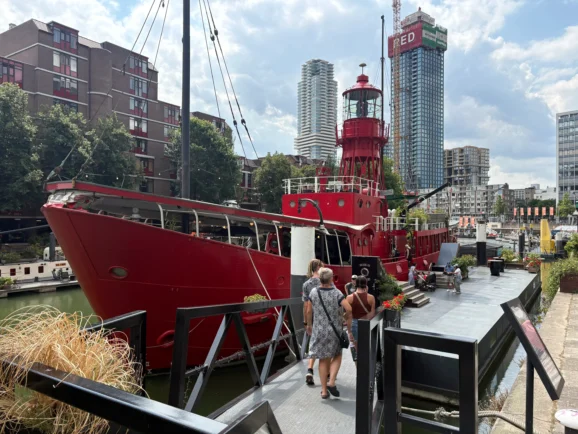
With Britain so close, cross-Channel ties run deep. A fun discovery in the old harbour was Vessel 11, a British gastro-pub housed aboard a bright red lightship. Built in Dartmouth in 1951 as Lightship 11, it was saved from the scrap heap by a Dutch enthusiast, restored into a floating bar, and reopened in 2014 – a brilliant stop for a drink on the water.
For our final evening in Rotterdam, we wanted a special farewell dinner with our son and chose YOLO on Admiraliteitsstraat, a lively cocktail bar and tapas spot. The food was outstanding; we shared a feast of tuna tataki lollipops, crab tostadas, hot beef tenderloin, homemade meatballs, and seared scallops.
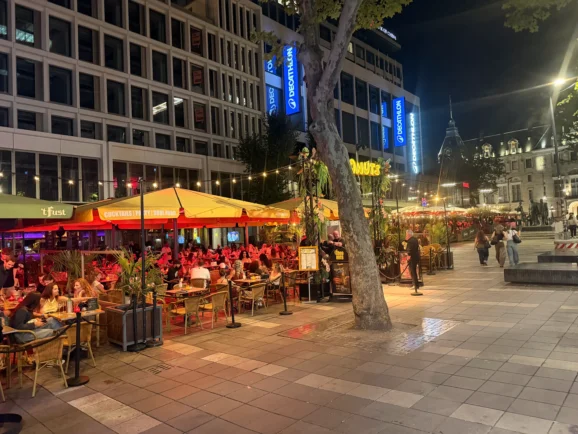
If you are looking for late-night nightlife, Stadhuisplein is the hub, featuring eight loud, energetic bars competing for the biggest crowd. We grabbed outdoor seats at Apres Skihut for a few drinks before the decibels got the better of us around midnight, leaving the late hours to the younger partygoers.
Amsterdam
With only a single day in Amsterdam, we made a late lunch our primary meal after our canal tour. Wandering into the heart of the city, we stopped at Argentalia Grill on Warmoesstraat. Guided by great reviews on TripAdvisor (4.3/5), we shared a generous mixed grill platter of steak, chicken, chorizo, ribs, and grilled corn – it did not disappoint.
Trip Costs
If you want to recreate Lee’s Dutch adventure, here is a breakdown of the key transport, accommodation, and entry costs from the trip:
- Eurostar Trains: €390 (~£200 each way) – Return ticket: London St Pancras ↔ Rotterdam Centraal
- Intercity Train: €20.40 – Rotterdam Centraal ↔ Amsterdam Centraal (each way)
- Uber Bike: €9.10 – 30-minute rental
- citizenM Hotel: €115.32 / night – Standard Room, High Floor
- Euromast Tower: €18.50 – Includes Euroscoop rotating elevator
- Canal Boat Tour: €19.50 – Lovely Cruises Open Boat Tour (~60 mins)
Lee Ness is a freelance writer and author with a background in sport and travel. Over the course of his career he has written extensively on destinations across Europe and beyond, combining practical insight with clear and engaging storytelling. He is the author of five novels and a non-fiction book, and continues to balance his journalism with long-form writing projects.
READ MORE: Padstow beyond Stein is a food lover’s dream. Famed for Rick Stein yet defined by far more, this harbour town and its surrounding coastline offer an extraordinary range of bakeries, pubs, delis and restaurants that reward any visitor with an appetite. In this personal guide, Lee Ness maps the walks, meals and memorable tables that have turned this corner of north Cornwall into an annual pilgrimage.
Do you have news to share or expertise to contribute? The European welcomes insights from business leaders and sector specialists. Get in touch with our editorial team to find out more.
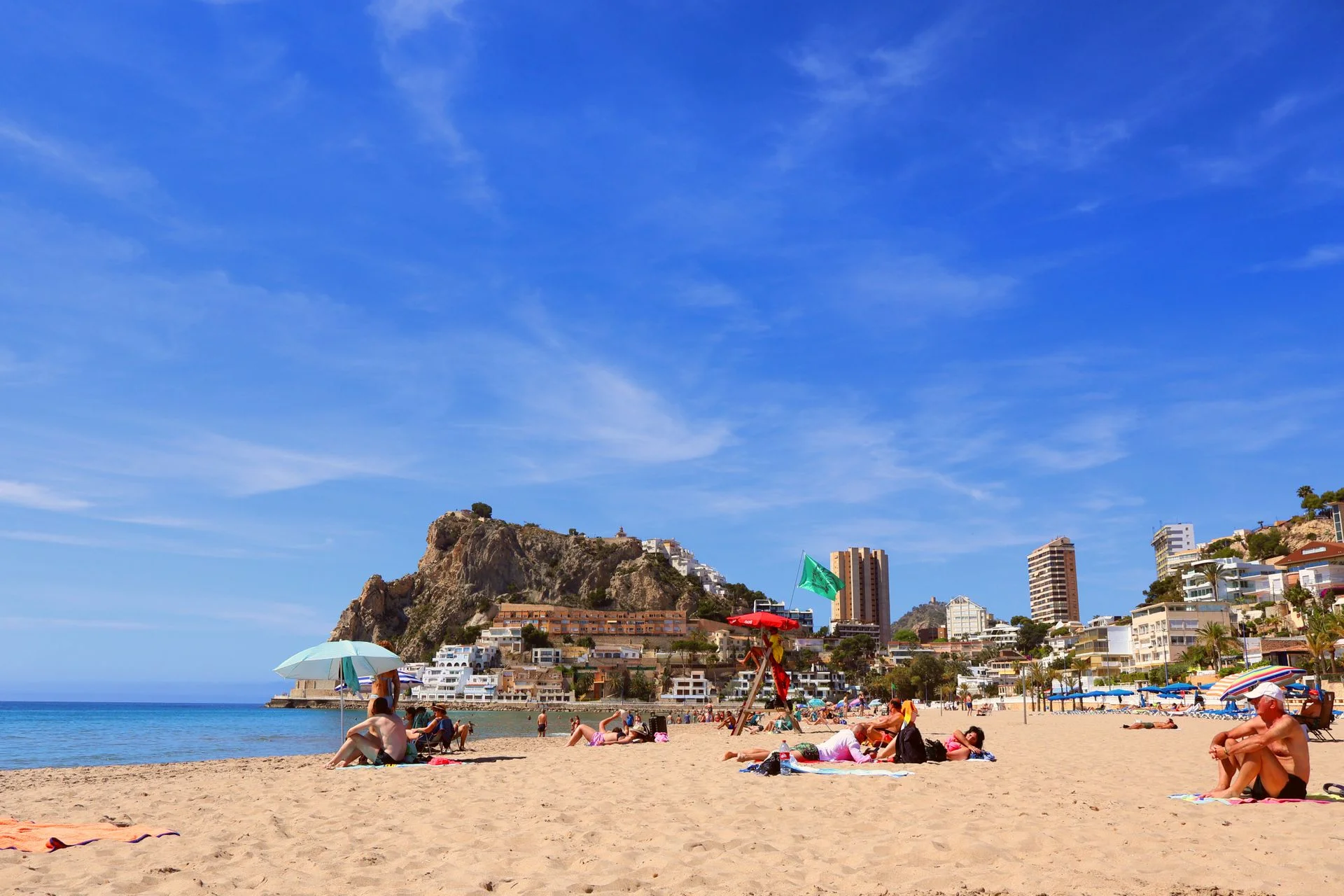
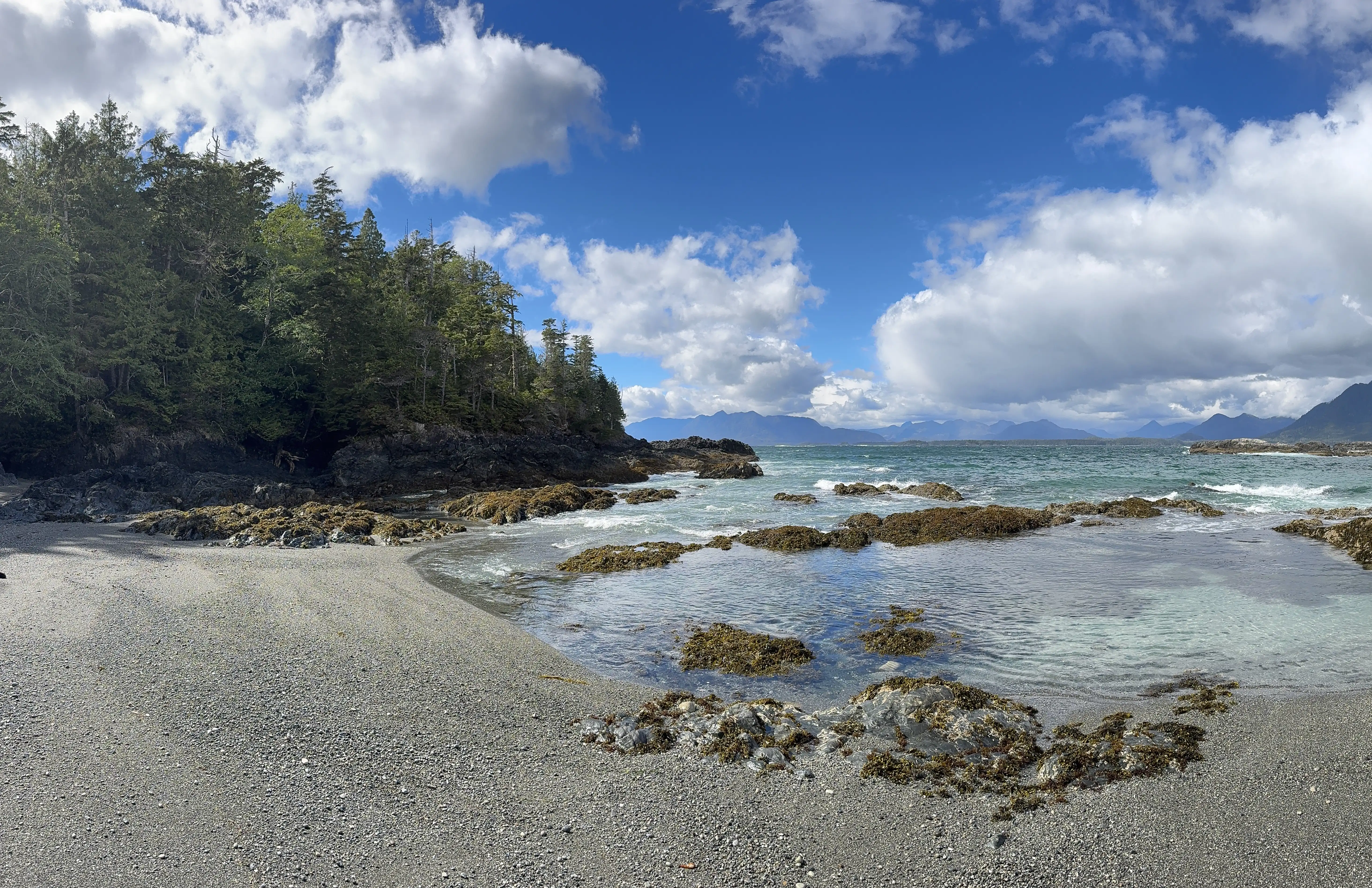
Main image: A twin-city break reveals two very different sides of the Netherlands, from Rotterdam’s bold modern architecture to Amsterdam’s historic canals and timeless charm. All pictures courtesy, Lee Ness.