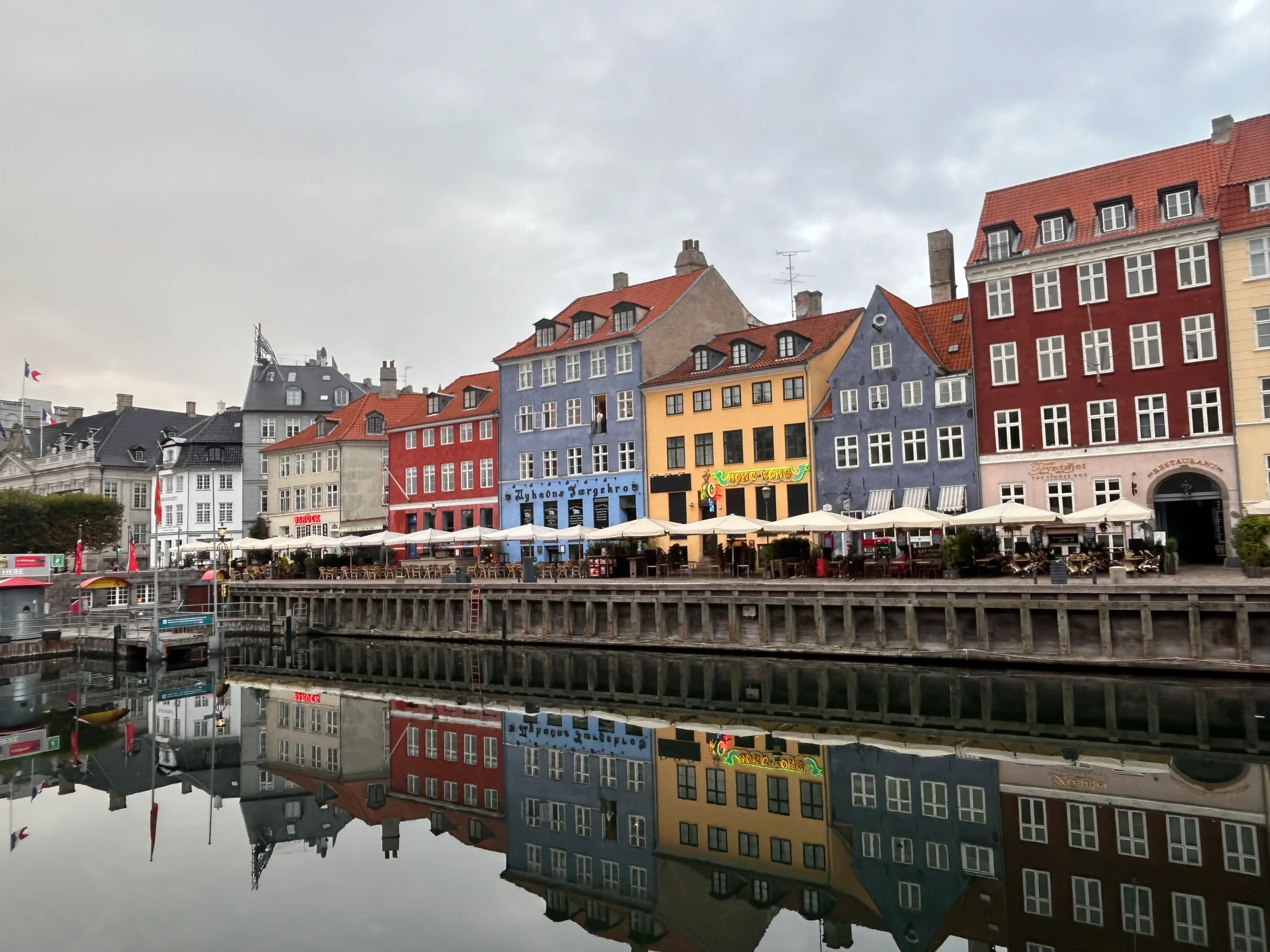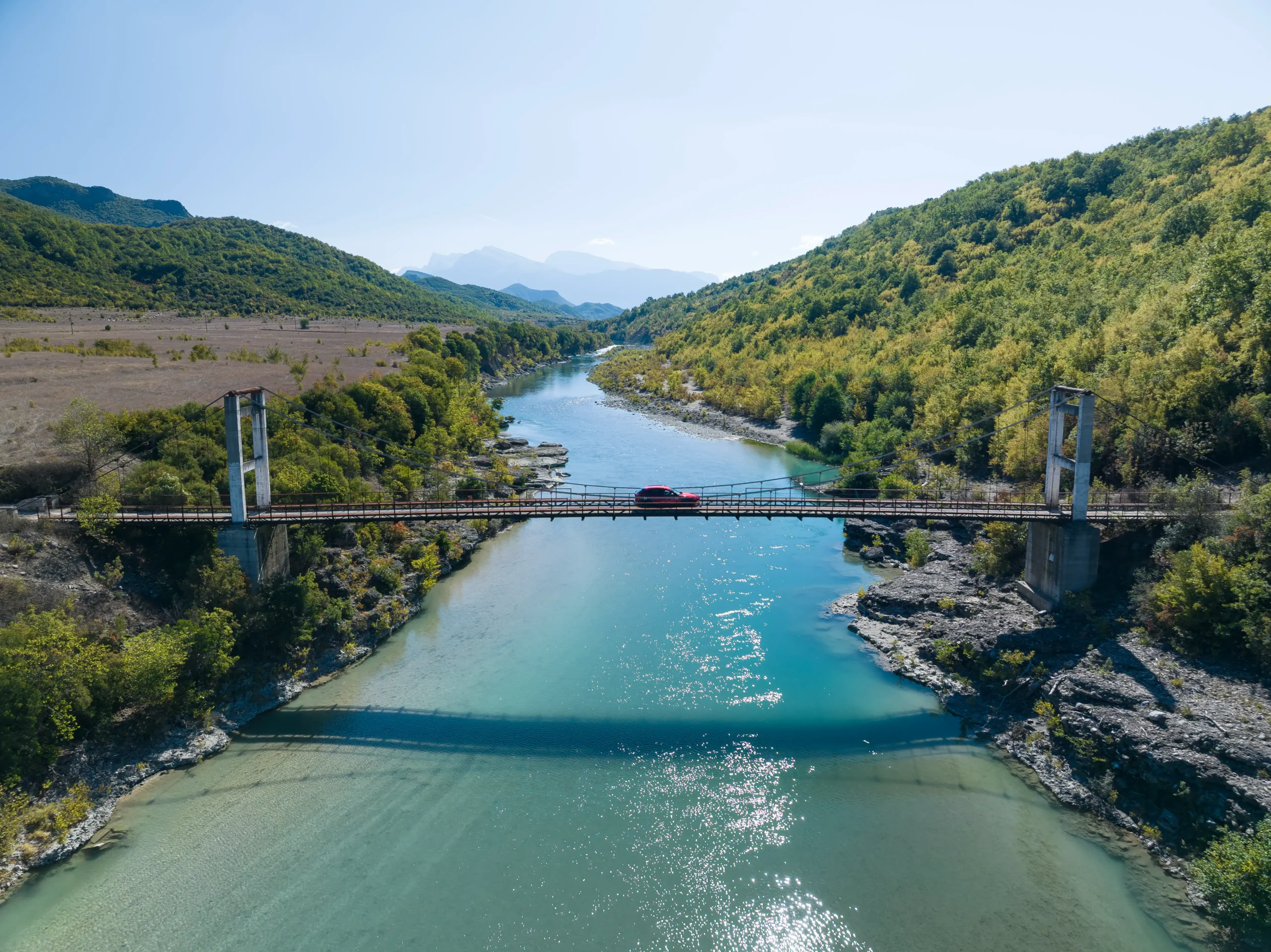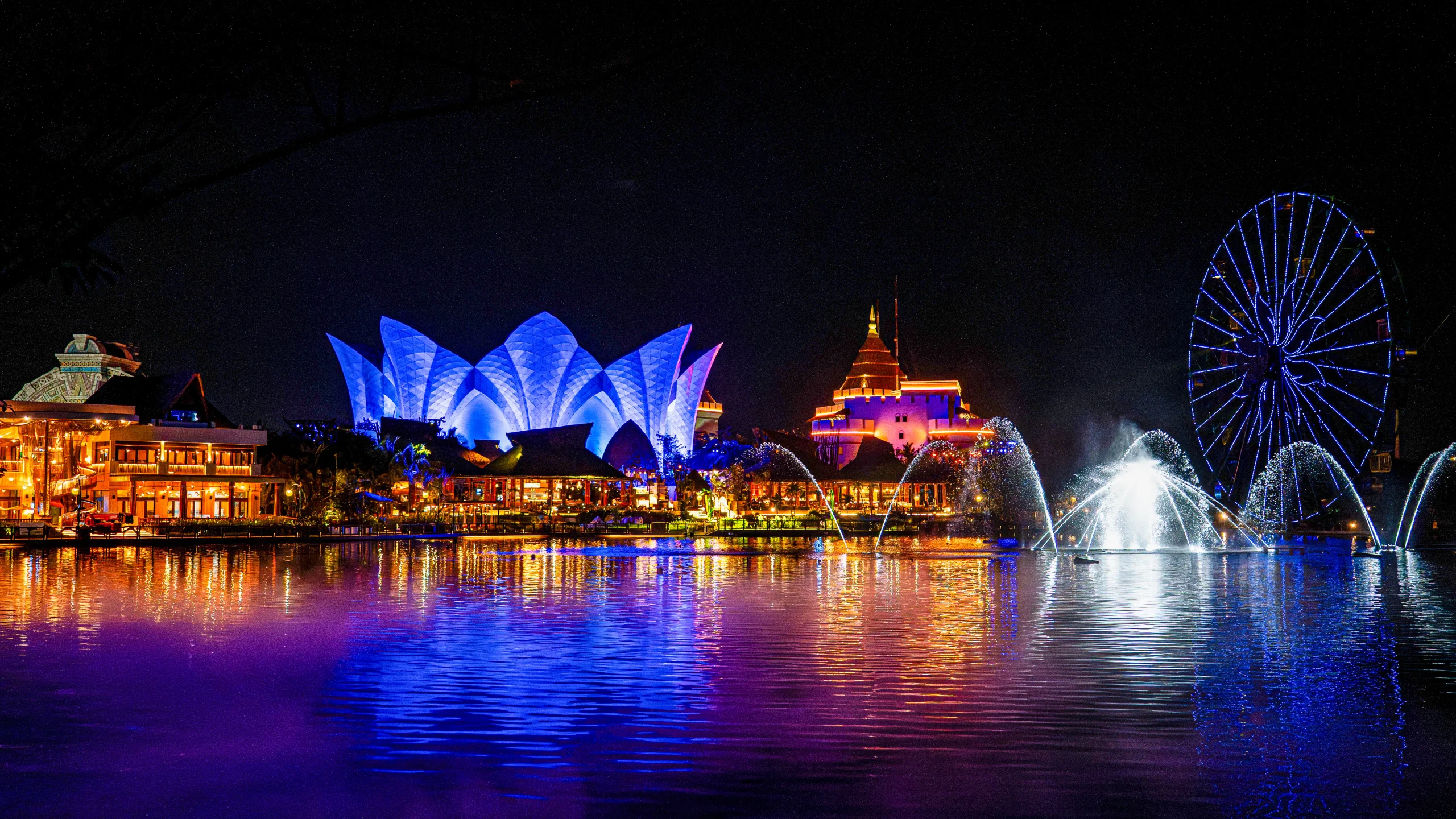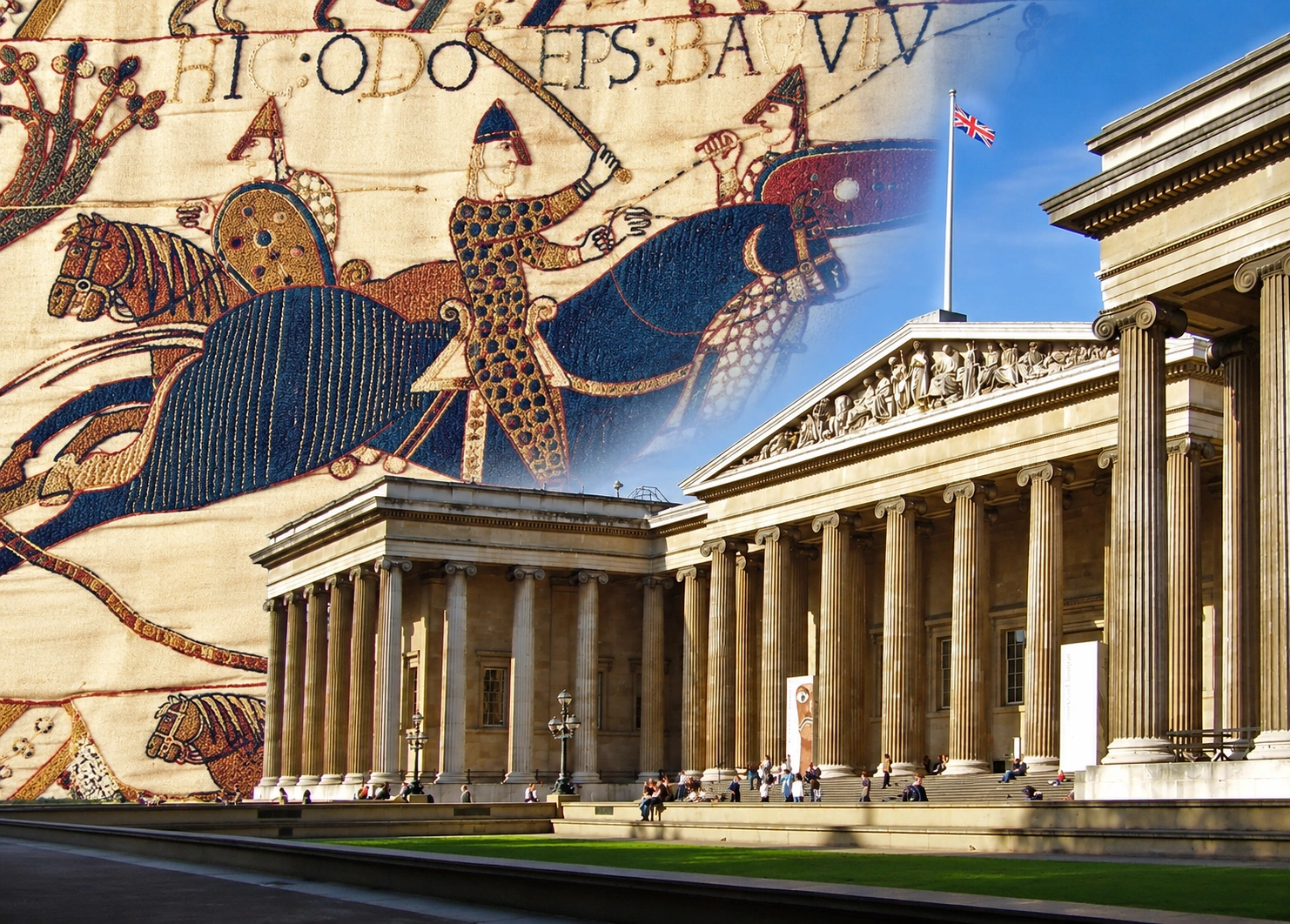
Yes, the beaches deserve their reputation, but Mauritius rewards travellers who venture beyond the resort – and its cooler, quieter winter months are the best time to discover the island’s markets, mountains, wildlife, culture and spectacular underwater world, read Peter Best
The turquoise sea has plummeted to a bracing 24C, daytime temperatures drop to the mid-to-high 20s and, on some days at least, downpours leave the ground wet for more than an hour before the warm tropical sun dries it out again.
Worse still, miles of unspoilt white sand are noticeably emptier, the traffic is less frantic and the famous markets – where you can haggle for everything from spices to holiday bric-a-brac – are easier to explore (and grab a bargain) without the crowds.
This is winter in Mauritius and, faced with such brutal seasonal conditions, fewer tourists grace the island at this time of year.
Which, of course, is precisely why now is such a good time to go.
Mauritius, a tiny island nation in the Indian Ocean around 2,000km off the south-east coast of Africa and east of Madagascar, may be sold around the world through images of picture-postcard beaches, turquoise lagoons, palm trees and luxury hotels – all of which it has in abundance – but seeing only that version means missing much of what makes the country so interesting.
Beyond the resort strips are bustling markets and historic towns, mountains and rainforest, waterfalls, sugar-cane fields and dramatic volcanic landscapes. There are giant water lilies, national parks, UNESCO World Heritage Sites and some spectacular scenery beneath the waves. Then there is the culture: a remarkable melting pot shaped by Dutch, French and British rule, slavery, indentured labour and successive waves of migration from Africa, India, China and Europe.
And despite it feeling a world away, Mauritius is surprisingly straightforward to reach. Air Mauritius currently flies non-stop from London Gatwick up to five times a week, while direct connections also operate from major European cities including Paris and Zurich.
Here’s what to see in Mauritius beyond its famous beaches, with enough variety to easily fill a fortnight without spending the whole holiday on the move. Most things are easy to reach from the main resort areas. Taxis are abundant – although it pays to avoid unlicensed drivers – and buses are cheap and frequent. But a word of warning here: Mauritian buses can be genuinely hair-raising. They tear through built-up areas at speeds that are wildly inappropriate for the roads, so don’t expect a sedate sightseeing ride, even in built-up areas.
Markets, history and mayhem in Port Louis
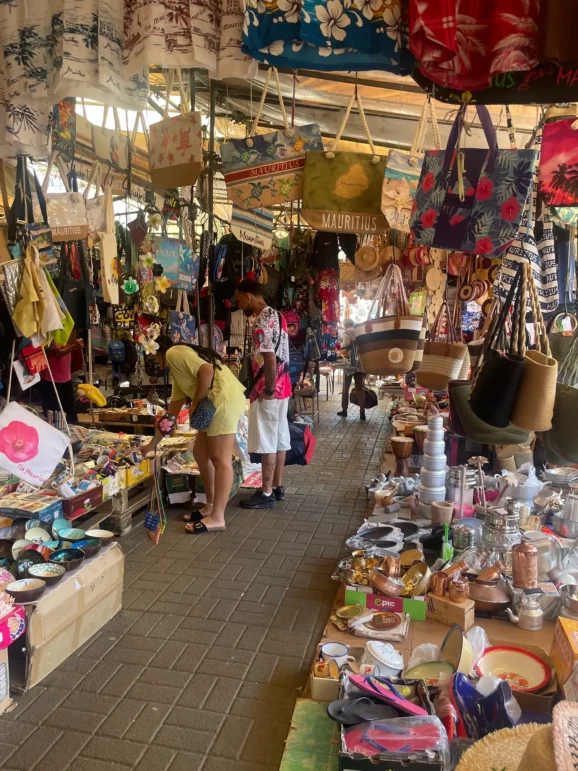
A few hours in Port Louis gives a very different impression of Mauritius from a few hours beside a hotel pool. The capital is busy, noisy and crowded, with traffic, markets, food stalls and the everyday bustle that is mostly non-existent in manicured resort areas.
Its Central Market, packed with every conceivable food, spice and souvenir, is the obvious starting point. Be prepared to haggle – and haggle hard. Stallholders can open with prices many times higher than they will eventually accept, so never assume the first figure is anything close to the final one. If you like a bargain – and bargaining – then this is the place for you.
The nearby Port Louis waterfront offers a more polished side of the city, with more than a hint of Hong Kong or Cape Town about it. Cafés, restaurants and shops line the area, making it an easy place to while away an afternoon.
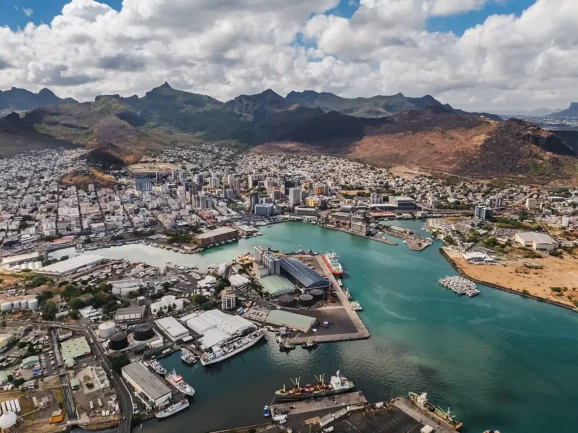
Its museums and historic buildings, meanwhile, explain the complicated forces that created modern Mauritius and are well worth a visit. One of the most important sites is Aapravasi Ghat, the UNESCO World Heritage Site associated with the arrival of indentured labourers following the abolition of slavery.
A half-day in the capital is usually enough, although if you’re heading back by bus, leave plenty of time to find the right one amid the organised chaos of the city’s packed central bus station.
Just outside the city, the Sir Seewoosagur Ramgoolam Botanic Garden at Pamplemousses offers a gentler contrast. The historic gardens are famous for their giant water lilies, tropical palms and extraordinary collection of plants and are easily reached from the north-west coast.
Head for the mountains
To understand quite how far Mauritius extends beyond its beaches, head south-west towards Chamarel and Black River Gorges.
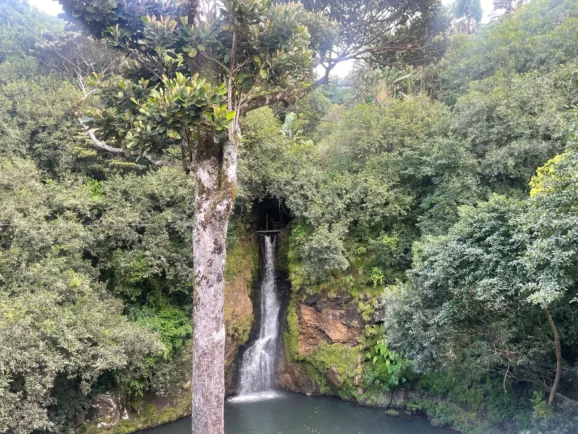
Chamarel’s Seven Coloured Earth is one of the best-known sights, with dunes displaying layers of red, brown, violet, green, blue, purple and yellow. The surrounding geopark covers around 8.5 hectares and a visit can be combined with nearby Chamarel Waterfall, the island’s tallest single-drop waterfall.
Continue towards Black River Gorges National Park and the scenery becomes wilder still. The park protects some of Mauritius’s remaining native rainforest and contains more than 50km of walking trails through forest, hills and deep gorges. It is also home to endemic wildlife including the echo parakeet, whose population has recovered dramatically following conservation work.
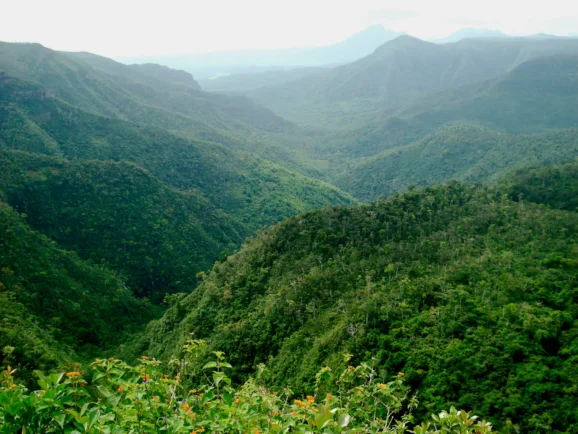
Keep going towards the south-western tip of the island and Le Morne Brabant eventually dominates the skyline. The huge basalt mountain, which is UNESCO-listed, and its surrounds are one of Mauritius’s most prominent (and most photographed) vistas, closely associated as they are with escaped enslaved people, or maroons, who sought refuge among its remote cliffs and caves.
The beaches and lagoons beneath Le Morne are among the most photogenic on the island and the mountain itself provides more than enough reason to stop.
Diving, sunsets and fruit bats at Trou-aux-Biches
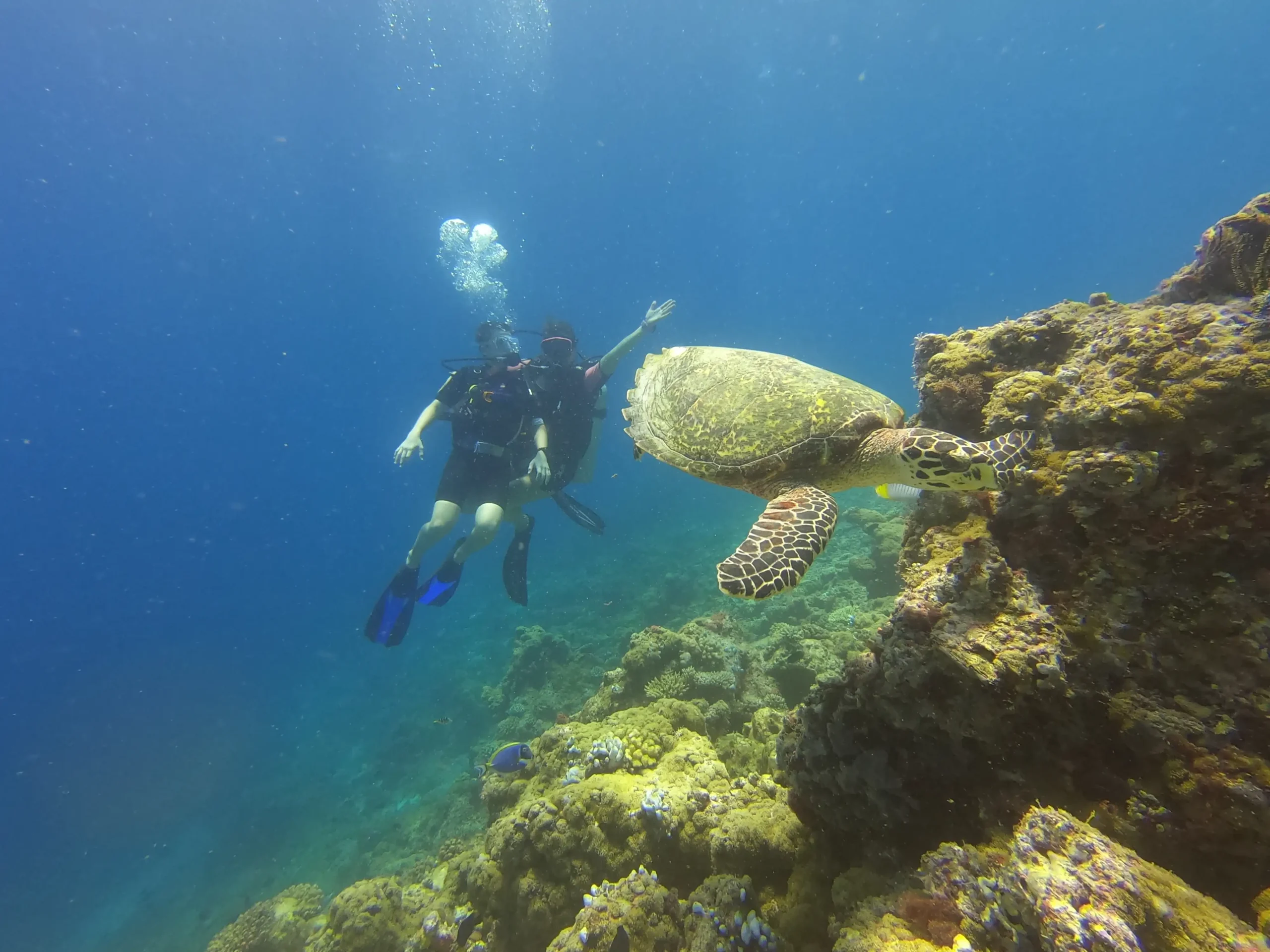
Mauritius is every bit as spectacular below the waterline as it is above it. Mauritius has more than 100 established dive sites around its coastline, ranging from shallow coral gardens to walls, caves and shipwrecks, and the north-west coast is one of the easiest places from which to explore them.
Trou-aux-Biches, a small resort town in the north-west of the island, makes an excellent base and is packed with dive centres. It has a long white-sand beach, a sheltered lagoon and several dive centres, while Port Louis, Pamplemousses and Grand Baie are all within easy reach for days spent on land.
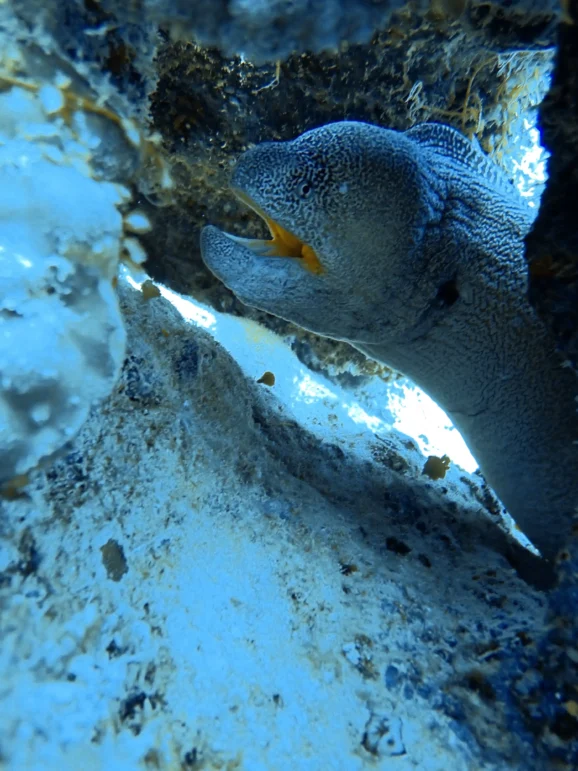
For qualified divers, one of the headline attractions is the Stella Maru, a Japanese vessel deliberately sunk to create an artificial reef. The wreck sits upright on the seabed, with its main diving depth at roughly 18 to 26 metres, putting it within reach of appropriately qualified recreational divers.
The years have been kind to the wreck. Marine life now crowds the structure, from moray eels and lionfish to clouds of smaller reef fish, while eagle rays sometimes glide past. Turtles are a possibility too and, with a little luck, so is the occasional shark.
Dive Spirit Mauritius is one of the main local operators and the trip out beyond the reef can be an attraction in itself, with dolphins a common sight and, in season, the chance of spotting breaching whales. The company also offers private tuition for families, making it a particularly good option for those wanting to learn or dive together.
Its beautiful lagoon is also shallow, calm and protected by the outer reef, making it ideal for swimming and snorkelling for all ages.
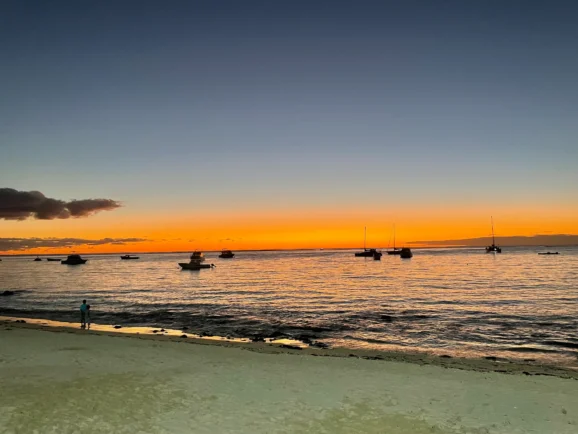
Trou-aux-Biches itself has plenty of shops and supermarkets, along with hotels, guesthouses and self-catering apartments to suit most tastes and budgets. There are restaurants and cafés along the coastal road, while the long public beach is backed by banyan and casuarina trees and faces west for some of the best sunsets on the island (though be quick with the camera, because tropical sunsets are as fleeting as they are spectacular). Look up as dusk falls and you’ll see huge fruit bats crossing overhead before dropping into the trees to feed for the night.
It is also considerably quieter than Grand Baie, around 15 minutes up the coast, which has a much bigger choice of restaurants, bars, shops and nightlife for anyone wanting a livelier evening.
Its beautiful lagoon, shallow and calm, is protected by the outer reef and is perfect for swimming, snorkelling, kayaking and paddleboarding for all ages.
If you’d prefer to see what lies beneath the waves without getting wet, Trou-aux-Biches also has its own submarine. Blue Safari takes up to 10 passengers down to around 35 metres for a 40-minute trip across the seabed, passing coral reefs, shoals of tropical fish, a 17th-century anchor and the wreck of the Star Hope along the way. The whole excursion takes around two hours, including the boat transfer out to the submarine.
However you spend your time here, be sure to stop for lunch at La Plage, a beachfront restaurant in Trou-aux-Biches where the tables sit almost on the sand. Its tuna tartare is exceptional – and, for my money, among the best on the island.
Watch the wildlife
The Mauritian winter also coincides with one of the island’s great natural spectacles. Humpback whales migrate through Mauritian waters between June and September, while sperm whales and pilot whales can be found around the island throughout the year.
Whale watching is regulated and swimming, snorkelling or diving with whales is prohibited. Visitors should use licensed operators and keep the distance required under Mauritian rules.
Dolphins are another draw, particularly along the west coast, including at Trou-aux-Biches where bottlenose and spinner dolphins are regularly encountered. Licensed trips operate under rules controlling how boats approach the animals and how any permitted swimming takes place.
Big-game fishing is serious business in Mauritius, with charter boats operating around the island for anyone wanting to head beyond the reef in search of blue and black marlin, tuna, mahi-mahi and other deep-water species. The ocean floor drops away steeply around the volcanic island, meaning deep water can be reached relatively quickly, while full-day charters can travel as far as 25 nautical miles offshore.
Back on land, and whatever you do, make time for Casela Nature Parks at Cascavelle. The sprawling 350-hectare park combines wildlife with adventure attractions, but one of the simplest experiences is also one of the best: feeding its enormous Aldabra giant tortoises, some of which are more than 100 years old. Food can be bought at the park specifically for the purpose.
There are giraffes, rhinos, big cats and numerous other animals to see, alongside safari experiences, zip-lines and family attractions, making it an easy half-day or full-day trip, particularly with children.
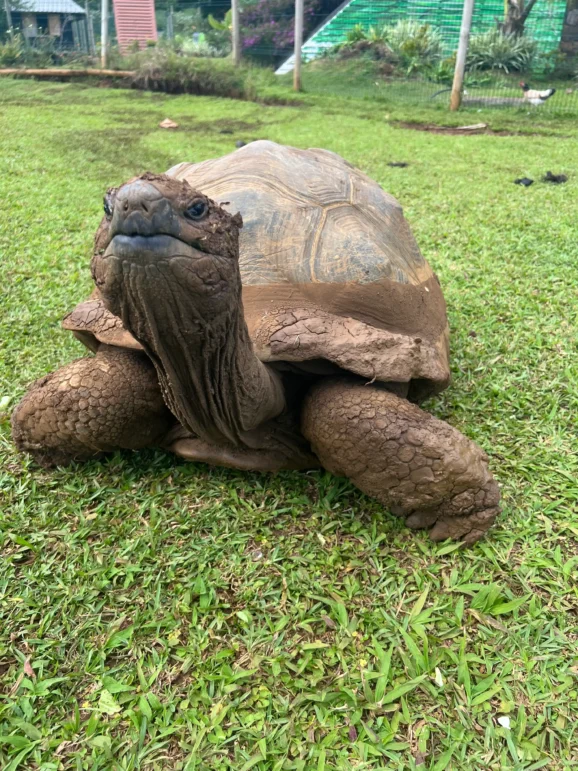
You can see some of Mauritius’s most spectacular wildlife beneath the water at Blue Bay Marine Park, near Mahébourg. Its protected lagoon contains extensive coral gardens that can be explored by snorkelling from shore or on a glass-bottom boat, with parrotfish, clownfish and other tropical species commonly seen around the reef.
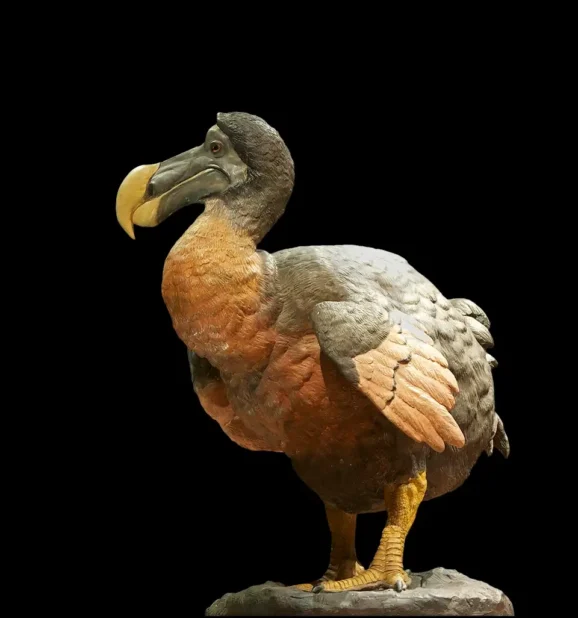
And then, of course, there is the dodo. Mauritius was the only place on Earth where the famously flightless bird lived before it disappeared in the 17th century, and its image is now everywhere – on souvenirs, signs, coins and logos across the island. To see the real thing, or at least what remains of it, head to the Natural History Museum in Port Louis, where the dodo gallery includes a rare skeleton whose bones all came from a single bird. It is a sobering reminder that Mauritius’s wildlife story is as much about what has been lost as what survives today.
Experience Mauritius’s spiritual side
Religion is everywhere in Mauritius and its temples, churches, mosques and pagodas offer another way to understand the wonderful mix of cultures that shaped the island. Almost half the population is Hindu, while large Christian and Muslim communities and the island’s Chinese heritage are also reflected in its places of worship and festivals.
If you’re staying around Trou-aux-Biches, start at Maheswarnath Mandir in nearby Triolet, the largest Hindu temple in Mauritius and one of its oldest. Founded in 1888 and dedicated to Shiva, its white buildings, colourful statues and smaller shrines make it well worth a stop even for visitors with no religious connection.
For sheer scale, though, head inland to Ganga Talao, or Grand Bassin, a sacred crater lake and one of the most important Hindu sites in Mauritius. Guarding the approach are two extraordinary statues: Mangal Mahadev, depicting Shiva with his trident, and Durga Maa Bhavani opposite. Both stand 108ft – or 33 metres – high, with the height itself chosen because 108 is sacred in Hindu tradition.
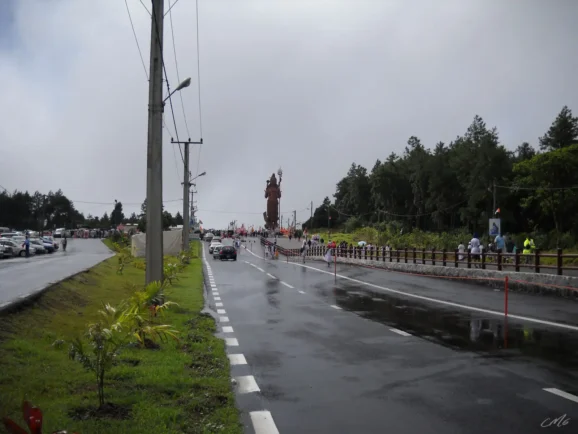
Around the lake are temples and shrines dedicated to Shiva, Ganesha, Hanuman, Ganga and other Hindu deities, while during Maha Shivaratri pilgrims travel from across Mauritius to worship and make offerings there.
And don’t stop with the Hindu temples. In Port Louis alone you can see the Jummah Masjid, St Louis Cathedral, Kwan Tee Pagoda and the colourful Sockalingum Meenatchee Ammen Kovil, while the little red-roofed Notre Dame Auxiliatrice church at Cap Malheureux is one of the most photographed buildings in the north.
Mauritius fact file
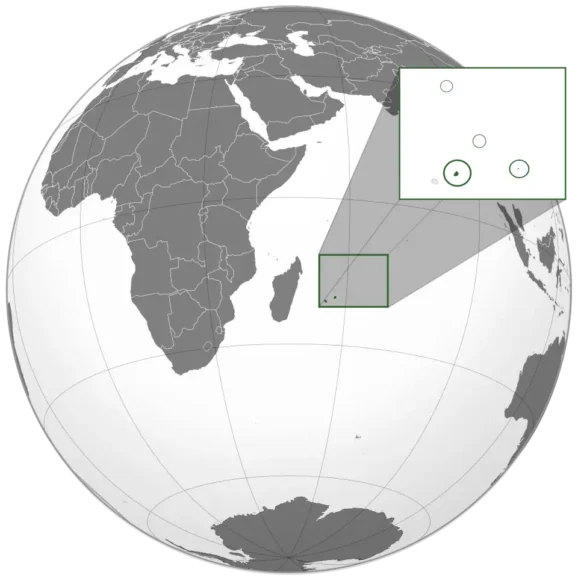
Getting there: Mauritius may feel a long way from Britain, but getting there is straightforward. Air Mauritius flies non-stop from London Gatwick up to five times a week, with the journey taking around 12 hours. There are also plenty of one-stop options through Europe and the Middle East.
Entry: British passport holders can stay for up to 60 days without a visa. Your passport needs to be valid for the duration of the trip with at least one blank page, and you may be asked for proof of your return or onward journey. Complete the Mauritius All-in-One travel form before you fly and you’ll save yourself some paperwork on arrival.
Currency: You’ll be spending Mauritian rupees (MUR or Rs), with £1 worth about Rs64 at the time of writing. Cards are widely accepted, but don’t rely on them entirely. Cash is still useful for buses, markets, small shops and restaurants, particularly once you get away from the resorts.
Language: English is the official language, but you’re just as likely to hear Mauritian Creole or French. English is widely understood, particularly anywhere visitors are likely to go.
Time: Mauritius is GMT+4 all year, so it is three hours ahead of Britain during BST and four hours ahead during the UK winter. The difference is small enough that jet lag is rarely much of an issue.
Health: Pack mosquito repellent and actually use it. Mauritius is experiencing a major chikungunya outbreak and dengue is also present, although there is no malaria risk. Make sure routine UK vaccinations are up to date and check current advice on hepatitis A, hepatitis B and chikungunya before travelling.
Hospitals: There are public hospitals across the island, including SSR National Hospital at Pamplemousses and Dr A G Jeetoo Hospital in Port Louis, as well as private healthcare. Treatment can be expensive, however, and more serious cases may require evacuation to Réunion or South Africa, so decent travel insurance is a must.
Emergencies: Save these in your phone before you need them: ambulance 114 or 999, police 112 or 999, and fire 115 or 999.
Crime: Mauritius generally feels safe and relaxed, but don’t become complacent. Petty theft occurs, particularly in Port Louis, Grand Baie and Flic en Flac, while burglaries and sexual assaults involving tourists have also been reported. Keep valuables secure and avoid deserted beaches and poorly lit areas alone at night.
Getting around: Taxis are plentiful, buses are cheap and frequent and a hire car gives you the freedom to disappear off around the island. UK photocard licences are accepted, subject to the hire company’s rules. Take care on the roads, though: some are narrow, pavements can simply disappear and driving standards can make even a short journey surprisingly lively.
Water: Stick to bottled water for drinking.
Electricity: The supply is 220V, 50Hz. You’ll find British-style three-pin sockets in plenty of places, but two-pin sockets crop up too, so throw a universal adaptor in the suitcase.
Phones: The international dialling code is +230, and mobile signal and internet coverage are generally good around the main tourist areas.
Best advice: Take proper travel insurance, carry mosquito repellent and some cash, and don’t try to judge journey times by looking at a map. Mauritius is small, but getting from one side of it to the other can take considerably longer than you expect.
READ MORE: Changing of the tide? How Mallorca is fighting to protect its clear blue seas. Think Magaluf is trashy? Think again. John E. Kaye travelled to Mallorca to see how the island’s southwest coast is trying to balance mass tourism with marine protection – and why some of the clearest diving water in the Med needs defending.
Do you have news to share or expertise to contribute? The European welcomes insights from business leaders and sector specialists. Get in touch with our editorial team to find out more.
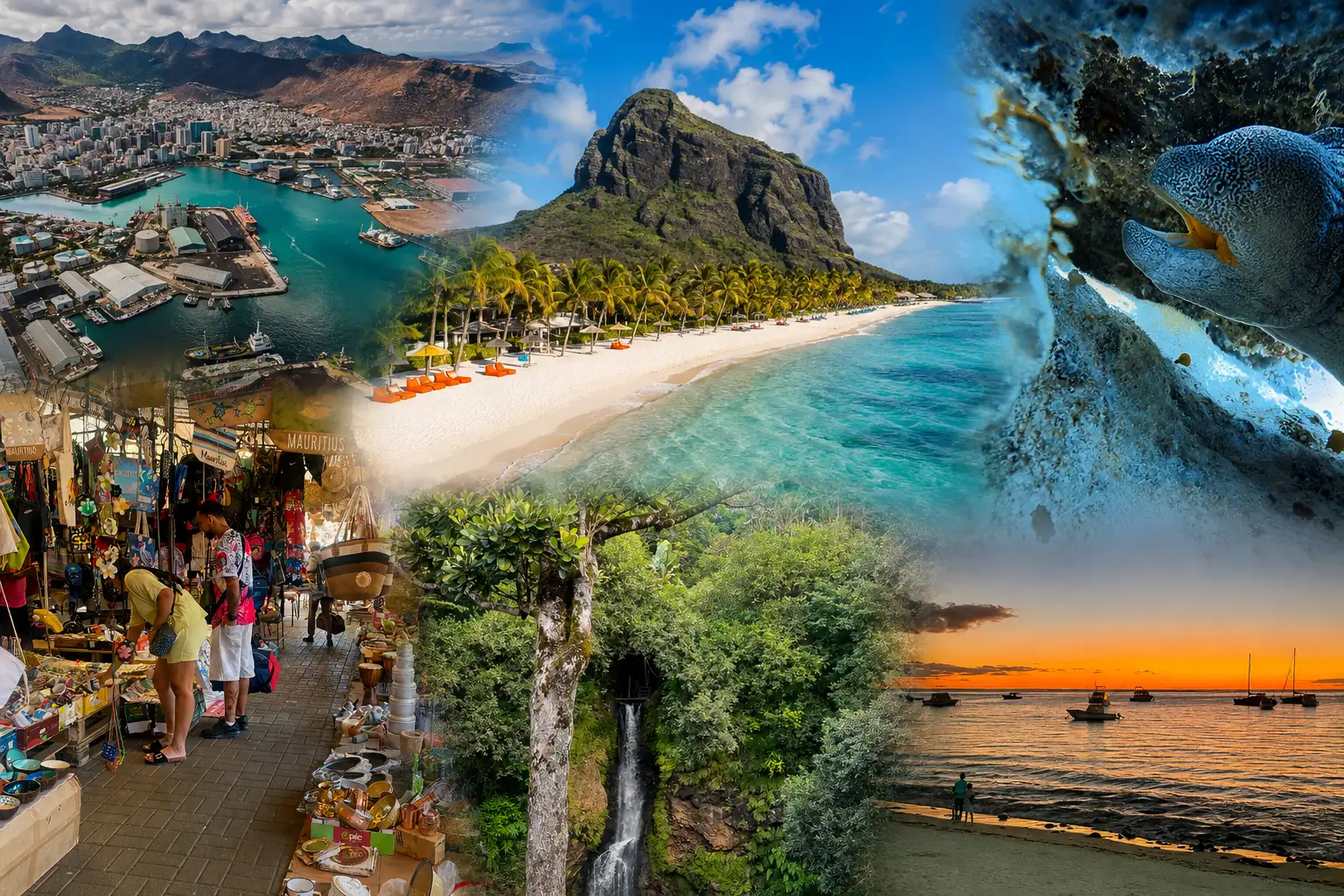
Main image: Mauritius beyond the beaches: from Port Louis and Le Morne to its markets, waterfalls, marine life and spectacular west-coast sunsets. Composite image. Pictures: Arne Müseler/www.arne-mueseler.com/Wikimedia Commons, CC BY-SA 3.0 DE; dronepicr/Wikimedia Commons, CC BY 2.0; Supplied