Viktor Orbán’s fall has sent shockwaves far beyond Budapest. The response from Europe, the US and Russia is already revealing what a new Hungary will mean for the balance of power beyond its borders, writes Ravi Balgobin Maharaj
On the banks of the Danube last Sunday, Hungary’s outgoing Prime Minister, Viktor Orbán conceded defeat after partial official results showed Péter Magyar’s Tisza party winning by a landslide, and in doing so, an entire architecture of illiberalism came crashing down.
And as the people of Hungary, and other interested parties across the globe, watched it all unfold, there was a feeling of something that is lacking in most political landscapes today: genuine hope.
By the final count, Péter Magyar’s centre-right Tisza party had won 141 of the 199 seats in parliament, while Orbán’s Fidesz was reduced to 52. That two-thirds supermajority matters enormously, giving Magyar’s government the numbers to rewrite laws, amend the constitution and begin dismantling the network of loyalists Orbán embedded across the state.
As someone who has spent years challenging the appointments of government officials through the courts, I understand how difficult it can be for any incoming administration to address entrenched political appointments and restore confidence in the independence of state institutions.
More interesting than the reaction inside Hungary, however, may be the response from the rest of the world, beginning with the United States. The Trump administration made itself impossible to ignore during this election. Vice President JD Vance spent two days in Budapest, pledging support for Orbán, while President Trump said Washington stood ready to use the full economic weight of the U.S to strengthen Hungary’s economy if his preferred candidate won.
What followed was more revealing still. After the result, Trump neither sulked nor doubled down, and he did not threaten to punish Hungary for voting the wrong way. Speaking to ABC News, he instead described Péter Magyar as a “good man” who would do a “great job” in government. In a single remark, he abandoned his ally and acknowledged the winner. The shift was cold, pragmatic and highly revealing of how Trump tends to operate once the public has spoken.
We have seen this pattern before. During the New York City mayoral election in November 2025, Trump threatened to withhold federal funding if Zohran Mamdani won, called him a “communist lunatic”, and reportedly urged Jewish voters not to support him. Yet after Mamdani’s decisive victory, Trump quickly walked back those threats, saying simply: “We’ll help him. We want New York to be successful.”
And nor did it stop there. When Mayor-elect Mamdani later visited the Oval Office, Trump congratulated him, said he hoped he would be a “really great mayor”, and added that “the better he does, the happier I am”. He also told the room that Mamdani might “surprise some conservative people” and said he would be “very comfortable” living in Mamdani’s New York.
The contrast was striking. Within weeks, the man he had denounced on the campaign trail was being treated as a legitimate democratic winner whose success now suited the White House as well.
Now look at the Magyar situation through that same lens. Trump praised Orbán’s legacy on immigration, spoke about their friendship in the past tense, and then signalled openness to Hungary’s incoming leadership. The White House Press Secretary had already offered what amounts to a governing philosophy for exactly these moments in the context of the Mamdani meeting, by stating that Trump is willing to meet with anyone and talk to anyone and try to do what’s right on behalf of the people, whether they live in blue states or red states or blue cities.
Applied to the international stage, the principle appears much the same. Trump may not always admire the winner or share the ideology, but when voters deliver a clear mandate he tends to accept the result and look for a way to work with the government they have chosen.
Magyar will be redefining Hungary’s relationship with Washington at a moment where Trump holds a less-than-rosy view of Brussels and Europe more broadly. That creates an obvious challenge for a leader who is markedly more pro-EU than Orbán. Even so, the early signals suggest that a pragmatic, transactional relationship remains entirely possible.
Brussels responded with barely concealed relief. European Commission President Ursula von der Leyen declared on social media that “Hungary has chosen Europe”, adding that Europe had always chosen Hungary and that, together, they were stronger as the country reclaimed its European path.
For von der Leyen, you see, this was personal. Orbán had been a thorn in the side of her institution for years, by blocking funding, vetoing sanctions, undermining collective foreign policy decisions at every turn.
Roberta Metsola, President of the European Parliament, also congratulated Magyar, saying Hungary’s place is at the heart of Europe.
What is striking in these responses is the sense of relief behind their warmth. These institutions had spent years developing legal mechanisms, funding freezes, and Article 7 proceedings trying to rein in Budapest, and in the end, it was the Hungarian people themselves who solved the problem through the ballot box.
The most immediate geopolitical consequences of Magyar’s victory may be felt in NATO and the wider transatlantic relationship. He has already spoken to von der Leyen, NATO Secretary General Mark Rutte, German Chancellor Friedrich Merz and French President Emmanuel Macron, underlining his European and Atlantic orientation, while his first official trips as prime minister are due to take him to Warsaw, Vienna and Brussels.
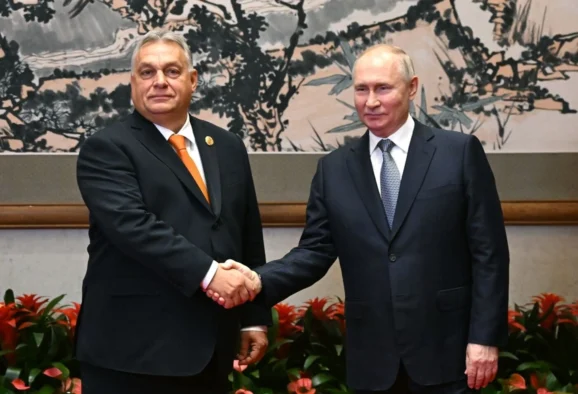
Political leaders across Europe have been quick to welcome the result. In a public message of congratulations, Friedrich Merz wrote: “Let’s join forces for a strong, secure and, above all, united Europe.” Germany’s interest in this outcome is more than sentimental in so far as Orbán’s obstruction of the EU loan to Ukraine had become a serious strain on European solidarity, and Berlin has spent years trying to restore coherence to a foreign policy framework that Budapest repeatedly disrupted.
Emmanuel Macron likewise said France welcomed a victory that showed the Hungarian people’s attachment to European Union values and Hungary’s place in Europe. For Macron, the result also carries domestic significance, offering a signal to his own electorate and to Marine Le Pen’s supporters that the European project remains politically alive and capable of renewal.
Keir Starmer also described Magyar’s victory as a historic moment, not only for Hungary but for European democracy. Britain’s enthusiasm is striking, given that Brexit took place a decade ago, and reflects the wider symbolic weight this election now carries even in a country that chose to leave the European Union. For the UK, a more stable and pro-Western Hungary would also make for a less difficult European neighbourhood.
Of course, nobody understands the stakes of this election better than the countries on Europe’s eastern flank. Estonian Prime Minister Kristen Michal said Hungarians had made a historic choice for a free and strong Hungary in a united Europe, rejecting forces that ignore their interests, while Finland’s Prime Minister Petteri Orpo said Hungarians had demonstrated their strong will to be an active member of the EU and NATO, adding that the result gives Hungary the opportunity to return to the community of values and security as a constructive actor.
These statements amount to far more than diplomatic pleasantries. Estonia and Finland live in Russia’s immediate shadow and understand the security stakes with particular clarity. For them, Orbán’s relationship with Moscow carried direct strategic consequences and was viewed as a serious concern for the region’s stability. A Hungary that blocked EU loans to Ukraine, purchased Russian oil at record levels, and reportedly collaborated with the Kremlin on weakening EU sanctions was a Hungary that made every member of the Alliance less safe.
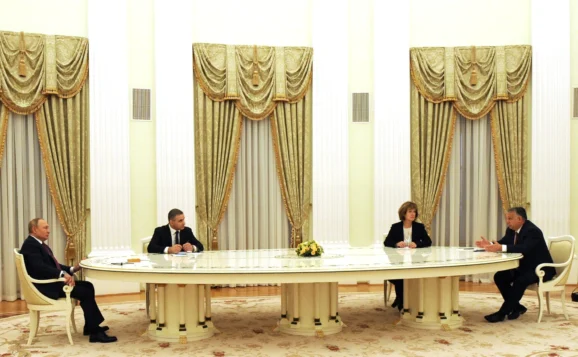
This all being said, probably no country had more at stake in this election than Ukraine itself. Orbán had become one of Vladimir Putin’s closest allies within the European Union, while campaign posters across Hungary depicted President Zelensky as a dangerous figure who threatened Hungarian sovereignty.
Zelensky said Ukraine has always sought good-neighbourly relations with everyone in Europe and expressed readiness to advance cooperation with Hungary. The Ukrainian side has already proposed a Zelensky-Magyar meeting to discuss a wide spectrum of problems, from border infrastructure to EU engagement. Four years into a grinding, devastating war, this is a diplomatic opening Kyiv will not take for granted as the practical implications are enormous.
Orbán’s defeat clears the way for greater European support for Ukraine, even if Tisza is expected to oppose the direct deployment of weapons or troops. Magyar campaigned on unblocking the €90 billion EU loan and has already signalled that his government will lift the veto. For Moscow, that carries serious implications. Orbán had become the chief spoiler of EU efforts to support Ukraine and reduce dependence on Russian fossil fuels.
The Kremlin’s response was tellingly restrained, with a spokesperson saying Moscow respected the result and would seek pragmatic ties with Hungary’s new leadership. The leaked telephone recordings involving Foreign Minister Péter Szijjártó and Sergei Lavrov, which reportedly suggested cooperation to weaken EU sanctions, only sharpened the sense that Orbán’s Hungary had drifted too close to Russia, and may well have helped push voters towards Magyar.
China will also be keenly watching Magyar’s new government, especially since it viewed Hungary as a soft entry point to the EU. Chinese investment in Hungary, including major EV battery manufacturing plants, had flourished under Orbán. A more pro-Brussels Budapest may not shut those doors entirely, but Magyar will face significant pressure from EU partners to apply greater scrutiny to Chinese strategic investment on European soil.
Italian Prime Minister Giorgia Meloni, long one of Orbán’s most vocal allies in Europe, also congratulated Magyar on his clear victory and thanked Orbán for years of collaboration. The message was gracious, but also revealing. Meloni understands that her own brand of nationalism has lost its strongest partner in Central Europe, and that the Orbán model she once admired has now been rejected by Hungarian voters themselves.
Orbán’s loss adds to a trend in far-right politics in Europe, wherein parties close to Moscow perform worse than far-right parties more critical of Russia. This trend will likely further trouble far-right parties in France and Germany, which have consistently struggled to productively position their views on Russia.
From where I sit, this election resonates far beyond Central Europe. We know what it looks like when governments capture institutions, fill the courts with allies, turn public media into an instrument of propaganda, tilt the electoral system in their favour and use public procurement as a tool of patronage. Under Orbán, Hungary came to embody many of those dangers.
The resilience of Hungary’s democracy in the face of authoritarian governance will hearten democracy activists around the world. Hungary, once seen as a herald of authoritarian nationalism, seems now a tale of how to overcome it.
In his victory speech, Magyar told tens of thousands of supporters: “Tonight, truth prevailed over lies. Today, we won because Hungarians didn’t ask what their homeland could do for them; they asked what they could do for their homeland.”
As such, the lesson we should all take from this election is that democracy, even when battered and bent, can recover if citizens refuse to give up on it.

Ravi Balgobin Maharaj is a geopolitical commentator and international affairs analyst with a focus on security strategy, alliance systems, and emerging global power structures. His work explores the intersection of military capability, political sentiment, and diplomatic alignment in an increasingly multipolar world. Drawing on a global perspective, he provides analysis on shifting coalition dynamics, regional security frameworks, and the evolving role of Western institutions in contemporary conflict.
READ MORE: ‘NATO reluctance signals limits on U.S. leadership‘. NATO’s refusal to back U.S. action on Iran shows that European allies will not automatically follow Washington into conflict. Ravi Balgobin Maharaj argues that the United States must now win support for each decision instead of expecting it as a given.
Do you have news to share or expertise to contribute? The European welcomes insights from business leaders and sector specialists. Get in touch with our editorial team to find out more.
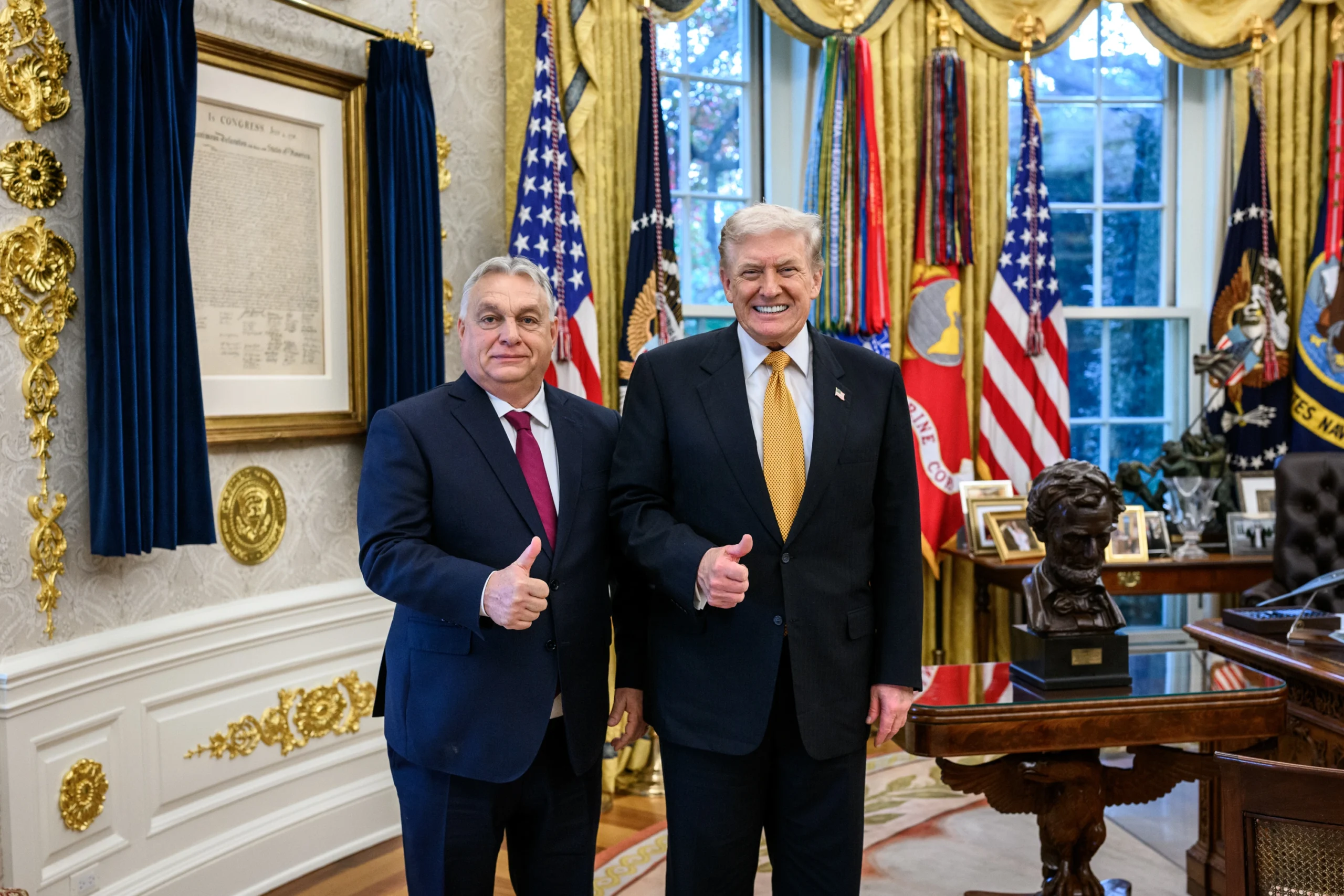
Main image: Orbán’s ties to Donald Trump underscored how closely his Hungary was aligned with the nationalist right beyond Europe, adding to the international significance of his eventual defeat at home. Pictured: Trump and Orbán at the White House in November 2025. Photo: The White House / Wikimedia Commons.