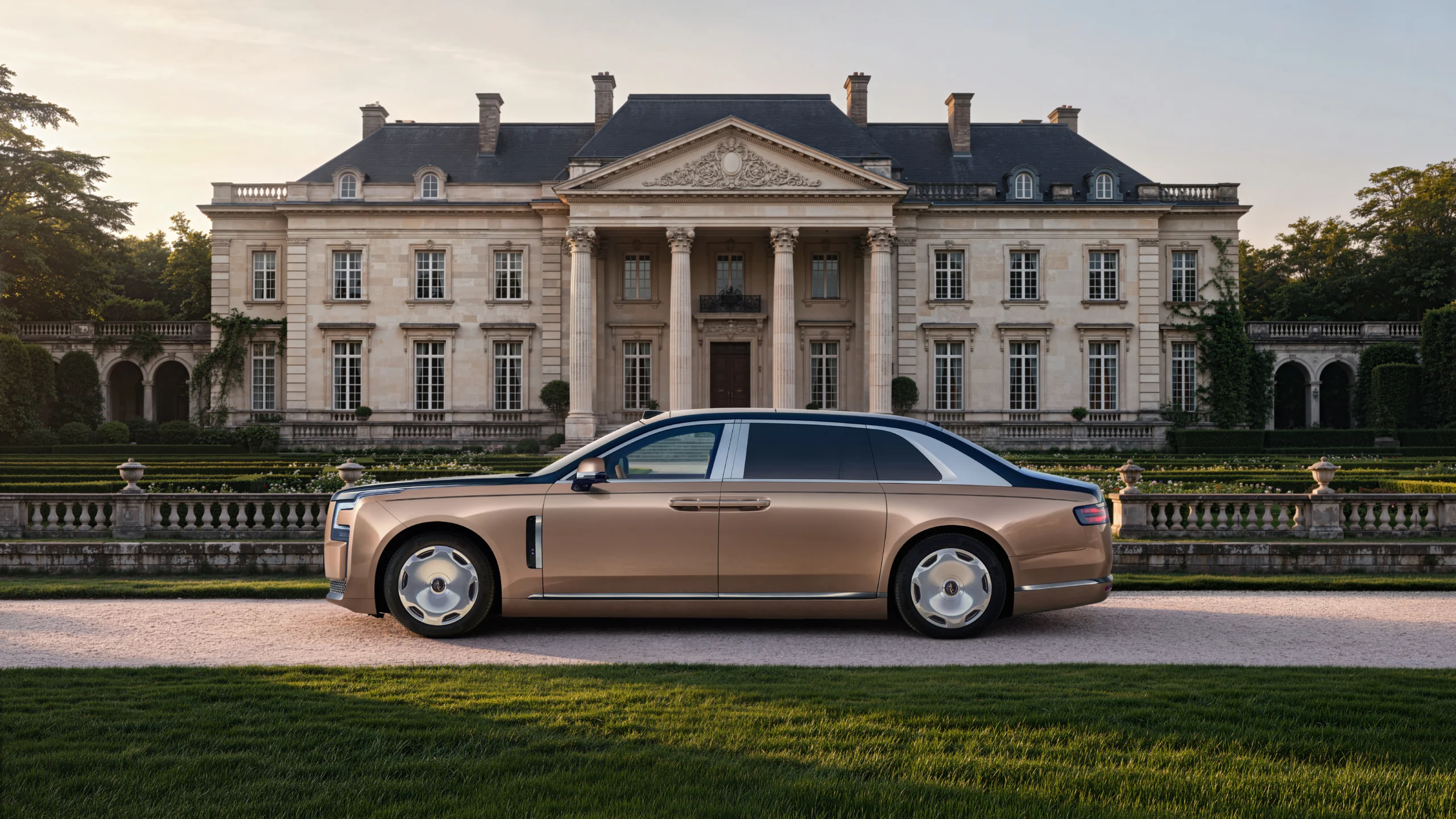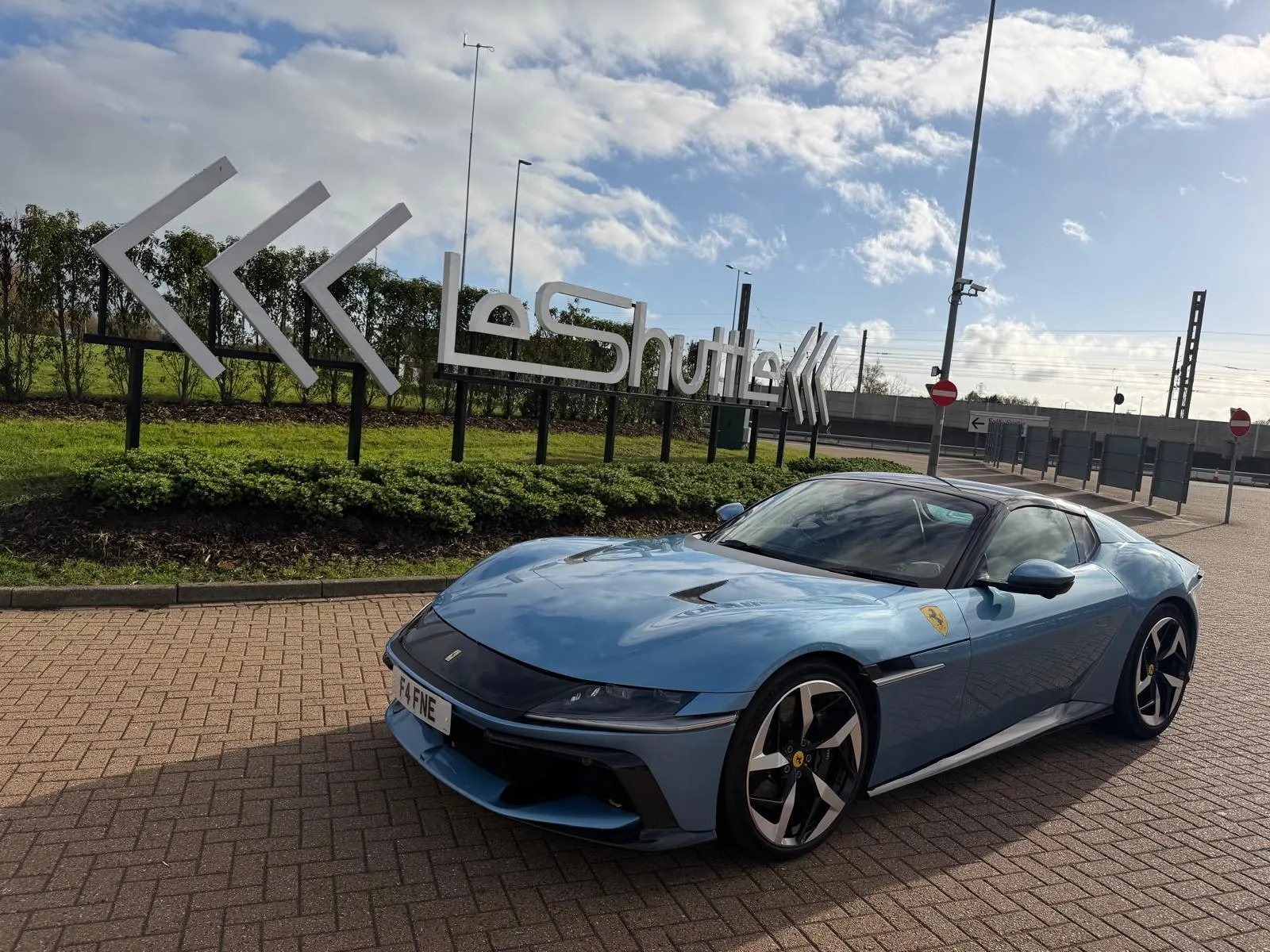
The Ferrari 12Cilindri Spider has just two seats, a small boot, an enormous thirst for petrol and a price tag that could buy nine Mercedes-Benz convertibles – and it’s worth each and every one of its 52.5 million pennies, discovers Mark G. Whitchurch on a 1,000-mile road trip to the Champagne capital of France
Ordering a G&T in Champagne country might seem a little sacrilegious. But I had a rather special one in mind – a Ferrari 12Cilindri Spider.
I’d always wanted to explore the sights of northern France in a GT, and last week I finally got my chance… behind the wheel of one of the most extraordinary grand tourers ever built.
Our destination was Reims, the historic city of French kings, magnificent Gothic architecture and, of course, some of the world’s finest bubbly.
The sensible option would have been to cross the Channel at Folkestone, join the A26 motorway at Calais and head straight there. But sensible isn’t really the word for a car that reaches 62mph in just 2.95 seconds and has a top speed exceeding 212mph.
The Spider starts at around £340,000, but with its optional extras, my test car cost more than £525,000. That’s enough to buy nine Mercedes-Benz CLE Cabriolets, with change left over. At that price, I wanted to find out just how good it really was.
So, rather than stick to the motorway, I planned to put Ferrari’s latest masterpiece through the everyday demands of a motoring holiday – negotiating narrow French streets, tackling rough country roads and finding out whether my partner and I would still be comfortable after hundreds of miles behind the wheel.
For many British motorists and car clubs, northern France means little more than cheap supermarkets in Calais and a stretch of dull motorway on the way to Paris or the Riviera. But this stunning region is packed with medieval cities, extraordinary wartime museums, beautiful countryside and some of the best driving roads on the continent.
So, with almost 1,000 miles ahead of us, three days of glorious November sunshine forecast and a V12 engine waiting to be unleashed, we set off to discover what we’d been missing.
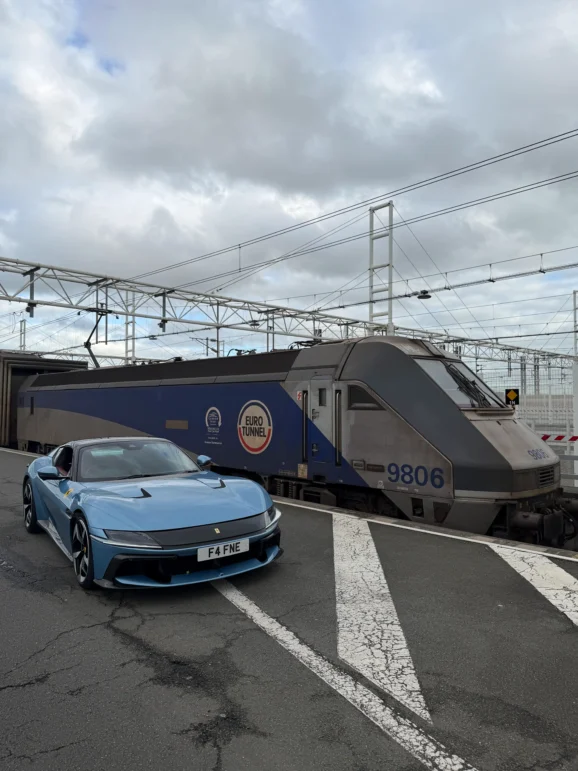
The Channel Tunnel remains a wonderfully convenient way of reaching France by car. The crossing takes just 35 minutes, you stay with your vehicle and there’s none of the business of finding your sea legs on a rough Channel crossing.
Before long, we were emerging from Le Shuttle into glorious French sunshine, the Ferrari’s V12 rumbling contentedly as we headed towards Saint-Omer.
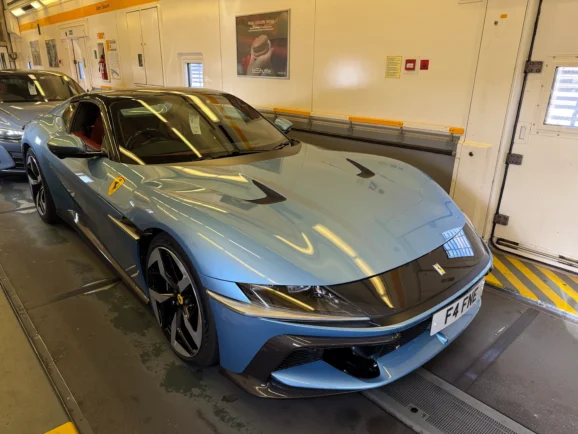
Rather than joining the A26 motorway, we followed the D928 through the Pas-de-Calais countryside.
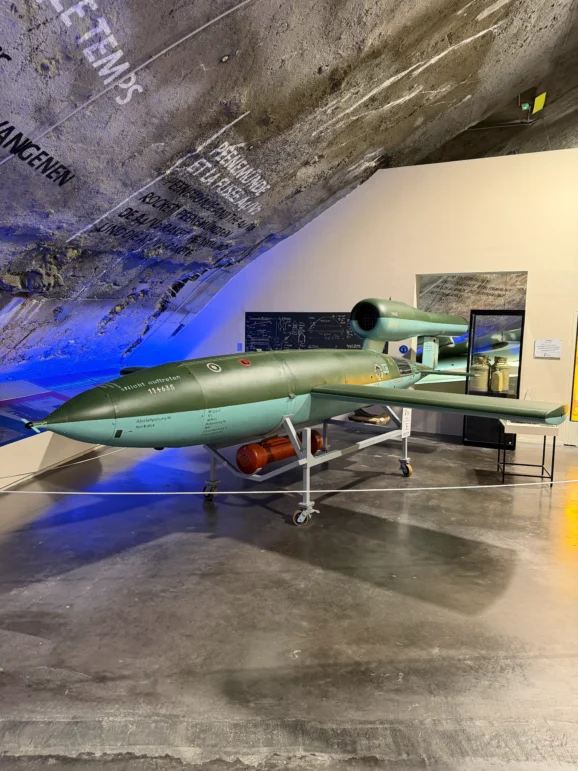
Our first destination was La Coupole, near Helfaut, home to one of the most sinister engineering projects of the Second World War. Hidden beneath an enormous concrete dome lies a vast complex of tunnels built by Nazi Germany as part of its V2 rocket programme.
Construction began in 1943, with the intention of using the site to support rocket attacks against London and southern England.
The dome itself is astonishing, a huge reinforced concrete structure around five metres thick, designed to protect the underground facilities from Allied bombing.
Fortunately, the Germans never completed their plans. Allied air raids disrupted construction, and the site was abandoned before a single rocket could be launched.
Today, visitors can explore the underground passages and discover the history of the V2 programme through interactive exhibits, historical displays and digital reconstructions.
Walking through the tunnels is a sobering experience. The sheer size of the structure is difficult to comprehend, and the museum does an excellent job of explaining both the technology and the terrible purpose behind it.
It’s well worth a visit, even if military history isn’t normally your thing.
Back outside, the November sunshine was still glorious, and we pointed the Ferrari south towards the Seven Valleys region.
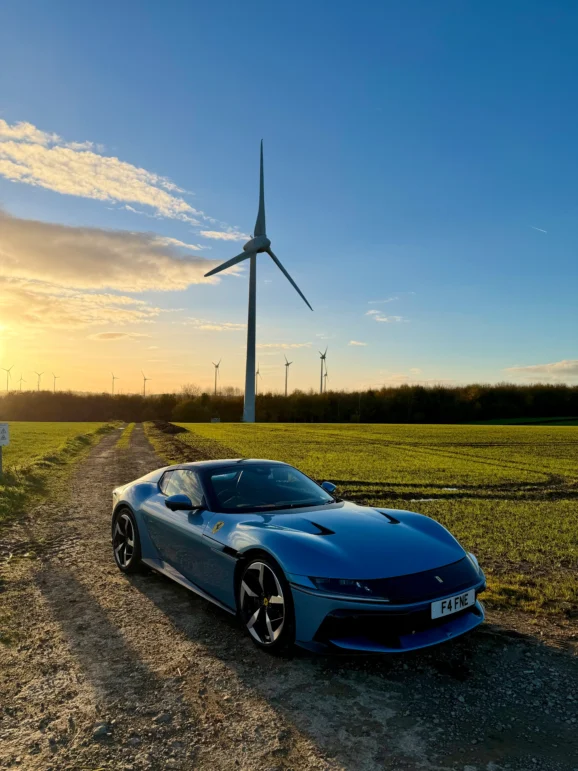
If you’ve ever wondered why people make such a fuss about driving holidays in France, the roads around the Seven Valleys provide a very good answer.
The D939 threads its way through rolling countryside, farmland and woodland, with sweeping bends, long straights and comparatively little traffic.
It’s beautiful country, particularly in autumn, when the trees are changing colour and the fields stretch towards distant horizons.
We passed through Hesdin, an attractive market town with medieval roots, before continuing towards Arras.
Unsurprisingly, the Ferrari was perfectly suited to these rural roads. I spent most of the journey in Sport mode, with the adaptive suspension softened to absorb the bumps and the engine remaining smooth and civilised at modest speeds. Race mode offered sharper acceleration and faster gear changes – and, dare I say it, more fun – but Sport was better suited to covering long distances.
There was plenty of power available too, of course. Ferrari’s naturally aspirated 6.5-litre V12 produces 830bhp and revs to an extraordinary 9,500rpm. Put your foot down where conditions allow and the engine responds with a glorious mechanical howl. It’s an extraordinary sound, particularly with the roof lowered.
The eight-speed gearbox was equally impressive, changing smoothly when left to its own devices but responding instantly to the carbon-fibre paddles whenever I felt like getting more stuck in.
Which I did. Often.
And the best thing was that we weren’t rushing anywhere. We could enjoy the countryside, stop whenever something caught our eye and make the most of roads we’d never have discovered from the motorway.
Arras, around 70 miles south-east of Calais, was our destination for the first evening, and what a place it was to arrive after dark.
The city’s two magnificent historic squares, the Grand Place and Place des Héros, are surrounded by rows of Flemish-Baroque buildings with elaborate stepped gables, graceful arches and richly decorated façades.
Much of Arras was devastated during the First World War, but the historic centre was painstakingly reconstructed.
Today, the squares are among the finest in northern France, their architecture reflecting the city’s historic links with the Spanish Netherlands.
At night, when the buildings are illuminated and the cafés and restaurants beneath the arcades are busy with diners, the effect is breathtaking.
in the sort of picture-postcard setting where it’s all too easy to order one glass of excellent wine too many.
Which again, I did. Often.
Our accommodation, Hotel Entre Cour et Jardin, was equally charming. Run by Isabelle and Jean-Luc Dubrulle, the property has beautifully furnished rooms, traditional French décor and secluded gardens tucked away behind the surrounding streets.
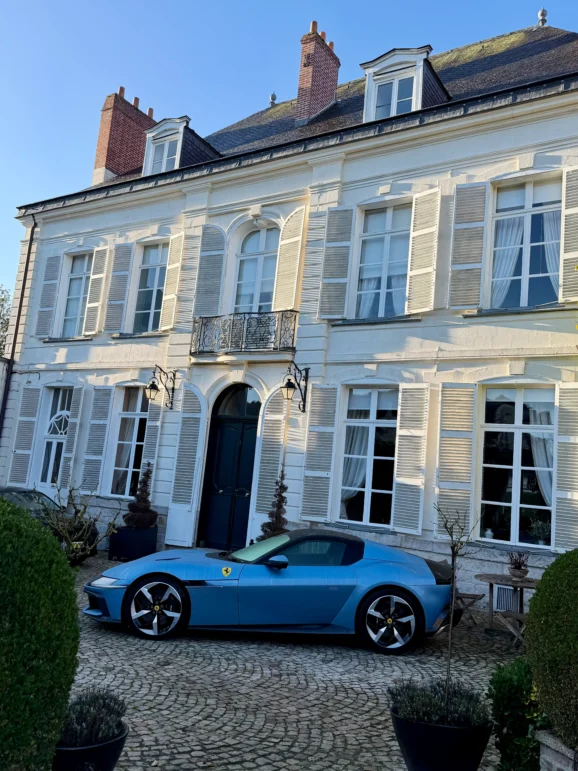
The Ferrari looked perfectly at home in such elegant surroundings, its sweeping lines and rich metallic-blue paintwork attracting admiring glances wherever we went. A beautiful car in a beautiful setting, and remarkably practical, too; its 200-litre boot had comfortably accommodated our weekend bags, coats and shoes.
Breakfast the following morning was exactly what one hopes for in France – freshly baked croissants, homemade preserves, cheese and excellent coffee.
If there’s a better way to begin a day’s sightseeing, I haven’t found it.
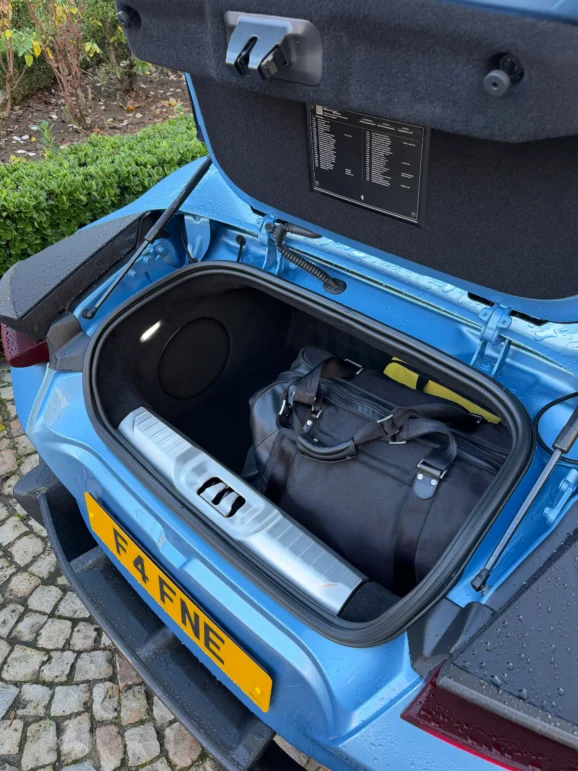
Leaving Arras on the D938, we headed south through Bapaume and Péronne, crossing the wide agricultural landscapes of the Somme. With miles of open road ahead, it was the perfect opportunity to discover just how comfortable the Ferrari could be over longer distances.
The Spider’s seats were superb, the infotainment system was surprisingly simple – never a sure thing in a supercar – and visibility was far better than I’d expected. The adaptive cruise control was also a godsend on longer stretches, automatically maintaining a safe distance from traffic ahead.
It even has a separate display for the passenger, which in my case allowed her to adjust the music and comfort settings without distracting me.
And thanks to Ferrari’s heated seats and clever air-scarf system, which blows warm air around the neck and shoulders, we could travel with the roof down despite temperatures hovering around single figures. The adjustable rear screen also kept wind buffeting to a minimum, allowing us to chat comfortably at motorway speeds.
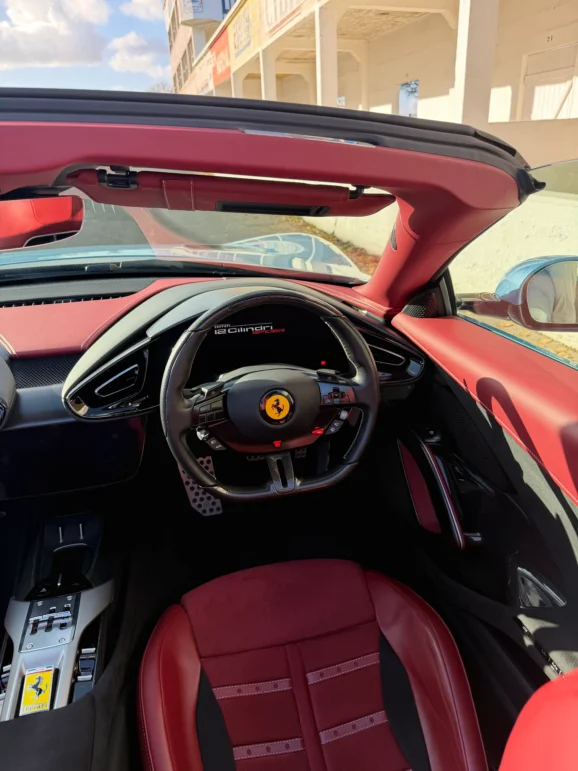
November in northern France, in an open-top Ferrari, without freezing to death. Who would have thought it?
Golden fields stretched towards the horizon beneath clear blue skies, while villages and patches of woodland broke up the scenery.
The region is steeped in history, much of it connected to the terrible battles of the First World War.
But one of the most spectacular sights on our route was considerably older.
Laon is a remarkable medieval town perched high above the surrounding countryside, with an enormous Gothic cathedral dominating the skyline.
The gradient was no trouble for the Ferrari, which produces a massive 678Nm of torque. It barely broke a sweat.
The narrow streets at the top were another matter. At more than 4.7 metres long and over 2.1 metres wide including its mirrors, the Spider is a substantial car, and medieval French town planners clearly hadn’t anticipated the arrival of half-million-pound Italian convertibles.
Fortunately, the excellent camera system made manoeuvring relatively straightforward, and the only thing we scratched was the surface of this fascinating town. The Ferrari remained unscathed but I was sweating buckets.
Our next stop had a special connection to the car we were driving. Just outside Reims, near the village of Gueux, stand the surviving pits and grandstands of the legendary Reims-Gueux Grand Prix circuit.
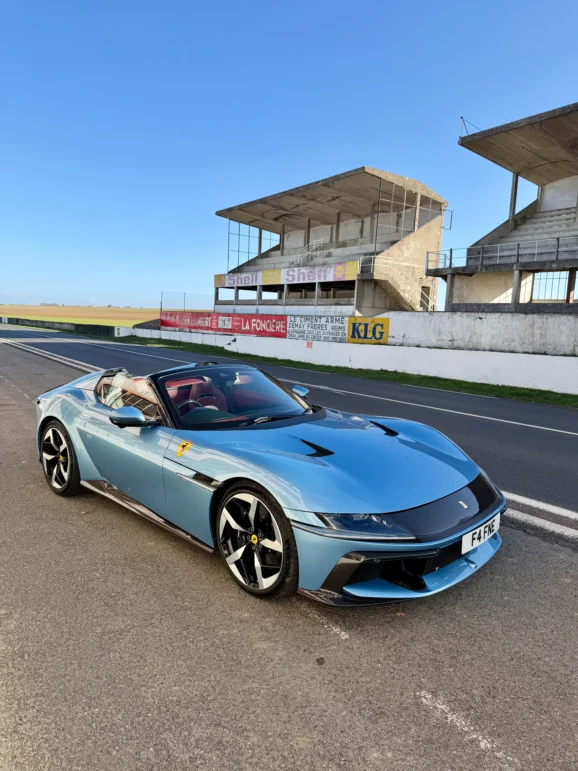
Reims-Gueux was one of Europe’s most famous racing venues, hosting Formula One World Championship races on a fearsomely fast triangular circuit.
The cars raced along public roads, with drivers spending much of each lap at full throttle.
Ferrari enjoyed considerable success here, with victories by legendary drivers including Mike Hawthorn, Peter Collins, Tony Brooks and Giancarlo Baghetti.
The surviving pit buildings and grandstands have been lovingly restored by volunteers from Les Amis du Circuit de Gueux, whose efforts have preserved an important piece of motorsport history.
Standing beside the old pits with our modern Ferrari was a memorable experience.
You could almost imagine the crowds, the smell of hot engines and the deafening roar of racing cars hurtling past the grandstands.
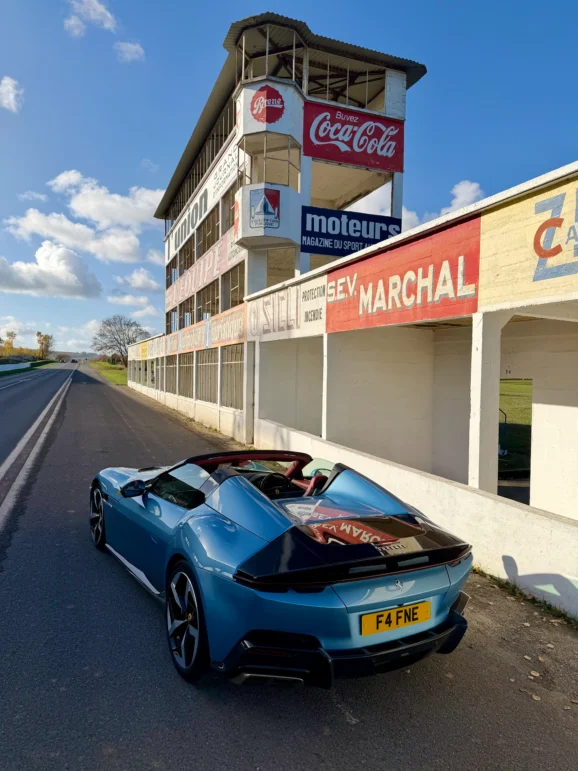
Our Spider would have astonished the drivers of that era. Its 830 metric horsepower, sophisticated electronics, rear-wheel steering and extraordinary performance are a world away from the machinery they raced.
When Hawthorn won the French Grand Prix here in 1958, he averaged more than 125mph over the entire race. The Ferrari I was driving could accelerate from a standing start to almost that speed in just 8.2 seconds.
How times have changed.
Yet for all the advances in technology and performance, Ferrari is still building cars powered by naturally aspirated V12 engines, just as it did in the 1950s. With most manufacturers now turning to hybrid and electric power, I couldn’t help wondering how much longer we’ll be able to enjoy their unmistakable sound.
From Gueux, we continued into Reims, the historic city of French kings and the unofficial capital of Champagne. It’s an impressive place, with a magnificent cathedral, handsome streets, excellent restaurants and some of the world’s most famous Champagne houses.
Our first stop was Domaine Pommery, whose striking Elizabethan-inspired buildings and beautiful grounds offer a grand introduction to the region’s most celebrated export.
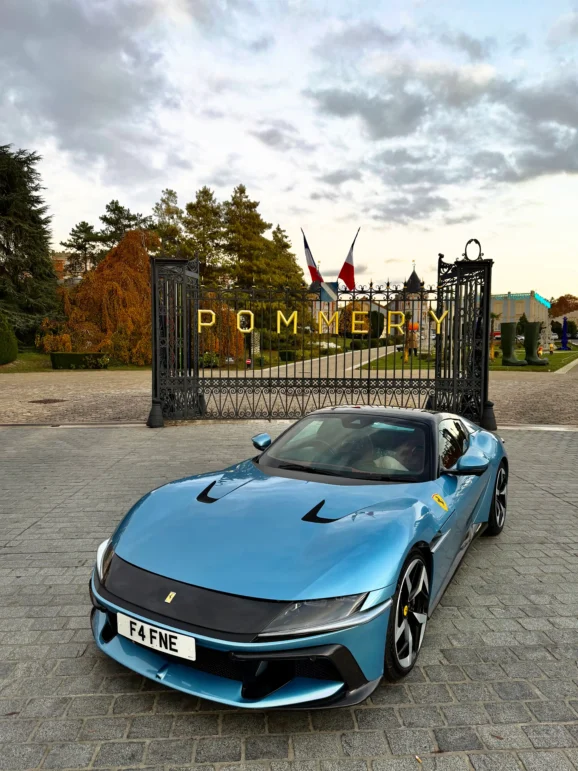
But no visit here would be complete without going underground. A staircase of 116 steps leads deep beneath the estate into an extraordinary network of chalk chambers known as crayères.
Originally quarried during the Gallo-Roman period, these enormous spaces were later converted into Champagne cellars, where the natural temperature and humidity provide ideal conditions for ageing wine.
Today, some 25 million bottles mature in the galleries.
Twenty-five million.
That’s enough Champagne to keep even the most enthusiastic dinner party going for a considerable time.
The cellars themselves are spectacular, with enormous chalk chambers resembling underground cathedrals.
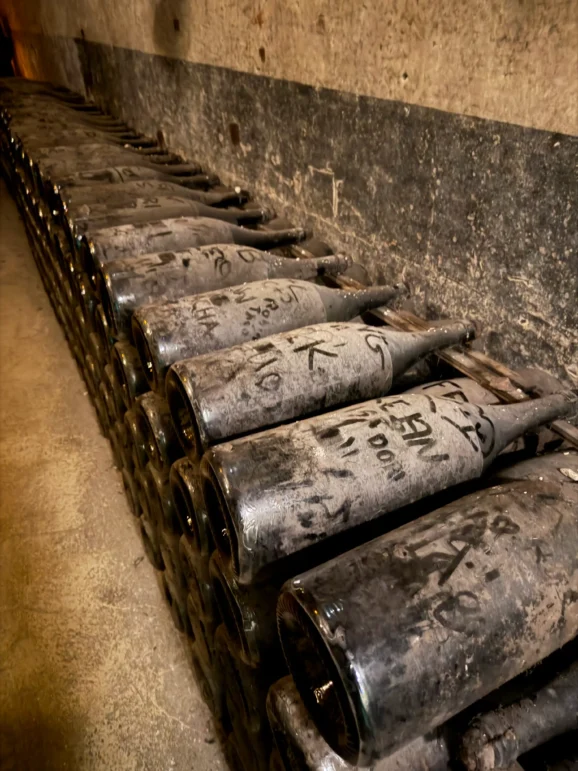
The guided tour explores the history of the house, the production process and the remarkable role played by Madame Pommery in establishing the company’s reputation.
Contemporary art installations add another dimension, making the experience considerably more interesting than simply wandering around looking at bottles.
The cellars form part of the UNESCO-listed Champagne heritage landscape, and it’s easy to understand why.
After returning to the surface, we headed into central Reims to find our accommodation. Les Berceaux de la Cathédrale was perfectly located, offering magnificent views towards the cathedral and the surrounding streets.
The owners had also arranged secure parking in a beautifully preserved Art Deco bus depot nearby – a welcome relief when travelling in a car worth more than half a million pounds.
With the Spider safely tucked away, we could concentrate on more important matters.
Dinner, for example.
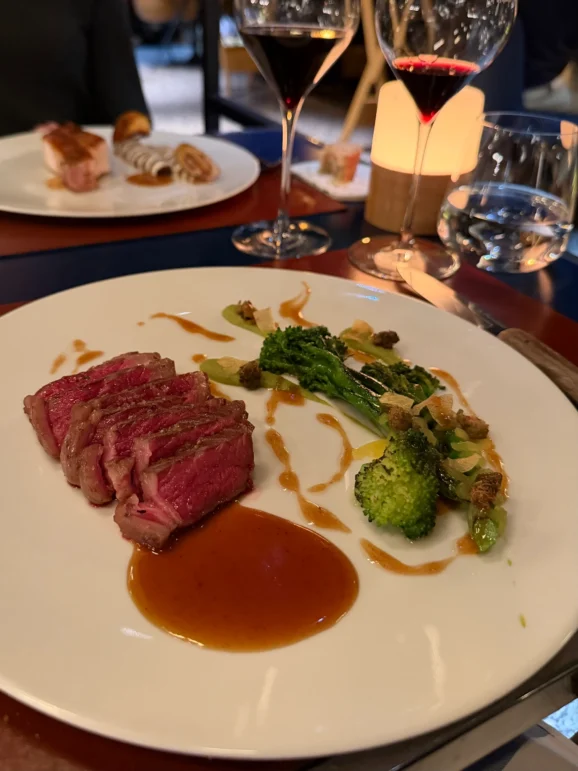
We headed to La Grande Georgette, an excellent restaurant near the cathedral, where contemporary French cuisine and an open view of the chefs at work made for a wonderful evening.
Reims has plenty of good restaurants, and it’s a city where a long lunch or leisurely dinner feels entirely appropriate.
Especially when there’s Champagne to accompany it.
The following morning began at Reims’ lively market. There’s something thoroughly enjoyable about French markets, not least watching fellow Brits attempting to haggle with bewildered stallholders in their best Del Boy French.
Stalls were piled high with fresh fish, fruit, preserves, cheeses and other local produce, while shoppers chatted over coffee and examined the day’s offerings.
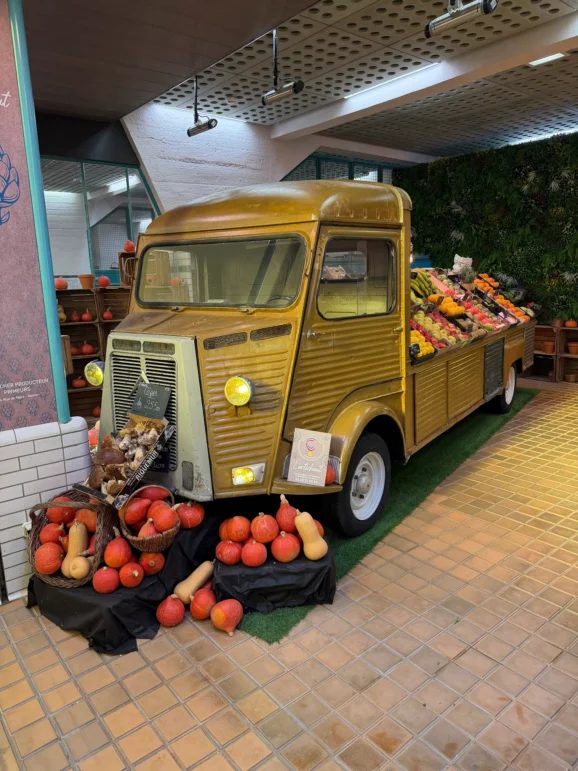
We spent a pleasant morning wandering among the displays before heading to one of the city’s most important historic attractions.
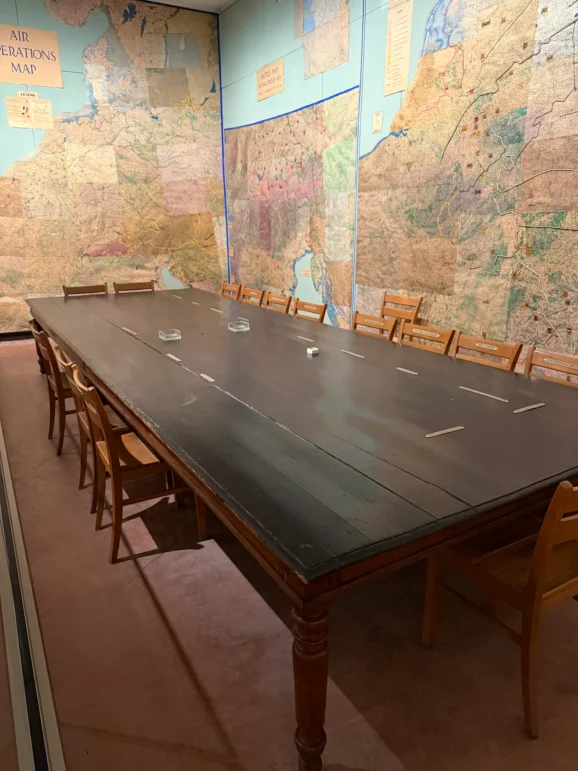
The Musée de la Reddition occupies the building used as General Dwight D. Eisenhower’s headquarters during the final stages of the Second World War.
At 2.41am on 7 May 1945, representatives of Nazi Germany signed their unconditional military surrender here, bringing the conflict in Europe towards its formal conclusion.
The room where the agreement was signed has been preserved, complete with the original maps and furnishings.
It’s an extraordinary and moving place to be. While the building itself is unremarkable, the events that took place inside changed the course of European history.
The museum’s exhibitions and audio guide explain the circumstances surrounding the surrender, while the preserved Map Room offers a powerful connection to the past.
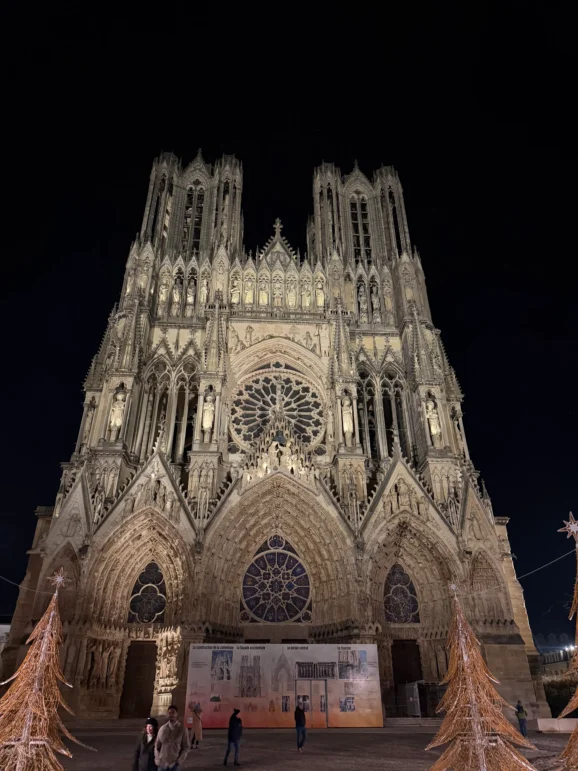
We returned to Reims Cathedral later that afternoon, just as the autumn sunshine was beginning to fade.
The timing was perfect. Golden light picked out the magnificent sculptures and architectural details of the great Gothic façade, while the ancient stonework glowed in the late afternoon sun.
Construction began in 1211, after an earlier cathedral was destroyed by fire, and the building went on to become one of the most important churches in France.
For centuries, it served as the traditional coronation site of French monarchs. Charles VII was crowned here in 1429, with Joan of Arc in attendance, while generations of kings passed beneath its soaring arches.
The cathedral contains more than 2,300 statues and some of the finest examples of medieval stone carving in Europe.
And inside, the scale of the place is breathtaking. Enormous columns rise towards the vaulted ceiling, while coloured light pours through the stained-glass windows.
During the First World War, German shelling caused a devastating fire that destroyed the roof and inflicted terrible damage on the building. Restoration continued for decades, and the cathedral was substantially rebuilt before the Second World War.
Today, it stands as both a masterpiece of medieval architecture and a testament to the determination of those who restored it.
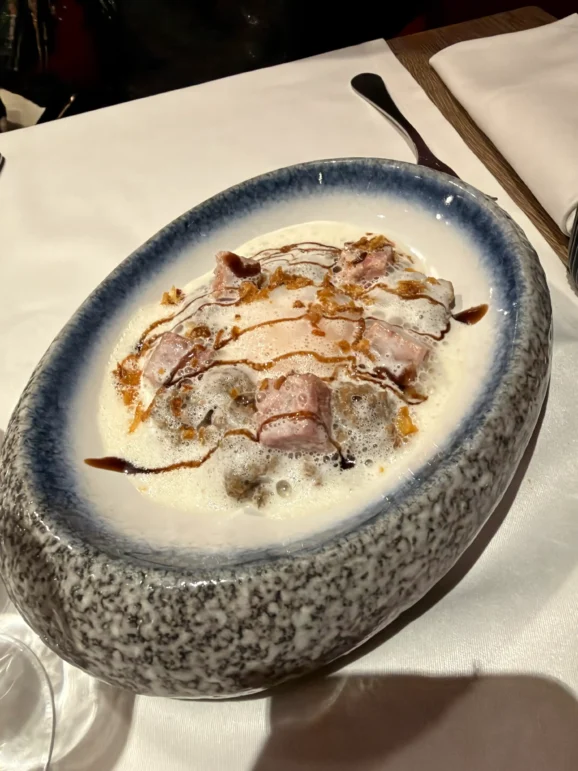
Our final evening meal in Reims was spent at Le Crypto, an excellent traditional French bistro with a warm atmosphere, attentive service and superb food.
And, naturally, Champagne.
By now, we’d spent several days discovering historic places, beautiful countryside and excellent restaurants, and I was beginning to wonder why I’d never devoted more time to this part of France.
All too soon, it was time to say goodbye to Reims and head back towards Calais. Taking the D944 north, we once again resisted the motorway and followed the quieter roads through the countryside, passing small villages, open farmland and historic battlefields.
The weather remained remarkably kind for November, and we were able to enjoy much of the return journey with the Ferrari’s roof lowered.
Our final stop was Cap Blanc-Nez, the magnificent viewpoint on the coast near Calais. From its elevated position, the views stretch across the English Channel towards the white cliffs of Dover.
After taking in the view, we headed to Le Shuttle and the short crossing back to Folkestone.
By the time we returned home, we’d covered almost 1,000 miles, and I was genuinely sorry to be handing back the keys. Yes, it costs a lot and yes, it’s wider than a Range Rover Evoque. On paper, it’s an utterly ridiculous proposition.
But what a car. What a work of art. And what an absolute joy to drive.
Vive la France! Et vive Ferrari!
Take the Champagne Supernova yourself: how to follow Mark’s route
You don’t need a £525,000 Ferrari to enjoy this road trip. Any reliable car will do, and four days is enough to explore the highlights of northern France and Champagne country.
Getting there
Take LeShuttle from Folkestone to Calais. The crossing takes approximately 35 minutes, with regular departures throughout the day. Book at www.leshuttle.com
The route
Day one – Calais to Arras: From Calais, take the D928 towards Saint-Omer and visit La Coupole, the former Nazi V2 rocket complex near Helfaut. Continue through the Seven Valleys region on the scenic D939, passing through Hesdin before reaching Arras for an overnight stay.
Day two – Arras to Reims: Follow the D938 towards Bapaume and Péronne, then continue across the Somme towards the medieval hilltop city of Laon. Explore its cathedral and old town before heading to the former Reims-Gueux Grand Prix circuit on the D27, just west of Reims. Spend the next two nights in Reims.
Day three – Exploring Reims: Visit Domaine Pommery for a tour of its extraordinary underground Champagne cellars. Explore Notre-Dame de Reims Cathedral, the Musée de la Reddition, where Germany’s military surrender was signed in 1945, and the city’s markets. The Halles du Boulingrin is particularly worth visiting on a Saturday morning.
Day four – Reims to Calais: Head north on the D944, taking quieter secondary roads where possible. Before returning to LeShuttle, stop at Cap Blanc-Nez for spectacular views across the Channel towards Dover.
What to book ahead
La Coupole’s museum and Domaine Pommery are two highlights of the journey. Reserve a Champagne cellar tour in advance, particularly at weekends, and take something warm – Pommery’s underground galleries remain cool throughout the year. The main cathedral is free to enter, although tower visits are charged separately.
Museum and cellar information:
www.maisonpommery.com/visites/en
Before you drive
British motorists should carry their passport, driving licence, vehicle registration and insurance documents, along with the safety equipment required in France, including a warning triangle and reflective jackets. Check headlamp requirements, the vehicle’s UK identification and the latest border-entry rules before departure.
The former Reims-Gueux circuit is on public roads, where stopping and photography restrictions may apply. Check locally before visiting, particularly with a car club.
Best time to go: Spring through autumn offers longer daylight hours, although Mark’s November trip proves the route can be equally enjoyable outside the traditional holiday season. Allow extra time for attractions, leisurely lunches and the occasional unplanned detour.
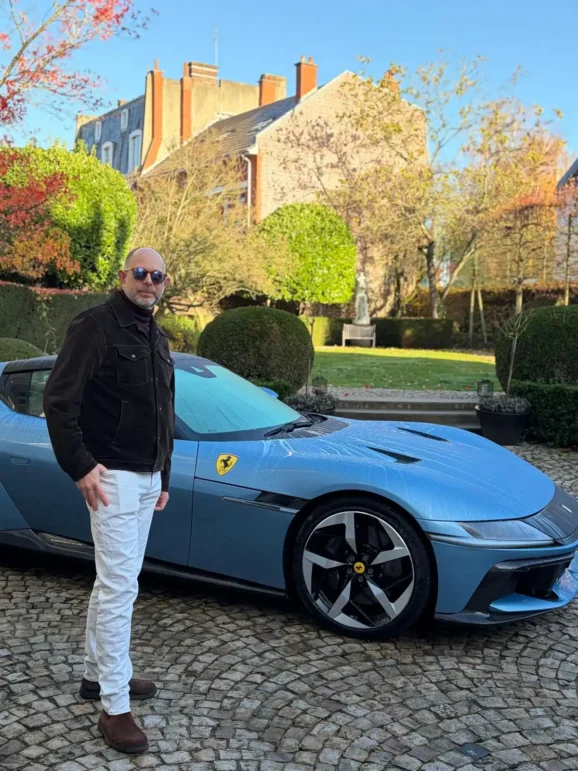
Mark G. Whitchurch is a seasoned motoring journalist whose work—covering road tests, launch reports, scenic drives, major races, and event reviews—has appeared in The Observer, Daily Telegraph, Bristol Evening Post, Classic & Sports Car Magazine, Mini Magazine, Classic Car Weekly, AutoCar Magazine, and the Western Daily Press, among others. He won the Tourism Malaysia Regional Travel Writer of the Year in 2003 and is a member of The Guild of Motoring Writers.
READ MORE: Albania’s wild heart on a 560-kilometre road trip through the Balkans. From communist-era bunkers and remote mountain villages to gin distilleries, wartime memorials and one of Europe’s last free-flowing rivers, Mark G Whitchurch explores Albania’s rugged interior behind the wheel of the latest Mazda CX-30.
Do you have news to share or expertise to contribute? The European welcomes insights from business leaders and sector specialists. Get in touch with our editorial team to find out more.
Main image: The £525,000 Ferrari 12Cilindri Spider at LeShuttle’s Calais terminal during Mark G. Whitchurch’s 1,000-mile road trip through northern France to the Champagne capital of Reims. All photos, Mark G. Whitchurch