Global leaders converge on Davos from 19–23 January for a World Economic Forum braced for clashes over geopolitics, shaky markets and runaway tech. The European will be available across Davos and key Swiss venues throughout the week, ensuring that European business and policy viewpoints reach delegates as discussions unfold
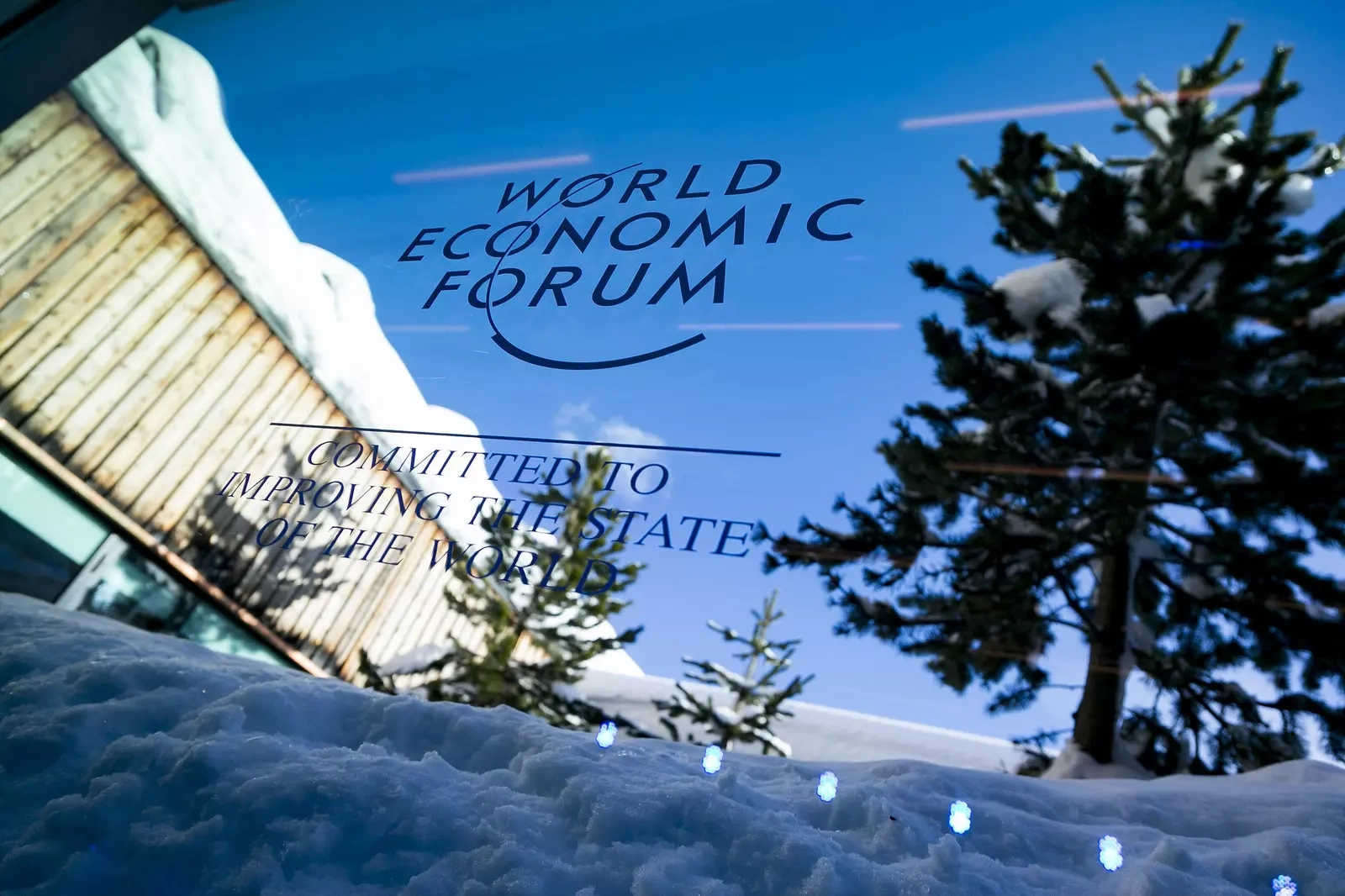
The World Economic Forum’s 56th Annual Meeting will return to Davos next month, bringing thousands of leaders from politics, business and civil society to confront a year marked by economic instability, geopolitical tension and accelerating technological change.
The official theme, ‘A Spirit of Dialogue’, signals an attempt to draw disparate interests into a shared conversation at a time when cooperation is under strain.
Set against a backdrop of slowing global growth and mounting structural pressures, sustainability is again expected to feature prominently.
Recent WEF events have underscored how economic health, energy security and environmental resilience are now deeply intertwined. “In this new, more uncertain era, dialogue is our greatest source of innovation and resilience,” Børge Brende, President and CEO of the WEF, said in October.
The WEF’s Chief Economists’ Outlook, released in September, has provided one of the clearest indications of the challenges shaping this year’s agenda. According to the report, 72% of surveyed chief economists expect the global economy to weaken over the next year, driven by intensifying trade disruption, rising policy uncertainty and rapid technological change. Respondents overwhelmingly assessed these pressures as structural, with long-lasting implications across natural resources, energy systems, technology, global value chains and global institutions.
The report also warned that advanced and developing economies are set to drift further apart, with 56% of respondents anticipating greater divergence over the next three years. The Forum’s leadership has described this environment as one already undergoing reconfiguration. “Leaders must adapt with urgency and collaboration to turn today’s turbulence into tomorrow’s resilience,” Saadia Zahidi, Managing Director at the WEF, said.
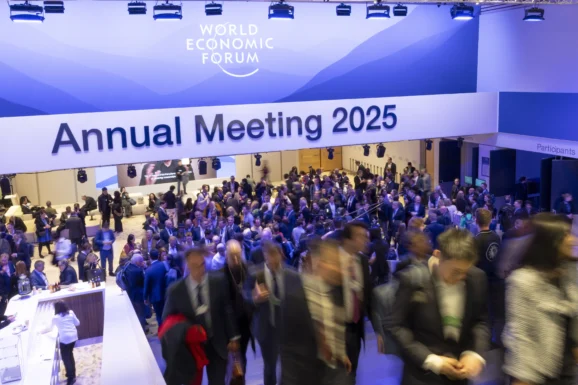
Last year’s Davos theme, ‘Collaboration for the Intelligent Age’, produced a programme centred on AI, digitalisation, clean-energy transition and regaining public trust. More than 3,000 participants, including over 50 heads of state, debated how to rebuild growth, invest in people and prepare industries for a rapidly evolving technological landscape. Sustainability held a prominent position, despite geopolitical distractions, and is widely expected to remain a core thread this year.
The WEF’s Sustainable Development Impact Meetings, held in New York in September, offered a further preview of likely Davos themes. More than 1,000 leaders examined carbon capture and utilisation, the global energy transition, sustainable finance, drug resistance, workforce resilience and the escalating health costs associated with climate change.
Reflecting on those discussions, Brende said they were already shaping the run-up to the Annual Meeting. “As we now look toward the Annual Meeting 2026, many of these discussions will continue to guide the agenda leading up to Davos,” he said. “With strong collaboration and commitment, I am confident we can turn shared challenges into shared solutions.”
Additional momentum came from the Global Future Councils meetings in Dubai in October, which the Forum positioned as “setting the tone” for Davos 2026. The sessions examined geostrategic shifts, innovation and technology, the energy transition, food systems, climate action and cybersecurity. “Only through open exchange… can we unlock the ideas and trust that we need to move the world forward together,” Brende added.
The European will be distributed across Davos and Switzerland for the duration of the event, placing the continent’s business, finance and policy perspectives directly into the hands of delegates as the week’s debates take shape.
READ MORE: ‘Exclusive: Global United Nations delegates meet in London as GEDU sets out new cross-network sustainability plan‘. London is hosting UNITAR’s CIFAL Global Network for the first time, drawing senior delegates from across the globe as GEDU Global Education unveils a new cross-network sustainability plan ahead of its inaugural group report.
Do you have news to share or expertise to contribute? The European welcomes insights from business leaders and sector specialists. Get in touch with our editorial team to find out more.
Main image: Credit – World Economic Forum