Europe’s leading defence powers launch joint drone and autonomous systems programme

John E. Kaye
- Published
- News
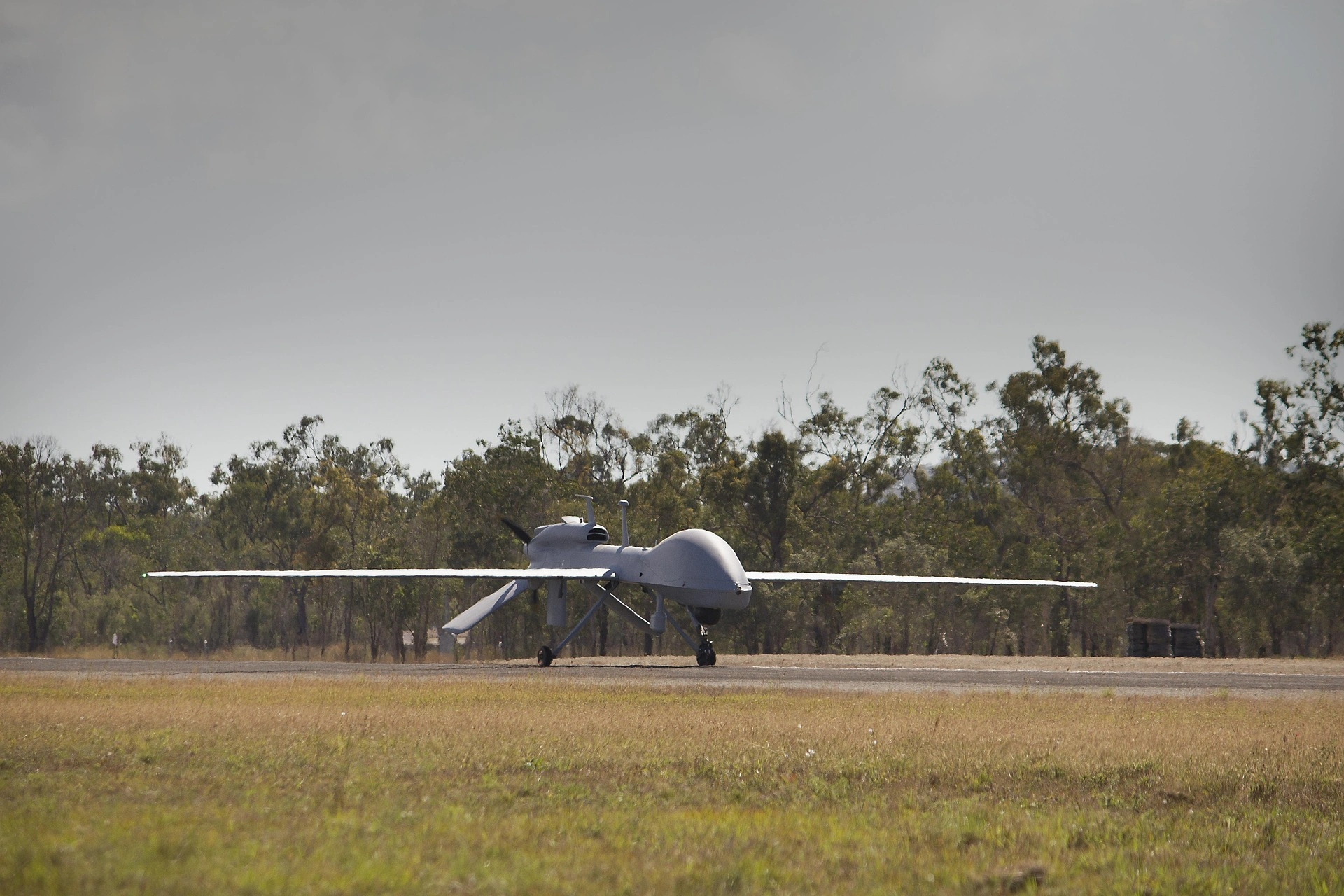
France, Germany, Italy, Poland and the UK agree new initiative aimed at scaling production of low-cost military platforms amid strategic and industrial pressures
Europe’s five largest defence powers have agreed to strengthen cooperation on the development and procurement of military drones and autonomous systems, launching a new industrial initiative designed to accelerate production and reduce fragmentation across national programmes.
France, Germany, Italy, Poland and the United Kingdom announced the creation of the Low-Cost Effectors and Autonomous Platforms (LEAP) initiative following a meeting of defence ministers in Krakow.
The programme is intended to coordinate the development and acquisition of “low-cost effectors” — the components that deliver operational capability — and unmanned platforms capable of operating with varying degrees of autonomy. The focus is on scalable, cost-effective systems that can be deployed rapidly and in significant volumes.
In a joint statement, ministers said the initiative would increase cooperation on development and procurement in order to “deliver military effect” more efficiently, while strengthening Europe’s defence industrial capacity.
The announcement comes amid continued reassessment of Europe’s defence posture following Russia’s invasion of Ukraine and alongside the European Commission’s action plan on drone and counter-drone security, which sets out measures to strengthen detection, resilience and industrial capacity across member states.
Drones and autonomous systems have played a central role in modern conflict, offering comparatively inexpensive alternatives to traditional missile and air-defence platforms. Their battlefield effectiveness has prompted European governments to accelerate efforts to expand domestic production and reduce reliance on non-European suppliers.
The LEAP initiative is also positioned as an industrial measure. European defence procurement has historically been fragmented, with national programmes developed in parallel and often duplicating capability, a challenge repeatedly highlighted by the European Defence Agency. Closer coordination could generate economies of scale, improve interoperability and shorten development timelines.
Ministers welcomed recent European Union measures granting member states greater fiscal flexibility for defence spending, while emphasising that defence capabilities remain a national responsibility.
Analysts say the success of the programme will depend on sustained political commitment, alignment of technical standards and clarity over funding mechanisms. Previous multinational defence projects have faced delays due to divergent requirements and export restrictions.
From an industrial perspective, deeper collaboration in autonomous systems could strengthen Europe’s competitive position in a sector where the United States and China have invested heavily. Defence companies specialising in robotics, artificial intelligence and electronic systems may benefit from increased demand and cross-border procurement opportunities.
The move reflects a broader shift in European policy towards reinforcing strategic autonomy in key sectors, as defence spending across Europe has risen sharply in recent years, according to data from SIPRI.
READ MORE: ‘AI-powered drones market to triple by 2030, driven by defence, logistics and agriculture‘. The global market for artificial intelligence (AI) in drones is forecast to grow from $821.3 million in 2025 to $2.75 billion (£2.13 billion) by 2030, according to a new industry report. The projection represents a compound annual growth rate (CAGR) of 27.4% over the five-year period, making it one of the fastest-growing areas of the aerospace and defence sector.
Do you have news to share or expertise to contribute? The European welcomes insights from business leaders and sector specialists. Get in touch with our editorial team to find out more.
Main image: Military_Material/Pixabay
TOP STORIES
-
 Raining cats and dogs? Brits have 17 ways to describe a downpour – and some are downright bizarre
 -
Rare jewellery returns to Japan after 50 years as German museum lends historic treasures to Kyoto
-
Dan Brown drops tantalising hint about where his next thriller could be set
-
Anthropic warns AI could pose ‘existential risks’ as it files for stock market flotation
-
North Korean agents are infiltrating Western businesses by posing as employees, security chief warns
-
Route 66 turns 100 next month – and there’s never been a better excuse for Europeans to hit the road
-
Serbia erupts in celebration as student protesters end Vučić’s 14-year grip on power
-
Two killed as Storm Boelo batters Britain with 85mph winds and leaves 90,000 homes without power
-
Man arrested on suspicion of arson after fire destroys Hitler’s Eagle’s Nest retreat
-
Britain faces higher winter energy prices as reliance on European electricity imports grows
-
Andy Burnham to make special Gogglebox appearance for Stand Up To Cancer
-
WPSL Golf targets £120 million valuation as billionaire-backed corporate deals and other commercial deals drive explosive global growth
-
Hackers could bring Britain’s essential services to a standstill, security chief warns after global website shutdowns
-
We’re talking to almost twice as many people on the phone as a decade ago, study finds
-
TalkTalk sells majority stake in Telecom Acquisitions as founder Nigel Barnett regains control
-
Company closures soar ahead of tax rises as new Budget looms
-
France calls in army after riots sweep cities
-
An Italian affair – Stanley Johnson takes London’s society set on the Silk Road
-
Himalayan mountainside moved 40cm before avalanche killed 1,451 in Nepal, scientists reveal
-
Scientists and engineers quitting jobs as AI changes roles ‘beyond recognition’, study finds
-
UK profit warnings hit near two-year high as businesses struggle with rising costs
-
Microsoft pulls out of major UK AI data centre project amid power grid delays
-
Russia takes control of more European corporate assets amid Ukraine tensions
-
EU leaders resist calls to delay carbon rules as energy costs soar
-
‘A big step forward’ – PM Andy Burnham hails plans for Great British Railways HQ in Derby