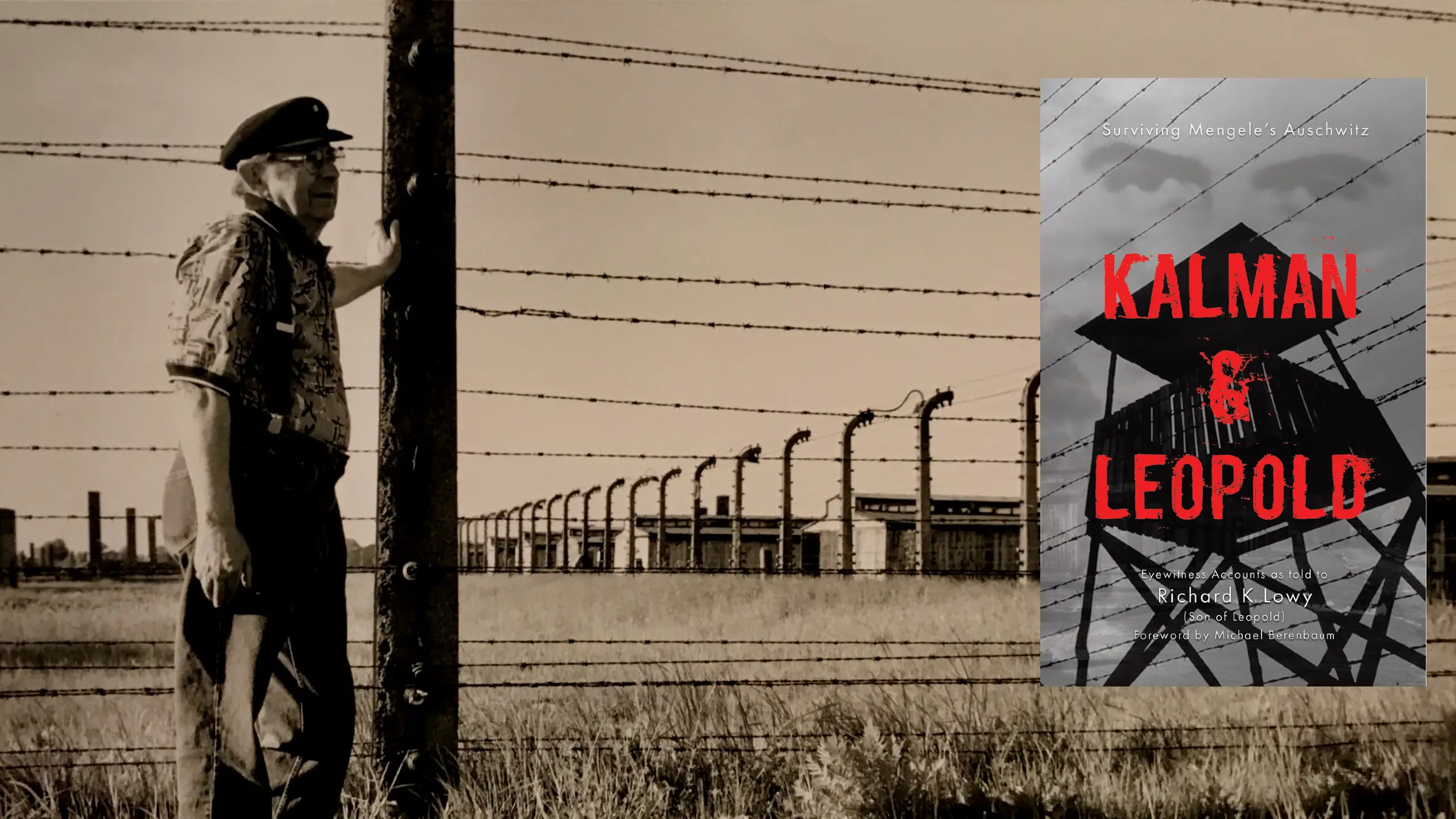
Richard K. Lowy’s new book gathers the parallel testimonies of two teenage twins from Josef Mengele’s notorious Nazi medical programme. Recorded late in life and verified through the camp’s surviving paperwork, their recollections of Hitler’s ‘Final Solution’ is a rare and crucial addition to the Holocaust record, writes Harry Margulies
“Outside, the rolling up of the Hungarian Jewish carpet continues. So many people being delivered, so many communities, so many trains. Every day thousands arrive. The systematic pace escalates to the point that four crematoria aren’t enough. There are only so many ovens. They can only burn so many people in one day.”
From their vantage point in a small SS guard shack, two emaciated Jewish teenagers would watch cattle trucks grind up the road laden with human cargo. The “two little mice,” frozen and silent, worked within sight and earshot of industrial genocide.
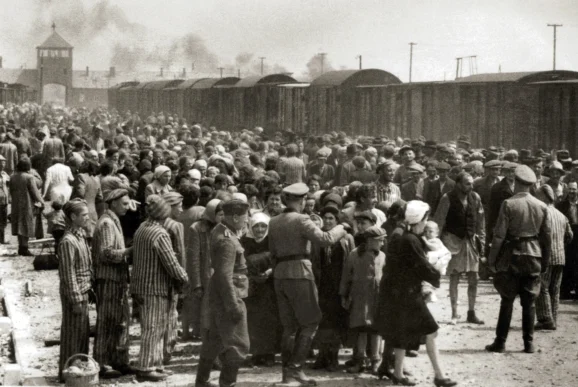
For more than six months they bore witness to the unimaginable horrors of Auschwitz-Birkenau, including crematoria with their ‘state-of-the-art’ ovens and open-air fire pits into which thousands of dead and dying prisoners were thrown each day.
In the space of eight weeks in 1944, over 425,000 Hungarian Jews were deported to the Nazis’ largest extermination facility in occupied Poland. On arrival, SS doctors carried out “selections” on the ramp, sending some to the left for forced labour, but most to the right for immediate death. Most sent directly to the gas chambers and murdered within hours of their arrival, women, children, the elderly, and the sick.
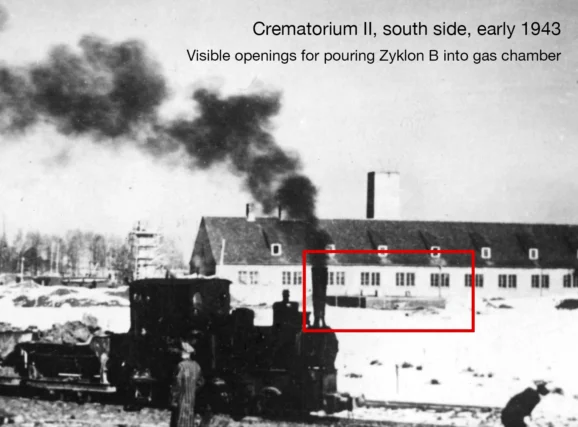
Their bodies were burned less than a hundred yards from the SS guard shack where Kalman Braun, 14, and Leopold ‘Lipa’ Lowy, 16, were forced to work.
The boys had arrived on different transports, from different countries and markedly different backgrounds. They were thrown together to work in the hospital camp’s guard shack, tending the coal stoves, polishing boots, fetching meals, and carrying notes and supplies between the sadistic henchmen in the different guard shacks who administered Hitler’s ‘Final Solution.’
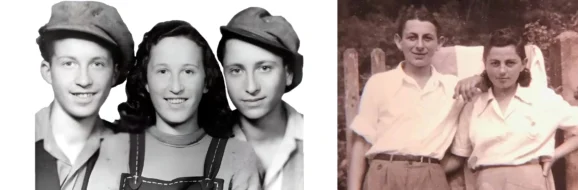
The work came with severe beatings and casual abuse, but in the camp’s brutal hierarchy of survival, the boys occupied a privileged position. Close to one hundred members of their extended families were murdered at Auschwitz, yet the boys survived – at times protected – because each was a twin and had arrived with a twin sister.
Twins were diverted into Josef Mengele’s medical programme and kept alive for measurements, blood draws, X-rays, comparative tests, and life-threatening injections. “In the craziest sense we exist because of this. It makes us special. I’ve heard others in the camp call him the Angel of Death, but Lipa says Mengele is the Angel of Life. We’re not burned straightaway because Mengele decides twins should not be burned…”
The guard shack offered another, unexpected advantage: food scraps. Kalman and Leopold scavenged leftovers of the SS mess and smuggled them to their sisters. The scraps of meat and bread supplemented the daily ration of broth and crust that kept starvation at bay when thousands around them wasted and died.
Their work placed them at the edge of the killing operation in a way few prisoners ever were. They could move between blocks, run errands across the camp and even enter the women’s compound, which gave them sight of the system as it functioned. They watched the transports arrive and the prisoners disembark. The smoke and smell from the crematoria drifted across the yard and settled on their clothes.
“Outside, when we leave work, we fully experience the pit by the combination of thick smoke, constant screams, calm evening air saturated with the smell of burning flesh, and the orange skyline painted by flames,” Kalman writes.
Their harrowing first-hand accounts are presented in Kalman & Leopold: Surviving Mengele’s Auschwitz (Tellwell), a new book compiled from more than 20 hours of recorded testimony.
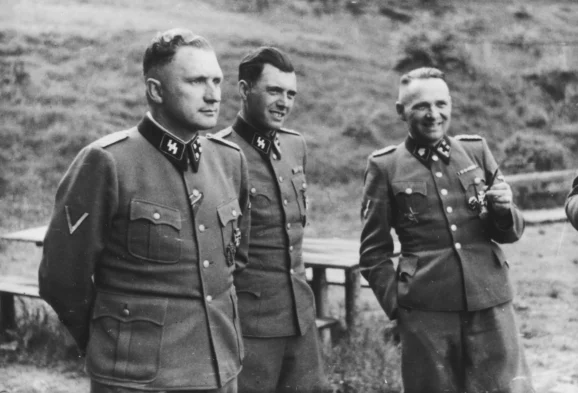
Very little testimony survives from the medical camp, guard shack, and laboratories inside Birkenau, and almost none comes from children. Detailed first-hand accounts from Mengele’s twins are rarer still.
They recall how scalpels were laid out on trays, how calipers were pressed against their bones, how blood was drawn, and the pain of injections, while witnessing the devastating results of unanaesthetised operations, including castrations performed on others in their barracks. They remember photographic sessions, anatomical inspections, and prisoners who died from their experiences with Mengele.
Among the inmates in their barrack, some were dwarves, also subjected to genetic and hereditary experiments. Kalman miraculously discovered upon arrival that one of dwarves was his distant uncle, L’udovit Feld, a gifted artist conscripted by Mengele to draw scenes of the camp and portraits of Mengele himself. Kalman describes Mengele: “He is standing quietly with one foot on a chair, a long, elegant cigarette holder in his hand, watching.”
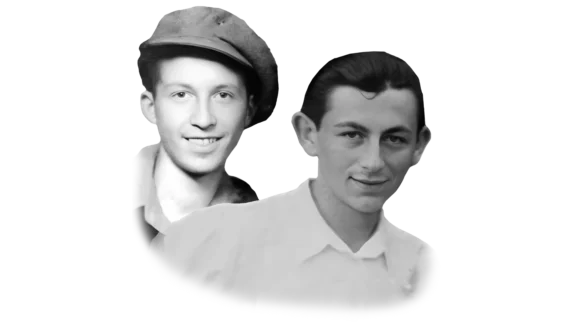
From the ramp selections and the steady stream of trucks carrying prisoners to the gas chambers, to the piles of bodies at the Leichenhalle, the morgue serving the crematoria, the boys bore witness to every stage of the killing process. They observed SS guards selecting prisoners for death, doctors dissected bodies, and the liquidation of the Roma (Gypsy) camp. Suicide at the electric fences was a daily occurrence; they also witnessed the only armed uprising in Auschwitz’s history, when the Sonderkommando destroyed Crematorium IV, followed by brutal reprisals. “The bodies of the rebels are lined up by the crematorium,” Kalman recalls. “They are naked. They are bleeding. They are mutilated. They are left there for all to see.”
It is, then, a major work of Holocaust remembrance that should sit beside The Diary of Anne Frank in the historical record. As with Anne Frank, it reminds us that even in extremity, people look out for one another and find hope through companionship. For all the machinery of murder, the heart of Kalman & Leopold lies in the unique working relationship that developed between the two teenagers. Leopold spoke no German but was sharp, streetwise, and quick to read a room. Kalman was younger, more trusting, and fluent in the language of the guards. Together they improvised an unspoken survival pact: Kalman translated the SS guards’ demands, Leopold handled the pragmatics and kept them both out of trouble.
After Mengele’s examinations, blood draws, and injections, Kalman returned so weak he could barely move his arms. Leopold – ‘Lipa’ – covered for Kalman in the guard shack for days, protecting him from beatings, until he could work again. “You can’t say, I’m sick, I can’t go. You’re sick, you’re dead. Thank G-d I have Lipa to help me at work,” he writes. Neither would have called it friendship at the time, but it was a deep and special bond.
By the time Auschwitz-Birkenau was liberated by the Soviet forces, almost everyone who had entered the camp with the boys was dead, including Kalman’s grandparents and Leopold’s entire family. Remarkably, Kalman’s twin sister Judith and Leopold’s twin sister Miriam survived. Against overwhelming odds, they were among the 120 surviving twins out of roughly 3,000 taken into Mengele’s programme.
Kalman recalls: “We parted without much ado – it’s like that in Birkenau. We just said goodbye without understanding it could be the last time we saw each other. … Lipa went that way, and I went this way.” They never expected to see each other again.
Over the next six decades, Leopold made a life in Canada. He was taken in by Jewish families in Vancouver, married, raised children and built a successful clothing business under the name Leo’s Men’s Wear. Kalman, meanwhile, reached Palestine, served in the Israel Air Force during the 1948 War of Independence and later built a civilian career with EL AL. He never stopped looking for the boy he had known only as “Lipa” — a misheard fragment of “Leopold” that left him searching for someone who did not exist under that name.
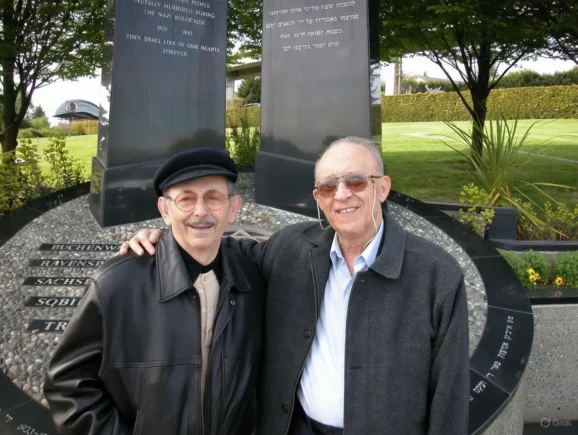
In 2000, Richard Lowy, Leopold’s son, produced a television documentary about his father and the story of the Mengele twins, narrated by The Sound of Music star, Christopher Plummer. In 2001, simply by chance, Kalman saw it at his home in Tel Aviv and recognised a picture of Leo Lowy as the sixteen-year-old boy he had last seen at Birkenau in January of 1945. In 2002, the two were reunited in Vancouver.
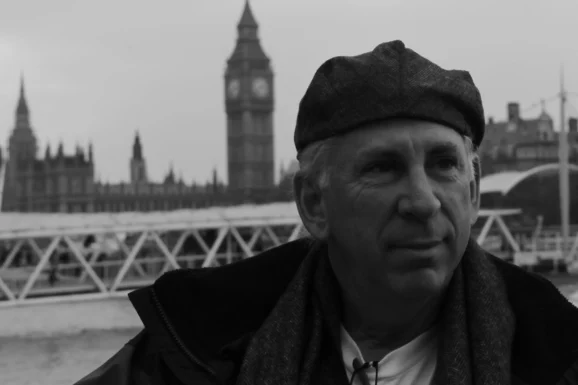
Though elderly when they spoke to Lowy, Kalman and Leopold often reverted to the boys they had been in Auschwitz, refreshing each other’s memory and filling in gaps. Over two decades, Richard Lowy meticulously transcribed more than twenty hours of testimony, cross-referencing every detail against records at Auschwitz, Yad Vashem, and the US Holocaust Memorial Museum to ensure names, dates, procedures, and locations matched the historical record. He then shaped their recollections into parallel narratives, accessible to young readers while retaining scholarly rigour. Concise notes provide context on the wider war and on Mengele, who escaped Europe and died abroad without ever being tried for his crimes.
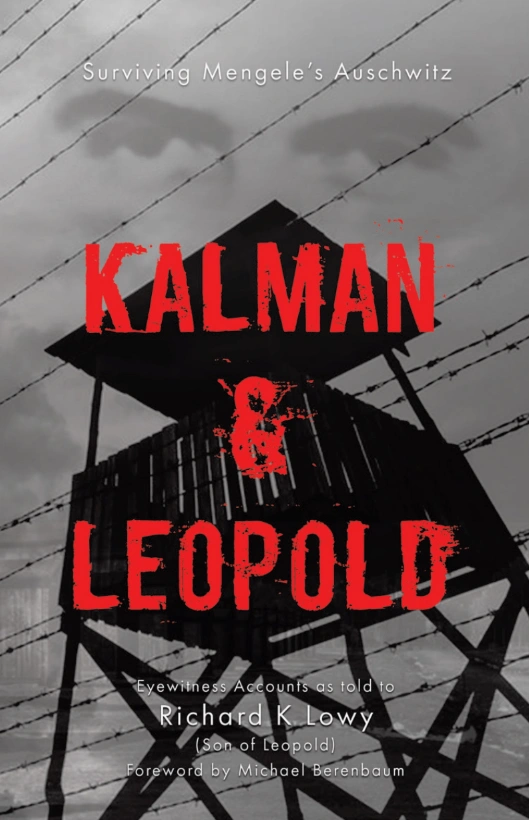
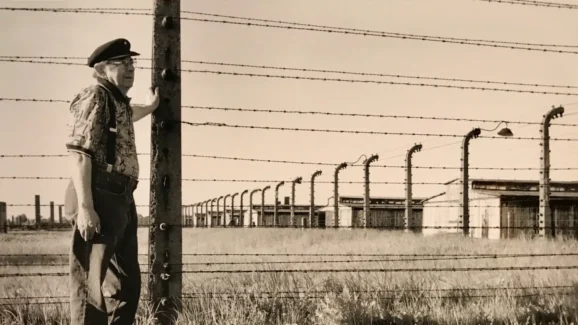
The result is a book of rare importance, and one of the last first-hand Mengele accounts likely to enter the historical record. Leopold died in Vancouver on 11 December 2002, six months after his reunion with Kalman, who passed away in late December 2019. Before he died, Leopold returned to Auschwitz with his son, Richard, declaring it a triumph of survival, family, and continuity – the opposite of what Hitler, Mengele and the SS intended. Standing before a large image of Hitler, he said: “You didn’t win, you didn’t kill us all. You did not achieve your goal. I’m still here and you’re gone.”
Kalman & Leopold: Surviving Mengele’s Auschwitz is published by Tellwell and is available online or at www.KalmanAndLeopold.com
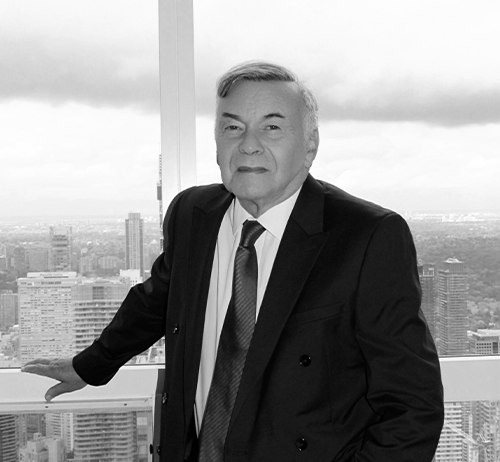
Harry Margulies is a journalist, author, commentator, and public intellectual whose work interrogates religion, politics, and morality with sharp wit and fearless clarity. A second-generation Holocaust survivor, he was born in Austria and spent time in an Austrian refugee camp before moving to Sweden. Educated by Orthodox rabbis throughout his childhood, he ultimately abandoned faith in his teens—a journey that has shaped his lifelong commitment to secularism, critical thinking, and freedom of expression. His latest book, Is God Real? Hell Knows, has been described by ABBA’s Björn Ulvaeus as “funny, sharp, and unafraid.”
READ MORE: ‘The European Reads: What a 2,000-year-old philosophy can teach us about power‘. Vendan Ananda Kumararajah’s Navigating Complexity and System Challenges: Foundations for the A3 Model puts forward a new way of thinking about governance at a time when institutions, organisations and technologies are straining under the weight of disruption. Drawing on both his career in digital transformation and the Tamil philosophical tradition of Saiva Siddhantam, Kumararajah argues that systems can only remain viable if ethics, vigilance and legitimacy are built into their core. In this exclusive interview with The European, he explains how his A3 Model seeks to bridge philosophy and practice, and why he believes its adoption is critical to the future of work, technology and society.
Do you have news to share or expertise to contribute? The European welcomes insights from business leaders and sector specialists. Get in touch with our editorial team to find out more.