Net-zero pledges and sustainable aviation fuel targets have become fixtures of industry rhetoric, yet capital, policy alignment and customer demand tell a more complicated story. Kevin Singh examines the commercial realities shaping general and business aviation, and argues that without structural incentives and credible investment, sustainability will remain peripheral to an industry that still functions as a laboratory for aerospace innovation
Sustainability in private aviation is often discussed as if the path forward is clear. Net-zero by 2050 is treated as an industry commitment rather than a hypothesis. Sustainable aviation fuel is presented as a solution already in motion, rather than one struggling to scale. From an operational and political standpoint, this framing does not reflect reality.
The industry sets itself a timeline to work toward an outcome. But realistically, who are the industry’s stakeholders? Owners of the aircraft, original equipment manufacturers (OEMs), pilots, fixed base operators (FBOs), airports? Sustainability was only introduced when the fear of taxation, rulemaking, and protest or vandalism began to affect operations. It was never a collective voice that truly cared about climate change.
Most people in our industry do not collectively agree on climate change or other sustainability issues. That matters, because alignment is a prerequisite for execution. The Biden administration, along with the EU, China, and countries that are the largest producers of fossil fuels, had a net-zero goal. At NBAA 2025 in Las Vegas, sustainability and carbon emissions were absent. There are no U.S. government subsidies for sustainability in general aviation or business aviation.
At the same time, the EU is imposing taxes and outright bans on business aviation (BA) and general aviation (GA) or imposing stupendous passenger taxes, which will increase operating costs. The largest operation of GA and BA lies in the United States, and the current administration does not, it would appear to me, believe in climate change. To achieve net-zero, or even to move beyond three per cent SAF adoption by 2050, we needed to start making progress in the U.S. yesterday. That ship has sailed.
“We are the backbone of trade and commerce because before freighters sail and products ship, smaller aircraft bring executives for planning, construction, and vision.” – Kevin Singh
The entire industry operates on a narrative that reflects public opinion. If the public starts protesting or vandalising private jets, we will suddenly see private charter aircraft advertising Sustainable Aviation Fuel (SAF), zero carbon, or carbon offsetting on their websites and even on their livery. Public opinion shapes the tax structure for the purchase of private aircraft, not long-term planning.
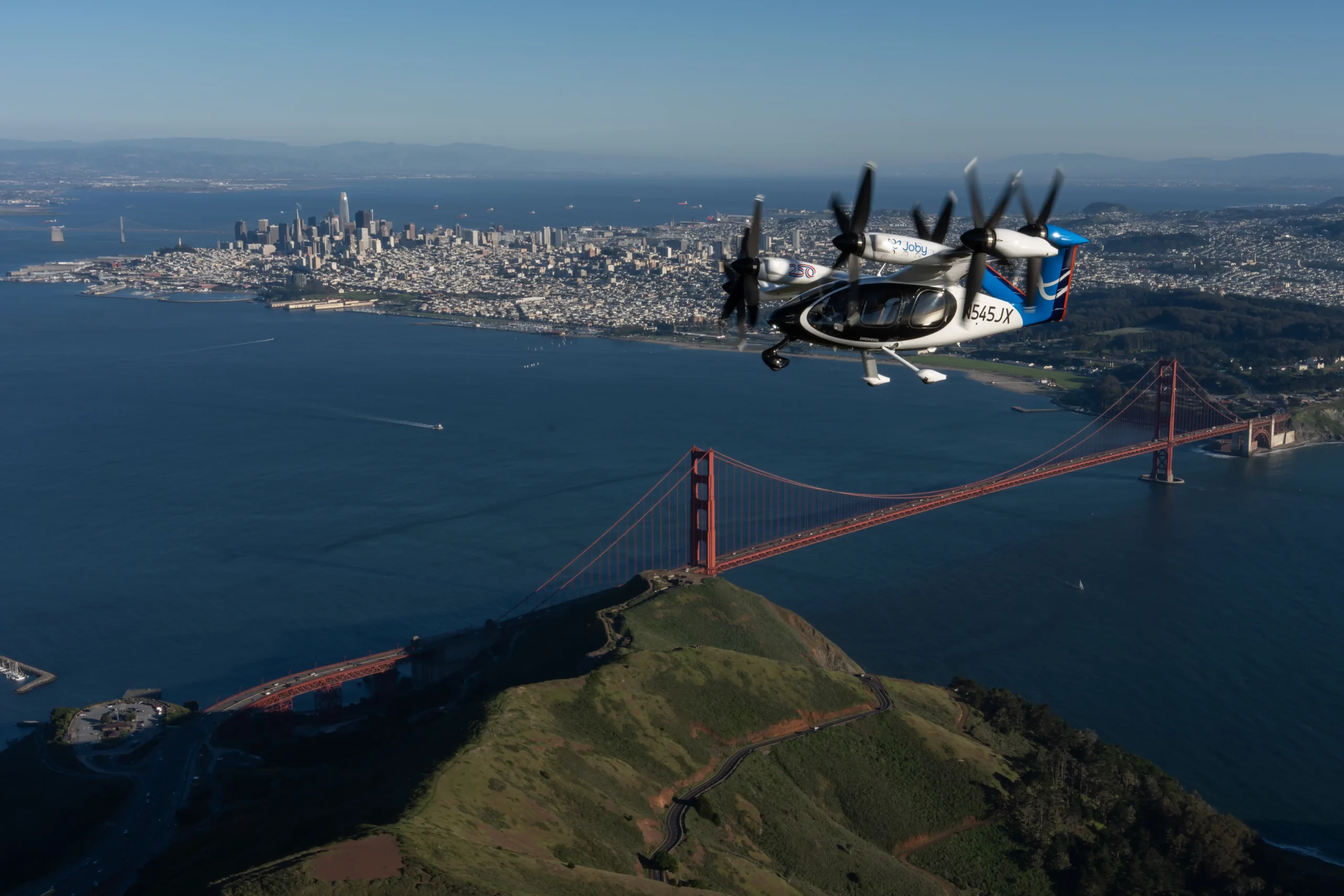
The last decade has seen major advancements in eVTOL, Rolls-Royce Pearl engines that sip fuel, and ATC infrastructure including RNAV and RNP airspace that is more optimal and fuel-efficient. UPS and FedEx use optimal airways and high altitudes until top of descent, essentially gliding down to the runway while consuming less fuel. Airlines shut down one engine on taxiways to save fuel.
But as soon as pressure around noise, EPA regulations, and climate change fades, and social unrest shifts to other issues, the entire GA and BA industry becomes drunk on creating records like who is the fastest private jet between two city pairs. OEMs stop talking about efficiency and start marketing gas-guzzling monsters flying at Mach 0.95. Performance efficiency takes a back seat to speed as spectacle.
Carbon offsets have not helped. They are not considered real and are so despised that they turn people into non-believers in climate change altogether. If the industry wants credibility, it has to stop leaning on symbolic gestures and start educating people. That includes education on greenhouse gas emissions from GA, BA, and the entire aviation industry. It also means addressing conspiracy theories like chemtrails and explaining how far science has come in aviation.
We should be educating younger generations about advances in aerodynamics, wing design, blended winglets, and engines like the Trent series that produce more thrust while burning less fuel. The industry should also be investing directly in renewable energy at airports and ushering in a new era of offsets that are not based on bogus certificates purchased to check a box.
When it comes to SAF specifically, the structural problems are obvious. The United States has the largest number of aircraft in the world. China has only about 500 private aircraft registered. Saudi Arabia plans to buy more than 750 private aircraft to compete with fractional providers. Of all these regions, only the EU has a concrete SAF plan, including anti-tankering rules for commercial operations.
The main barriers to SAF production are cost and the current Washington administration’s lack of a justifiable reason to subsidise it. SAF will be dead on arrival unless there is a change in D.C. The largest consumer of GA and BA fuel is not taking a leadership role. The private industry sees short-term, high profitability, and with private equity money now embedded in nearly every facet of GA and BA, there will be no serious discussion on SAF beyond lip service on websites until the political winds change.
At the operational level, this disconnect is even clearer. Not one client has asked about SAF or carbon emissions anymore. People want to avoid flying with airlines if they can, because airline infrastructure is bursting at the seams and consumer rights are shrinking. Even in private aviation, clients struggle to get to their destinations on time due to severe ATC delays. The infrastructure is simply not in place to support the increase in GA and BA traffic. Conversations about SAF and offsets have not happened since 2024.
Despite all of this, I remain convinced that private aviation is essential to innovation and progress. GA and BA bring this world closer. Before shipping, which laid the groundwork for navigation in aviation today, people believed that the Earth was flat. There was no trade or commerce, as people feared falling off the edge of the Earth. Once this myth was dispelled, trade and commerce and science replaced fear and ignorance.
We are the backbone of trade and commerce because before freighters sail and products ship, smaller aircraft bring executives for planning, construction, and vision. Commercial aviation relies on two manufacturers, Airbus and Boeing, where innovation is largely state-sponsored. In GA and BA, there are tens of companies and hundreds of vendors tweaking, tinkering, and building in garages.
The history of Bill Lear, Bombardier, Gulfstream, Dassault Falcon, Citation, Embraer, Pilatus, and Daher proves this point. So does the work of Burt Rutan, who dared to fly to the edge of space while barely sipping fuel.
If aviation is going to innovate its way toward a more sustainable future, general and business aviation are not the problem to be solved. They are the test bed that makes progress possible.

Kevin Singh is a pilot and the founder of Icarus Jet, a trip support and aircraft management company. He has served as chief pilot and captain on aircraft including the Hawker 800XP and 850XP, and Bombardier’s Challenger 600 series and Global 6000. He also works as an instructor pilot on the Bombardier Global and Challenger platforms.
READ MORE: ‘On a wing and a prayer: the reality of medical repatriation‘. Long-range patient transfers often look effortless on screen, yet in reality they depend on precise coordination between medical teams, aviation operators and regulators across multiple jurisdictions. Adam Mikulski, General Manager at Medical Air Service — which provides global medical evacuation and repatriation by private medical jet or with medical escorts on commercial flights — explains how modern “wing-to-wing” operations function in practice and why continuity of care matters as much as speed.
Do you have news to share or expertise to contribute? The European welcomes insights from business leaders and sector specialists. Get in touch with our editorial team to find out more.
Main image: Pexels