F1’s sweeping 2026 reset roared into life under the Bahrain floodlights, where lighter cars and new power units sent the competitive order back to the grid. Aston Martin’s ambitious new works era with Honda and Adrian Newey spluttered through a bruising test, while rivals found early traction. Motoring Editor Mark G. Whitchurch separates the front-runners from the also-rans as the sport heads flat-out towards a season already on pole for drama
The desert has a way of exposing truth. In Bahrain, beneath the hard winter sun and the floodlights that turn the circuit into a glowing amphitheatre, the first laps of Formula 1’s 2026 era revealed a sport in transition: lighter cars, sharper edges, new power units, new teams and new philosophies converging at once. With post-testing results now in, the scale of that transformation — and the winners and strugglers it has already produced — is beginning to come into focus.
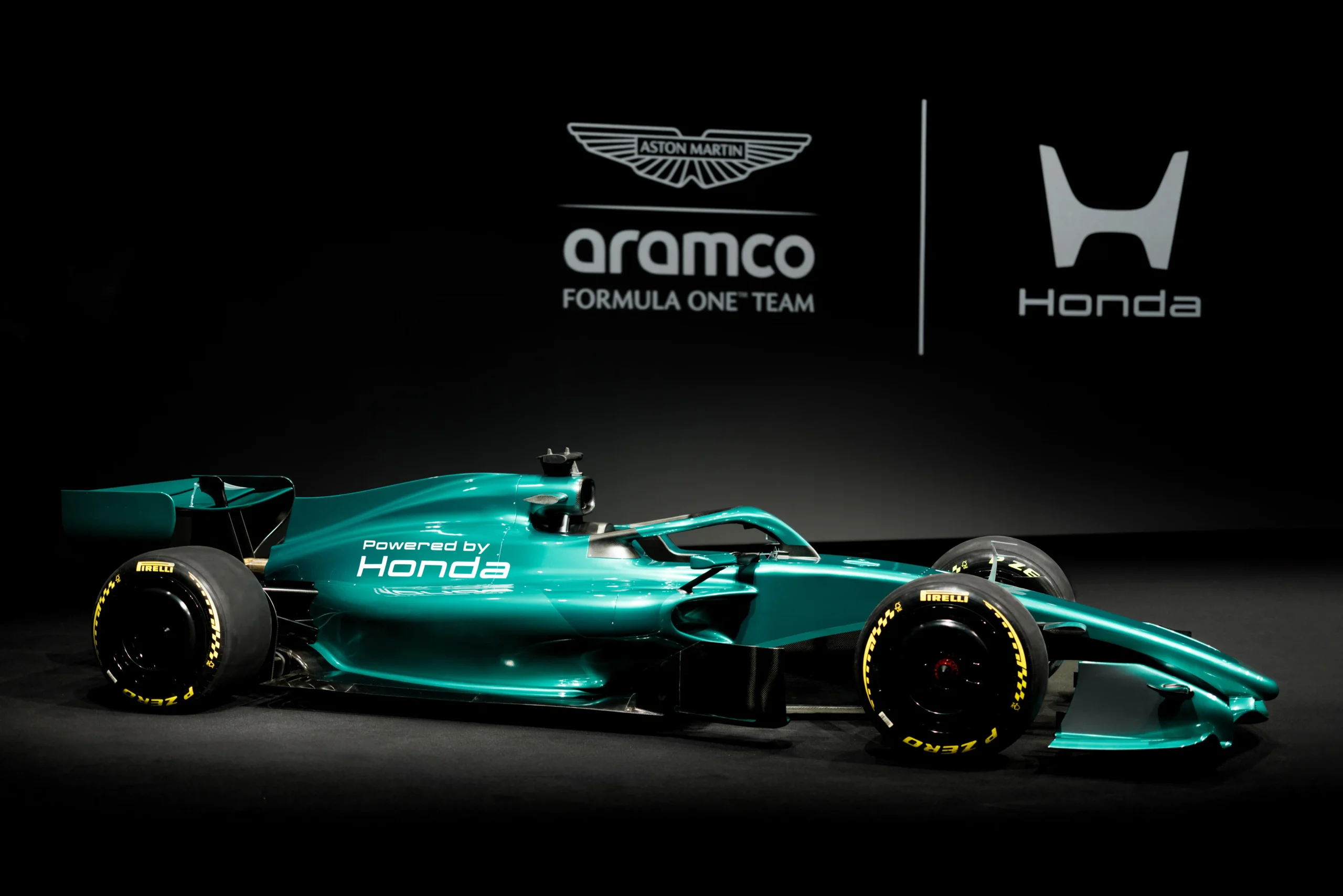
No team felt the weight of that transition to the new 2026 Formula 1 regulations more acutely than Aston Martin. The Silverstone outfit arrived at pre‑season testing carrying the hopes of a new works partnership, the aura of Adrian Newey’s arrival, and the expectation that this would be the moment they stepped decisively into the sport’s top tier.
However, for this British underdog, two Bahrain tests became a sobering reminder that revolutions rarely unfold cleanly. The AMR26 — Newey’s first creation for the team — was bold, intricate, and unmistakably ambitious. Flying this close to perfection has unfortunately resulted in a car that was late, fragile, and when paired with a Honda power unit that had not yet found its rhythm delivered a frustrating few weeks for the team.
Aston Martin entered 2026 with a new clarity of purpose that the team has rarely enjoyed in its modern incarnation. For the first time since the 1960s, they are a true works operation: a bespoke Honda power unit, a unified technical structure, and a new technology campus designed to rival the sport’s elite. The arrival of Adrian Newey — the most decorated designer in Formula 1 history — added a sense of inevitability to Lawrence Stroll’s long‑term ambitions.
But Formula 1 is rarely kind to teams undergoing simultaneous transformation. An unpainted AMR26 arrived at the Barcelona shakedown later than planned. Its first laps were cautious, its systems raw. By the time the team reached Bahrain for the first test, the car was still in its infancy. Newey’s design philosophy was clear — tight packaging, aggressive underfloor geometry, and aerodynamic surfaces that seemed to bend the regulations to their conceptual limit — but the execution was unfinished.
Battery‑related stoppages interrupted Fernando Alonso’s early work. Calibration issues kept Lance Stroll in the garage. A shortage of power unit components forced the team into short, carefully spaced runs. Across both Bahrain tests, Aston Martin completed fewer laps than any other team — by a significant margin.
Fernando Alonso remarked that at the reduced speed, “even the team chef could drive the car through Turn 12”, adding that they were running around 50km/h slower than usual in order to conserve energy for the straights.
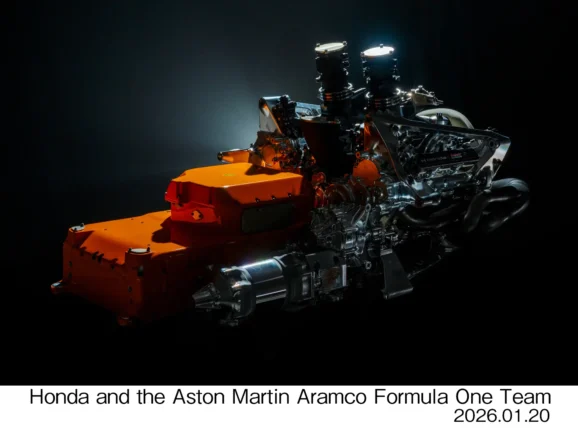
Honda’s return as a full works supplier was exciting for the F1 community and was meant to be the cornerstone of Aston Martin’s rise. The Japanese manufacturer embraced the 2026 regulations with characteristic intensity, building a power unit around the new 50/50 hybrid split and sustainable fuels. On paper, it is a masterpiece of engineering.
In practice, it is still learning to breathe.
Battery issues halted Alonso’s running in the second test. Energy deployment inconsistencies forced the team into conservative modes. The power unit’s potential is clear — its architecture is sound, its efficiency promising — but its reliability remains a work in progress.
Fernando Alonso has never been one to sugar‑coat reality. His assessment of the situation was blunt: Aston Martin are on the back foot. They need more mileage, more data, more time. But his faith in Newey is absolute. “On the chassis, there is no doubt,” he said. “We will find a way.”
Newey’s cars rarely begin a season as the finished article. They evolve, sharpen, and become weapons. The question is whether Aston Martin can survive the early months of the season long enough to let that evolution take hold.
The 2026 Formula 1 season is very much branded as a reset: A New Formula for a New Era. The new F1 regulations represent the most profound transformation of the sport since the hybrid era began in 2014. The FIA’s goal was simple: create lighter, more agile cars that race more closely, rely more on driver skill, and embrace a more sustainable technological platform.
The new chassis are regulated to be 30 kilograms lighter, 200mm shorter in wheelbase, and 100mm narrower than the 2025 cars. The effect has been immediate. Drivers reported sharper rotation, more responsive direction changes, and a return to the kind of mechanical feel that had been lost in the ground‑effect era. The cars look smaller, more purposeful, more alive.
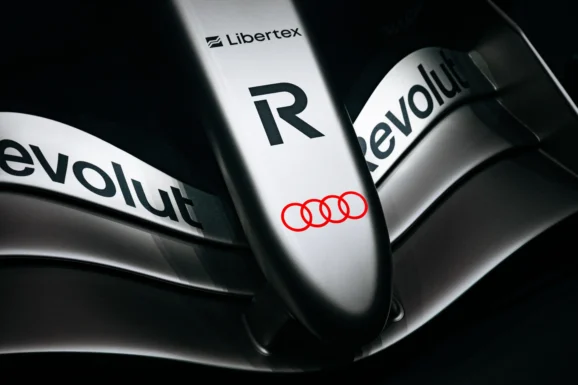
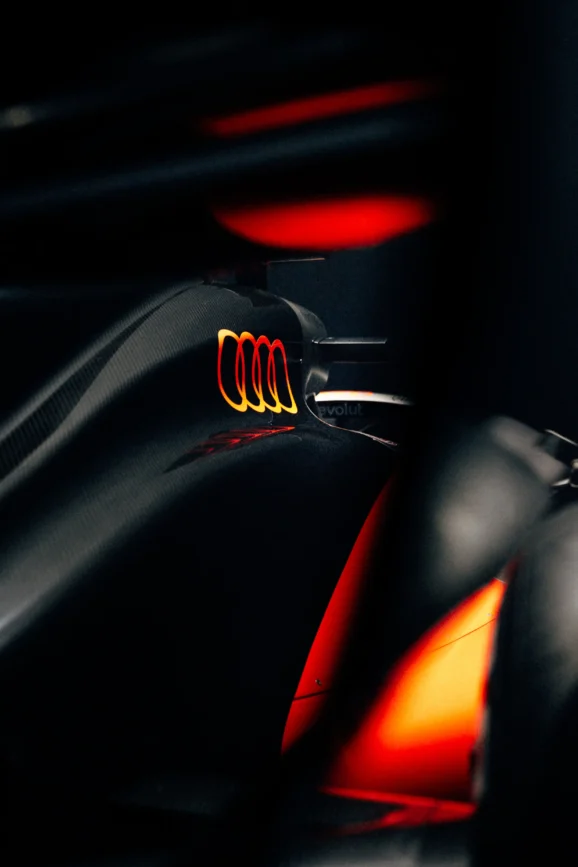
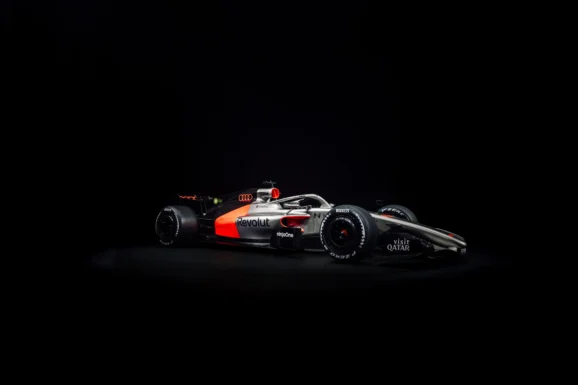
The most visible change is the introduction of fully active front and rear wings. Drivers now switch between Corner Mode (high downforce) and Straight Mode (low drag) on designated straights. DRS is gone. In its place is a system that relies on driver skill, requires timing, finesse, and a new rhythm behind the wheel.
Some teams mastered the transition quickly. Others — including Aston Martin — found the aero re‑engagement under load to be unpredictable.
Ferrari, meanwhile, embraced the new freedoms with characteristic audacity. Their rotating rear wing flap, which flips completely upside down in Straight Mode, became the technical sensation of the second Bahrain test. Combined with a diffuser‑extending bodywork trick made possible by an aggressive driveshaft layout, the SF26 is a car that pushes the regulations to their conceptual edge. It’s clear to see why Lewis Hamiliton is smiling again.
With one eye on sustainability regulations impose a 50/50 power split between the internal combustions engine and the batteries. The removal of the MGU‑H and the tripling of the MGU‑K’s output have transformed the power unit landscape. Energy recovery, deployment mapping, and software optimisation are now as important as aerodynamic efficiency.
Teams have already diverged in their philosophies, some prioritise explosive electric punch out of slow corners, whilst others aim for sustained deployment across the lap. A few are still wrestling with energy limits that force them into lift‑and‑coast earlier than planned.
This is the battleground that will define the early season.
And on this very subject the first major political flashpoint of the 2026 season arrived before a single competitive lap had been turned. Mercedes, long regarded as the benchmark in hybrid power unit engineering for the 2026 season found themselves at the centre of a storm over the interpretation of the new compression‑ratio limits introduced for the 2026 power units. What began as quiet paddock murmuring quickly escalated into formal pressure from Ferrari, Red Bull, and several other manufacturers, prompting the FIA to intervene.
Under the 2026 regulations, the maximum compression ratio for the internal combustion engine was reduced from 18:1 to 16:1, a change designed to rebalance combustion efficiency in line with the new 50/50 hybrid split. The intention was clear: limit peak thermal efficiency and ensure no manufacturer gained an outsized advantage from the ICE alone.
Rivals suspected Mercedes had found a way to maintain an effective 18:1 compression ratio under operating conditions, whilst not by breaking the rules, but by exploiting the gap between how compression ratios were measured at ambient temperature versus how they behaved once the engine reached full operating heat. In a formula where marginal gains can decide championships, this was no small matter.
After weeks of private discussions and what were described as “quiet technical checks,” the FIA issued its first major regulatory clarification of the season. The governing body confirmed that, from 1 August 2026, all power units must demonstrate compliance with the compression‑ratio limit not only at ambient conditions, but also at a representative operating temperature of 130°C.
For Mercedes, the ruling is a setback — but not a crisis. Their power unit remains one of the most sophisticated on the grid, and their performance during testing suggests they have speed to spare even without the disputed compression behaviour. But the episode has reminded the paddock of an old truth: in Formula 1, innovation and controversy often travel together.
And in a season defined by new technology, this is unlikely to be the last regulatory battle fought before the championship is decided.
The First round of testing in Bahrain was less a performance shootout and more a collective attempt to understand machinery that behaves like nothing the drivers have experienced. Yet patterns emerged — subtle, but telling:
McLaren: The Quietly Confident Benchmark – McLaren logged the most laps of any team and looked immediately comfortable. Lando Norris topped Day 1. Oscar Piastri’s long‑run pace was tidy, consistent, and free of drama. The reigning world champions have built a car that appears predictable, stable, and well‑suited to the new regulations.
Mercedes: Low Mileage, High Potential – Mercedes completed fewer laps than most, but their peak performance was eye‑catching. Kimi Antonelli delivered the fastest time of the week. George Russell’s early‑day benchmark hinted at a car with strong underlying speed, even if reliability remains a concern.
Red Bull: Fast, but Not Yet Harmonious – The Red Bull Ford power unit impressed rivals with its sustained deployment and recharge efficiency. Max Verstappen completed heavy mileage and looked comfortable. But the RB22 suffered from rear‑end instability and a narrow setup window. The raw pace is there; the consistency, maybe not.
Ferrari: Methodical and Encouraging – Ferrari ran a split programme, gathering aero data and completing race simulations. Their mileage was strong. Their tyre degradation numbers were encouraging. Their engineers looked quietly satisfied — always a sign that Maranello has found something worth exploring.
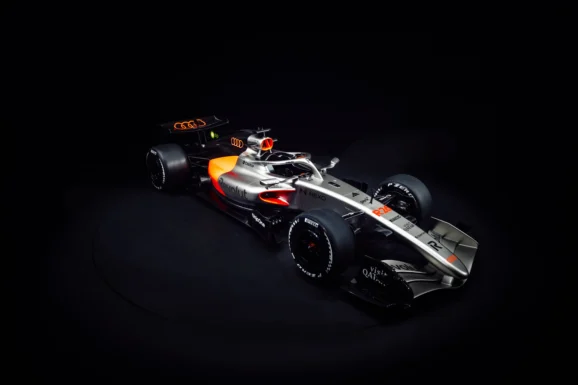
Audi and Cadillac: Solid Debuts – Audi’s first test as a works team was steady rather than spectacular. Cadillac impressed with operational sharpness and reliability. Both teams look well‑prepared for their first season, though neither appears ready to challenge the established top four.
Aston Martin: The Struggle Begins – Aston Martin completed the fewest laps of any team. Their power unit issues were persistent. Their correlation work was incomplete. Their drivers were still learning the car’s behaviour under active aero transitions. It was a difficult week — and a sign of things to come.
The second Bahrain test is traditionally when teams begin to reveal their true form. Performance runs appear. Soft tyres emerge. The competitive picture sharpens.
On the first day, George Russell topped the timesheets. McLaren and Ferrari looked strong. Aston Martin suffered a red flag when Lance Stroll beached the AMR26 at Turn 11. Alonso’s morning had already been compromised by a power unit issue.
Day two saw Kimi Antonelli deliver the fastest lap of the test so far. Verstappen looked sharp. Piastri was consistently competitive. Alonso, meanwhile, triggered another red flag when his AMR26 stopped on track — the result of a battery issue that forced Honda into overnight simulations in Sakura.
Day 3 revealed the first real competitive picture withperformance runs from the top teams; Mercedes looked the most comfortable overall, with Ferrari delivering the most impressive soft‑tyre laps. Red Bull showed strong pace but inconsistent balance, but McLaren made a noticeable step forward. The top four teams appear separated by tenths, not seconds.
Aston Martin, by contrast, completed just six laps. A shortage of Honda power unit parts forced them to end their test early. It was a painful conclusion to a painful fortnight.
As for the drivers, it’s good to see Lewis Hamilton enjoying Formula 1 again, his race simulations were competitive and his feedback has been sharp. Ferrari’s rotating wing and diffuser innovations have given him a platform that could yet deliver a final chapter worthy of his legacy.
Lando Norris enters 2026 with the quiet confidence of a driver who knows he has the machinery to fight for a title. McLaren’s consistency across both tests suggests they will be in the mix from the opening race. Norris’s long‑run pace was among the most stable of the field.
Max Verstappen remains the reference point. His adaptation to the new hybrid systems has been seamless. The Red Bull Ford power unit looks potent. If the team can widen the RB22’s setup window, he will be a formidable force.
Fernando Alonso has been candid about Aston Martin’s struggles, but he remains committed. His faith in Newey is absolute. His assessment of the power unit is measured. He knows the early season will be difficult, but he also knows that championships are not won in March.
Whilst the 2025 season was all about the rookie drivers, 2026 is about new teams. Audi’s arrival as a full works team is one of the defining stories of 2026. Their power unit programme is ambitious. Their facilities are world‑class. Their testing form was steady, if unspectacular. They look like a team building for the long term.
Cadillac, meanwhile, impressed with reliability and operational sharpness. Their debut was cleaner than many expected. They are not yet midfield leaders, but they are not backmarkers either.
Both teams add depth to a grid that now feels more competitive than at any point in the past decade.
Testing is now behind us. The numbers are written, the mileage logged, the problems exposed. What remains is the long road to Melbourne in a season that is poised on a Knife‑Edge. The factories are humming late into the night as teams prepare their final updates for the opening race. The competitive picture remains tantalisingly incomplete and too close to call. Will McLarens consistency keep them ahead? Or will the cool confidence of Mercedes provide the upper hand? I’d love to see Ferrari’s intriguing aerodynamic package bear fruit and give Lewis that elusive 8th World Championship. But we always have to watch those Red Bulls who are brimming with potential if they can tame their beast.
The midfield is compressed. The new entrants are competent. The regulations have delivered what they promised: unpredictability, diversity of design, and a genuine reset.
Aston Martin, however, faces a different kind of challenge. Their car is conceptually strong but operationally fragile. Their power unit is promising but inconsistent. Their testing mileage is low. They enter the first race not as dark horses, but as a team fighting simply to stabilise.
And yet, this is Formula 1. Seasons are long. Development curves are steep. Newey’s influence is rarely immediate — but it is always profound.
As the first Grand Prix of 2026 approaches, the sport finds itself on the cusp of a new era. The cars are lighter. The racing promises to be closer. The hybrid systems have redefined strategy. And Drive to Survive, launching this week, will bring millions of new eyes to a championship that has never looked more open.
The lights will go out in Melbourne soon. When they do, the story of 2026 will begin in earnest — a story of reinvention, resilience, and the relentless pursuit of speed.
Aston Martin may not have started this new era the way they hoped. But in Formula 1, beginnings are rarely the point. What matters is where you finish. And in a season as unpredictable as this one, anything remains possible.

Mark G. Whitchurch is a seasoned motoring journalist whose work—covering road tests, launch reports, scenic drives, major races, and event reviews—has appeared in The Observer, Daily Telegraph, Bristol Evening Post, Classic & Sports Car Magazine, Mini Magazine, Classic Car Weekly, AutoCar Magazine, and the Western Daily Press, among others. He won the Tourism Malaysia Regional Travel Writer of the Year in 2003 and is a member of The Guild of Motoring Writers.
READ MORE: ‘New £2.5 million Rolls-Royce Phantom marks model’s centenary‘. To commemorate 100 years of its flagship model, Rolls-Royce has unveiled a 25-car Centenary Phantom combining solid-gold detailing with the most intricate craftsmanship ever produced at Goodwood.
Do you have news to share or expertise to contribute? The European welcomes insights from business leaders and sector specialists. Get in touch with our editorial team to find out more.
All images: Courtesy, Aston Martin