The storied Swiss resort of St Moritz, known internationally as the epitome of Alpine luxury, is a favourite with Royals and celebrities thanks to its stellar hotels, Michelin-starred restaurants, and designer boutiques. But you don’t have to be rich or famous to visit Europe’s landmark skiing destination, finds BBC World Affairs producer and avid skier, Oggy Boytchev
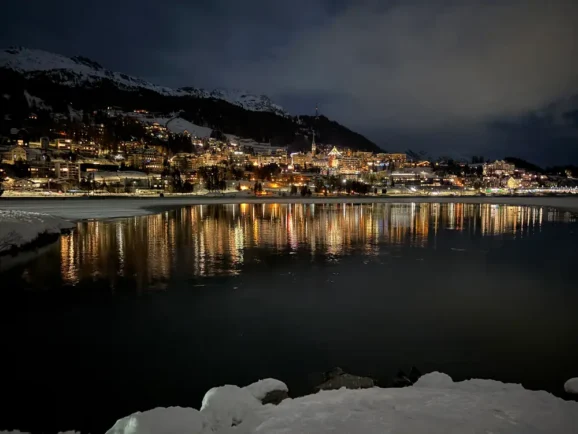
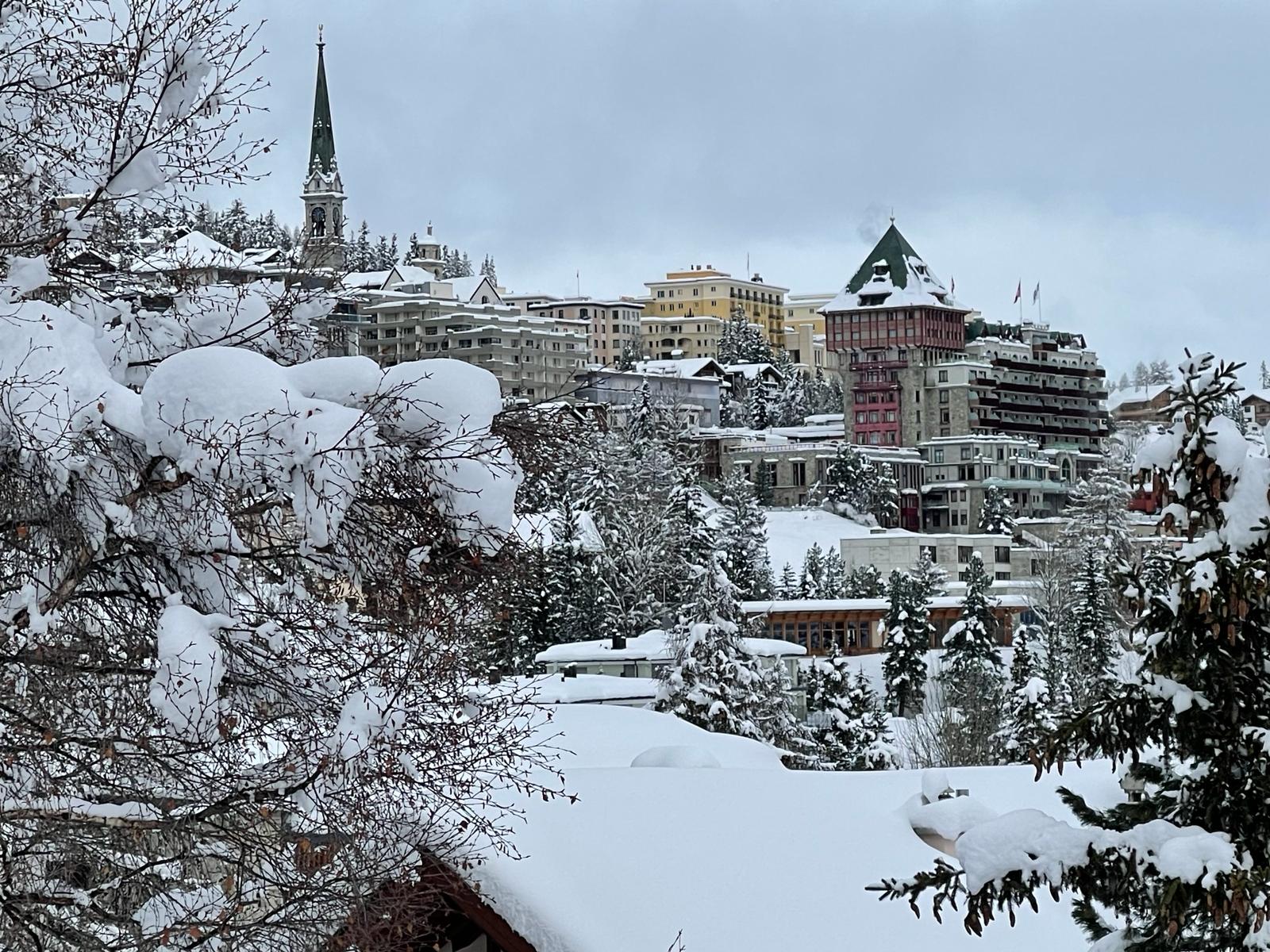
For a long time, the small mountain village of St Moritz in the Swiss Alps has had a reputation of being a playground for the mega-rich. In the last few years, the local tourist board has rebranded St Moritz with the catchphrase ‘Top of the World’.
With its high altitude of 1856m (6000 feet) it stands literally at the top of the world. A short ride on state-of-the-art ski lifts takes you to above 3000m (10,000 feet), which guarantees good skiing for most of the winter.
But there is much more to St Moritz. It has attracted royalty and wealthy merchants since the middle ages who sought cure for their ailments in the hot mineral springs of St Moritz Bad. Under the current mayor, Christian Jott Jenny, a classical tenor turned politician, St Moritz is rapidly becoming a centre of the arts. The patrons? Well, they are the wealthiest people on the planet. Some have bought properties here, and others are frequent visitors to some of the most luxurious hotels ever known. There is, of course, also persistent rumours of celebrity tax exiles living here, although you don’t see any signs of them in the village shops.
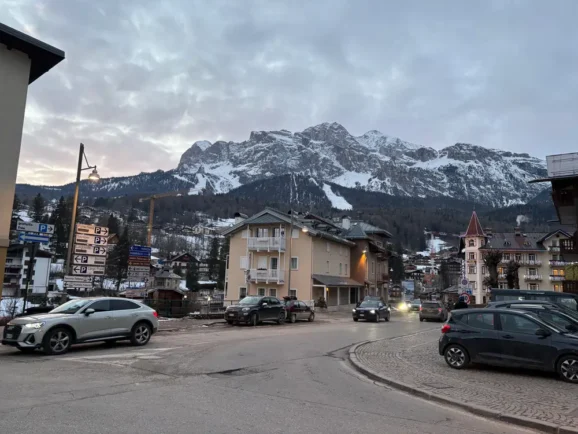
I’ve been coming to St Moritz regularly since 1998. It offers some of the best skiing in the world. And I’m not super-rich. You can do St Moritz on a budget if you know how.
First, get acquainted with the village geography. The municipality of St Moritz consists of St Moritz Dorf (village) and St Moritz Bad (Baths). If you are a skier, I wouldn’t recommend looking for budget accommodation in the village. There are affordable apartments here but they have been taken well in advance by the army of seasonal workers.
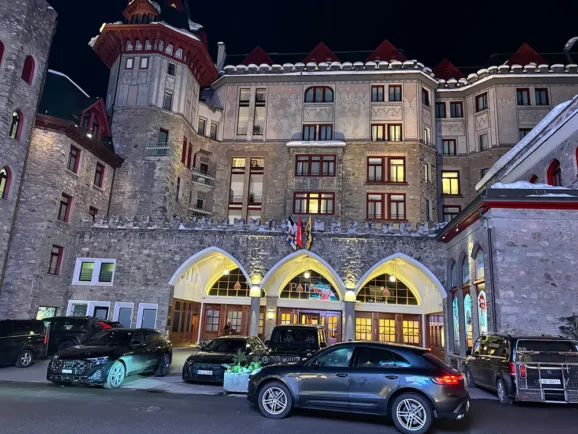
So that leaves us, budget skiers, with St Moritz Bad. The biggest landmark in St Moritz Bad is the exquisite Kempinski Hotel.
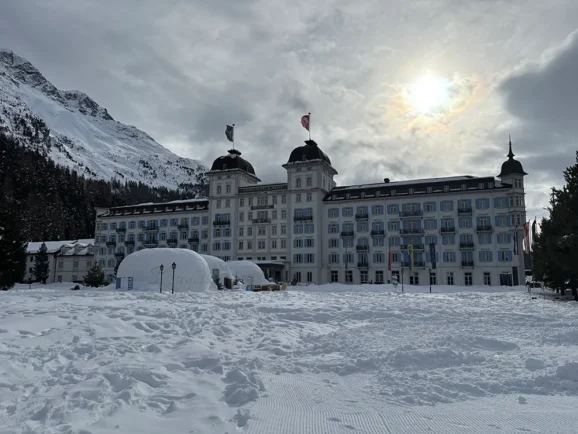
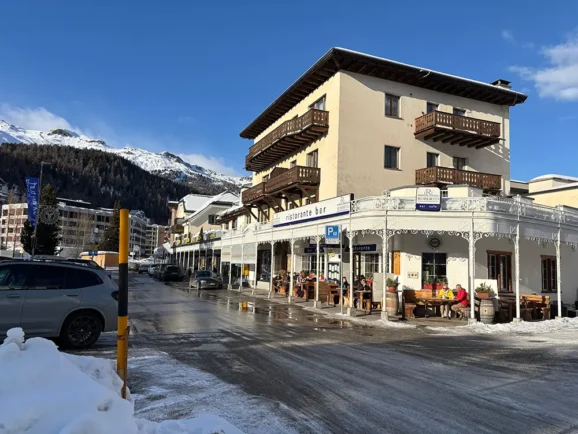
But you can also find mid-range hotels, relatively cheaper restaurants and cafes, and some purpose-built apartment blocks where you can rent self-catering accommodation.
St Moritz Bad has the added benefit that the base station of the Signalbahn (a fast cable car) is located here. It takes you to Alp Giop on altitude of more than 2,000m within minutes. From there you can explore the whole of the magnificent skiing space of Corviglia, a vast network of interconnected black and red runs. A day lift pass covering the whole of Corviglia and the neighbouring Corvatsch skiing slopes costs CHF47 (£40), an extremely competitive price compared with all major skiing resorts.
At the turn of the 21st century, St Moritz Bad was somewhat unloved. Some of the hotels were falling into disrepair, others offered lower prices in order to survive. This is when I used to come to Hotel Reine Victoria (Queen Victoria Hotel). It’s a walking distance to Signalbahn – a great bonus for avid skiers. The dark corridors, the peeling paint, the surly barman, the unappealing public spaces of this Art Nouveau building were sometimes difficult to accept. But it was cheap and I loved it.
Not anymore.
The demand in the last ten years has made a total refurbishment worth it. And what a beauty it has become today.
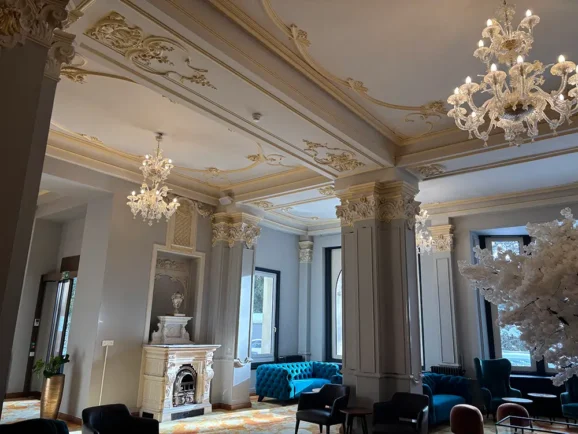
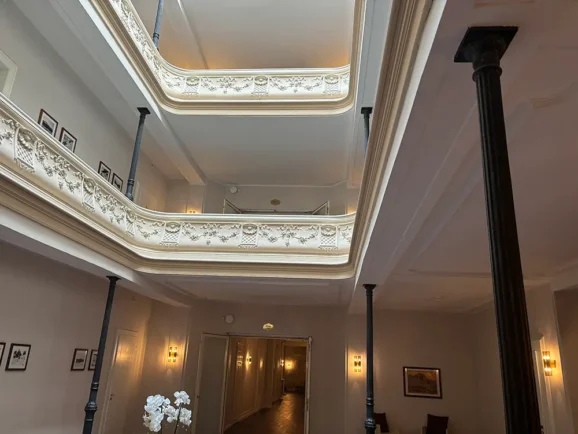
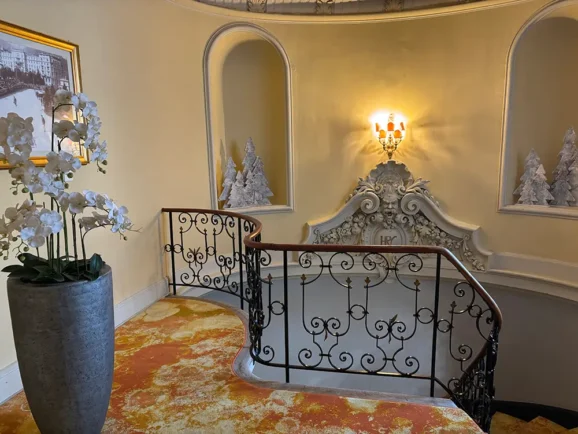
I stayed there last year, having taken a Belle Etage room (first floor with a balcony), and it nearly broke the bank at the end of the week.
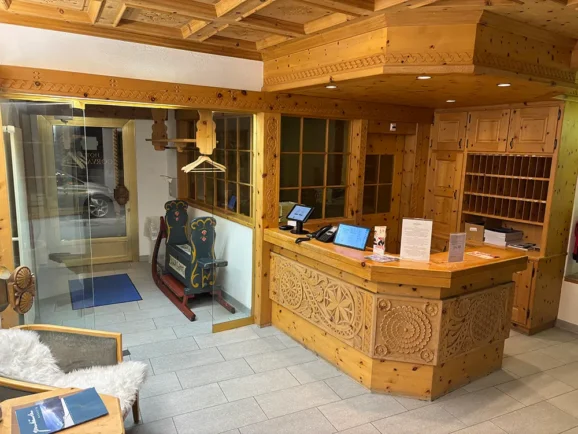
This year, we chose a budget option (these things are relative in St Moritz) at a nearby Hotel Corvatsch. It’s situated in a parade of shops and restaurants. The traditional Swiss chalet décor is a bit cheesy but palatable. It was spotlessly clean and breakfast was good.
The advantage of staying in St Moritz Bad is that almost all hotels here offer free access to the municipal swimming baths, a vast complex comprising a 25m swimming pool, open air hot mineral water pool, a children area and, of course, lots of spa treatments, which sadly are not included in the deal. You are given a bracelet at the hotel, which lets you through the turnstile and serves as an electronic key to your locker in the changing room. In the spirit of communality, the modern complex is owned and run by the parish council.
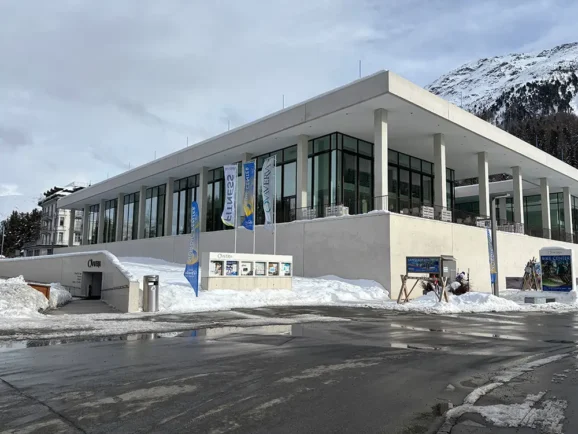
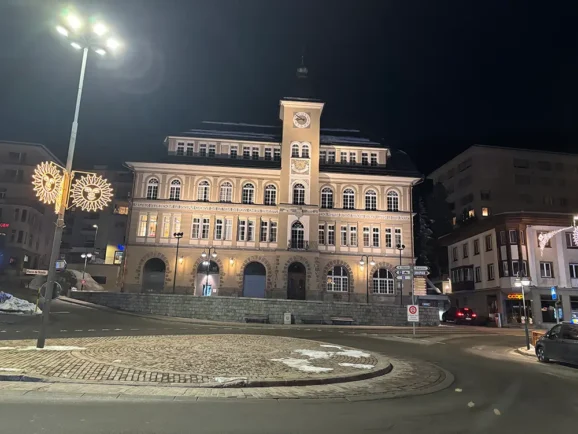
Community spirit in St Moritz, backed by the substantial revenues of the council, is epitomised in the grand building of a functioning lending library in the village centre. Needless to I say, I have always been too tired after a day of skiing to take advantage of it.
The municipality of St Moritz has a population of 5,000 permanent residents. In the winter, it nearly doubles because of the seasonal workers. These are not just hotel cleaners and kitchen staff. The ‘seasonal’ workers in St Moritz include some of the top chefs in the world, chauffeurs, butlers, personal shoppers, croupiers, bodyguards and security staff. For example, the famous NOBU restaurant takes residence at the Badrutt’s Palace Hotel in a space which was once the first indoor tennis court. La Coupole at the Palace is only one of seven NOBU restaurants in the world by celebrity chef Nobuyuki Matsuhisa.

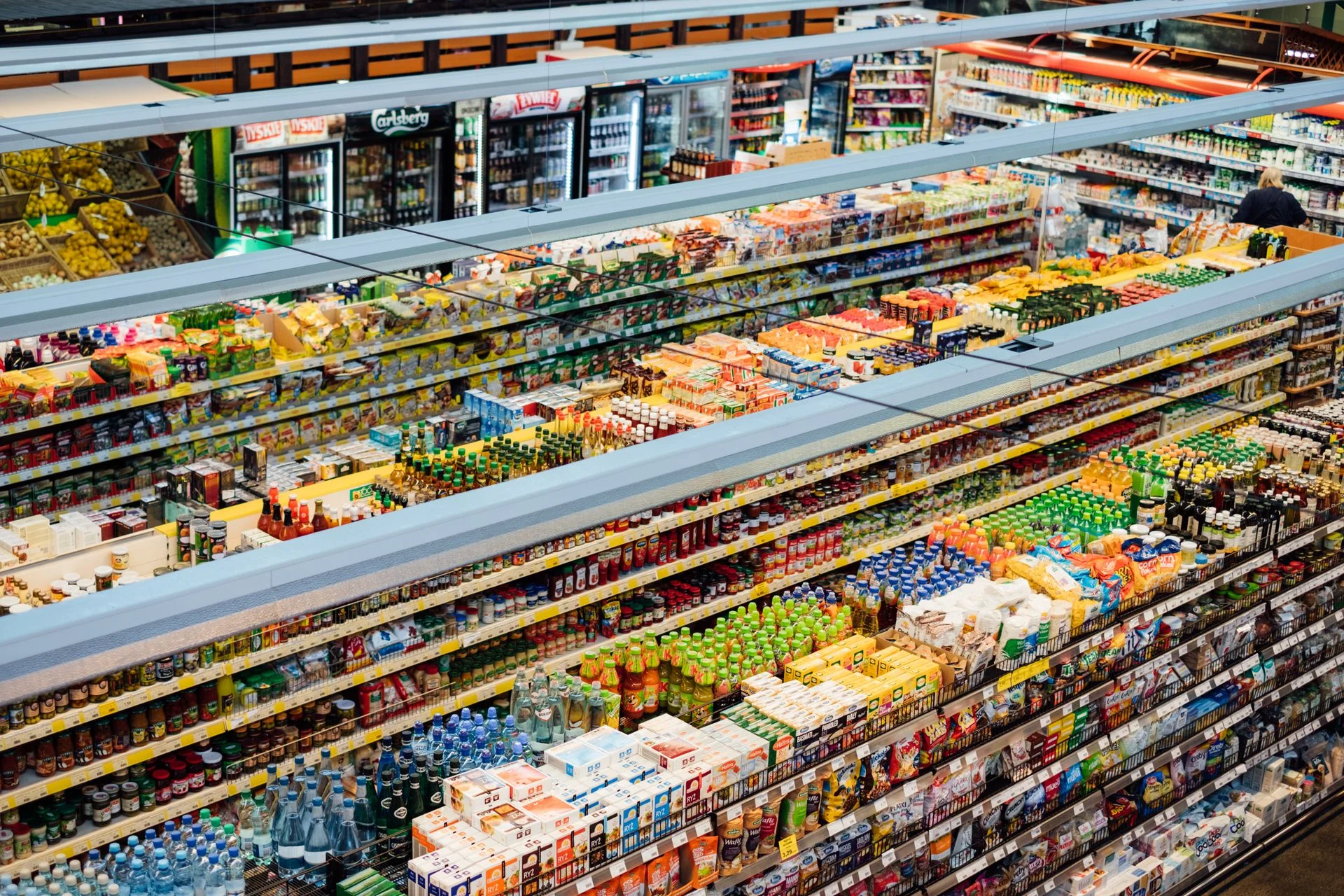
When it comes to shopping for ordinary people, until recently there was only one place to buy stuff at a reasonable price – The CO-OP. This is where most budget travellers to St Moritz shop. It’s the biggest supermarket in St Moritz, which sells not only groceries, ready meals and alcohol but electrical goods and clothes. In the last few years, a Lidl has appeared not far from the CO-OP.
When it comes to languages, St Moritz is situated in the German speaking canton of Graubunden (French, Grisons). But, of course, everybody speaks English. I am envious of the ability of hotel and restaurant staff to switch effortlessly between English, German and Italian. Northern Italy is not very far and a lot of Italians work in St Moritz. Very rarely have I heard any French spoken here, although it’s one of the four official languages in Switzerland. If you hear a strange-sounding language, which may confuse you, it’s Romansh, the fourth official language in the country. It’s an ancient language with roots in the colloquial Latin spoken in the streets of the Roman Empire and Rhaetian. Rhaetian is another ancient language spoken in the Eastern Alps, which some linguists believe is non-Indo-European.
And finally, how to get there.
Although I have seen cars with British number plates here, the best way to get to St Moritz from the UK is to fly to Zurich. From there you can take a train from the main train station to St Moritz. It takes about three hours and inevitably involves one change. But the journey is well worth it. You will see some of the most picturesque landscapes on earth.
Of course, there is an airport in the outskirts of St Moritz but, as you might imagine, it only accommodates private planes.

Oggy Boytchev is a celebrated BBC journalist and producer who has covered the majority of international conflicts over the last 30 years, often with the BBC’s World Affairs Editor, John Simpson. His critically-acclaimed book ‘Simpson & I’ lifts the lid on the untold stories behind the headlines and documents some of the most memorable reports to appear on BBC News. Today, Oggy is an in-demand public speaker and author. His latest novel, Bullion – The Mystery of Gaddafi’s Gold, is an adventure spy thriller based on research into Gaddafi’s missing wealth.
Images, courtesy Oggy Boytchev