After IPSO and its Editors’ Code Committee both rejected calls to address politically biased reporting, the veteran journalist Michael Leidig asks whether technically accurate news can still distort the truth — and whether the current rules allow it to happen
Earlier this month, I received a short reply from the Editors’ Code of Practice Committee, part of the UK’s press regulator IPSO. It was polite, two paragraphs long, and unequivocal in its conclusion that the Code itself would remain unchanged. My request for it to reflect the dangers of selective factual reporting had been declined. The reason given was that any such amendment would conflict with the principle of a “free press”.
This brought to a close a complaint I had pursued for several months. It concerned the way former Transport Secretary Louise Haigh’s resignation was reported. The headlines referred to a “fraud conviction” and “missing phones”, creating an impression of serious wrongdoing. The truth was, in fact, considerably more mundane. More than ten years ago, Haigh reported her mobile phone stolen after being mugged. At some point after filing the report, she found the phone at home. Although there had been no deliberate attempt to deceive, and no financial gain or malicious intent, the initial report was technically false. On legal advice, she accepted a caution for wasting police time, a decision taken to avoid a lengthy court process. The caution resulted in a spent conviction, meaning it had no impact on her record going forward and was no longer disclosable. The court imposed no penalty, and the matter was closed. By the time it was revisited in press coverage, it had long since ceased to have any relevance to her political career.
The news coverage wasn’t technically inaccurate as the facts of the matter were correct. My concern lay with the arrangement of those facts. The presentation encouraged readers to draw a conclusion that was in my view misleading, even though the details had not been invented. The headlines led with the most damaging interpretation. The relevant context came much later, and by the time readers saw it, the narrative had already been shaped and views cemented.
I complained to IPSO, citing political bias. Under the current Code, there is no mechanism for addressing political bias when it takes the form of selective emphasis or omission. This approach allows press coverage to influence perception in subtle ways that remain beyond the reach of regulation.
The technique is common. Newsrooms, whatever their editorial stance, often frame stories to reflect the expectations of their audience. Readers receive content that confirms what they already believe. Context is stripped away or confined to the final paragraphs. Opposing viewpoints are marginalised or absent. The end result is a media environment that reinforces division, with each outlet claiming truth while presenting only part of it.
Perhaps unsurprisingly, my complaint was rejected on the basis that political bias is not regulated under the current code.
In response to its ruling, I took the issue further by submitting a formal request to the Editors’ Code of Practice Committee. I asked them to consider a simple addition to the Code, one that acknowledged the power of framing and fact selection to mislead. I was not asking for new limits on opinion or for political neutrality but rather wanted an editorial standard that recognised that distortion can occur even when no single fact is wrong.
Earlier this month, I received a reply to say the reporting in question did fall within the rules because it was factually correct. The response was brief and offered no further detail on how the decision had been reached. There was no explanation of the process, no mention of whether alternative views had been considered, and no indication that an appeal would be possible.
“The committee has considered your suggestion and has concluded that the Code should not be amended. The committee considered that your proposals would run counter to the concept of a free press,” I was told.
Let me be clear here: this is nothing whatsoever about censorship (or calls for it). The freedom of the press to publish opinion, analysis and criticism must remain protected. But there is a difference between journalism and political messaging. As investigative journalist Michael Nikbakhsh observed in the documentary How to Build a Truth Engine, when the press serves power without scrutiny, it ceases to inform and begins to persuade.
I have experienced this shift personally. Years ago, my own agency was falsely accused of spreading fake news by a digital publication with an overt ideological agenda. Internal documents later revealed that the motive was commercial rivalry, not a pursuit of accuracy. The allegation was untrue, but the damage it caused was real. The reporting may have followed the facts, but the intention behind it was anything but impartial.
The consequences of this are becoming more and more serious. Public trust in journalism is under pressure. Elon Musk has accused traditional outlets of manipulating narratives. Donald Trump recently accepted a substantial legal settlement over a disputed poll. While both figures are divisive, the concerns they raise speak to a growing sense that reporting is increasingly shaped by agenda rather than evidence.
There is an argument that the press should be subject to neutrality laws, similar to those applied to broadcasters. I disagree. That approach often creates false balance, giving disproportionate weight to marginal views in the name of fairness. What is needed is something more basic: recognition of how editorial judgement affects meaning. Readers deserve transparency in the facts they read and about how those facts are framed.
The Haigh story was small but the way it was presented was anything but. If newspapers cannot be relied upon to treat even minor political matters with accuracy and fairness, then their ability to report on more consequential issues will rightly come under scrutiny.
The line between truth and fairness is a narrow one. The press should not be punished for reporting facts but it should be willing to reflect on the way those facts are used.
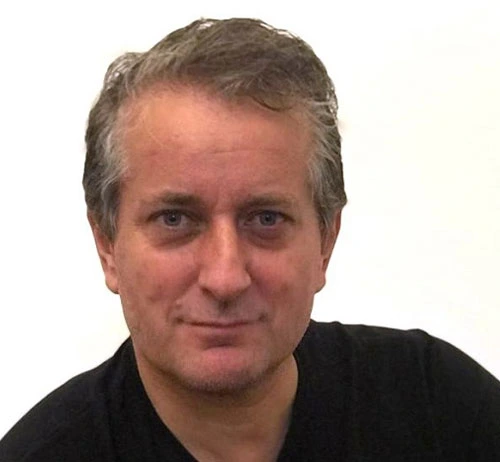
Michael Leidig is a British journalist based in Austria. He was the editor of Austria Today, and the founder or cofounder of Central European News (CEN), Journalism Without Borders, the media regulator QC, and the freelance journalism initiative the Fourth Estate Alliance respectively. He is the vice chairman for the National Association of Press Agencies and the owner of NewsX. Mike also provided a series of investigations that won the Paul Foot Award in 2006.
Main image: Suzy Hazelwood/Pexels