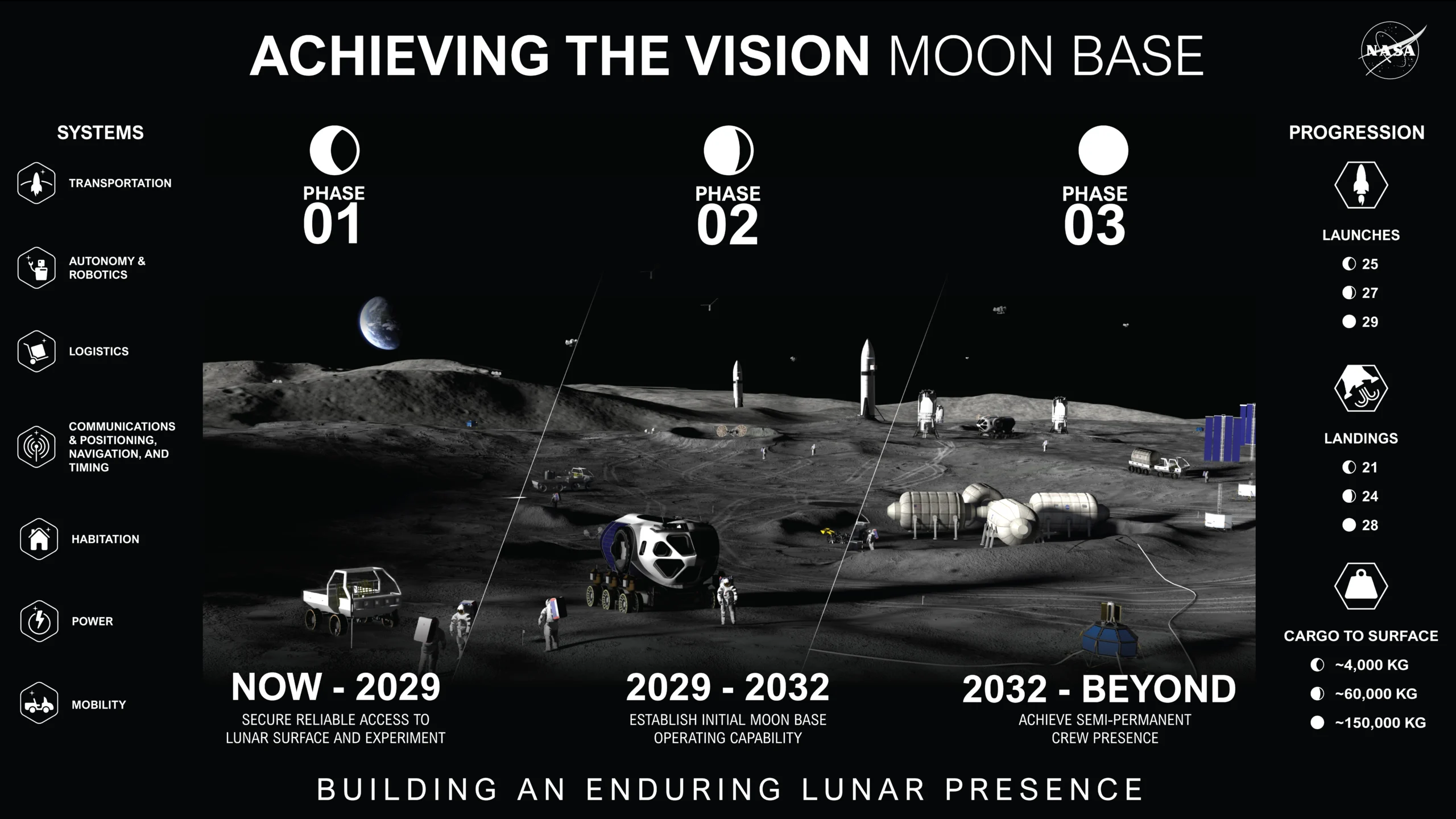
Four rocket-powered MoonFall drones will ‘hop’ across the lunar South Pole before astronauts begin building NASA’s new Moon Base, with Firefly Aerospace awarded a $75m contract to deliver them
NASA plans to send four rabbit-like drones to the Moon to hop across some of its toughest terrain before astronauts begin building the first lunar base.
The MoonFall drones will use rocket-powered jumps rather than rotors, allowing them to move across the lunar South Pole where there is no air for conventional drones to fly.
The mission is part of NASA’s wider Moon Base plan, which is intended to turn Artemis from a series of landings into a lasting human presence near the lunar South Pole.
Firefly Aerospace won a $75m NASA Jet Propulsion Laboratory subcontract to deliver the drones, with launch targeted for no earlier than 2028.
The drones will be carried by Firefly’s Elytra spacecraft and deployed above the lunar South Pole to support NASA’s MoonFall mission and the agency’s Moon Base programme.
They are designed to land and operate for one lunar day, which can last up to 14 Earth days, using high-definition cameras and instruments to survey the terrain.
Firefly says: “Based on the legacy of NASA’s Ingenuity Mars Helicopter, the drones will be capable of multiple propulsive hops to explore hard-to-reach areas and map safe landing spots and resources, such as water ice, in support of future human missions under NASA’s Artemis program.”
That could allow them to reach places that ordinary rovers would struggle to cross, including rough ground, shadowed regions and cratered terrain near the South Pole.
NASA has chosen the area because it is central to its Moon Base ambitions, with permanently shadowed regions that may contain water ice and areas of high scientific and operational interest.
“NASA’s MoonFall mission will deploy four highly mobile drones to survey the lunar South Pole,” NASA said.
“MoonFall drones are designed to scout locations that are difficult or impossible for traditional rovers to access, including steep terrain and permanently shadowed regions that may contain water ice and other valuable resources.
“Using high-definition optical cameras and other instruments, the drones will survey terrain, gather imagery, and help identify areas of interest for future exploration and site development.”
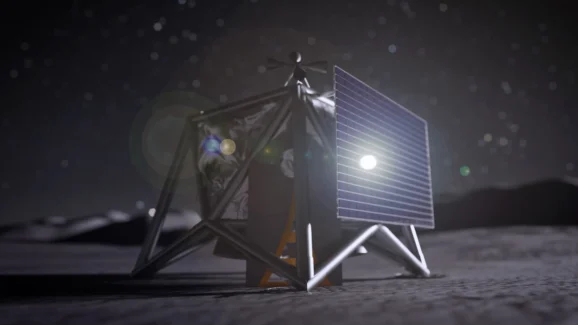
According to NASA, the Moon Base plan is being developed in phases. The first, running from now until 2029, is built around robotic missions, technology tests and early equipment deliveries to scout the area and prepare for future surface operations.
NASA’s own Moon Base development material lists MoonFall drones among the key Phase One missions, alongside Blue Origin’s Blue Moon Mark 1 lander, Astrobotic’s Griffin-1, Intuitive Machines’ IM-3, lunar terrain vehicles, radioisotope heating units, communications satellites and VIPER.
The second stage, from 2029 to 2032, is expected to move towards early habitation, with a pressurised rover, site preparation and logistics rovers, nuclear surface power, extra solar power and surface communications systems.
And the third, from 2032 onwards, is intended to establish a sustained human presence, with habitats, cargo return, logistics systems and technologies to use resources found on the Moon itself.
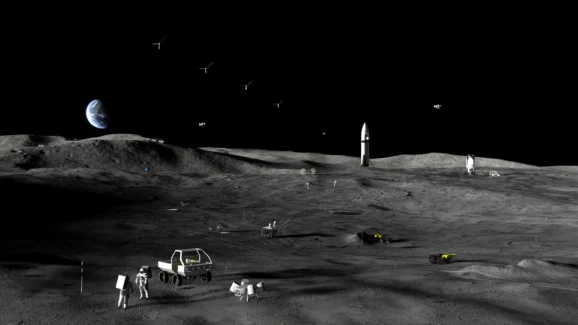
NASA says Artemis astronauts will live and work at humanity’s first lunar outpost as the agency works with international partners, industry, universities and innovators to build an enduring presence near the South Pole.
READ MORE: Apollo, Artemis, Ali and Live Aid satellite station set for new Moon role in £37m deal. Goonhilly Earth Station on Cornwall’s Lizard Peninsula as the US space company builds a commercial space-to-ground network for future lunar missions, deep-space communications and NASA-backed services.
Do you have news to share or expertise to contribute? The European welcomes insights from business leaders and sector specialists. Get in touch with our editorial team to find out more.
Main image: Infographic illustrating a phased approach to Moon Base development near the lunar South Pole, showing the progression from early exploration and infrastructure deployment to sustained human presence on the Moon. Image Credit: NASA/Edmy S. Cruz Reyes