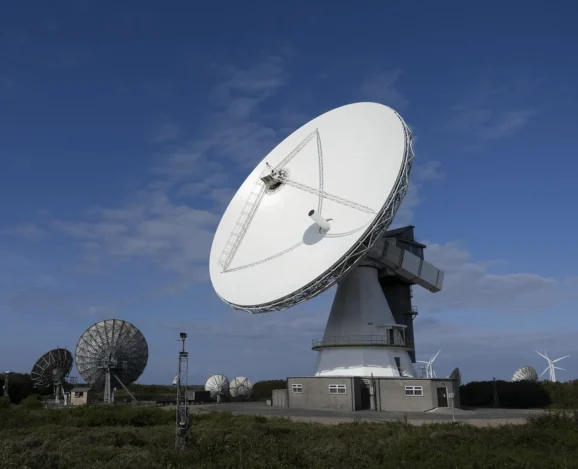
Goonhilly Earth Station on Cornwall’s Lizard Peninsula as the US space company builds a commercial space-to-ground network for future lunar missions, deep-space communications and NASA-backed services
A Cornish satellite station whose giant dishes helped bring Apollo 11, Muhammad Ali fights and Live Aid to British television screens is set for a new role in the next Moon race under a £37m deal with a U.S space company.
Goonhilly Earth Station, on the Lizard Peninsula in Cornwall, which was also involved in the Artemis mission, is being acquired by Intuitive Machines (IM) as part of a space-to-ground network designed to keep spacecraft, lunar landers and future Moon missions connected.
The site, once the largest satellite earth station in the world, has more than six decades of communications history and is now being drawn into the next phase of lunar exploration.
IM has entered into a definitive agreement to acquire Goonhilly Earth Station Ltd and Goonhilly USA Inc, which trades as COMSAT. The acquisition includes Goonhilly’s lunar and deep-space communications, commercial satellite communications, and defence and security divisions.
The UK acquisition is valued at about £37m, split equally between cash and stock, according to transaction filings. The wider deal is expected to close in the third quarter of 2026, subject to conditions including approval under the UK National Security and Investment Act 2021 and clearance from the US Federal Communications Commission.
IM said the acquisition is expected to expand its integrated space-to-ground network by adding 44 antennas, increasing network availability and scaling spacecraft communication and control capabilities in lunar and cislunar environments.
Steve Altemus, IM’s co-founder and chief executive, said: “Customers have been clear that they want a single, integrated, and resilient solution for their communications and PNT needs as they accelerate missions at an unprecedented pace.
“Our partners of integrated space-to-ground network are configured to support missions across LEO, lunar, and cislunar environments through a single source for communications, PNT, and data transport.
“The Intuitive Machines space-to-ground network combines a lunar data-relay constellation with a global ground segment to maintain persistent line-of-sight communications with the Moon.
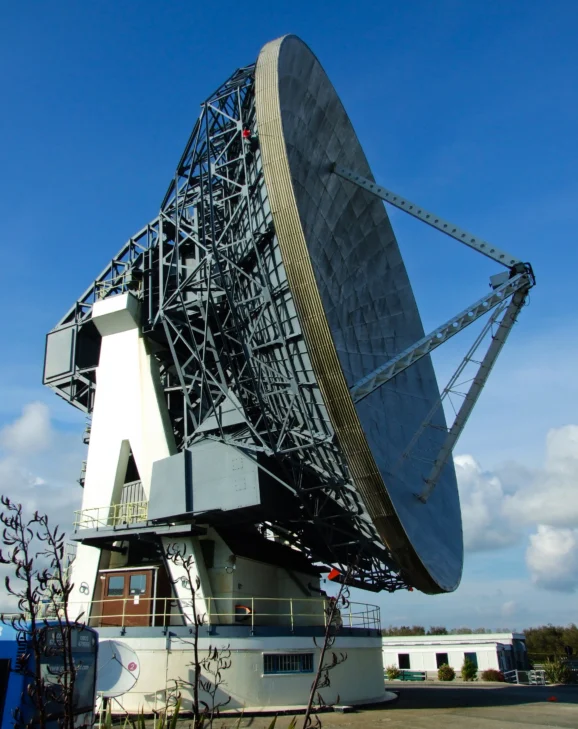
“Goonhilly is expected to enhance this architecture with deep space assets, including the GHY6 32-meter antenna, the cryogenically cooled GHY3 30-meter antenna, and multiband support across X-band, S-band, and Ka-/Ku-band.
“This will give customers greater flexibility in mission design and more options for communicating with spacecraft throughout lunar and deep space operations.”
Goonhilly sits on Goonhilly Downs near Helston and was chosen in part because the hard serpentine rock beneath the downs could bear the weight of huge satellite dishes while causing limited interference with faint signals from space.
Its first dish, Antenna One, known as Arthur, was built in 1962 to work with Telstar, the satellite that helped launch the age of live transatlantic television.
Arthur is 25.9 metres in diameter, weighs 1,118 tonnes and is now a Grade II listed structure.
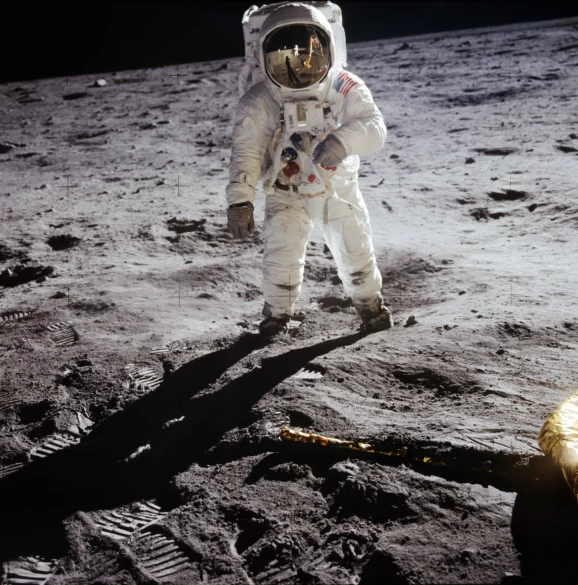
The station later became part of major global communications moments including Muhammad Ali fights, the Olympic Games, the Apollo 11 Moon landing and the Live Aid concert in 1985.
At its peak, Goonhilly had more than 30 communications antennas and dishes in use and also linked into undersea cable lines.
Its largest dish, Merlin, is 32 metres across. Other dishes carry names from Arthurian legend, including Guinevere, Tristan and Isolde, reflecting Cornwall’s links with the legend.
The site was one of Britain’s most visible symbols of the early satellite age, connecting Cornwall with global broadcasting, international telecommunications and later space science.
Its fortunes changed after BT announced in 2006 that it would shut satellite operations at Goonhilly and move them to Madley Communications Centre in Herefordshire.
The visitor centre, which had once attracted about 80,000 people a year, closed after Easter 2010.
The station then began a second life in space science.
In 2011, part of the site was earmarked for sale to create a space science centre, with plans to upgrade dishes for deep-space communications.
Goonhilly Earth Station Ltd took ownership of the site in 2014.
Its 30-metre and 32-metre dishes have since been refurbished, upgraded, tested and certified as deep-space stations capable of supporting or enhancing NASA’s Deep Space Network and the European Space Agency’s ESTRACK network.
Goonhilly has offered services to space agencies including NASA, ESA, JAXA, ASI, CNES, CSA, DLR and the UK Space Agency.
The station has also become directly involved in the new wave of commercial lunar missions.
In 2018, Goonhilly joined a collaboration with the European Space Agency and Surrey Satellite Technology to support commercial lunar mission services, including work connected with the Lunar Pathfinder mission.
On February 22, 2024, the station served as the Earth station for IM’s IM-1 spacecraft as it landed on the Moon, the first American spacecraft to do so since Apollo 17 in 1972.
Goonhilly has also supported more than 20 missions for NASA, ESA and private exploration companies including Intuitive Machines and ispace since becoming a commercial deep-space communications provider.

Kenn Herskind, executive chairman of Goonhilly, said: “Goonhilly has spent years building a world class deep space communications capability.
“Joining Intuitive Machines will allow us to scale that capability globally and directly support the next era of lunar exploration.
“Together, we will be creating a commercial lunar communications network that is interoperable, resilient, and ready to support Artemis and international missions.”
The deal comes as NASA’s Artemis programme, commercial landers, national security missions and private-sector plans for long-term Moon operations drive demand for more resilient space communications, Intuitive Machines said.
Spacecraft, orbiters, surface systems and landers need communications, navigation, timing and mission data services, particularly when operating beyond normal Earth-orbit satellite networks.
IM intends to operate lunar satellites around the Moon, using dedicated partner ground segments on Earth to support crewed and uncrewed operations in the cislunar environment.
The planned architecture is intended to support missions through multiple service-delivery paths, including direct-to-Earth and relay-based access, so customers can maintain connectivity and secure communications even when Earth drops out of view.
IM said it used its data relay and partner ground segments earlier this year to track Artemis II.
Later this year, it expects to link its IM-3 mission and first lunar relay satellite into a unified communications and navigation network intended to support long-term lunar operations and persistent connectivity.
That first relay satellite, Altus-1, is expected to launch with the IM-3 mission and support GEO-to-cislunar relay services.
READ MORE: Japan and Luxembourg deepen space ties as lunar race gathers pace. A Japanese ministerial delegation toured ispace-EUROPE’s Luxembourg rover facility as the two countries strengthen cooperation in lunar exploration, robotics and advanced space technology.
Do you have news to share or expertise to contribute? The European welcomes insights from business leaders and sector specialists. Get in touch with our editorial team to find out more.
Main image: Goonhilly Earth Station alongside images reflecting its role in broadcasts linked to Apollo 11, Muhammad Ali fights and Live Aid. Artwork: Belters News. Credits: Goonhilly image by Alison, CC BY-SA 3.0, via Wikimedia Commons; Muhammad Ali image by Associated Press / The Courier-Journal, Public Domain, via Wikimedia Commons; Apollo 11 image by Neil A. Armstrong, Public Domain, via Wikimedia Commons; Live Aid image by ElLo57, CC BY-SA 2.0 de, via Wikimedia Commons.