Felicity Heathcote, a celebrated author, Olympic psychologist and wife of an Irish diplomat, spent five extraordinary years as one of the last Western women to remain in Tehran after the Iranian Revolution. During her time there, her husband met future Supreme Leader Ayatollah Ali Khamenei, while she smuggled an Enigma-style code machine into the country, dodged bullets, survived a month of relentless Iraqi bombing and adopted a child from India. With Khamenei now dead and Iran engulfed in another war, she recalls her remarkable experiences and reflects on the country she came to love
When my diplomat husband told me he was considering taking on the job of reopening an Irish embassy abroad, I was thinking it would be somewhere warm, safe and hospitable.
Then he said: “It’s in Tehran …”
I struggled to catch my breath as the thought of living in Iran sank in.
After all, this is a land famous for hostages, assassinations and ‘mad mullahs’ – and which was at war with neighbour Iraq at the time.
This was also directly after the crisis caused by the hostage-taking of American Embassy personnel had finally been resolved in early 1981.
As time passed the idea began to increasingly appeal to Niall. “Not a chance” was still my response when the subject arose.
But eventually Niall became completely sold on the challenge so after striking a deal with him for us to travel overland through Europe and Russia to get there, I finally agreed to go.
I completed my Peak Performance programme for Olympic athletes using Zen meditation techniques which I adapted when lecturing in Tokyo during Niall’s earlier posting in Japan and began to pack our bags.
So began an adventurous five years of life and travel in a fascinating country in the middle of a period of unique transition – a time which would never be repeated and which very few other people were permitted to witness.
Our initial train journey was a time both of apprehension and excitement. We were carrying 10 pieces of luggage, one of which included an Enigma-style coding machine to send confidential messages back to Ireland.
After a short stay in the Embassy in Moscow, we headed to the border between Azerbaijan and Iran, where Soviet guards searched for any defectors hidden in the tiny compartments above our heads or under our feet.
The thought that anyone might be desperate enough to try and escape to Iran was quite amusing. On the Iranian side of the border, the guards were more interested in searching for alcohol and pork products than people.
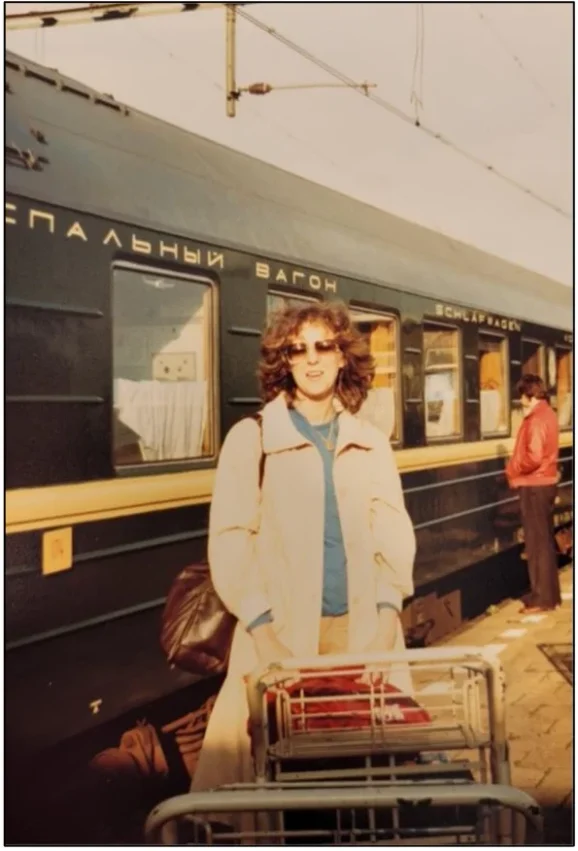
Crossing the riverbed that defined the border, there was a flood of activity as the Russian passengers flung empty champagne and wine bottles out of the windows before entering the Islamic Republic of Iran.
The train attendant hid our last bottle of beer and piece of ham in the ice container in his compartment while we waited in trepidation for our first encounter with an Iranian Pasdar (Revolutionary Guard).
This turned out to be ‘Scar Face’ – “an unfriendly-looking man in khaki fatigues with a black mustache, a jagged scar across his cheek and an AK47 slung over his shoulder.”
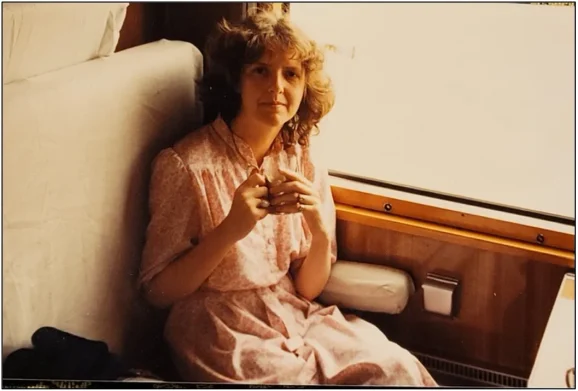
After four days of travel, we finally arrived at the central station in Tehran. The walls of many of the buildings in the city were covered with huge murals of revolutionary slogans, which reminded me of my time in Belfast where I had worked at Queen’s University for five years at the beginning of the 70s.
At least I had had some experience of a city in turmoil – this probably helped me to come to terms with the many incidents of violence I was to encounter in Iran.
A significant event occurred within three weeks of our arrival. Niall, who was Chargé d’Affaires at the Irish Embassy in Tehran from 1981 to 1986, and I were driving downtown to the French Cultural Institute for a lecture on Ferdowsi, one of Iran’s great literary figures, when we got caught in a crowd of anti-government protestors fleeing from the Revolutionary Guards.
Shots rang out all around us. Our only option was to return to the Embassy, although we kept coming up against truckloads of pro-regime Hezbollah militia shooting apparently at random. That day left many dead throughout Tehran. From then on, the situation continued to deteriorate.
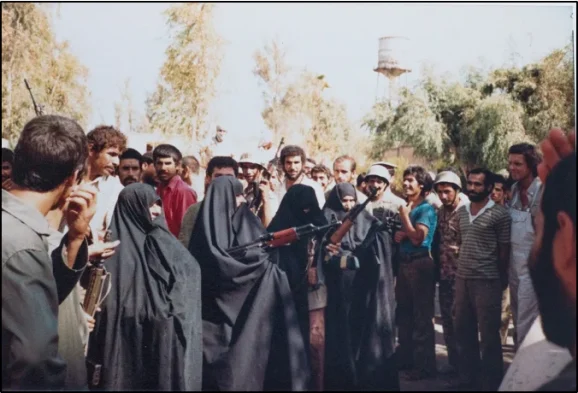
Another violent episode happened a few days later. There was a huge explosion at the Majlis (Parliament), and on this occasion the death toll was over 70.
At the time there had been no knowledge about who planted the bomb although it was assumed to be the work of the anti-regime Mujahideen.
It was not until 2023 that reports appeared in the Western media that an Iranian called Mohammed Reza Kolahi Samadi had been killed in 2015 in the Netherlands by a gang organised by the Kinahan crime group from Ireland.
This was apparently at the behest of the Iranian regime.
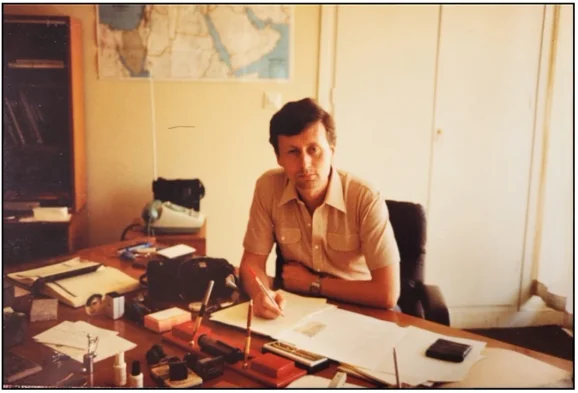
It appears that Samadi was held responsible by the Iranian regime for planting the bomb in the Majlis in 1981.
(The Kinahan gang are also believed to be involved in money laundering and illegal oil trading on behalf of the regime and may well rue the day they ever got involved with Iran.)
The violence on the streets of Tehran continued to escalate, especially for women.
The Revolutionary Guards sniffed under women’s armpits to check if they were wearing deodorant.
Faces were roughly wiped to get rid of any makeup or lipstick.
At this point several of the diplomatic wives decided not to wear a headscarf in support of the local women.
Unfortunately, it was really only symbolic and soon I was probably the only woman left protesting.
I continued until the Governor of Tehran announced that any woman who did not wear hijab would be beaten or imprisoned.
Sadly, over forty years later, women are still being beaten and tortured for defending their basic rights.
In 1981, the name of the IRA hunger striker Bobby Sands was everywhere in Tehran. Slogans on the walls proclaimed: “Bobby Sands is not dead”.
When the patrols were checking my Islamic attire, they would even ignore my lack of headscarf when they heard the name “Irlanda”.
Indeed, Iran was obsessed with the concept of martyrdom (Shahids) and the regime viewed Bobby Sands as a local hero because he had deliberately killed himself in the struggle against international imperialism.
In a delicious touch of irony for which Iranians have always been well-known, the road at the back of the British Embassy previously named after Winston Churchill was re-christened as Bobby Sands Street.
Another major topic of conversation at the time was about the American hostages who had been released only a few months before our arrival in Tehran.
A series of small books was delivered to the embassy.
To our amazement these books contained reconstructions of the many confidential files shredded by the American diplomats before they were taken hostage and held for 444 days.
This information pieced together laboriously by Iranian students gave us a great insight into the policies and activities of the American government prior to the revolution.
The long, drawn-out war with Iraq raged throughout our time in Iran.
I recall well the time in early 1985 when we sat clutching our young child, whom we had adopted in India several months previously, as the Iraqis bombed Tehran night and day for nearly four weeks.
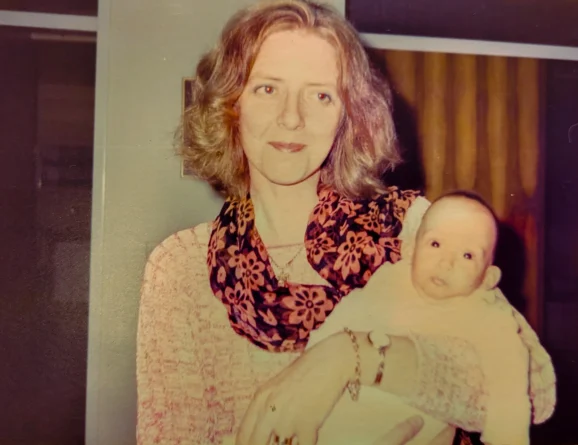
There were no bomb shelters anywhere in the city and it was terrifying as the death toll rose day by day.
Our experience made the recent bombing by American planes and missiles much more depressing.
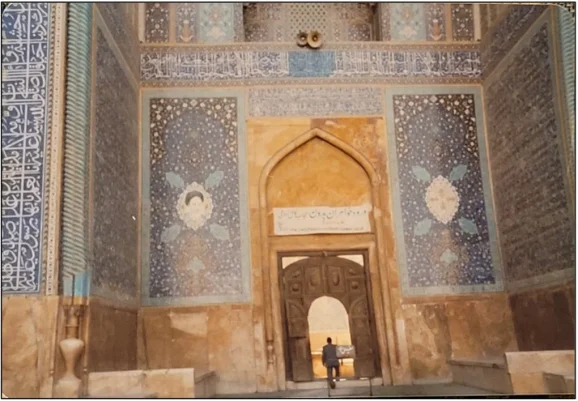
Apart from the death of many innocent civilians, each place bombed had its own memories for me – especially Isfahan.
Despite the dangers, we spent as much time as we could travelling throughout Iran.
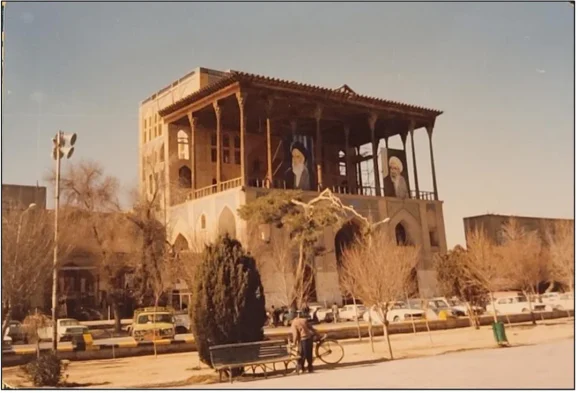
Our favourite city was Isfahan built by Shah Abbas in the 17th century, a city like no other, beautifully decorated with blue and gold mosques, incredible palaces and famous bridges.
Sadly, Isfahan was among the targets bombed in the latest campaign and damage has been reported to the huge central square where Shah Abbas would watch games of polo from his balcony on the Ali Gapou palace.
The ancient site of the great city of Persepolis was also fascinating. Two and a half millennia ago, carved friezes on its walls showed:
Processions of the Imperial Guard and envoys from the twenty-three countries in the empire carrying gifts of gold, spears, musical instruments and animals moved in a gentle rhythm up the sides of the open staircases.
Iranians are of course well aware that no dynasty or regime lasts forever.
Their long history has seen many different dynasties, some inspirational and some less so. All have eventually fallen. Omar Khayyam (1048 – 1131) tells us:
“How sultan after sultan with his Pomp
Abode his Destin’d Hour, and went his way.”
The Achaemenians (B.C. 550 – 330) were perhaps the most impressive of the Persian dynasties.
Their empire was founded by Cyrus the Great and ended when Persepolis was destroyed by fire by Alexander the Great who defeated Darius III, the last of the Achaemenian rulers.
The latest disastrous war in Iran started by Trump and Netanyahu was neither necessary, legal nor strategic.
Maybe they thought they were following in the footsteps of Alexander the Great but, if so, they were greatly mistaken.
They have destroyed much of the country’s civilian infrastructure but the regime itself seems stronger than ever.
Meanwhile the rest of the world is paying a huge economic price for the vanity of two men who seem to care only about their own political survival.
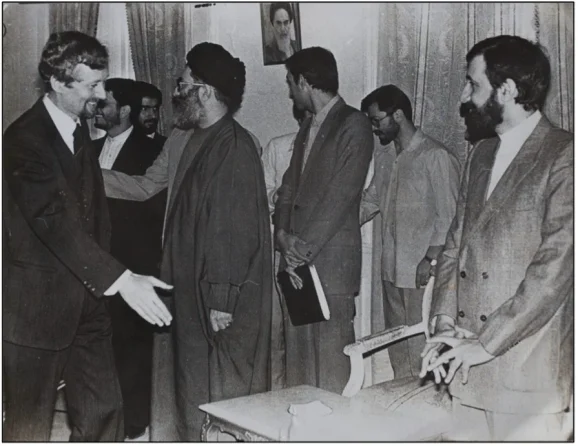
During our time there, Niall met President Ali Khamenei and Foreign Minister Ali Akbar Velayati. I still have a photograph of them shaking hands – an extraordinary reminder of a man who would become Iran’s Supreme Leader in 1989, only to be killed more than four decades later, on 28 February this year, in joint U.S-Israeli air strikes on Tehran.
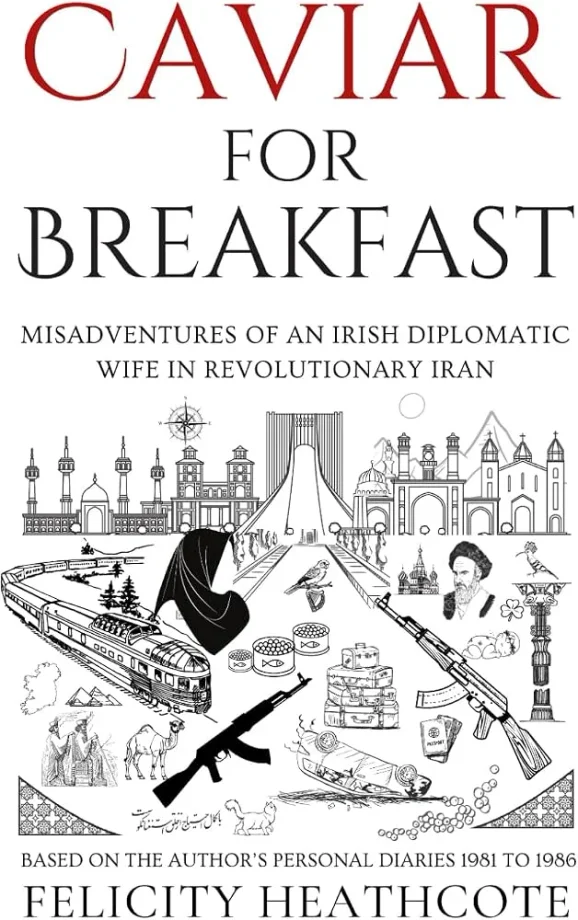
My book, Caviar For Breakfast: The Misadventures of an Irish Diplomatic Wife During The Iranian Revolution, out now, is a record of my five years in Iran which was a very special time for me.
I learned so much from the fascinating archaeological, architectural and literary heritage of this great culture.
So much was also learned from the kind, talented and resilient people who will one day arise from the ashes of the current turmoil, political repression and unconstrained greed which has caused so much death and destruction.
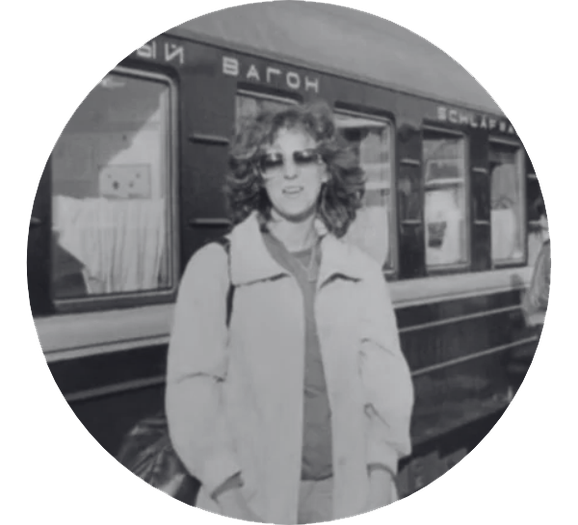
Felicity Heathcote is a Dublin-based clinical psychologist, teacher and writer. Born in the UK, she studied at Manchester University and Glasgow University’s Department of Psychological Medicine and has lived and worked in Belfast, Dublin, Tokyo, Tehran, New York, Jerusalem and Riyadh. She spent several years in Palestine, conducting workshops for UNRWA, Médecins du Monde and other NGOs in Gaza and the West Bank, and has lectured internationally, including to diplomats at the UN in New York.
She has worked with Irish Olympic teams since the 1980 Moscow Games and was appointed Official Psychologist for the Barcelona, Sydney and Athens Olympics. Her adapted Zen techniques have been applied to mental health, sport, business, the arts and education. Her books include Peak Performance: Zen and the Sporting Zone (Wolfhound Press, 1996), The Learning Zone (Wolfhound Press, 2000) and The Hoopoe Bird Series, comprising The Resting Place of the Moon(2007, 2023), The Gaza Diary (2024) and The Man With No Secrets (2010, 2024), all published by The Otherworld Press.
READ MORE: World’s first luxury theme park to open in Mexico with £1.1bn of rides, fine entertainment and deliberately limited crowds. A £1.1bn theme park billed as the world’s first luxury attraction is preparing to open in Mexico, promising spectacular thrill rides, exclusive surroundings and a permanent Cirque du Soleil show – with visitor numbers deliberately restricted to prevent overcrowding.
Do you have news to share or expertise to contribute? The European welcomes insights from business leaders and sector specialists. Get in touch with our editorial team to find out more.
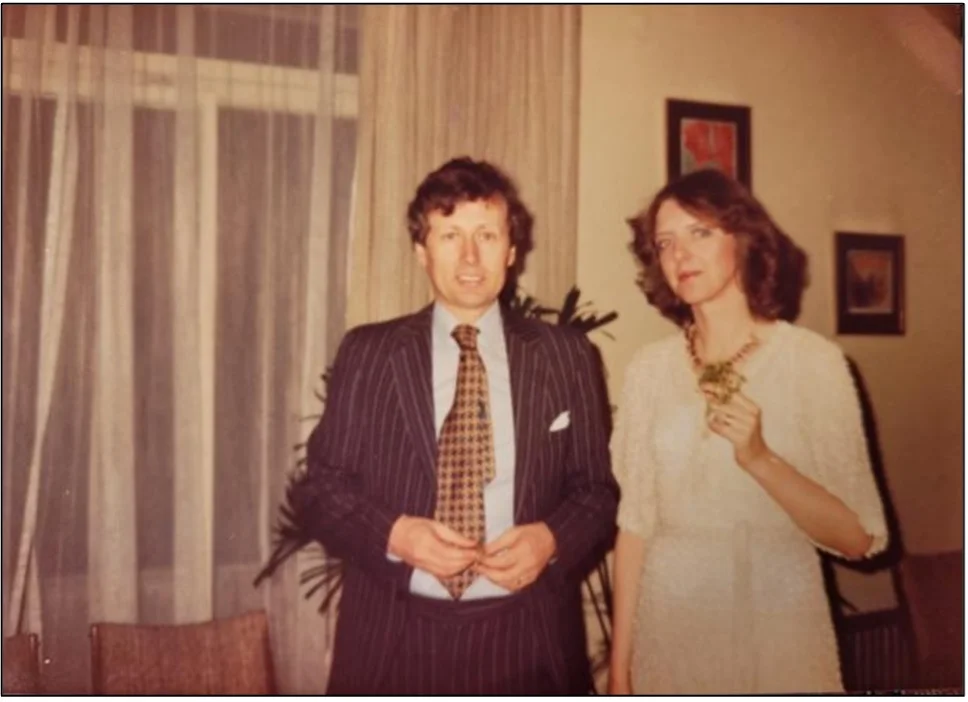
Main image: Heathcote and her husband Niall at a St Patrick’s Day reception at the Irish Embassy in Tehran, where they spent five extraordinary years amid political upheaval and war. The couple brought a touch of Irish tradition to diplomatic life in revolutionary Iran. Credit: Felicity Heathcote