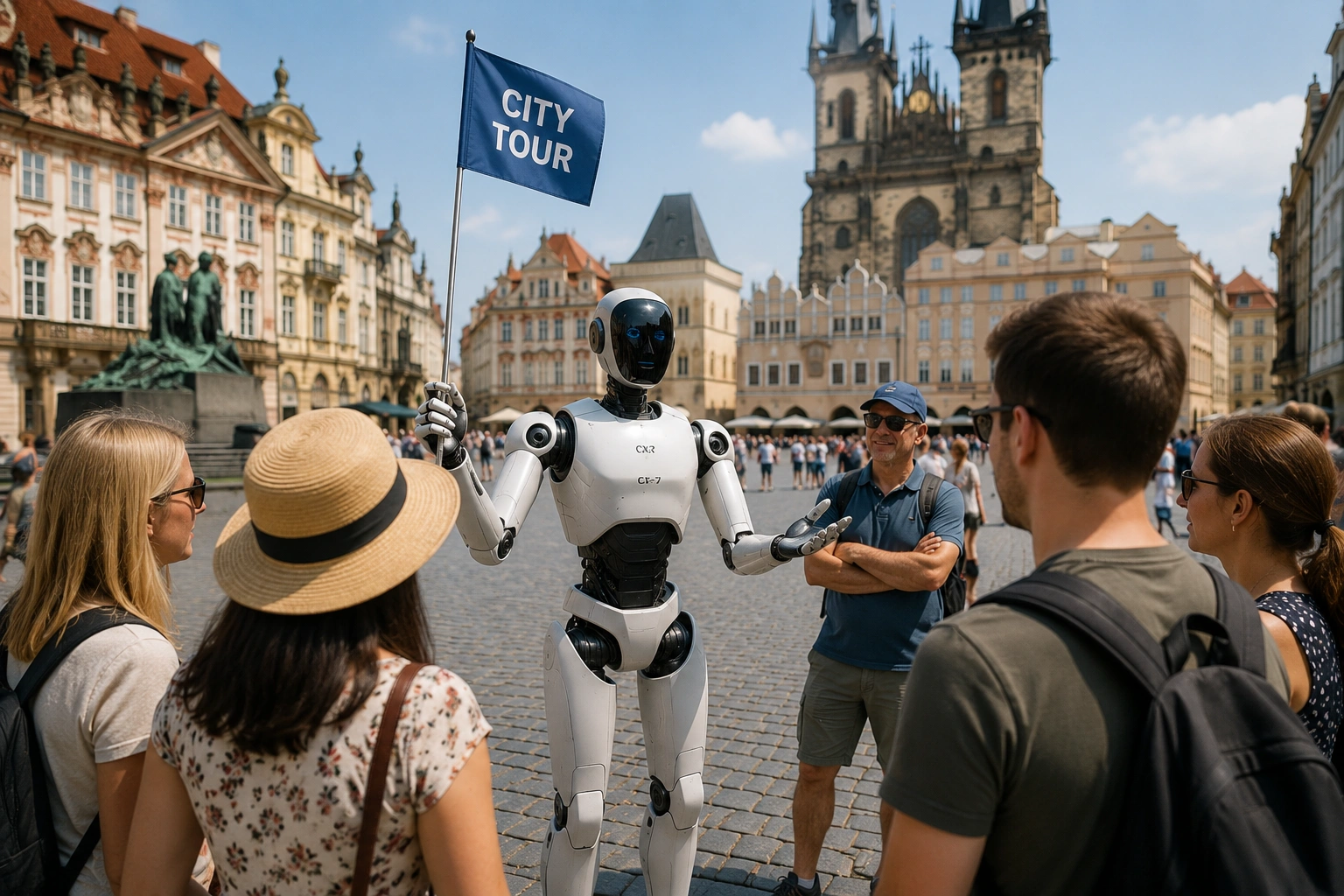
Tien Kung 3.0 can lead visits, answer questions, pose for photos and navigate venues without remote control or staff intervention, using what it calls the “most powerful brain in embodied intelligence”. Its unveiling raises the prospect of similar machines one day challenging human tour guides on city sightseeing routes
The sightseeing walking tour could be stepping into the robot age.
A humanoid guide with what its developers call the most “powerful brain in embodied intelligence” has been unveiled in China – raising the prospect of machines one day replacing flag-toting tour leaders at the world’s busiest landmarks.
Tien Kung 3.0 is described as a fully autonomous humanoid guide that can hold conversations in multiple languages, walk with a natural gait and use gestures including handshakes, finger hearts, group-photo poses and even fist bumps with guests.
The robot can also deliver narration, handle question-and-answer exchanges and interact face-to-face with visitors, using an AI ‘brain’ designed to break each tour into tasks and decide how to respond.
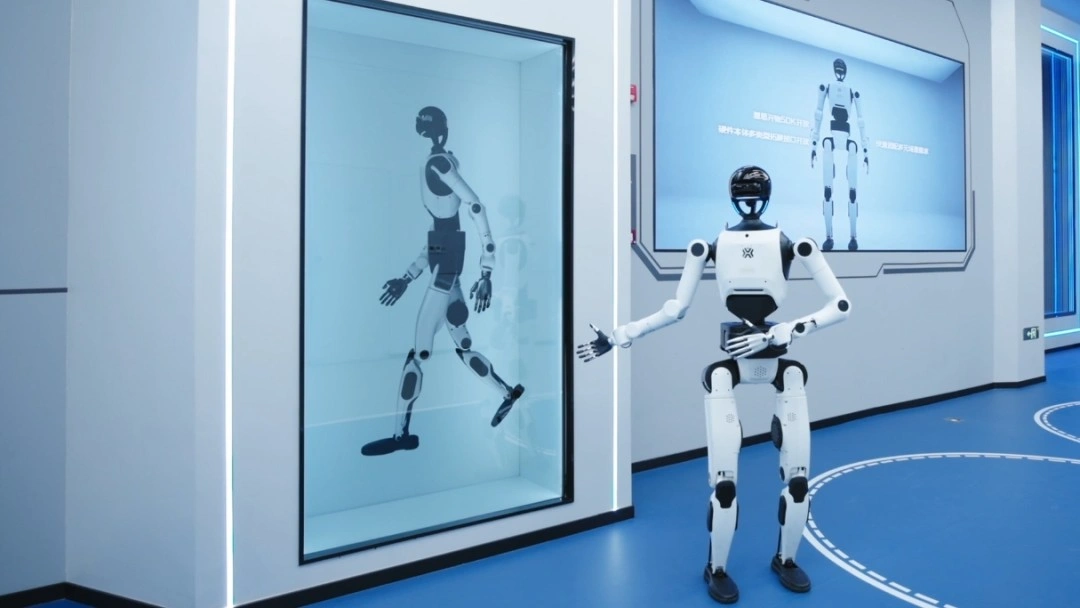
Its developers, the Beijing Innovation Center of Humanoid Robotics, known as X-Humanoid, said Tien Kung 3.0 is designed for exhibition halls, cultural tourism sites, shops and other commercial venues.
The technology is edging closer to the wider sightseeing industry, where robots could eventually move from guiding visitors inside or around attractions to leading them on longer journeys through city streets, squares and landmarks.
X-Humanoid said: “Whether for exhibition-hall narration, cultural-tourism sites or in-store retail guidance, [Tien Kung 3.0] can rapidly complete feature customization, scenario adaptation and deployment, with no large-scale retrofitting or debugging required.
“This dramatically reduces customers’ rollout costs and timelines, and delivers a standardized, mass-producible and replicable blueprint for commercial humanoid robots.”
Autonomous guide robots are not new and have been used in wheeled form in museums, laboratories, airports and visitor attractions for years.
But unlike existing models, Tien Kung 3.0 combines autonomous navigation, multilingual conversation, real-time route planning, human-like gestures and visitor interaction in a single commercial system.
X-Humanoid said the robot is powered by ‘Wise Kaiwu’, its proprietary intelligence platform, which boasts an AI-driven “embodied brain”.
The robot’s perception system allows it to read its surroundings, detect foot traffic and obstacles, while its brain breaks a guided tour into tasks and answers visitors’ questions.
An “embodied cerebellum” then executes movement commands and replans the robot’s route in real time, allowing Tien Kung 3.0 to complete a guided tour without remote control or staff intervention.

More than 70 international media outlets from the United States, Russia, Japan, South Korea and elsewhere recently visited the centre to see the upgraded guide system, according to X-Humanoid.
X-Humanoid said: “Built on the platform’s end-to-end, closed-loop architecture of perception, decision-making and execution, Tien Kung 3.0 delivers truly fully autonomous, staff-free operation.”
READ MORE: Robots can’t care — and believing they can will break our health system. Artificial intelligence is being hailed as the next frontier in healthcare but as broadcaster and disability rights advocate Matthew Kayne writes, empathy cannot be automated. Real care exists in human presence, in the moments of understanding that only people can offer
Do you have news to share or expertise to contribute? The European welcomes insights from business leaders and sector specialists. Get in touch with our editorial team to find out more.
Main image: An artist’s impression imagines how a humanoid robot could one day lead tourists on a city walking tour in a historic European square. (The European)