A breakthrough partnership between Nokia and Nvidia is reshaping the architecture of mobile networks, turning base stations into AI-native computing platforms. The technology was built in Europe, yet the capital, early deployments and strategic momentum are increasingly centred in the United States — exposing the widening gap between Europe’s engineering strength and its ability to scale the industries it creates, writes Marco Ryan
There is a pattern in European technology that has become so familiar it barely registers as remarkable any longer. A European company, drawing on deep engineering heritage and decades of research investment, develops a technology of genuine strategic importance. American capital arrives to accelerate it. American operators move first to deploy it. And the commercial value — the jobs, the data, the platform economics — migrates steadily across the Atlantic while Europe’s contribution is acknowledged politely and then absorbed into someone else’s growth story.
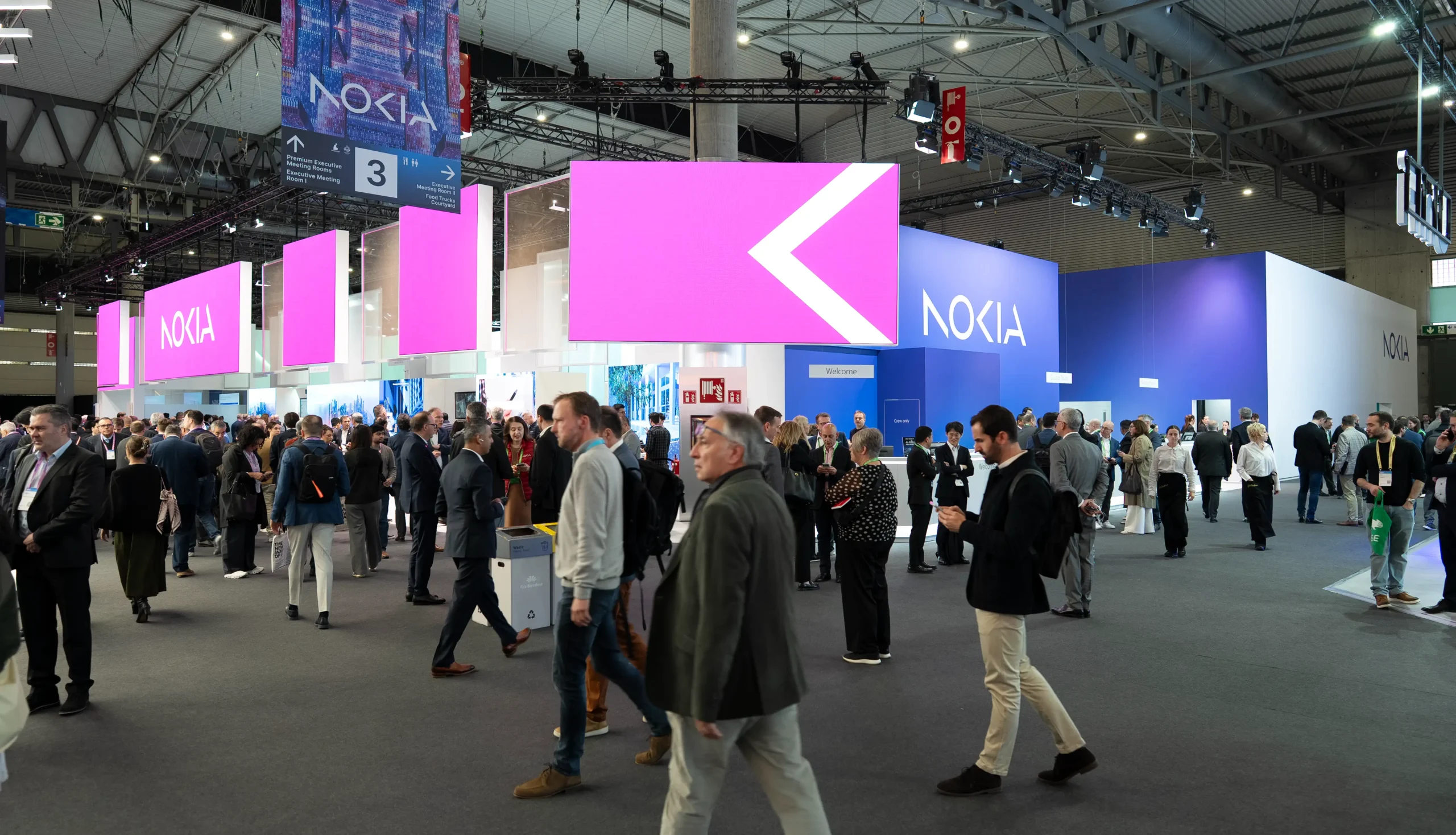
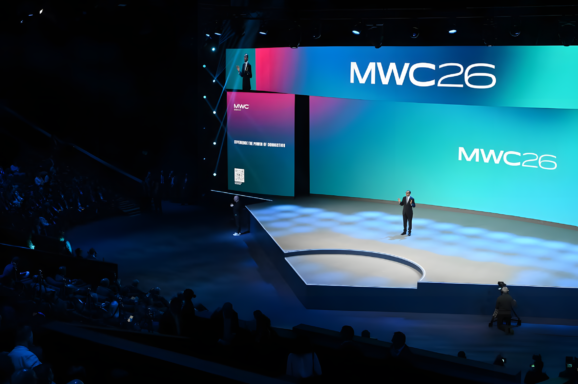
Nokia’s AI-RAN programme, unveiled in its latest form at Mobile World Congress 2026 in Barcelona, threatens to follow precisely that trajectory. What makes this case particularly instructive is that the technology in question is not an incremental improvement. It is a foundational rearchitecture of how mobile networks are built and operated, and Nokia — headquartered in Espoo, Finland, with roots stretching back more than 160 years — is the company that has made it work.
For four decades, the base stations that connect mobile phones to the wider network have relied on purpose-built, proprietary hardware — specialised silicon handling the extraordinarily complex signal processing required to manage thousands of simultaneous wireless connections. Upgrading these networks has meant replacing physical equipment in cycles that stretch across years and cost tens of billions of euros. AI-RAN dismantles that model.
Nokia’s approach moves the most processor-intensive radio functions onto Nvidia’s GPU-accelerated computing platform, eliminating the need for separate dedicated accelerators. The same hardware that runs the mobile network can simultaneously run artificial intelligence workloads at the network edge: real-time analytics, generative AI applications, industrial automation, autonomous systems.
The base station ceases to be a single-purpose piece of telecommunications equipment and becomes a software-defined computing platform that happens, among other things, to provide mobile connectivity. Networks stop being upgraded in hardware cycles and start being improved in software releases. It is, in the language the industry itself is now using, a shift from networks that carry AI traffic to networks that are themselves AI-native.
Nokia’s engineering achievement is substantial. The company has successfully ported its most demanding RAN software onto Nvidia’s architecture, demonstrated concurrent AI and radio processing on a single server, and built new AI-ready radio hardware — its Doksuri product line — that delivers meaningful improvements in power efficiency and deployment simplicity. At MWC 2026, Nokia showcased successful functional tests with operators spanning the United States, Southeast Asia and Japan. Commercial deployments are expected from 2027. The breadth of that validation, across three continents, reflects serious engineering executed at genuine scale.
And yet the commercial centre of gravity tells a familiar story. Nvidia’s US$1 billion investment in Nokia established the financial architecture of the partnership. T-Mobile US is the first and most prominent trial partner. The servers are built by Dell. The GPUs are Nvidia’s. Nokia provides the radio intelligence and the RAN software — arguably the hardest part — but the value chain around it is overwhelmingly American. Nvidia’s own framing was illuminating: its CEO described telecommunications as critical national infrastructure and positioned AI-RAN as the means by which the United States would regain global leadership in this vital technology. That is not an engineering statement. It is a geopolitical one.
In conversation ahead of this article, Nokia’s CFO offered an observation that deserves to be heard well beyond the telecommunications industry. European mobile operators, he suggested, continue to behave as though their primary competition is with each other — fighting over market share within fragmented national markets, engaging in the price wars and bundle discounting that have been eroding margins for over a decade. The real competitive threat, he argued, is not the operator in the next country. It is the pace at which the United States, India and Asia are building the next generation of network infrastructure while Europe deliberates.
The numbers bear this out, even if the full picture is more uncomfortable than any single statistic conveys. European mobile revenue per user is today lower than it was a decade ago. In the United States, operators generate nearly three times as much per subscriber. Europe has 44 mobile network operators of significant scale; the U.S has eight, South Korea has three. That fragmentation was once celebrated as evidence of a competitive, consumer-friendly market. What it has produced in practice is an industry that cannot generate sufficient returns to invest at the scale the next technological cycle demands.
This is more than a complaint about regulation, though regulation is certainly part of it. What was being described is a failure of strategic perception. European operators have spent years optimising for a domestic competitive environment — trimming costs, launching sub-brands, fighting over tenths of a percentage point of market share — while the infrastructure platforms that will define the next era of connectivity are being designed, funded and deployed elsewhere.
The AI-RAN market alone is projected to exceed $200 billion dollars cumulatively by 2030. If European operators are not at the leading edge of that deployment, they will find themselves purchasing American and Asian technology on someone else’s terms, just as they have in cloud computing.
What Nokia sees that others do not
What makes Nokia’s position in this landscape distinctive is that the company is not merely selling equipment into the AI-RAN transition — it is attempting to become the intelligence layer within it. Its anyRAN cloud software, its new rApp Marketplace for network automation, and its integration with Nvidia’s computing platform position Nokia not as a hardware vendor but as a platform company whose software sits at the centre of how next-generation networks operate. That is a fundamentally different commercial model, and one that carries echoes of the platform economics that have driven value creation across the broader technology sector.
European operators including BT, Elisa and Vodafone Group are engaged with Nokia’s AI-RAN work, and it would be wrong to suggest the continent is entirely absent from this transition. But engagement is not the same as urgency.
In Japan, SoftBank is already trialling the use of spare AI-RAN compute capacity to run third-party AI workloads — a model that could transform the base station from a cost centre into a revenue-generating edge computing platform. In the United States, T-Mobile is building dedicated innovation centres around this technology. The gap between exploration and execution is where competitive advantage is won or lost, and European operators, constrained by the economics of their own fragmented markets, risk finding themselves perpetually on the wrong side of that divide.
A technology Europe built but may not lead
Nokia has delivered something that Europe should be proud of: a technology platform that could redefine the economics of mobile networks globally. The company’s stock rose nearly eight per cent on the Monday following its MWC announcements, a signal that investors see the strategic logic clearly enough. The question is whether European institutions can see it with equal clarity.
The pattern of European technical excellence being commercialised first and most aggressively outside Europe is neither new nor inevitable. But breaking it requires more than admiration for the engineering. It requires regulatory frameworks that allow operators to consolidate and invest, capital markets willing to back long-horizon infrastructure plays, and — most fundamentally — a recognition among European operators and policymakers that the competition they face is not with the network next door. It is with the networks being built, at speed and at scale, in markets that have decided telecommunications is strategic infrastructure for the AI age, not a regulated utility to be squeezed for consumer savings.
Nokia has built the technology. Whether Europe builds the conditions for it to succeed at home will determine whether the continent participates in the AI-native network era as a leader or as a customer.

Marco Ryan is a board-level advisor, author and former FTSE 100 executive specialising in digital transformation, leadership strategy and ethical oversight in the age of AI. He has held senior global roles including Chief Digital Officer at BP, Wärtsilä and Thomas Cook, and now serves as Cyber Leader in Residence at Lancaster University Management School. He is co-author of Rewire or Retire: AI for Leaders, a candid guide to navigating AI’s impact on work, leadership and ethics, and has published widely on cybersecurity and AI literacy for executives. An angel investor, mentor and regular conference speaker, Marco is an active voice in the global conversation on digital intelligence, governance and leadership in an AI-driven world.
READ MORE: ‘Is Europe regulating the future or forgetting to build it? The hidden flaw in digital sovereignty’. As Europe builds on the GDPR and AI Act, the next frontier lies beyond rulebooks and penalties, writes Vendan Kumararajah, who argues that digital sovereignty will endure only if governance, legitimacy and distortion detection are engineered directly into the architecture of AI systems themselves, rather than imposed from outside through compliance alone.
Do you have news to share or expertise to contribute? The European welcomes insights from business leaders and sector specialists. Get in touch with our editorial team to find out more.
Main image: Nokia