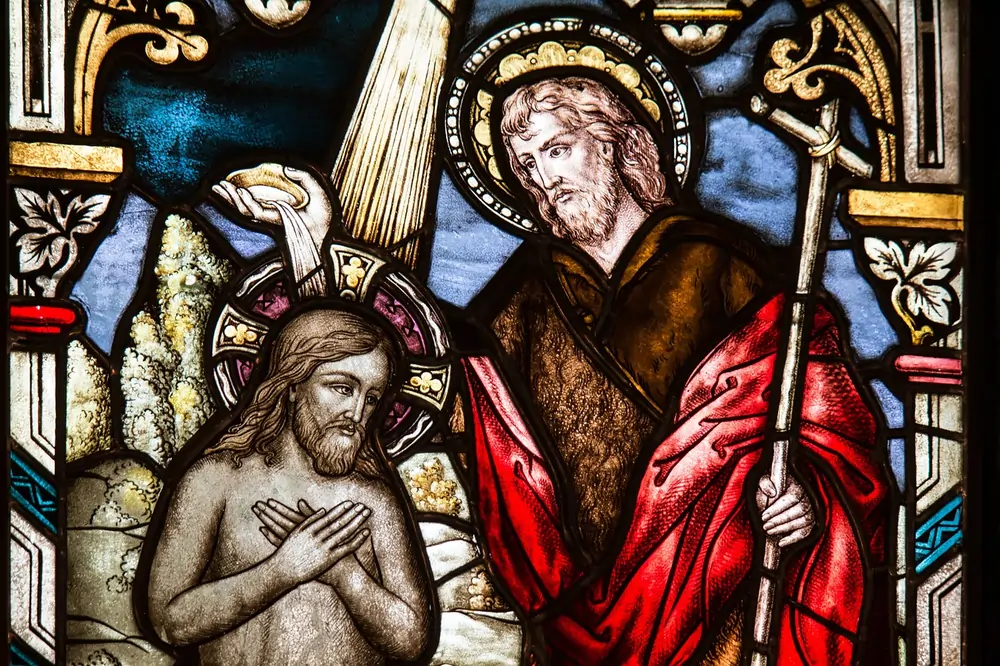
The story of how Jesus met fishermen Andrew and Simon by the Sea of Galilee is a red herring – much like other parts of the Bible, writes Monty Python filmmaker and author, Julian Doyle, exclusively for The European
Last year, I received a lot of media attention after saying that the iconic comedy Monty Python’s Life of Brian, which I edited, offers a more accurate representation of Jesus’ life than you can find in the Bible.
This is because the Bible is full of contradictions – something you would expect for a book that was compiled by multiple authors over the span of centuries. The result is that even a biblical scholar who thinks they know the Gospels probably doesn’t. In fact, what we know of Jesus’ life is a pick-and-mix story that changes as the years roll on and as lost biblical texts are discovered.
Take the hidden chapter that was discovered in the Vatican Library. This previously unknown fragment of the Gospel of Matthew states that Jesus’ disciples ‘rubbed grain in their hands’, whereas the original says they ‘picked the grain heads’. It’s a subtle difference, but an important one when it comes to our understanding of that period in history.
The Gospel of Mark is another good case in point. It includes the heartwarming and oft-told story of when Jesus first met his disciples. Chapter 1, verse 16 says, “As Jesus walked beside the Sea of Galilee, he saw Simon and his brother Andrew casting a net into the lake, for they were fishermen. Jesus said, “Come, follow me””.
And just like that, they follow him.
Academics have long drawn on this story to write about the Sea of Galilee fishermen and the type of boats they used. The story has even been adopted as a part of the official regalia worn by the Pope: the Fisherman’s Ring. It seems there’s absolutely no question that Simon and his brother were indeed Galilean fishermen who suddenly drop their nets and follow Jesus.
But were they really? There is a totally different story of Jesus meeting Andrew and Simon in the Gospel of John: “The next day John the Baptist saw Jesus and said to two disciples, ‘Look, the Lamb of God!’
“When the two disciples heard him say this, they followed Jesus. Turning around, Jesus saw them following and asked, ‘What do you want?’
“They said, “Rabbi, where are you staying?”
“’Come,’ he replied, ‘and you will see.’
“So they went and saw where he was staying, and they spent that day with him. It was about four in the afternoon. Andrew, Simon Peter’s brother, was one of the two who heard what John had said and who had followed Jesus. The first thing Andrew did was to find his brother Simon and tell him.
“’We have found the Messiah.’ And he brought him to Jesus.”
Based on the Gospel of John, Simon and Andrew were not fishermen at all but rather followers of John the Baptist. And according to the Gospel of John, the meeting took place by the River Jordan in Judea, some 18 miles from Jerusalem, and not in Galilee.
Furthermore, the Gospel of John says that Andrew immediately goes to find his brother, Simon, who is living somewhere in Judea. And if you doubt me that this is happening in Judea, not Galilee, it is followed by this:
‘The next day Jesus decided to leave for Galilee.” (John 1:43)
So off they go, apparently, on a 100-mile trek to Galilee.
Even Simon himself speaks about spending time with Jesus in Judea and Jerusalem, rather than in Galilee: “Now I, and those with me, can witness to everything he did throughout the countryside of Judea and in Jerusalem itself.” (Acts 10:39).
The Gospel of John places Jesus’ story in Jerusalem, too. “At that time the Feast of Dedication took place at Jerusalem. It was winter, and Jesus was walking in the temple, in the colonnade of Solomon.” (John 10:22)
Although John’s version of Jesus recruiting the disciples is less remarkable, it does seem more likely. This begs the question of why three separate Gospels would place Jesus in Galilee and not in Judea and Jerusalem where he clearly spent most of his time. And it raises serious doubts about the story of Simon and Andrew. Did two hapless fishermen really down nets and follow a stranger into the great unknown on nothing more than a whim?
Was this merely a question of muddled reporting, one might ask.
The answer is that the Sea of Galilee is a red herring.
Scholars have long known that the passages in the Gospels that mention Galilee were added at a later date. While most academics dismiss these additions as inconsequential, my own research suggests there was a very good reason for them – one on which Christianity itself is hinged.
My new book, Who Killed Jesus?, reveals all. If you don’t have the time to read it, just watch Life of Brian. Like the Bible, it too, doesn’t tell the Gospel truth – but it has a lot more jokes.
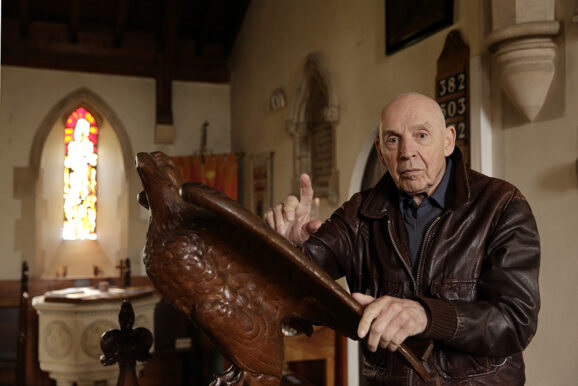
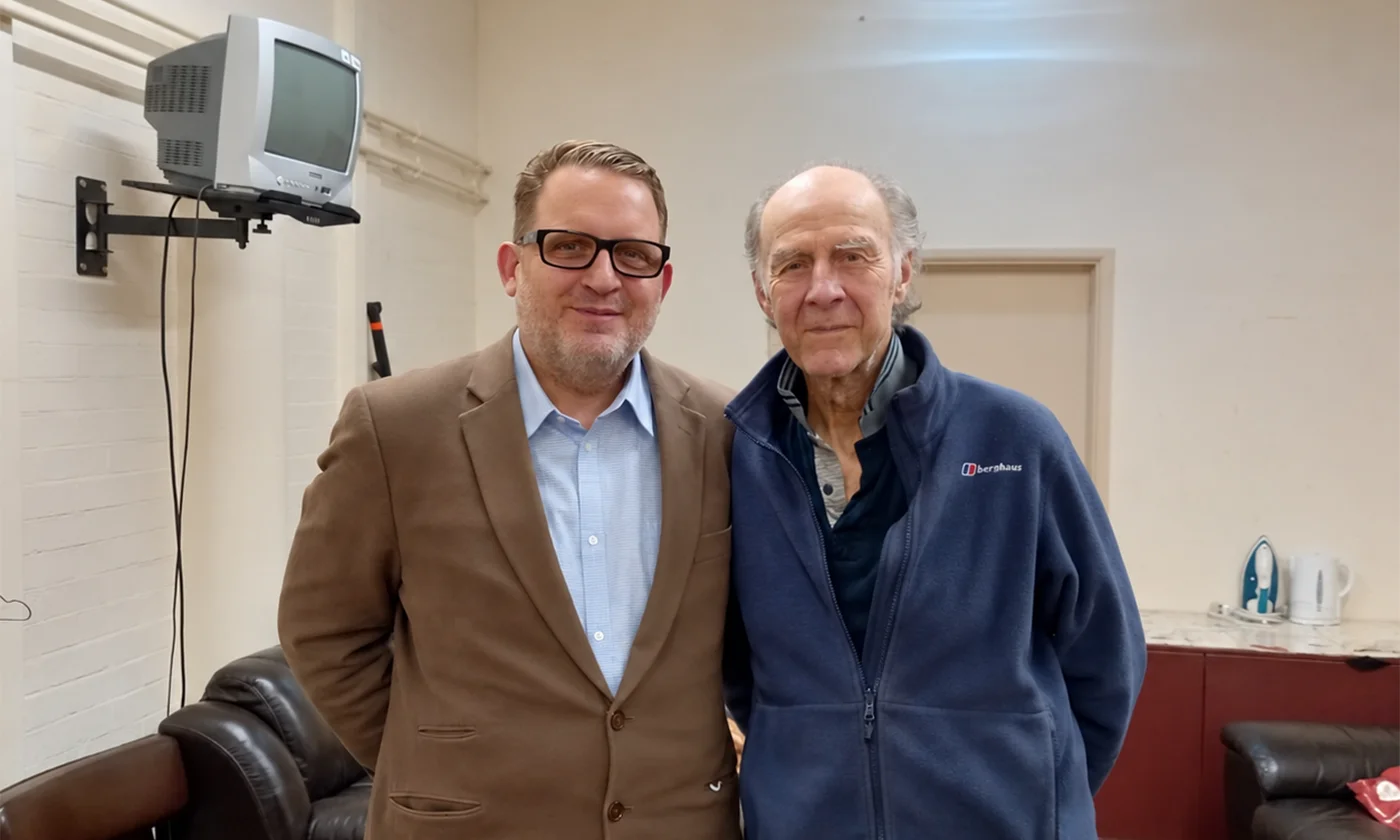
Julian Doyle is a distinguished British filmmaker with an outstanding career in the film industry. He is widely recognised for his long-standing collaboration with Monty Python, where he worked on their most celebrated films including Monty Python and the Holy Grail, Life of Brian, and The Meaning of Life. While internationally recognised for his work in film, he is also an expert on biblical history and is the author of multiple books on the subject including The Gospel According to Monty Python, The Secret Life and Hidden Death of the Galilean, and Who Killed Jesus?
Main Image, courtesy Didgeman/Pixabay.com