Donald Trump has renewed his vow to bring Greenland under American control – but could Washington do so without war? As Greenland heads to the polls to determine on its future, polar and military historian Dr. Linda Parker warns that even if it chooses to remain independent of both Denmark and the U.S, a blockade of the Northwest Passage could devastate its economy, forcing its leaders to reconsider their sovereignty and allegiance
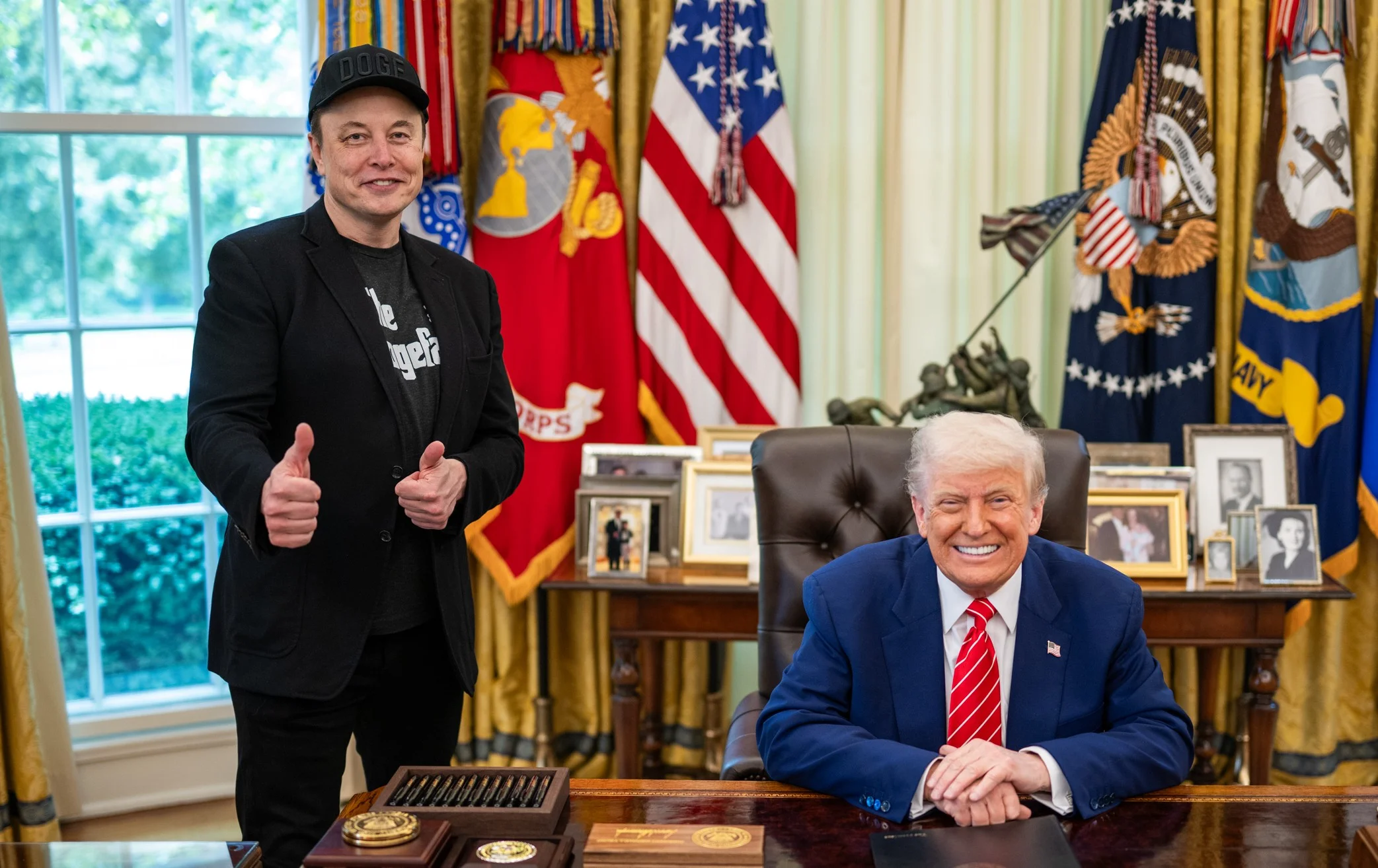
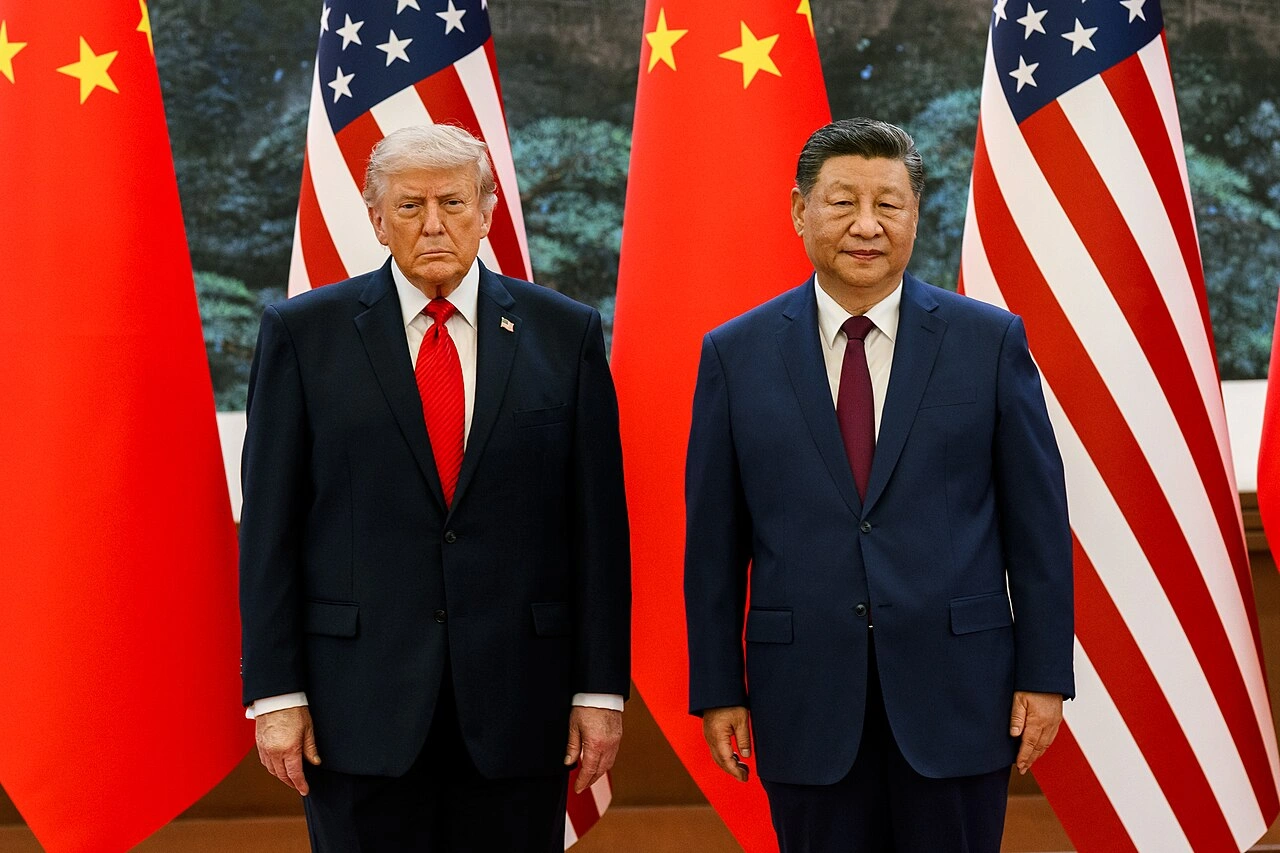
Donald Trump repeated his vow to secure U.S. control of Greenland this week, telling Congress that America will acquire the semi-autonomous territory of Denmark “one way or the other.”
One way or another, as he puts it, could be by blocking the Northwest Passage.
There is, of course, no indication whatsoever that the President is considering or would ever take this unprecedented step. But – hypothetically speaking – it would be the natural course of action for any world leader looking to land-grab without a full-blown invasion.
It could be achieved relatively simply with a flotilla of 40 or so Naval destroyers and frigates positioned at key points between Nuuk, a city in the southwest of Greenland, and Qaanaaq in the north.
Another 10 would need to be on permanent anchor at Lancaster Sound, Nunavut, Canada, the Passage’s narrowest body of water and an obvious choke point.
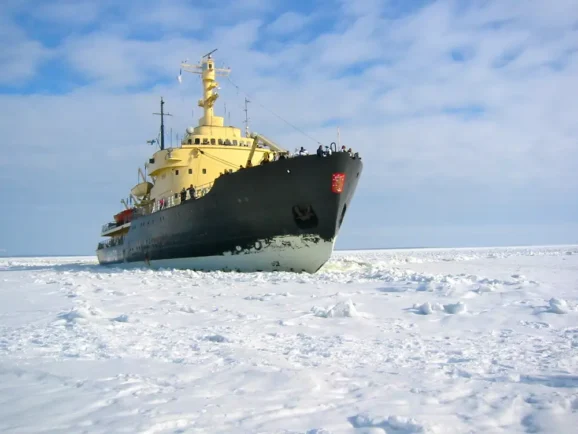
A further 20 icebreakers would be needed on constant standby to keep the Passage free of ice.
Together, those giant ships would act as a physical barrier – and a visible deterrent – to any captain hoping to pass through unannounced.
Pulling a fleet of 70 vessels wouldn’t be cheap or quick. Polar-class icebreakers cost around $1 billion and take seven to 10 years to build.
With the addition of new warships and personnel, the bill would likely exceed $50 billion.
Yet this figure, as high as it may be, is a drop in the ocean compared to the financial and human cost of an all-out war with Denmark and, by extension, its NATO allies.
As it stands, the Passage is largely impassable and is likely to remain that way until 2045 – the year experts expect global warming to have melted much of the sea ice. By that point, America’s new naval fleet could be ready for action, hypothetically, of course.
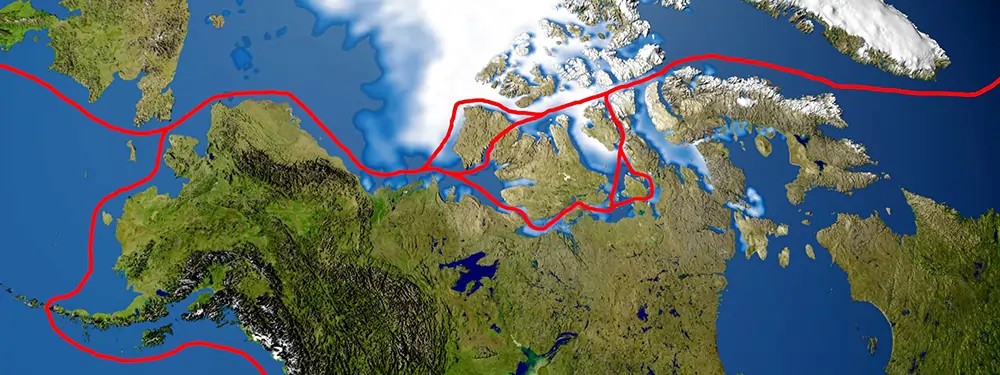
Using the icebreakers to clear a path, the vessels could slowly, surely, and surreptitiously make their way up and set anchor along the 900-mile Passage with ease.
According to the U.S. and the European Union, it sits in international waters. Few countries currently care about the Passage, much less lay claim to it.
Only Canada, which asserts sovereignty over the Northwest Passage based on historical usage and Inuit land claims, is likely to object. While Canada’s newly elected prime minister, Mark Carney, has vowed to stand up to Trump, his country would stand little real chance against America in a military or diplomatic confrontation.
Trump’s reported remarks about Canada becoming “a cherished 51st state” may be dismissed as bluster, but we have yet to see where he draws the line between rhetoric and reality. If given the option to avoid a confrontation by renouncing its claim to the NWP, Canada is likely to take it.
Once in position, that 70-strong fleet could remain at post indefinitely, returning to the nearest U.S. naval base, in Washington, only to refuel and change personnel.
Only an all-out attack by sea and by air would stand a chance of dislodging such a well-protected and technically advanced force. Even in today’s trigger-happy climate, such a scenario seems unlikely.
Blockading the Northwest Passage when it is free of ice would send a clear and decisive message to its holder’s enemies: the Arctic is ours and always will be. Practically speaking, it would also prevent those foes from using it for military or commercial gain.
As it stands, ships traveling between the Atlantic and Pacific Oceans must pass through the Panama Canal. However, once the sea ice clears, the Passage will offer an alternative and much shorter route, reducing the journey by 4,000 miles and cutting travel time by a fortnight.
Any nation that controls the Northwest Passage will, therefore, control a vital artery for global trade; access can be given or denied at will. For Greenland, a country that Trump already has in his crosshairs, this could spell disaster.
Greenland’s future economic and geopolitical interests are intrinsically tied to the opening of the Passage. Having free and unrestricted passage through it would unlock significant opportunities for resource exports, tourism, and international trade. If it were blocked from using it, Greenland’s economy could be scuppered.
Only last week, Greenland’s Prime Minister Mute Egede said that the Greenlandic people will determine their own future and do not want to be Danes nor Americans. If his ruling coalition party, Inuit Ataqatigiit, win in tomorrow’s general election then, for the time being, that may well be true, with the prospect of an independence referendum becoming more likely.
But its hand may be forced in the 2040s if Greenland, and only Greenland, is tactically barred from the Passage. With mounting pressure from the electorate and increasing global competition for Arctic resources, its ruling party may have no other choice than to hand over control to the U.S. in exchange for Passage access.
Hypothetically speaking, this would be blackmail. In modern politics, however, it would pass for diplomacy.

Dr. Linda Parker is widely considered to be one of Britain’s leading polar and military historians. She is the author of six acclaimed books, an in-demand public speaker, the co-founder of the British Modern Military History Society, and the editor of Front Line Naval Chaplains’ magazine, Pennant, which examines naval chaplaincy’s historical and contemporary role.
Photos, courtesy NASA and stimmwolke/Pixabay