Forget the supercars and star drivers – for many, the Settrington Cup was the real crowd-puller at this year’s Goodwood Revival. Motoring Editor Mark G Whitchurch speaks to Master of Ceremonies Alex Kinsman about over-eager parents, rule-bending and the happy chaos of 70 children racing historic Austin J40 pedal cars worth up to £10,000
There was no shortage of HP at last weekend’s Goodwood Revival – Human Power, that is.
While Cobras, GT40s and E-Types thundered around the circuit, some of the event’s most determined drivers relied on their own legs for speed.
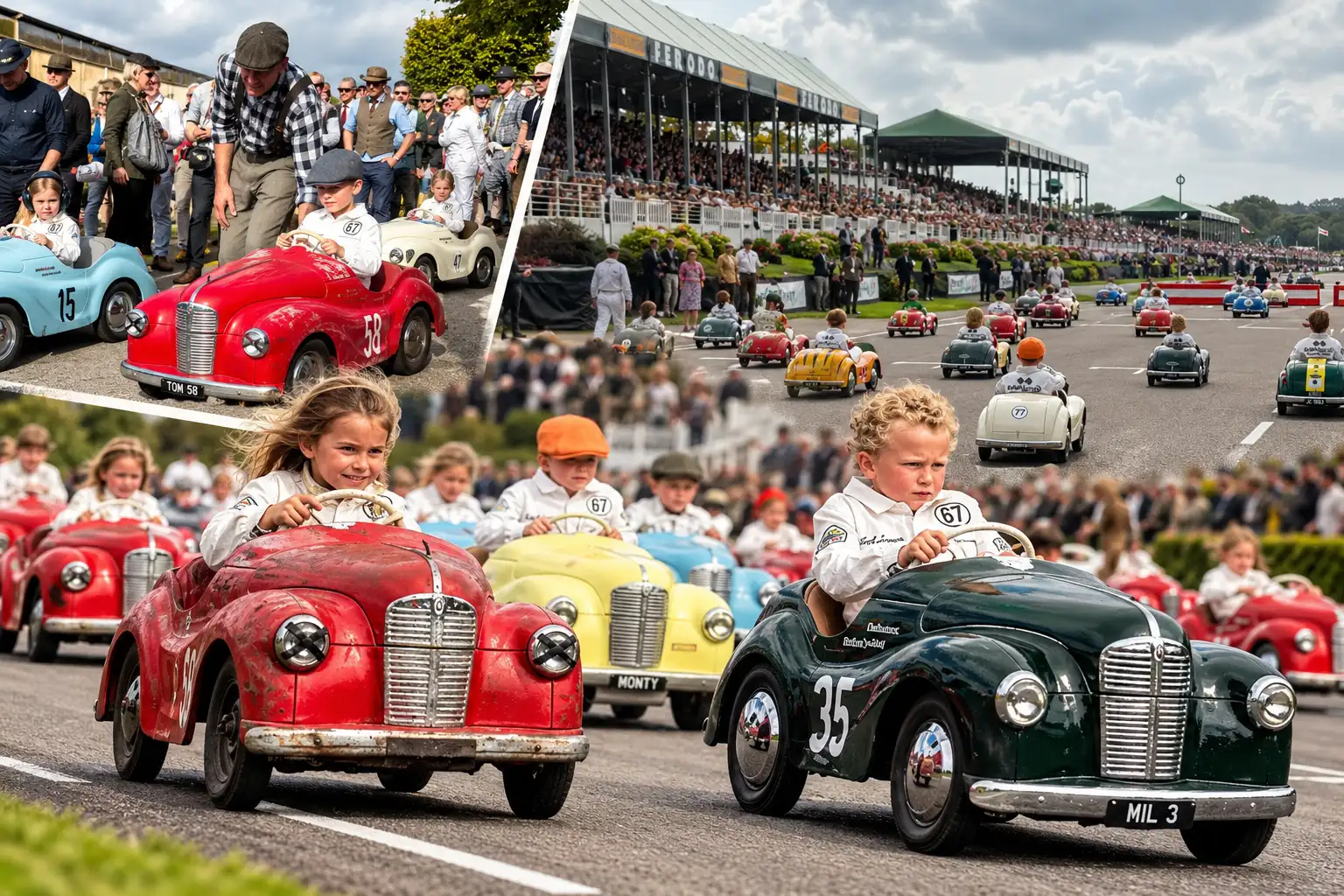
The Settrington Cup saw around 70 children line up in Austin J40 pedal cars for a 227-yard dash down the Pit Lane Straight. Aged between four and 11, they began with a Le Mans-style start, sprinting across the track when the flag dropped, jumping into their cars and pedalling for all they were worth.
First held in 2012, the event has become one of the Revival’s best-loved fixtures – and almost certainly one of its most competitive. The cars may be small, but the racing is taken seriously – and I do mean seriously. Parents fret, children practise, scrutineers check for rule-bending and, once the flag falls, a grid of beautifully restored pedal cars hurtles towards the finish to some of the loudest cheers of the weekend.
Following this year’s race, I spoke to Master of Ceremonies Alex Kinsman about over-eager parents, creative engineering, pre-race meltdowns, the remarkable history of the Austin J40 and why Goodwood’s smallest racers continue to steal the show.
Alex, for readers who’ve never witnessed it, how would you describe the Settrington Cup?
Imagine the traditional Le Mans start, but replace the GT prototypes with beautifully restored pedal cars and the hardened professionals with children. It’s a 227-yard pedal-powered sprint down the Pit Lane Straight in Austin J40s.
It’s bedlam – wonderful, organised, joyous bedlam. Around 70 children pedal their hearts out trying to win or simply do the best they can. Some are one with their machine, others have been chucked in it by mummy and daddy, and a few just pedal down the track waving at the crowd.
There are nerves and occasional meltdowns beforehand. But once the flag drops, everything changes. All of the stress and grief goes away and there are just 70 children enjoying themselves.
Goodwood can’t do a true Le Mans start with full-size cars any more for safety reasons, so the Settrington Cup gives us the opportunity to recreate that proper pre-1970 run-and-jump start. Only two or three times have we had to switch to a standing start because it was too wet.
It can be hazardous for the adults too. The starter and I have to get out of the way quickly because the first three rows will be past us before you know it!
Where did the idea for the race come from?
It began as the junior race for the junior title of the Goodwood estate. It’s the Duke of Richmond, the Earl of March and then Lord Settrington. The original idea came from Will Kinsman and his motorsport colleagues, who remembered being bored stiff at race circuits when they were children. The thought was: “Why not have a race for the children of the drivers?”
The first race was held in 2012 with 28 cars. Murray Walker did the commentary and Sir Stirling Moss waved the chequered flag. Today we have around 70 children taking part each year, the event is massively oversubscribed and there’s a long waiting list.
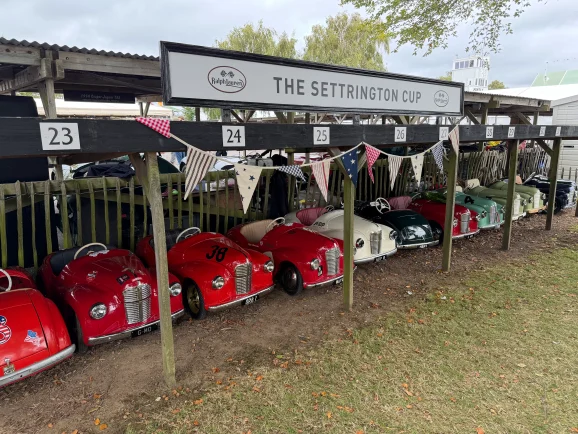
By 2019 we had reached 73 cars and physically couldn’t fit many more in. We fill the pit straight with around 70 metres of cars and we’re into the chicane.
The Austin J40 has a remarkable history. What’s the story behind it?
After the Second World War, Austin Motor Company chairman Leonard Lord, working with the government, started a rehabilitation programme for disabled miners in South Wales suffering from pneumoconiosis. Using offcuts of steel from the Austin Motor Works, they produced J40 pedal cars based on the 1948 Austin A40 Devon and Dorset models.
Around 32,000 were made between 1949 and 1971. They were proper little cars – heavy, durable and beautifully made.
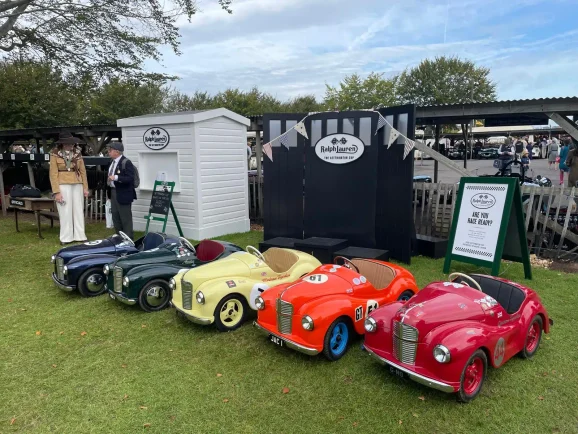
The earlier Pathfinder was rarer, but the J40 became the definitive pedal car, with a steel body, Dunlop tyres, working headlights and an opening bonnet. They were expensive luxury toys and even the future King Charles III had one. They fitted the Goodwood Revival perfectly because they were British, mid-century and authentic. They’re scarce, but they’re not rare, so there were still enough original cars around to create a proper grid.
The Revival is very particular about period detail, from the signage and food stalls to the mechanics’ overalls, and the J40 belongs naturally in that world. When the first Settrington Cup ran, people thought it might be a novelty. The reaction from the crowd showed otherwise.
How seriously do families take the racing?
Very seriously! Children develop rivalries, parents can get carried away and the work done in the garage can sometimes become quite creative.
The competitive nature quite often comes out in what they’ve done in the garage before they get to the track. Detailed preparation is one thing; bending the rules is another! The rules are strict. Cars have to use standard wheels, tyres, axles and steering, and the body dimensions have to be right. Heavy wheels are banned and slick pram tyres don’t work.
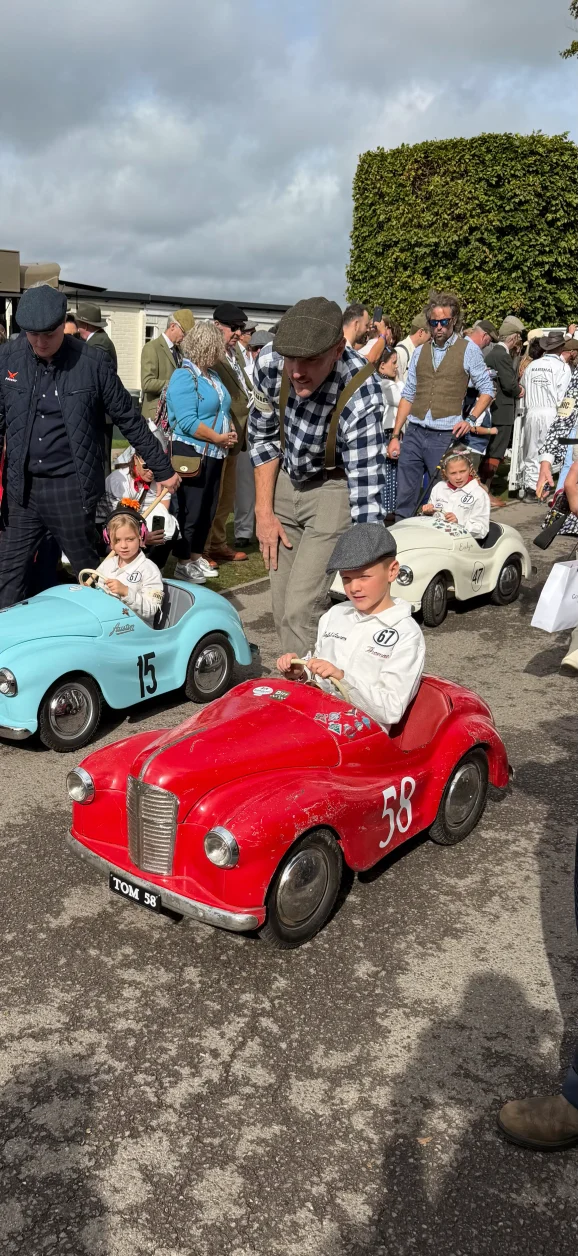
Families can spend months restoring and preparing their cars. Some children practise in their gardens or driveways and race times have fallen by around 20 seconds since 2012.
And yes, people have cheated.
What does scrutineering involve – and have you caught people bending the rules?
It’s probably the most over-regulated and over-inspected race at the Revival. We check body size, apertures, steering wheel diameter, axles, hubs and pedals, and we weigh them.
There are two parts to it. The first is safety, making sure nothing on the car can hurt the child. The second is eligibility, making sure nobody has gained an unfair advantage. After we discovered an issue following a race, we moved to 100 per cent pre-race inspection. Every governing body has gone from post-race checks to pre-race inspection because of cheating.
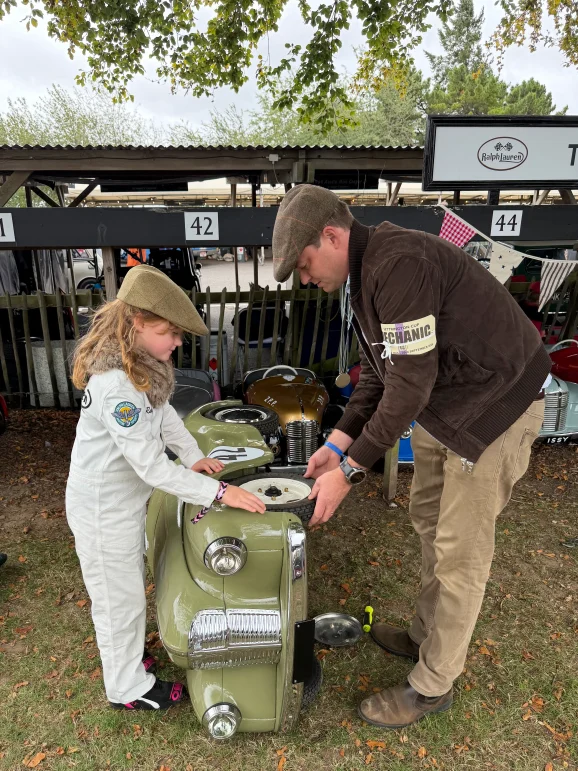
I’ve certainly seen some creative interpretations of the rules. On one occasion I proved the point by getting into an illegally modified car myself and pedalling it out of scrutineering. We try to deal with discrepancies diplomatically, but we keep a close eye on the more enthusiastic engineering parents.
COVID also brought in self-declaration forms, which are now backed up by verification, and we issue non-conformance sheets each year.
The Cup attracts some famous families. Does that change anything?
No. Plenty of famous families have taken part, but once the race starts everyone is equal. I’ve seen celebrity parents panic just as much as anyone else. Fame doesn’t help when your child has to pedal a 38kg steel car as fast as their legs will carry them.
What do the children get out of it – and have any gone on to race seriously?
Joy, confidence and an introduction to motorsport. It’s proper junior motorsport. Several former competitors have gone on to karting, Ginetta Juniors and other junior categories. Some now race at the Members’ Meeting and Revival, while others have come back to help with scrutineering and joined the Orange Army.
The Cup was never created as a talent-scouting event, but it can certainly light the spark.
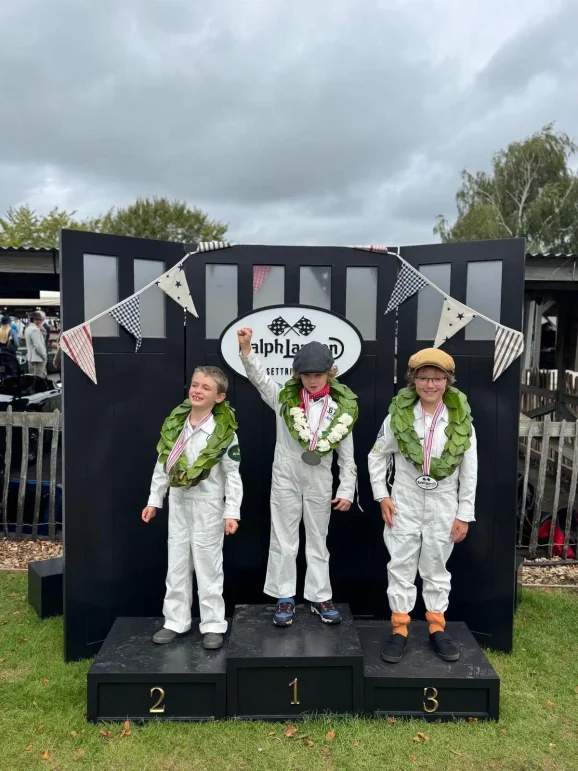
One former competitor told me the Settrington Cup taught them “the importance of a good start”, which is a pretty useful lesson in any form of motorsport.
How many original J40s survive today – and what are they worth?
Hundreds, if not thousands, and more continue to emerge. The Settrington Cup has helped drive a real renaissance in them. Austin Pedal Cars now produces continuation models too, although they aren’t eligible to race in the Cup.
A decent usable original starts at upwards of £3,000. A fully restored example from a reputable builder can reach £10,000 or more. For one of my own fully restored concours examples, you’d be looking at around eight to nine grand.
Do you have a personal connection with the J40?
Absolutely. It started with my dad. He saw one in a BMC dealership in the 1950s while his father was buying a new car. He sat in it and loved it, but at £25–£33 it was simply too expensive. That was the equivalent of around four weeks’ salary for the average family.
He vowed that his own children would have one. Years later he spotted a rather beaten-up J40 in a farmyard while travelling for work. He used the phone book to track down the farmer, who agreed to sell it to him. There was no seat base, so my brother and I sat on a plank of wood. It was a toy and we used it hard – we even built jumps to drive it over.
We eventually broke it, of course, but Dad kept it.
In 2011 I decided to restore it as a Smokey Yunick NASCAR replica for the first Settrington Cup in 2012. It has raced every year since.
Last year I also built a J40 evocation of the ex-Prince Bira ERA R5B ‘Remus’, appropriately enough because the owner lives on Bira Mews.
What are the biggest challenges in running the Cup, and what would you change?
Space and fairness. The paddock was built with 36 shelters in 2012 and now we have roughly twice as many cars. We have absolutely run out of room.
Rain can make the paddock almost unworkable, so a bigger paddock would be top of my list. I’d also love to have more racing – heats, semi-finals and finals – but there simply isn’t enough track time.
Fair play is the other challenge. We have cheating, meltdowns and the occasional argumentative parent, although safety always comes first. The job of a scrutineer is not to stop anybody racing – it’s to make sure their car doesn’t hurt them. The job of the eligibility consultant is to ensure a level playing field.
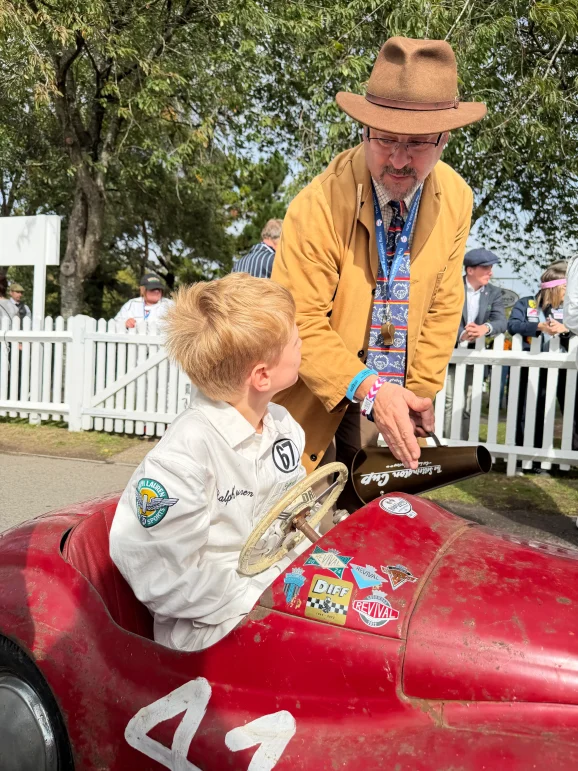
The event itself has evolved enormously since 2012. We have more cars, better preparation, stricter rules and faster racing.
Can you imagine not having it now?
What does the Settrington Cup represent to you?
For me, it’s about the next generation. It’s the next generation having fun, playing at being racing drivers to see if they want to become racing drivers, all while there’s some deadly serious competition going on.
One of my favourite moments every year is the walk up the grid. You hear the crowd, feel the tension building and then the flag drops. I always think of Jenks’ line: “When the flag drops, the bullshit stops.”
Then at the other end you have the victory lane procession and 70 children glowing with pride. For all the fun around it, the racing itself is completely genuine. It’s the most deadly serious race of the weekend, an absolute leveller and the only race where it is a completely level playing field.
That combination of children having fun, family tradition, post-war motoring history and proper racing is what makes the Settrington Cup such an important part of the Revival.

Mark G. Whitchurch is a seasoned motoring journalist whose work—covering road tests, launch reports, scenic drives, major races, and event reviews—has appeared in The Observer, Daily Telegraph, Bristol Evening Post, Classic & Sports Car Magazine, Mini Magazine, Classic Car Weekly, AutoCar Magazine, and the Western Daily Press, among others. He won the Tourism Malaysia Regional Travel Writer of the Year in 2003 and is a member of The Guild of Motoring Writers.
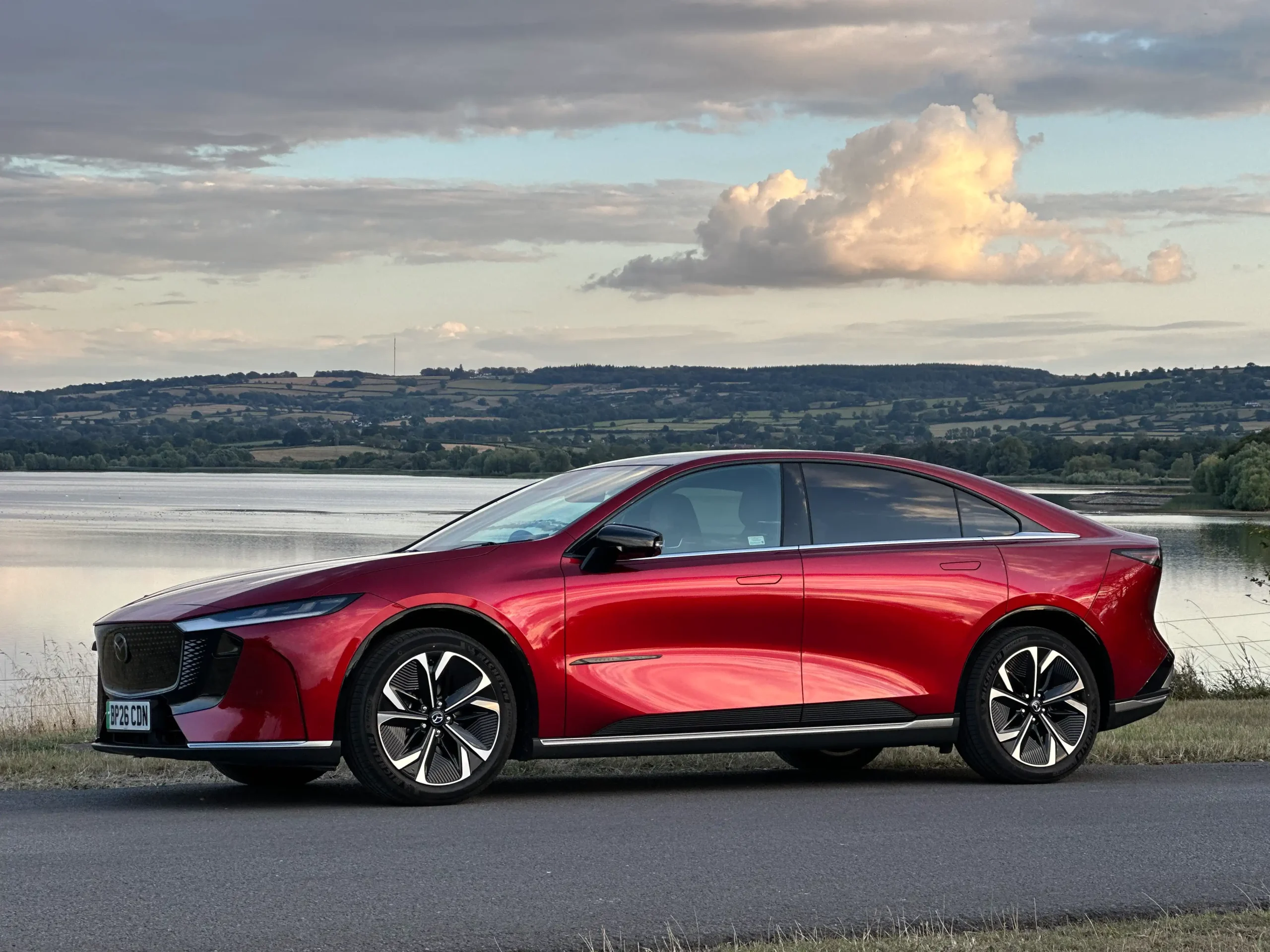
READ MORE: Is Mazda’s new £39,000 EV the ideal commuter? With prices starting at £38,995, Mazda’s new electric hatchback offers an elegant alternative to the SUV for drivers juggling the commute, client visits and weekends away. Mark G Whitchurch spends a week behind the wheel to find out how comfortable it is, how much it will carry and whether it is a car he would want to own.
Do you have news to share or expertise to contribute? The European welcomes insights from business leaders and sector specialists. Get in touch with our editorial team to find out more.
Main image: Young drivers battle it out in the Settrington Cup, where around 70 children took to the Goodwood track in historic Austin J40 pedal cars. Composite image based on photographs supplied by Goodwood Revival.