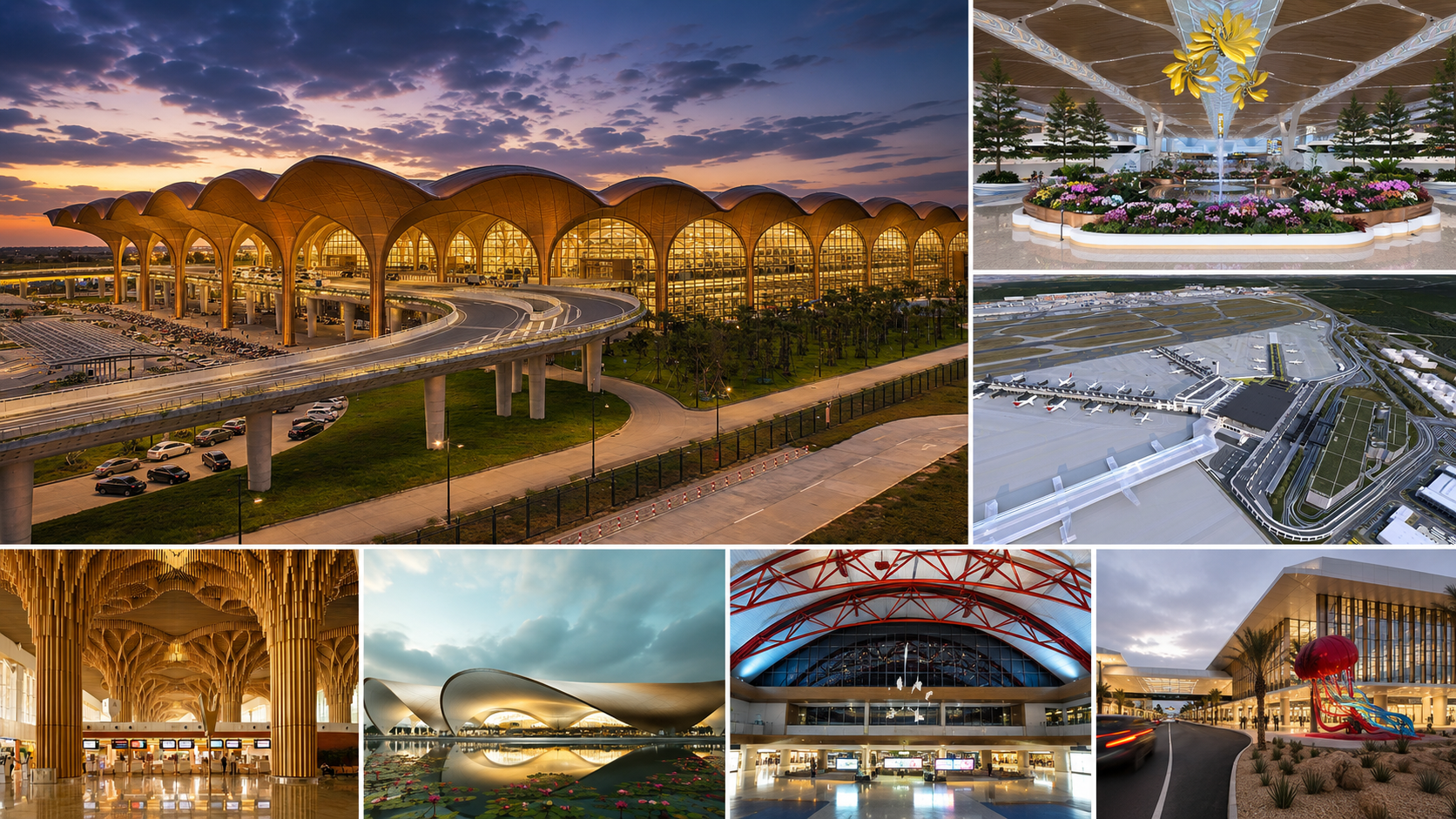
Frankfurt Airport’s Terminal 3 is Europe’s only entry on Prix Versailles’ 2026 list, joining flower-inspired halls in China and India, a Cambodian canopy and new terminals in the United States
Frankfurt Airport’s €4bn Terminal 3 has been named among the world’s most beautiful airports, becoming Europe’s only entry on a seven-strong international architecture list.
The vast new terminal joins a bamboo-inspired “sky forest” in northeast India, a giant lotus-shaped airport above Mumbai, a Cambodian terminal beneath a sweeping canopy and new airport projects in China and the United States.
The seven airports and terminals were selected for the annual Prix Versailles World’s Most Beautiful Airports List, announced in Paris this week.
Prix Versailles said the projects were selected for contemporary architecture that gives each airport a distinct identity and makes the terminal an integral part of the journey.
Frankfurt’s Terminal 3, one of Europe’s largest infrastructure projects, sits alongside Guangzhou’s flower-inspired Terminal 3, Guwahati’s bamboo-orchid terminal, Navi Mumbai’s lotus-like canopy, Techo International Airport near Phnom Penh, Pittsburgh’s mountain-shaped roofline and San Diego’s glass-fronted waterfront terminal.
Three of the seven projects will go forward for further Prix Versailles World Titles later this year, covering overall architecture, interior design and exterior design.
Jérôme Gouadain, secretary general of Prix Versailles, said: “Whether they have newly appeared on the horizon or undergone a major renovation, contemporary airports and airport terminals are innovative, inescapable hallmarks of their regions and their eras.”
The World’s Most Beautiful Airports – Full List
Frankfurt Airport Terminal 3, Germany
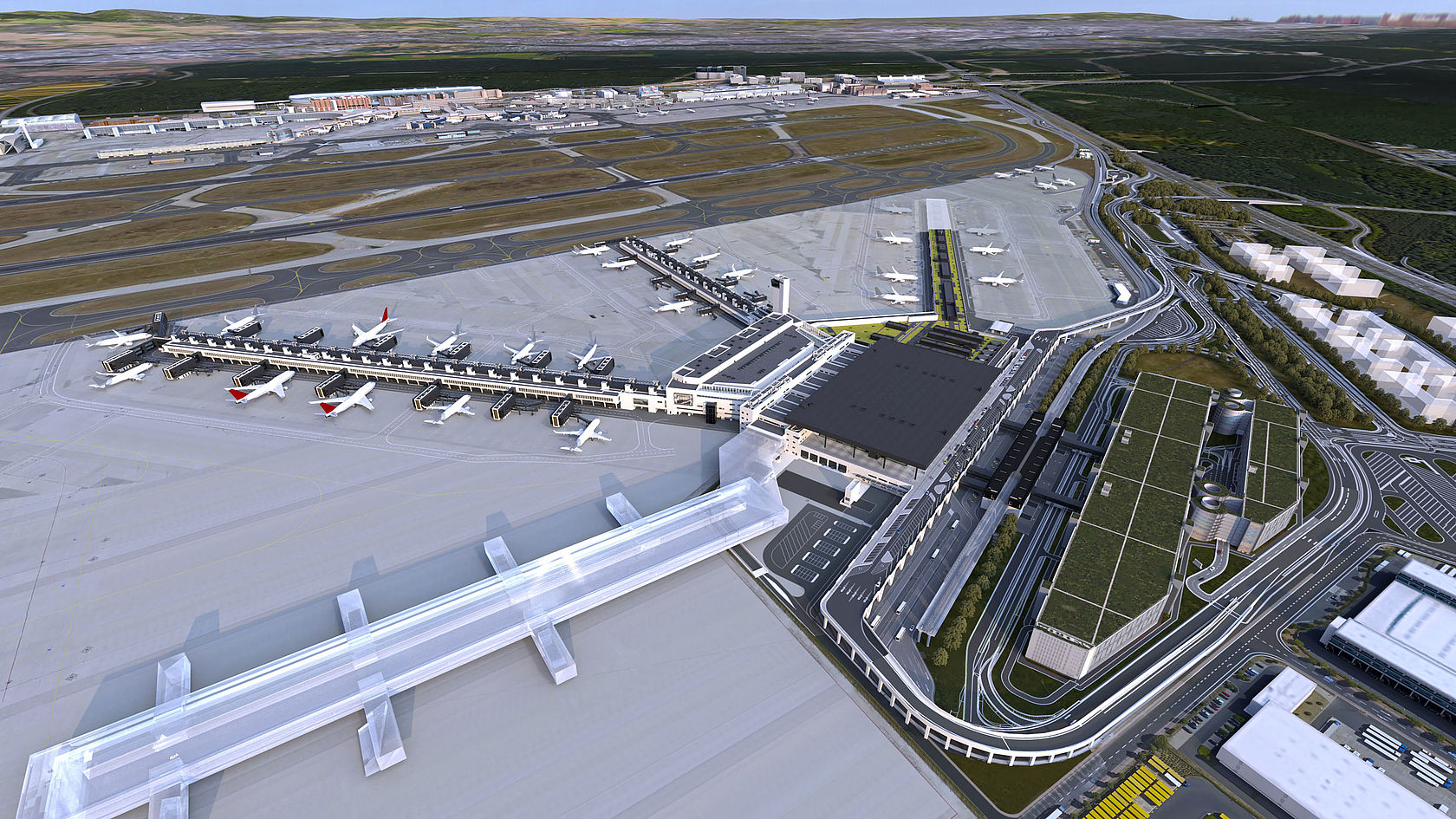
In the heart of Europe, Frankfurt’s Terminal 3 was recognised as the culmination of one of the continent’s largest infrastructure projects.
The terminal occupies 1.3 square kilometres of land, roughly equivalent to Frankfurt city centre. Architect Christoph Mäckler designed its piers, boarding gates and lounges to resemble streets and squares, creating what Prix Versailles called a “lively urban environment”.
The awards body highlighted its use of Jura limestone, travertine and plate-glass windows, which fill the building with natural light. Three suspended rings made from coloured aluminium discs rotate continuously above the terminal, while much of the building was designed to change as aviation and passenger needs evolve.
Guangzhou Baiyun International Airport Terminal 3, China
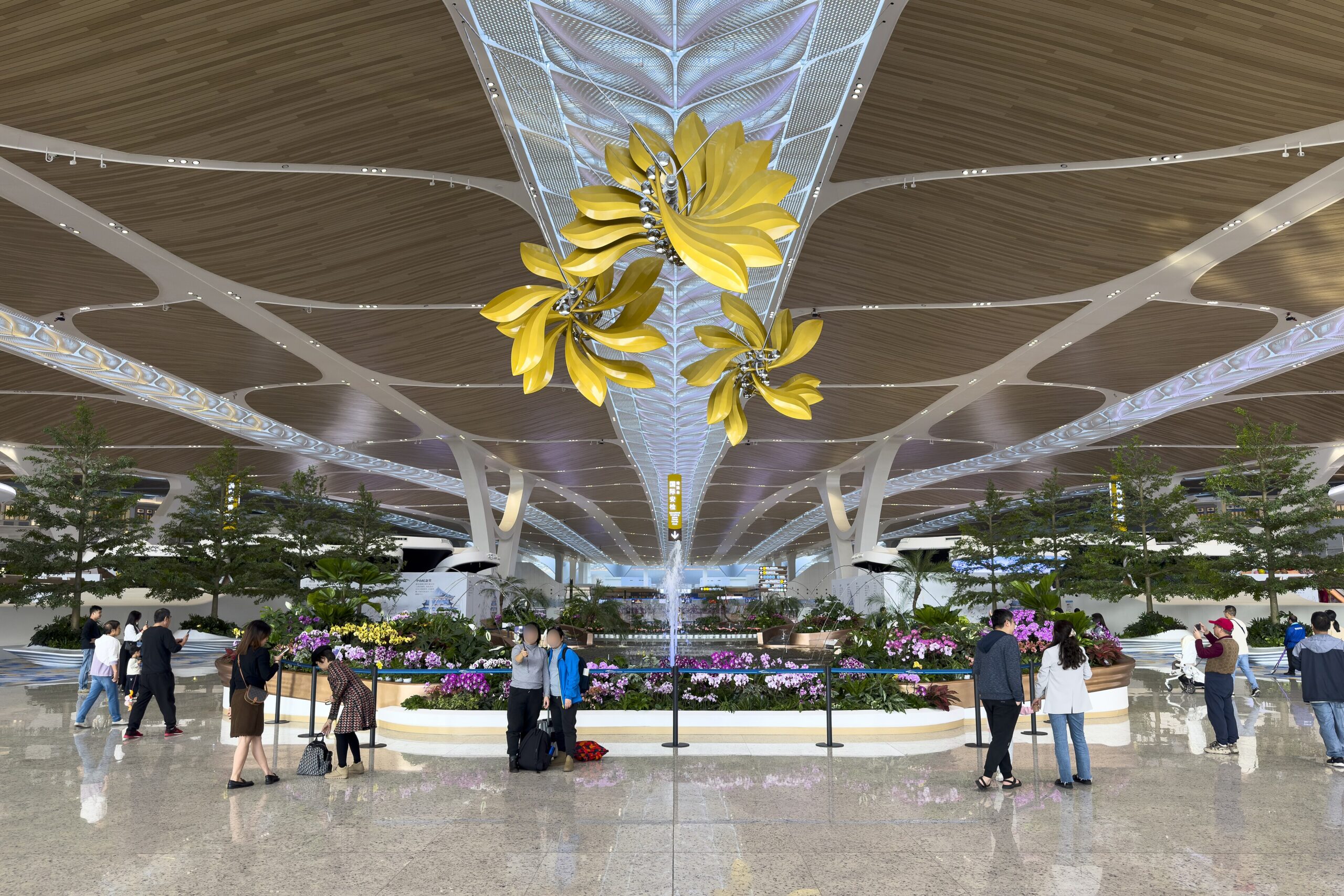
Guangzhou’s Terminal 3 was selected for a design that draws on the city’s identity as the “City of Flowers” and on the architectural traditions of Lingnan in southern China.
Designed by Artelia with the Guangdong Architectural Design and Research Institute, the terminal uses clouds, water and flowers as the basis for light-filled spaces, terraces, atriums and gardens. Its flowing forms are intended to guide passengers through the building, while references to the Maritime Silk Road run through the design.
Prix Versailles said the terminal includes the highest open-air public observation deck at a Chinese airport.
Lokapriya Gopinath Bordoloi International Airport Terminal 2, India
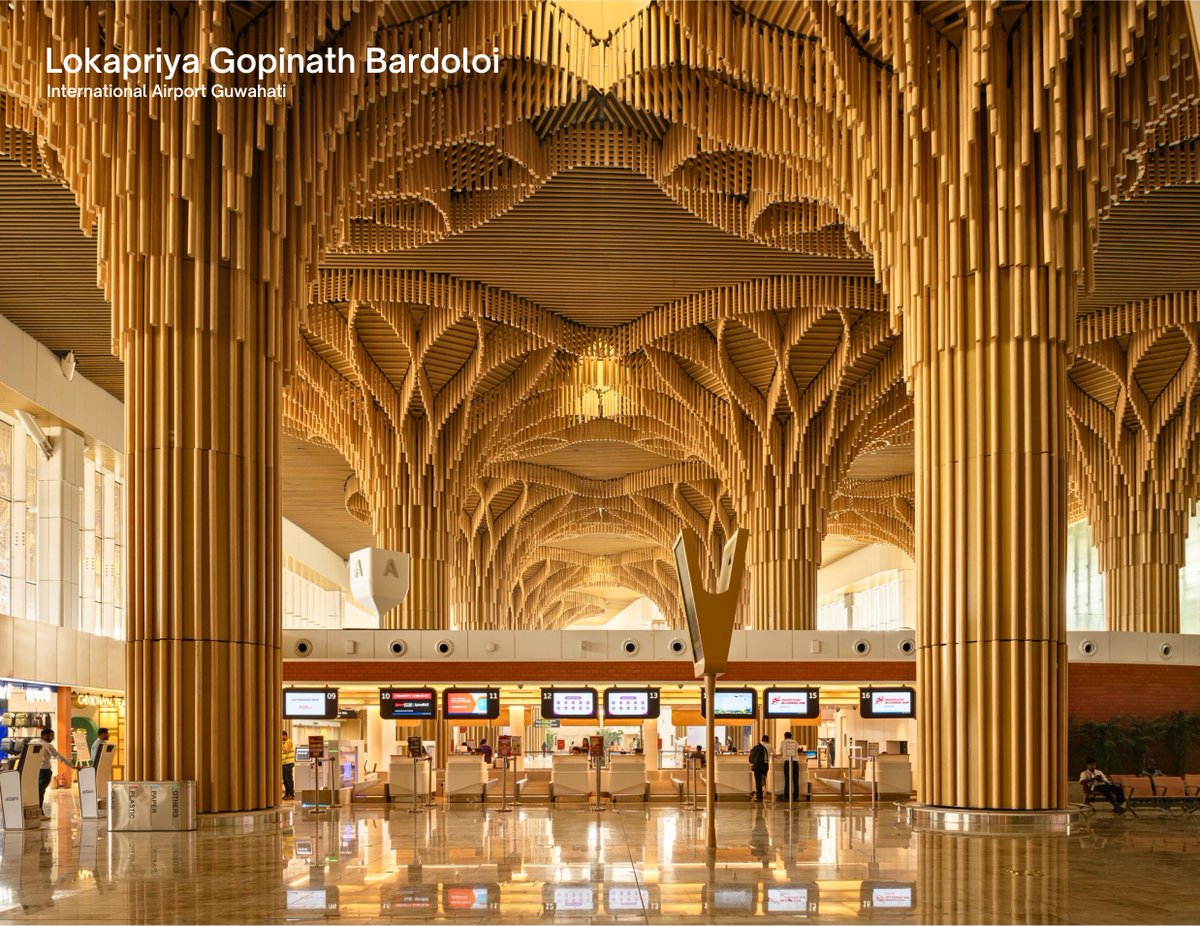
Guwahati’s Terminal 2 was chosen for a design inspired by the bamboo orchid, a symbol of northeast India’s biodiversity.
Architect Nuru Karim created sweeping vaulted ceilings and organic forms intended to reflect Assam’s landscapes and indigenous architecture. Ceiling patterns trace the Brahmaputra and its tributaries, while local art, tribal narratives and craft traditions have been incorporated into the terminal’s public spaces.
Prix Versailles also pointed to the use of bamboo, passive daylighting and biophilic design.
Navi Mumbai International Airport Terminal 1, India
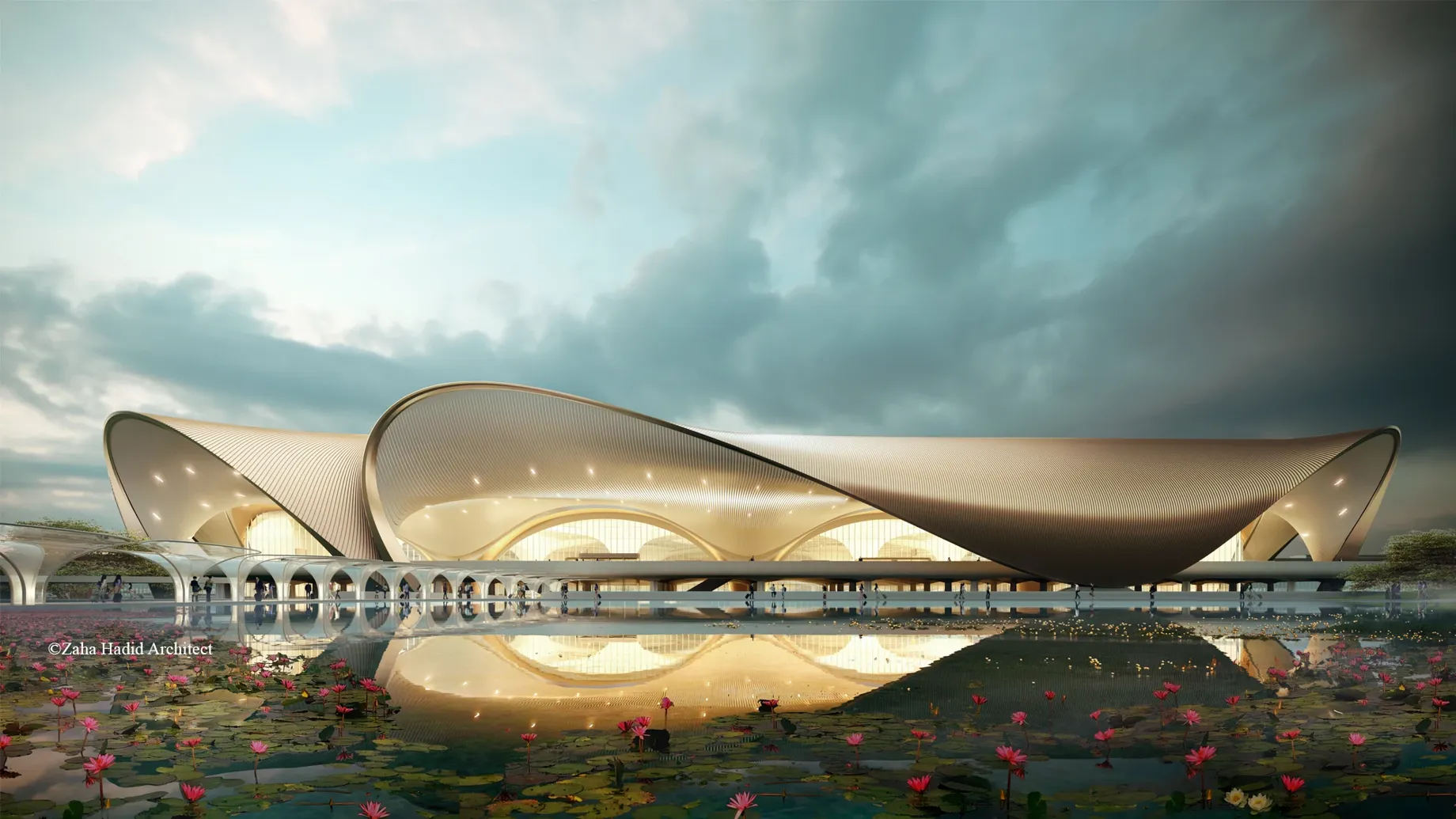
Navi Mumbai’s Terminal 1, which opened in 2025, was recognised for a lotus-inspired design by Zaha Hadid Architects.
The airport was built after rivers and mountains were reshaped, high-voltage cables moved and marshland reclaimed from the sea. Its canopy is designed to resemble a lotus opening in morning light, with broad overhangs, geometric entrance portals and flower-like columns carrying the theme through the terminal.
Digital art installations appear at key points around the building, which Prix Versailles said combined India’s technological ambitions with cultural references.
Techo International Airport, Cambodia
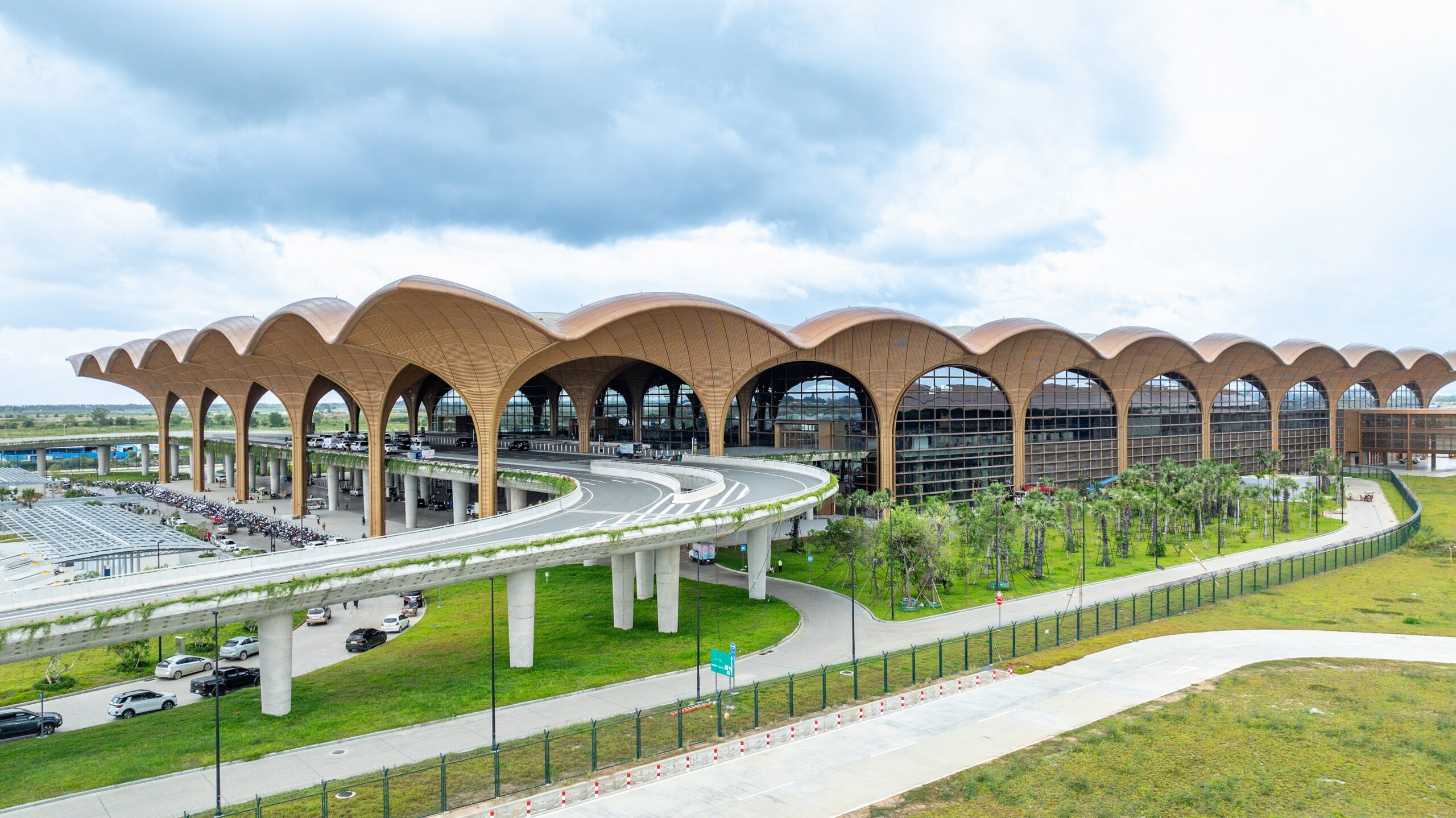
Techo International Airport was selected for a terminal designed by Foster + Partners that draws on Cambodian temples, palaces and traditional basket weaving.
Its modular roof rises in a wave towards the centre of the building, while ceiling panels evoke woven bamboo and rattan. Prix Versailles said the design reduced the need for mechanical ventilation and artificial lighting during the day.
Native rumduol trees, a Cambodian national symbol, rise through the central space. The terminal was also designed to give passengers short walking distances and clear routes from drop-off to boarding gates.
Pittsburgh International Airport, United States
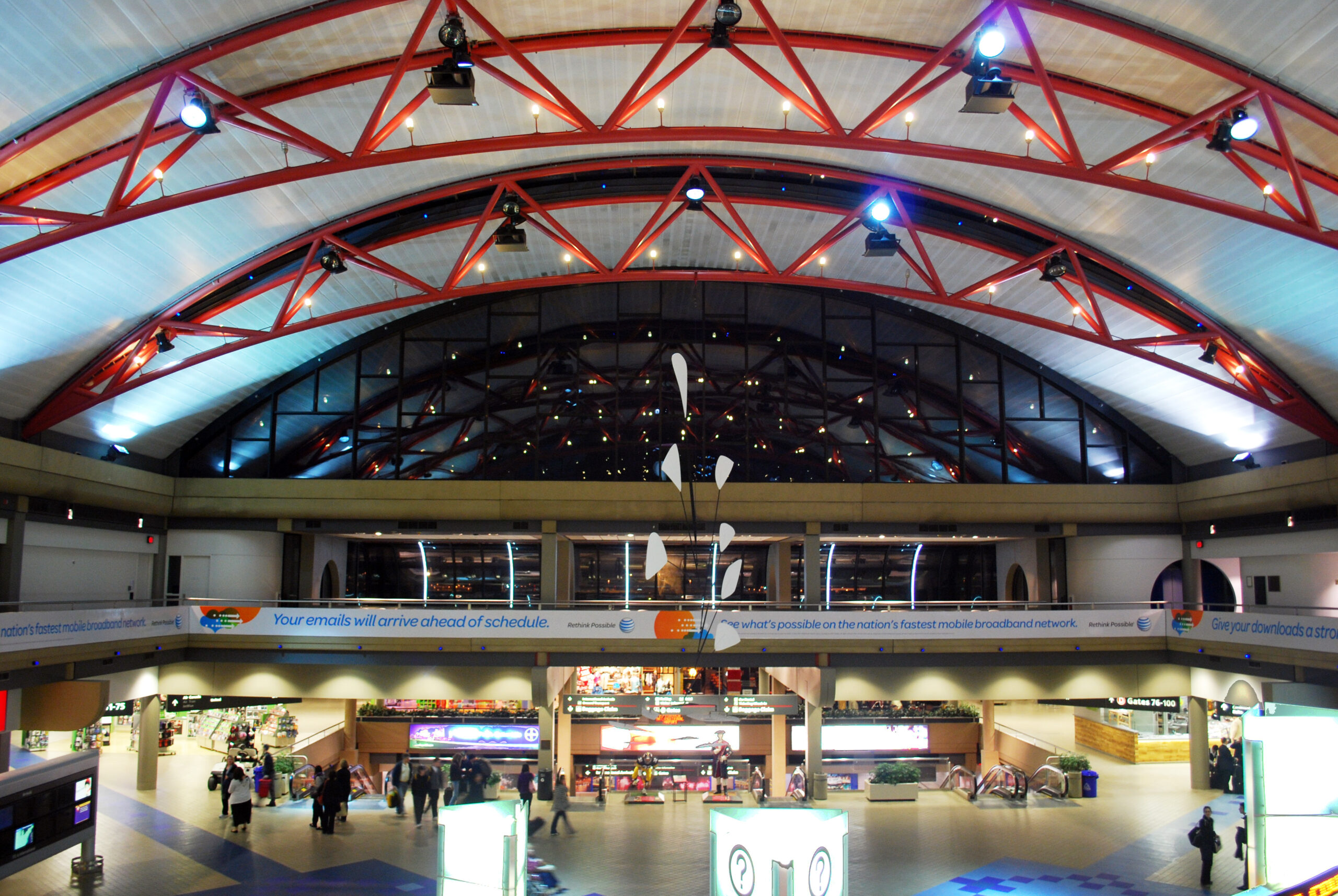
Pittsburgh International Airport made the list for a terminal whose sweeping roofline references the nearby Allegheny Mountains.
Designed by Gensler and HDR with luis vidal + architects, the building uses 38 steel columns shaped like trees to create a canopy inspired by the region’s forests. Glass walls bring daylight into the terminal, while four outdoor terraces are planned to give travellers access to fresh air.
Prix Versailles also highlighted local art, including the Petal Tunnel inspired by Pittsburgh’s Fort Pitt Tunnel, alongside shorter passenger distances, energy efficiency and inclusive comfort features.
San Diego International Airport Terminal 1, U.S
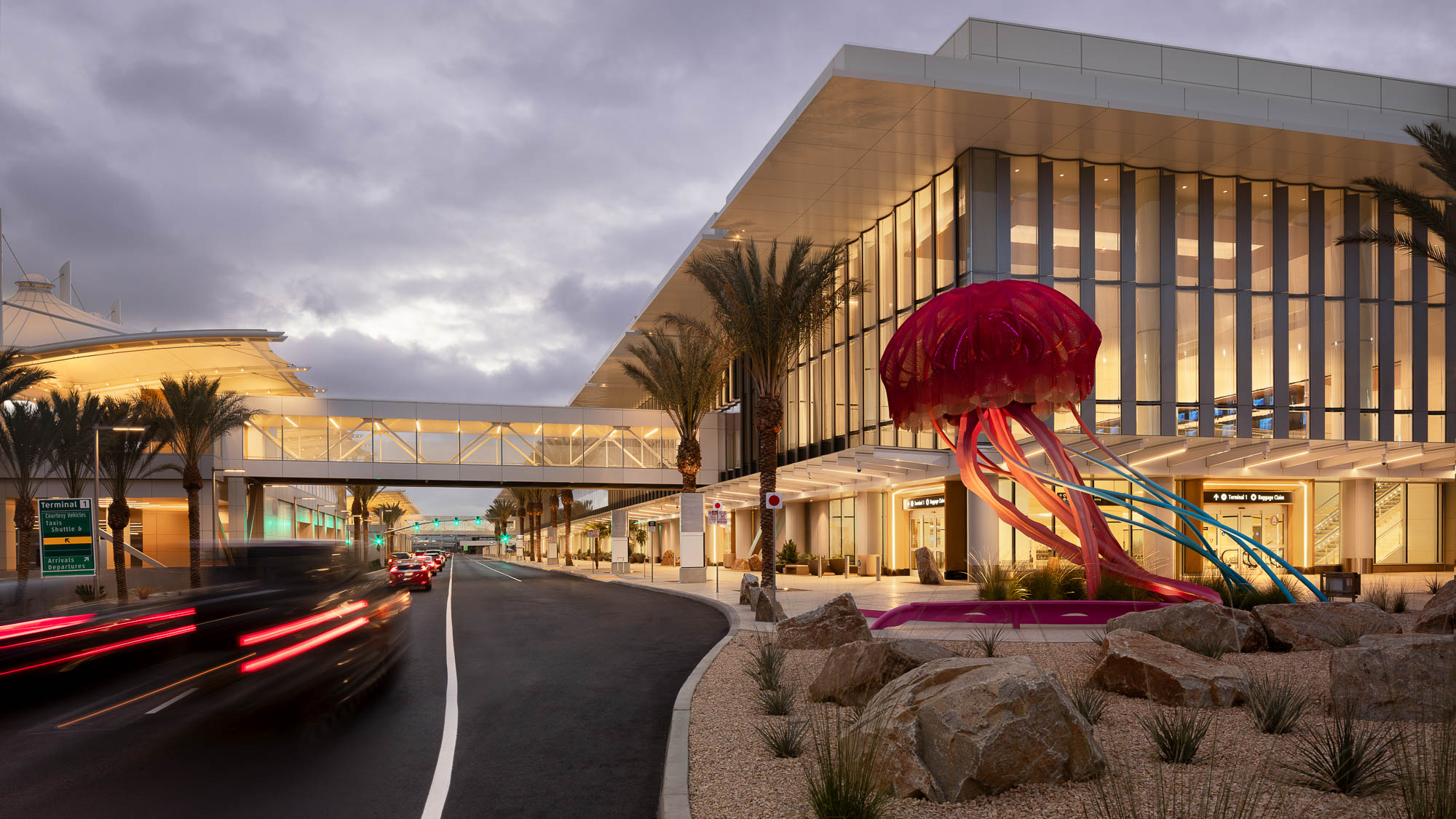
San Diego’s Terminal 1 was selected after a full redevelopment of the terminal, surrounding roads, car parks and public-transport links at America’s busiest single-runway airport.
The centrepiece is a 244-metre curved glass façade developed by Gensler with artist and architect James Carpenter. The glass brings daylight into the terminal while reducing heat and glare.
Prix Versailles said an engineering system allowing the removal of structural columns had created a more open ticketing hall and helped reduce the project’s carbon footprint by 30 per cent. Outdoor terraces overlooking the bay, flexible lounges and local concessions also formed part of the redesign.
The airport awards comes days after Denmark’s Den Gamle By in Aarhus was named 2026 European Museum of the Year.
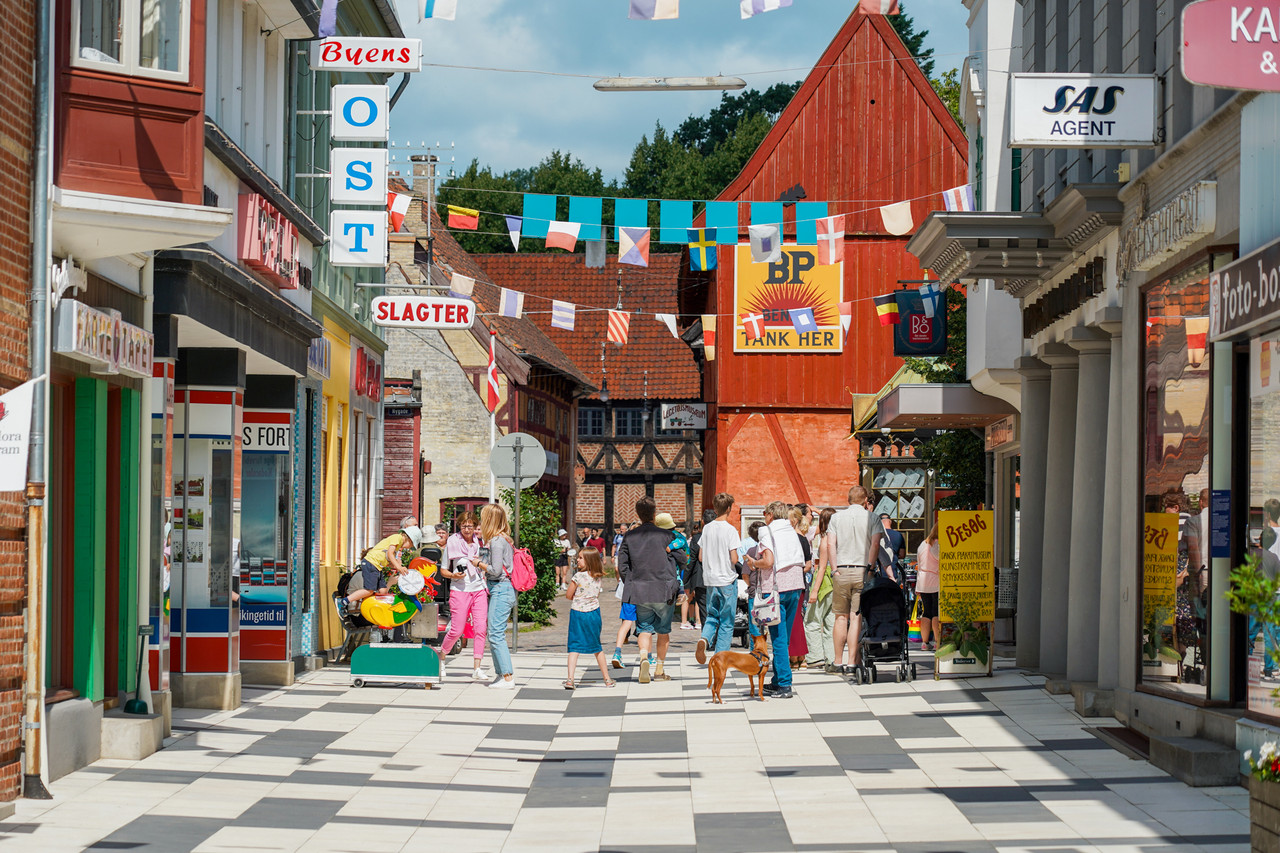
The open-air museum was recognised for bringing historical and contemporary urban environments together to address migration, sustainability, social justice and wider questions of public life.
Thirty-four museums from 16 Council of Europe member states took part in the awards, with jury members visiting the nominees during 2025 before the winners were announced this week.
London’s Young V&A received the 2026 Council of Europe Museum Prize at a separate ceremony in Strasbourg in April. The museum was recognised for its child-centred approach, developed with children, young people, families and teachers following its reopening in 2023.
READ MORE: WATCH: this tiny plane could let passengers fly from rooftops instead of airports. A hybrid-electric aircraft that can land in just 150ft has completed an urban test flight, raising the prospect of passengers flying from rooftops, car parks and city piers.
Do you have news to share or expertise to contribute? The European welcomes insights from business leaders and sector specialists. Get in touch with our editorial team to find out more.
Main image: A selection of airports named on the Prix Versailles 2026 World’s Most Beautiful Airports List, including Techo International Airport in Cambodia, Guangzhou Baiyun International Airport in China, Frankfurt Airport’s Terminal 3, Guwahati in India, Navi Mumbai in India, Pittsburgh International Airport and San Diego International Airport. Composite image: The European. Images: Rkives1898/CC BY 4.0; Zaha Hadid Architects; Lokapriya Gopinath Bordoloi International Airport; John Marino/CC0; Ema Peter Photography; airport handouts.