A hybrid-electric aircraft that can land in just 150ft has completed an urban test flight, raising the prospect of passengers flying from rooftops, car parks and city piers
The future of air travel may have just landed.
A tiny plane that could one day take off and touch down from city rooftops has completed a successful urban test flight.
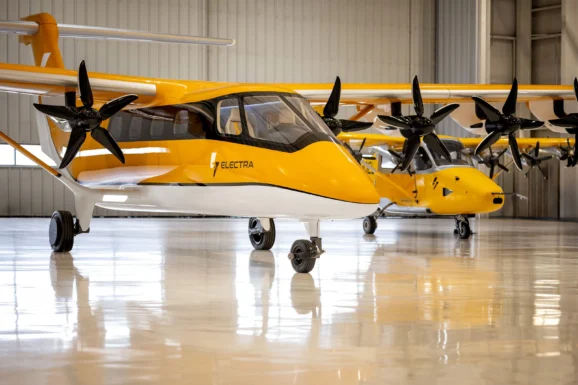
Electra says its Ultra Short aircraft can get airborne in just 150ft – the length of just two tennis courts and thousands of feet less than a conventional runway.
Thanks to hybrid-electric propulsion and blown-lift technology, it needs a strip shorter than an Olympic swimming pool.
According to U.S aviation firm Electra, the plane could become a new form of regional air travel that cuts out airport queues, long drives to terminals and the usual slog of short-haul flying.
Electra says the technology could allow aircraft to operate from “Ultra Short Access Points” close to where people live and work.
That could mean passengers boarding a small plane from a city rooftop, a riverside pier or a car park for a short regional hop that would otherwise take hours by road.
The aircraft has just completed a demonstration at the Columbus Street Terminal in Charleston, South Carolina, during an event hosted by SC Ports at the CAPA Airline Leader Summit Americas.
According to Electra, its Ultra Short technology can deliver 2.5 times the payload and 10 times longer range than helicopters and electric vertical take-off and landing aircraft, with 70 per cent lower operating costs.
Electra says its target is the millions of awkward journeys that are too long to drive quickly and too inconvenient to make through a traditional airport.
Marc Allen, chief executive of Electra, said: “This demonstration is about showing what’s possible in the real world for urban/suburban airspace access.
“When you can offer air services close to where people live, work and play, that opens the door to transformative options for regional mobility. It is a new way to travel that’s more direct, flexible, and much easier to use.”
The Charleston flight was carried out by Electra’s EL2 technology demonstrator, but the company plans to use its larger EL9 aircraft as a nine-passenger regional shuttle.
That aircraft is intended to carry people and cargo on short routes that currently fall between driving and flying.
Electra says more than 35 million daily trips in the US fall into that gap.
Its Direct Aviation Market Outlook identifies 1,851 routes with at least 1,000 travellers a day where passengers could save more than an hour.
It also found 540 routes with potential savings of more than two hours and 227 routes where travellers could save more than three hours.
The figures point to a possible new market for short, direct flights between city centres, business districts and regional destinations.
The company says its aircraft could be used by business travellers trying to save time, families heading away for the weekend and people visiting relatives without turning a short trip into an all-day journey.
Regular services would still depend on regulatory approval, suitable landing sites and public acceptance.
Electra has already been selected for the US Department of Transportation’s Advanced Air Mobility pilot operations programme, which is designed to speed up the safe deployment of new aircraft.
The company is working with public and private partners on demonstrations linking urban and regional destinations in Florida and metropolitan centres in New York, New Jersey and Pennsylvania.
It has also supported a submission from the state of Louisiana.
Its investors include Lockheed Martin Ventures, Honeywell and Safran, while contracted customers include the US Air Force, US Army, US Navy and NASA.
The company also says it has more than 2,200 letters of intent from more than 60 commercial customers, including airlines and helicopter operators.
READ MORE: Electric air taxis move closer after aircraft completes key in-flight switch. The idea of electric air taxis zipping passengers between cities and airports moved closer to reality this week after a test aircraft pulled off one of the hardest tricks in aviation.
Do you have news to share or expertise to contribute? The European welcomes insights from business leaders and sector specialists. Get in touch with our editorial team to find out more.
Main image: An artist’s impression of Electra’s hybrid-electric Ultra Short aircraft flying above city rooftops, illustrating how future regional air travel could operate from small urban sites such as rooftops, car parks, piers and barges rather than conventional airports. Credit: Graphic created by Belters News using Electra aircraft imagery.