Europe’s leading defence powers launch joint drone and autonomous systems programme

John E. Kaye
- Published
- News
France, Germany, Italy, Poland and the UK agree new initiative aimed at scaling production of low-cost military platforms amid strategic and industrial pressures
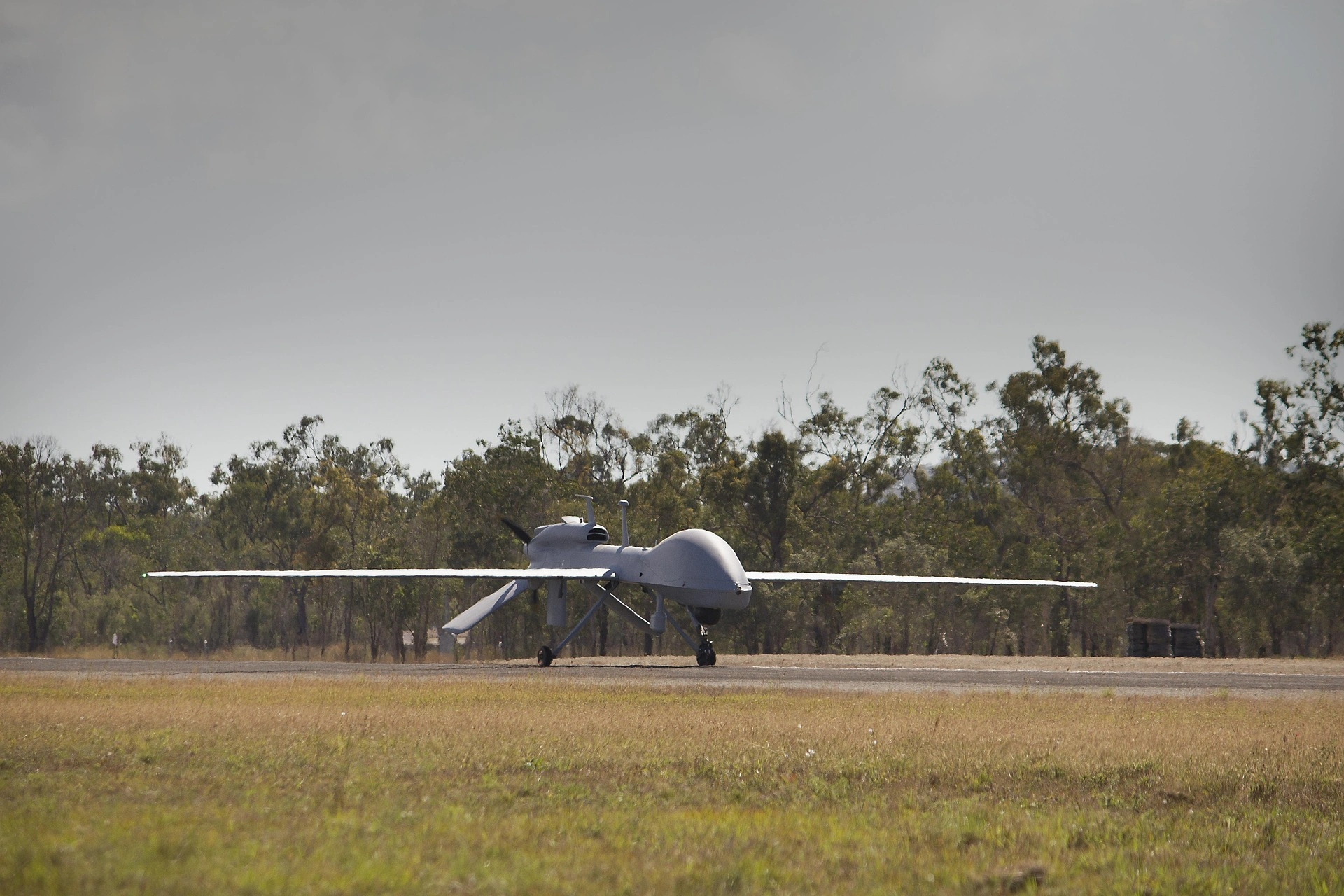
Europe’s five largest defence powers have agreed to strengthen cooperation on the development and procurement of military drones and autonomous systems, launching a new industrial initiative designed to accelerate production and reduce fragmentation across national programmes.
France, Germany, Italy, Poland and the United Kingdom announced the creation of the Low-Cost Effectors and Autonomous Platforms (LEAP) initiative following a meeting of defence ministers in Krakow.
The programme is intended to coordinate the development and acquisition of “low-cost effectors” — the components that deliver operational capability — and unmanned platforms capable of operating with varying degrees of autonomy. The focus is on scalable, cost-effective systems that can be deployed rapidly and in significant volumes.
In a joint statement, ministers said the initiative would increase cooperation on development and procurement in order to “deliver military effect” more efficiently, while strengthening Europe’s defence industrial capacity.
The announcement comes amid continued reassessment of Europe’s defence posture following Russia’s invasion of Ukraine and alongside the European Commission’s action plan on drone and counter-drone security, which sets out measures to strengthen detection, resilience and industrial capacity across member states.
Drones and autonomous systems have played a central role in modern conflict, offering comparatively inexpensive alternatives to traditional missile and air-defence platforms. Their battlefield effectiveness has prompted European governments to accelerate efforts to expand domestic production and reduce reliance on non-European suppliers.
The LEAP initiative is also positioned as an industrial measure. European defence procurement has historically been fragmented, with national programmes developed in parallel and often duplicating capability, a challenge repeatedly highlighted by the European Defence Agency. Closer coordination could generate economies of scale, improve interoperability and shorten development timelines.
Ministers welcomed recent European Union measures granting member states greater fiscal flexibility for defence spending, while emphasising that defence capabilities remain a national responsibility.
Analysts say the success of the programme will depend on sustained political commitment, alignment of technical standards and clarity over funding mechanisms. Previous multinational defence projects have faced delays due to divergent requirements and export restrictions.
From an industrial perspective, deeper collaboration in autonomous systems could strengthen Europe’s competitive position in a sector where the United States and China have invested heavily. Defence companies specialising in robotics, artificial intelligence and electronic systems may benefit from increased demand and cross-border procurement opportunities.
The move reflects a broader shift in European policy towards reinforcing strategic autonomy in key sectors, as defence spending across Europe has risen sharply in recent years, according to data from SIPRI.
READ MORE: ‘AI-powered drones market to triple by 2030, driven by defence, logistics and agriculture‘. The global market for artificial intelligence (AI) in drones is forecast to grow from $821.3 million in 2025 to $2.75 billion (£2.13 billion) by 2030, according to a new industry report. The projection represents a compound annual growth rate (CAGR) of 27.4% over the five-year period, making it one of the fastest-growing areas of the aerospace and defence sector.
Do you have news to share or expertise to contribute? The European welcomes insights from business leaders and sector specialists. Get in touch with our editorial team to find out more.
Main image: Military_Material/Pixabay
TOP STORIES
-
 Chris Packham urges PM to ban ‘frankenchicken’ from schools and hospitals
 -
Loch Lomond’s 'Bonnie Banks at risk’ from major road upgrade
-
LED lights could be ‘the new asbestos’, UCL scientists warn
-
MPs tune in to Britain’s Eurovision ‘nul points’ problem
-
MPs tell Government to reject Thames Water creditors as utility nears insolvency
-
Only 14% of companies can show supply chain safeguards are working, study finds
-
OpenAI admits AI models hid mistakes, invented data and acted without permission
-
EIB makes first small nuclear reactor investment with €40m backing for Finnish start-up
-
AI arms race could mean fewer cold emails reaching your inbox
-
Housing costs hit recruitment at 77% of large London firms, survey finds
-
SpaceX to launch one-tonne orbital factory for European space firm in 2028
-
Estonia’s e-residents launch more than 4,200 companies as business creation jumps 36%
-
Small business bank lending falls £27bn in three years as nine-in-10 areas see decline
-
Europe’s healthcare sector lags on AI uptake – but leads once it starts using it
-
Stranded drivers could soon call for help even with no mobile signal
-
NASA backs space ‘air brake’ that could cut years off missions to Uranus and Neptune
-
MPs and peers call for UK ban on AI that could evade human control
-
France orders €1.3bn in extra cuts as growth falls behind European neighbours
-
Bioweapons research, Russian-linked spies, guided rockets and cyber-attacks on Europe used Claude AI, Anthropic reveals
-
Cadbury Takes a Break as KitKat tops Britain’s social media sweet rankings
-
European network alliance doubles in size as digital sovereignty drive accelerates
-
European insurance giants join New York summit on future of AI
-
Oxford leads £10m international study as resistance threatens new TB treatments
-
Inside the world’s wildest new mini golf course with caves, 13ft waterfalls… and sharks
-
Apple’s new boss bets £1,999 on first folding iPhone