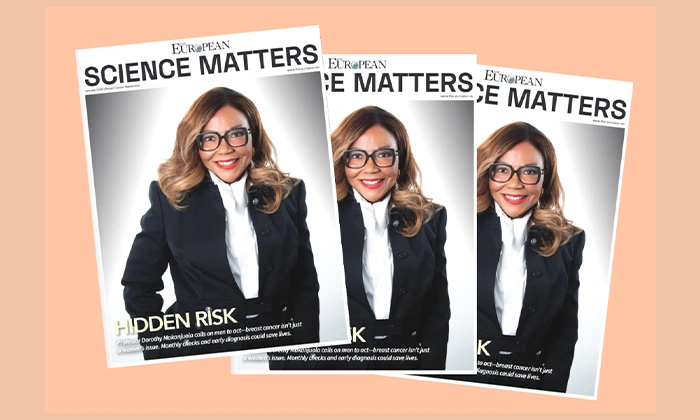
This 20-page special edition gathers expert insight on cancer, addiction, sustainability and biotechnology, showing how scientific evidence informs real-world decisions
From male breast cancer to targeted cancer therapy, addiction science, sustainable fashion and the limits of genetic engineering, the latest edition of Science Matters brings together research that directly affects how people live, work and stay well.
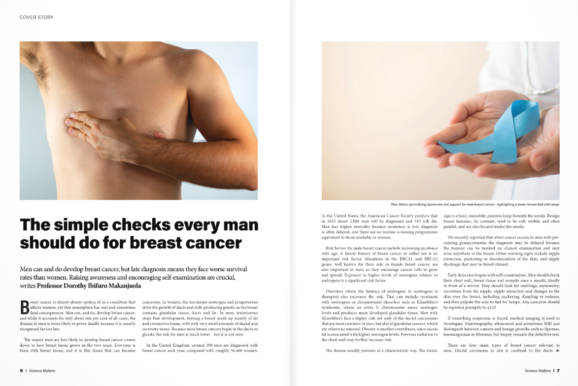
Its cover story focuses on a condition most people assume affects only women. Professor Dorothy Ibifuro Makanjuola explains why men can and do develop breast cancer, why diagnosis is so often delayed, and how simple monthly self-examination can mean the difference between a 97 per cent survival rate and one closer to 20 per cent. Drawing on clinical research and imaging practice, she sets out the warning signs men routinely miss and the genetic, hormonal and lifestyle factors that increase risk.
From early detection to treatment innovation, it also explores a therapy that could change how cancer is treated worldwide. Curium’s expansion into radioligand therapy shows how radioactive isotopes can be attached to molecules that seek out tumours and destroy them from within, reducing damage to surrounding healthy tissue. Chief Executive Renaud Dehareng explains how the company’s nuclear medicine expertise is now being redirected towards therapies that may improve survival and quality of life for patients with advanced cancers.
Elsewhere, clinicians at Hope Rehab Thailand address the persistent belief that addiction reflects weak willpower, despite clear medical evidence that it is a chronic brain disease. Drawing on the American Society of Addiction Medicine’s definition and decades of clinical evidence, specialist Simon Mott explains how neurological change drives compulsive behaviour, why relapse is part of the disease process, and why therapy is central to recovery.
Science’s influence on society extends well beyond hospitals and laboratories. Global Fashion Agenda sets out how climate change now sits at the centre of leadership decision-making, warning that the financial risks of delaying decarbonisation and supply-chain reform are rising rapidly. Its Fashion CEO Agenda 2025 explains how responsible purchasing, material choices and circular systems are being integrated into commercial strategy.
Finally, the eminent Oxford biologist, Professor Tim Coulson, takes aim at one of biotechnology’s most headline-grabbing claims: de-extinction. From “dire wolves” engineered from grey wolves to promises of returning the dodo to Mauritius, he explains why the science required to resurrect extinct species remains far beyond current capabilities, and why marketing language has raced ahead of biological reality.
Across 20 pages of exclusive reporting, Science Matters explores how clearer understanding of the evidence behind cancer, addiction, sustainability and biotechnology shapes decisions and outcomes in everyday life.
Read our new Science Matters supplement here.