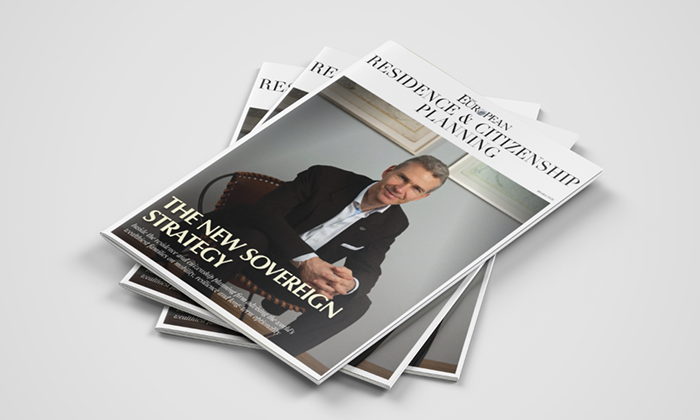
Our latest special supplement is packed with exclusive insights, new data and country updates on how wealthy families are spreading their lives across multiple jurisdictions
The European’s new Residence & Citizenship Planning supplement is packed with exclusive reporting from Europe, the Gulf and Asia on the battle to attract globally mobile families, and the incentives, thresholds and programmes reshaping the market.
It brings together essays, an extended interview and fresh market data on where globally mobile families are moving, how governments are redesigning their frameworks and what this means for capital and talent flows.
Our cover feature by Dr Christian H. Kaelin, the Chairman of Henley & Partners, sets out the idea of “sovereign equity”, a framework in which residence and citizenship programmes operate as long-term partnerships between individuals and states. He charts how affluent families are building “sovereign portfolios” across multiple jurisdictions to secure mobility, education, healthcare access and future optionality, while governments use carefully structured programmes to attract debt-free capital, entrepreneurial networks and specialist skills. The piece also examines the strategic choices facing Europe as Singapore, the UAE and others integrate investment migration into broader plans for national competitiveness.
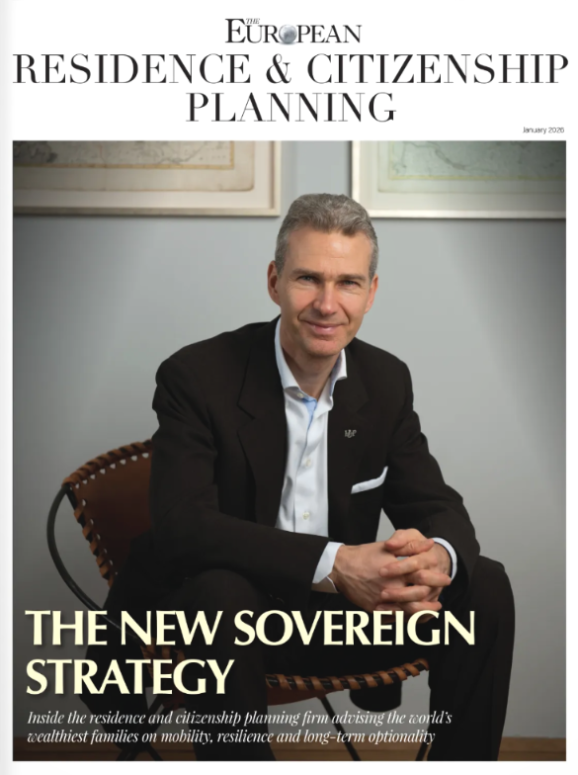
A detailed interview with Dominic Volek, the Group Head of Private Clients at Henley & Partners, meanwhile, explores how residence and citizenship planning now sits alongside tax, succession and wealth structuring in private client advisory. He reports a sharp rise in demand from U.S nationals, with Americans now accounting for almost 40 per cent of applications handled by the firm, and explains how families are using “sovereign diversification” to spread domicile and legal exposure across multiple countries. The conversation highlights the continued pull of European residence pathways such as Malta and Greece, the projected migration of 165,000 millionaires in 2026 and the way governments are tightening due diligence and AML standards while still competing for globally mobile investors.
The supplement also carries timely policy developments, including Bahrain’s decision to lower the minimum property investment required for its Golden Residency scheme, and Slovenia’s launch of a digital nomad visa allowing non-EU remote workers to live in the country for up to 12 months while working for employers or clients based overseas.

Wealth concentration and relocation trends are covered through UBS’s Billionaire Ambitions Report 2025, which finds global billionaire wealth at a record level. The study highlights a significant rise in intergenerational transfers, a growing number of multi-generational billionaire families and a marked increase in relocation among ultra-high-net-worth individuals seeking quality of life, geopolitical stability and more efficient tax administration. New data on the faster growth of women’s billionaire wealth and shifting regional investment preferences rounds out a picture of a market in rapid transition.
Read our new Residence & Citizenship Planning supplement here.
READ MORE: ‘How residence and citizenship programmes strengthen national resilience’. As multiple crises test nations simultaneously, countries that systematically invest in adaptability and attract global talent through residence and citizenship programmes are positioning themselves for sustainability in an uncertain world, writes Dr Juerg Steffen, Chief Executive Officer at Henley & Partners.