AI-powered drones market to triple by 2030, driven by defence, logistics and agriculture

John E. Kaye
- Published
- News
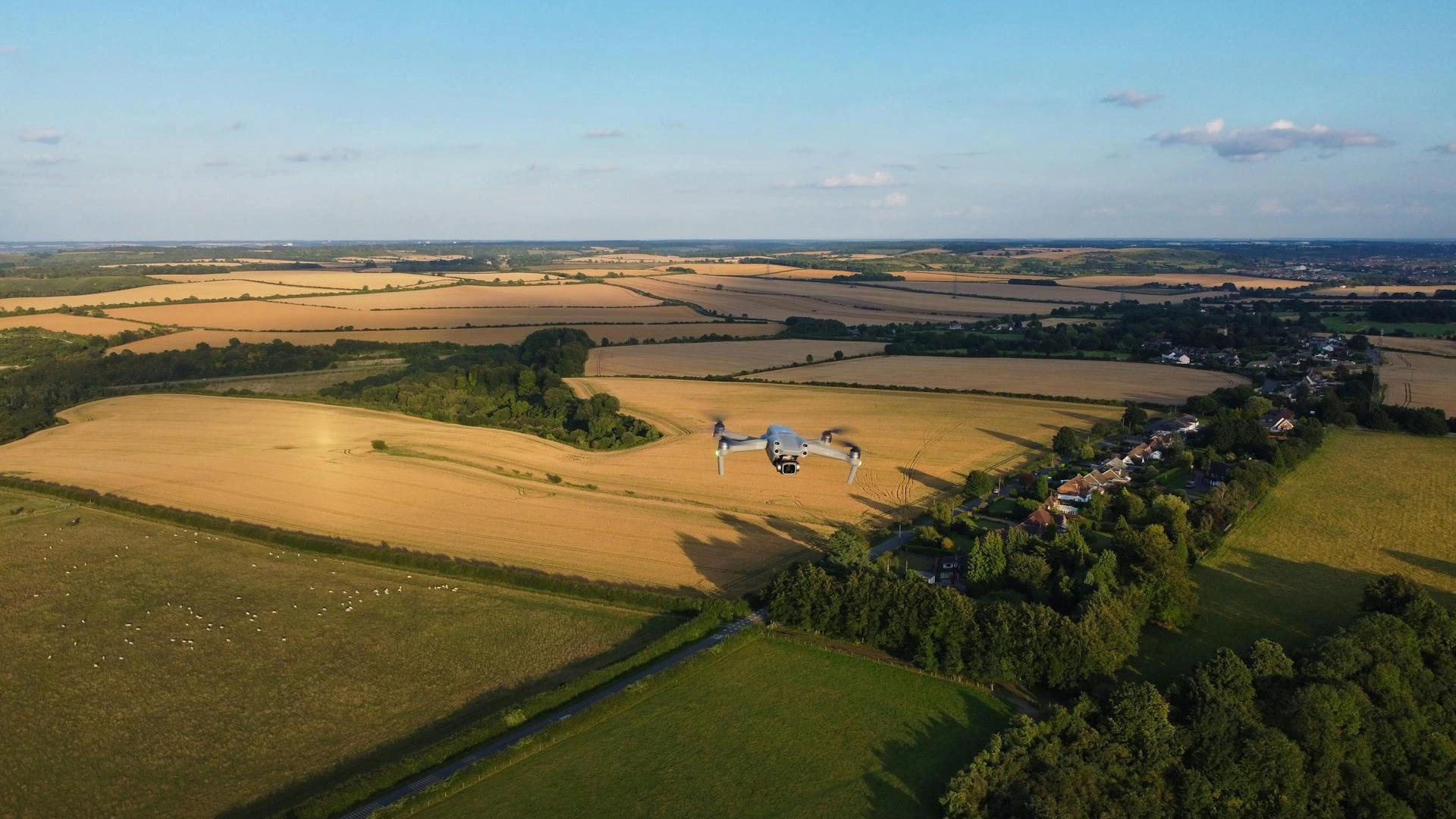
The global market for artificial intelligence (AI) in drones is forecast to grow from $821.3 million in 2025 to $2.75 billion (£2.13 billion) by 2030, according to a new industry report. The projection represents a compound annual growth rate (CAGR) of 27.4% over the five-year period, making it one of the fastest-growing areas of the aerospace and defence sector
The research by MarketsandMarkets, published yesterday, attributes growth to rising adoption across the commercial, civil and defence sectors, as drones are increasingly used in applications ranging from logistics and infrastructure inspection to agriculture and urban mobility.
Organisations are said to be adopting drones for last-mile delivery, asset inspection, crop monitoring and precision mapping, with AI capabilities enabling predictive decision-making, automated object detection and real-time analytics.
According to MarketsandMarkets, these developments are also lowering barriers to adoption by allowing businesses to reduce labour costs and integrate drone systems into enterprise operations.
The expansion of drone-as-a-service (DaaS) business models is also helping commercial users access advanced drone technology without the need for significant upfront investment.
“The artificial intelligence (AI) in drones market is witnessing strong growth globally, fuelled by the rising adoption of drones across the defence, commercial, and civil sectors,” the company said.
“As drone applications expand from surveillance and logistics to agriculture and urban mobility, there is a growing demand for advanced AI that offers greater efficiency, endurance, and reliability. This market growth is further supported by increasing defence investments, supportive regulatory frameworks, and a surge in demand for autonomous aerial operations.”
The report also identifies flight and mission operations as the largest functional segment of the market. This includes technologies for autonomous navigation, route optimisation, obstacle avoidance and swarm coordination, all of which are becoming standard for AI-powered systems.
Delivery services are increasingly employing AI to shorten route durations and enhance logistical efficiency, while emergency services are using autonomous drones for reconnaissance and search-and-rescue missions in hazardous environments, according to the report.
North America is expected to account for the largest regional share over the forecast period, driven by military investment, high levels of R&D and a well-established regulatory and innovation ecosystem.
“The region is witnessing the growing use of drones in delivery services, agriculture, infrastructure inspection, and emergency services, all of which need reliable and efficient propulsion systems,” MarketsandMarkets said.
It also pointed to the role of the U.S Federal Aviation Administration (FAA), as well as the presence of AI chipmakers and drone manufacturers in the United States and Canada.
Elsewhere, the report identifies data privacy and cybersecurity as a major challenge for the sector. As drones become more autonomous and operate in high-stakes commercial and military environments, there is increasing focus on protecting communications, flight data and AI models from interference or manipulation, it said.
Among the most significant developments on the horizon is the deployment of AI-enabled swarm drones. These coordinated fleets are capable of operating autonomously to carry out complex missions across defence, surveillance and emergency response.
According to the report, “deployment of AI-enabled swarm drones for defence and emergency response” represents one of the key growth opportunities in the years ahead.
Main image, courtesy Altaf Shah/Pexels
TOP STORIES
-
 North Korean agents are infiltrating Western businesses by posing as employees, security chief warns
 -
Route 66 turns 100 next month – and there’s never been a better excuse for Europeans to hit the road
-
Serbia erupts in celebration as student protesters end Vučić’s 14-year grip on power
-
Two killed as Storm Boelo batters Britain with 85mph winds and leaves 90,000 homes without power
-
Man arrested on suspicion of arson after fire destroys Hitler’s Eagle’s Nest retreat
-
Britain faces higher winter energy prices as reliance on European electricity imports grows
-
Andy Burnham to make special Gogglebox appearance for Stand Up To Cancer
-
WPSL Golf targets £120 million valuation as billionaire-backed corporate deals and other commercial deals drive explosive global growth
-
Hackers could bring Britain’s essential services to a standstill, security chief warns after global website shutdowns
-
We’re talking to almost twice as many people on the phone as a decade ago, study finds
-
TalkTalk sells majority stake in Telecom Acquisitions as founder Nigel Barnett regains control
-
Company closures soar ahead of tax rises as new Budget looms
-
An Italian affair – Stanley Johnson takes London’s society set on the Silk Road
-
Himalayan mountainside moved 40cm before avalanche killed 1,451 in Nepal, scientists reveal
-
Scientists and engineers quitting jobs as AI changes roles ‘beyond recognition’, study finds
-
UK profit warnings hit near two-year high as businesses struggle with rising costs
-
Microsoft pulls out of major UK AI data centre project amid power grid delays
-
Russia takes control of more European corporate assets amid Ukraine tensions
-
EU leaders resist calls to delay carbon rules as energy costs soar
-
‘A big step forward’ – PM Andy Burnham hails plans for Great British Railways HQ in Derby
-
UK economy grows just 0.1 per cent as construction falls and services stall
-
Germany risks losing €155bn a year under tighter AI data rules, new study warns
-
Pope Leo XIV diagnosed with lung cancer after surgery in Rome
-
France faces freezer meltdown as hackers strike supermarket chains
-
Bumble shares soar 50% amid $1bn takeover talks