Anniversary marks first civilian voyage to Antarctica 60 years ago

John E. Kaye
News & Features
- Published
- News
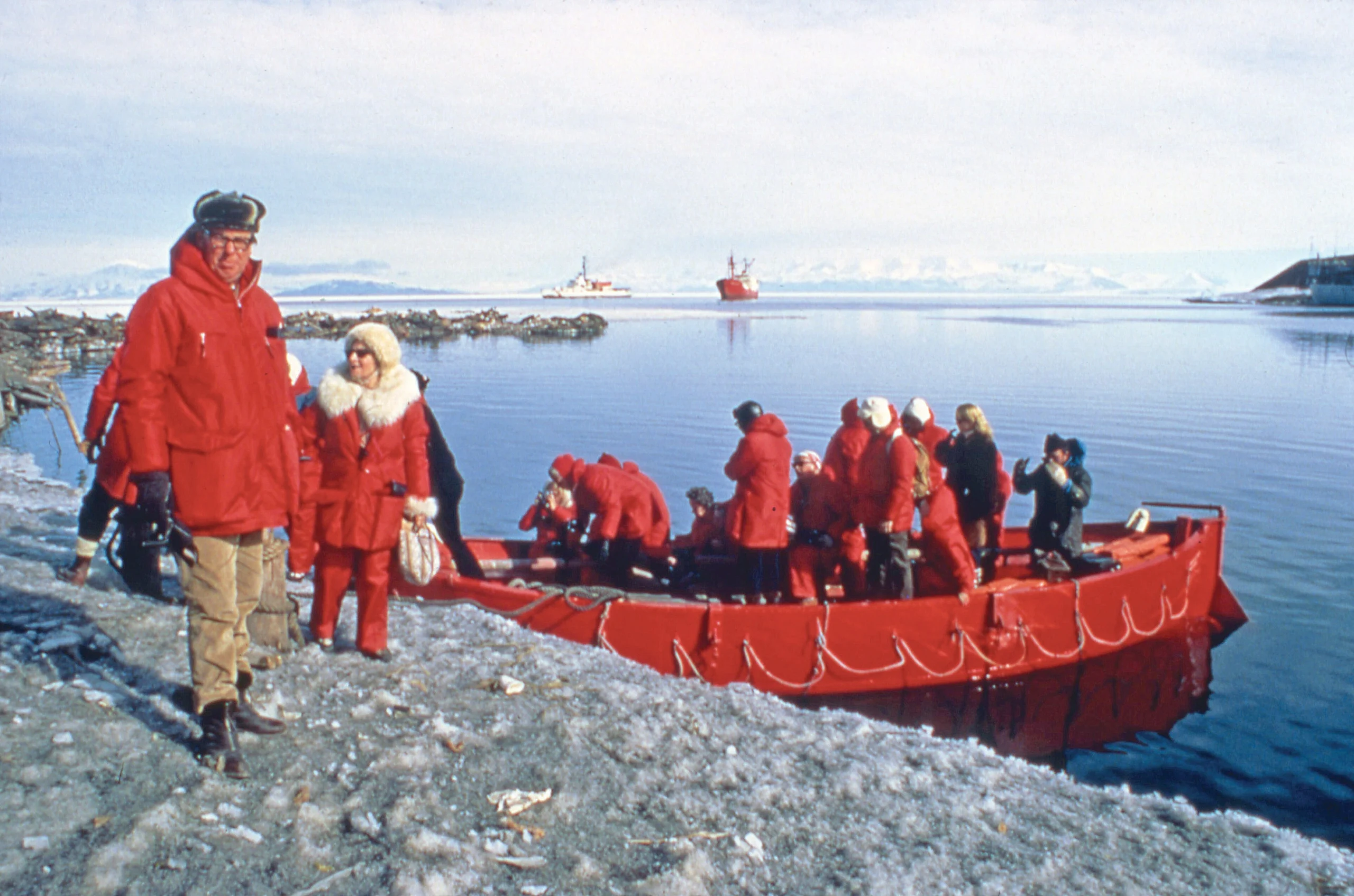
Sixty years ago today, 57 paying passengers sailed to Antarctica for the first time in history, a milestone that opened the continent to civilian travellers and helped establish modern expedition cruising
Today marks the 60th anniversary of the first civilian trip to Antarctica, a journey widely regarded as the starting point of modern expedition cruising.
On January 23, 1966, Lars-Eric Lindblad led 57 non-scientific passengers to the continent, opening one of the world’s most remote regions to visitors outside research and exploration.
The voyage laid the foundations for a style of small-group travel focused on wildlife, education and close engagement with the natural environment rather than traditional cruise leisure.
Within a year, Lindblad organised the first civilian expedition to the Galápagos Islands, applying the same approach in a very different setting and establishing a model that would later be used in destinations around the world.
Originally a tour operator specialising in remote destinations, Lindblad believed ordinary travellers could visit fragile and inaccessible parts of the world if travel was done responsibly and with education at its core.
In 1966 he led the first group of paying, non-scientific passengers to Antarctica. A year later he organised the first civilian expedition to the Galápagos Islands.
Lindblad, who died in 1994, later founded Lindblad Expeditions, which partnered with National Geographic in 2004.
Today, the company sails to more than 100 destinations worldwide, including Antarctica and the Galápagos as well as itineraries across Europe, Asia and Africa, led by specialist guides and naturalists.
Speaking this week its CEO, Natalya Leahy, said: “Lars-Eric Lindblad pioneered expedition travel with a simple belief: how you see the world matters.
“Sixty years after the voyage that started it all, that vision continues to guide us. Every sailing is shaped by decades of experience, deep relationships with local communities, and the expertise of some of the world’s most seasoned captains, navigators, and naturalists. What defines our expeditions isn’t just where we go, but how we approach each place—creating life-expanding moments that spark curiosity and stay with our guests long after they return home.”
READ MORE: ‘At the edge of Europe. A cruise gateway on the Russian frontier’. For most travellers, Kirkenes is simply the final port on Norway’s coastal voyage. Stay a little longer, though, and you’ll find king crab feasts, Cold War relics, reindeer roadblocks, and the most fascinating frontier town in Europe, finds travel writer Emma Strandberg.
Do you have news to share or expertise to contribute? The European welcomes insights from business leaders and sector specialists. Get in touch with our editorial team to find out more.
Main image: On January 23, 1966, Lars-Eric Lindblad made history when he led 57 passengers to Antarctica, marking the birth of modern expedition cruising for non-scientific travellers. Credit: Lindblad Expeditions
TOP STORIES
-
 We're talking to almost twice as many people on the phone as a decade ago, study finds
 -
TalkTalk sells majority stake in Telecom Acquisitions as founder Nigel Barnett regains control
-
Company closures soar ahead of tax rises as new Budget looms
-
France calls in army after riots sweep cities
-
An Italian affair – Stanley Johnson takes London's society set on the Silk Road
-
Himalayan mountainside moved 40cm before avalanche killed 1,451 in Nepal, scientists reveal
-
Scientists and engineers quitting jobs as AI changes roles ‘beyond recognition’, study finds
-
UK profit warnings hit near two-year high as businesses struggle with rising costs
-
Microsoft pulls out of major UK AI data centre project amid power grid delays
-
Russia takes control of more European corporate assets amid Ukraine tensions
-
EU leaders resist calls to delay carbon rules as energy costs soar
-
‘A big step forward’ – PM Andy Burnham hails plans for Great British Railways HQ in Derby
-
UK economy grows just 0.1 per cent as construction falls and services stall
-
Germany risks losing €155bn a year under tighter AI data rules, new study warns
-
Pope Leo XIV diagnosed with lung cancer after surgery in Rome
-
France faces freezer meltdown as hackers strike supermarket chains
-
Bumble shares soar 50% amid $1bn takeover talks
-
China slump drives Volkswagen to sharpest quarterly fall in more than four years
-
Hollywood mega-powerhouse created as Paramount completes Warner Bros Discovery takeover
-
Gamers face gridlock as latest Grand Theft Auto download 'nears two days'
-
Samsung profits soar ninefold to record £61bn amid AI chip boom
-
New Springer books put the UN’s struggling sustainability goals to the real-world test
-
Europe’s solar boom set for two-year slowdown after record growth
-
Let it pea. Musicians turn vegetables into instruments at Beatles' Abbey Road studios
-
Golden naked Trump statue unveiled at European Parliament