For years, organisations treated email security as a technology challenge. Deploy secure email gateways, add detection tools, automate remediation, and assume risk is managed. That approach no longer works
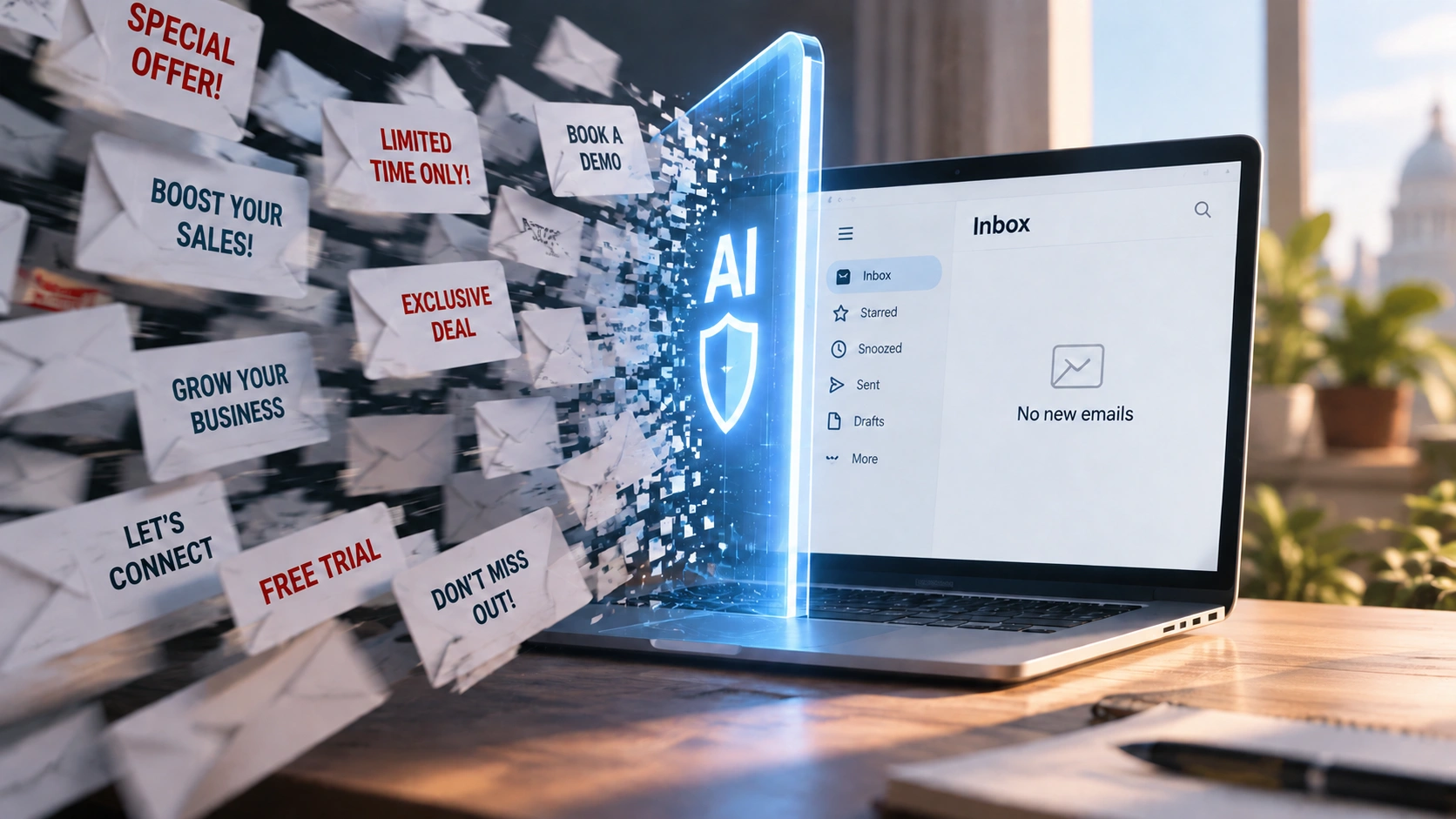
Today’s attackers are using AI to create highly sophisticated, polymorphic phishing campaigns that continuously evolve to evade detection. They rotate URLs, vary sender identities, change messaging, and adapt tactics faster than traditional security tools can keep pace. As a result, many organisations are discovering that even advanced email security solutions and Microsoft 365 protections cannot stop every threat.
This is why email security can no longer be viewed as an IT responsibility alone. It has become a business-wide resilience challenge that requires executive oversight and board-level accountability.
The question leaders should be asking is no longer, “What security tool should we buy next?” Instead, it should be, “How do we build an organisation that can continuously adapt to evolving threats?”
The Need for Cross-Functional Alignment
The reality is that modern phishing attacks are not simply email attacks. They target business processes, employee trust, financial workflows, supplier relationships, and executive communications. This means cyber resilience must extend beyond the security team and involve HR, finance, legal, operations, and leadership functions working toward a shared goal.
At the same time, organisations face another challenge: fragmented security ecosystems. Many enterprises already own multiple security technologies, including secure email gateways, SIEMs, SOAR platforms, endpoint protection, and threat intelligence solutions. Individually, these tools can be highly effective. Together, they often operate in silos, creating visibility gaps and slowing response times.
The future of security lies not in deploying more tools, but in ensuring existing technologies work together seamlessly. Security systems must share intelligence, enrich detections, automate response actions, and provide a unified view of risk across the organisation. Success depends on creating a connected ecosystem where every security investment contributes to a common outcome.
However, technology alone is not enough.
The Value of Context Combined with Adaptive AI
One of the most valuable and underutilised sources of security intelligence is the workforce itself. Employees see threats that bypass technical controls and often recognise suspicious behaviour through context that machines cannot easily interpret. When organisations create a strong reporting culture, employee observations become actionable intelligence that can improve detection, strengthen automation, and inform future training.

This creates a powerful feedback loop. Threats are reported, intelligence is validated, security tools are updated, training evolves, and organisational resilience improves continuously. Rather than operating as isolated controls, people and technology work together to strengthen security over time.
AI also has an important role to play, but only when used strategically. The most effective AI solutions do not replace human judgement; they enhance it. By identifying patterns across campaigns, detecting relationships between seemingly unrelated attacks, and accelerating response, AI can help organisations move from reactive defence to proactive resilience.
In 2026, good security will not be defined by how many tools an organisation owns. It will be defined by how effectively it combines people, intelligence, AI, and technology into a continuously improving unified security ecosystem, because the organisations that will outperform attackers are not those with the biggest security stacks. They are the ones that can learn, adapt, and respond fastest to threats as they evolve.
Further Information
Produced with support from Cofense. To find out more about Cofense’s AI-powered, campaign-based phishing detection and response solutions, visit www.cofense.com
READ MORE: Polymorphic attacks: the shape-shifting threat. Malicious email threats were once a numbers game, reliant on repetition and scale. AI-powered polymorphic phishing has rewritten that model, replacing volume with relentless variation as every message, link and attachment is uniquely generated in near real time. Here, Cofense examines how this machine-speed evolution is outpacing traditional email defences and sets out five practical measures organisations can take to strengthen detection, accelerate response and reduce exposure.
Do you have news to share or expertise to contribute? The European welcomes insights from business leaders and sector specialists. Get in touch with our editorial team to find out more.
Main image: Supplied