At Rétromobile’s 50th anniversary, motoring editor Mark G. Whitchurch reports from Paris, where the show halls and four major auctions together revealed why Ferrari’s analogue supercars are now commanding record prices and attracting a new class of global buyer
Paris has always known how to stage a spectacle, but Rétromobile 2026 was something else entirely — a 50th‑anniversary edition that felt less like a motor show and more like a cultural summit. For one week, the city became the gravitational centre of the automotive world, drawing collectors, investors, designers, historians, and dreamers into a single orbit.
Yet the real story of 2026 stretched far beyond the polished floors of Halls 4 and 7 of Porte de Versailles, beyond the concours‑level displays and the Bugatti railcar, beyond the supercar sanctuaries and the rallying legends. It unfolded across Paris Car Week, where four major auctions — RM Sotheby’s, Gooding Christie’s, Bonhams, and Artcurial — turned the French capital into a theatre of desire and a barometer for a global collector car market in transformation.
And at the centre of that transformation stood one marque; Ferrari!
The surge in Ferrari supercar values in 2026 cannot be understood in isolation. It is the product of how global wealth expansion, inflation, currency instability, geopolitical tension, the rise of gold, and the psychology of nostalgia converged to make Ferrari supercars the most coveted hard assets of 2026 to date and deliver some truly jaw dropping sale prices.
What unfolded across the halls of Rétromobile and the four major auctions was not merely a celebration of automotive heritage; it was a reflection of a world in flux, one in which rare Ferraris have become both emotional artefacts and strategic assets.
Paris in late January has always carried a certain charge, but this year the atmosphere felt unusually heightened. The winter rain that slicked the boulevards seemed to sharpen the city’s edges, and the familiar hum of anticipation that accompanies Rétromobile had grown into something more insistent. The move to the modern expanse of Halls 4 and 7 at the Porte de Versailles exhibition centre signalled a shift in ambition, and as visitors streamed toward the venue, it became clear that the fiftieth edition would be unlike any that had come before. The crowds were larger, broader, younger, more international. The conversations drifting through the queues were not merely about provenance or restoration but about liquidity, inflation, geopolitical risk and the search for permanence in an unstable world. Paris was preparing to host a cultural event, but also, inadvertently, a financial one.
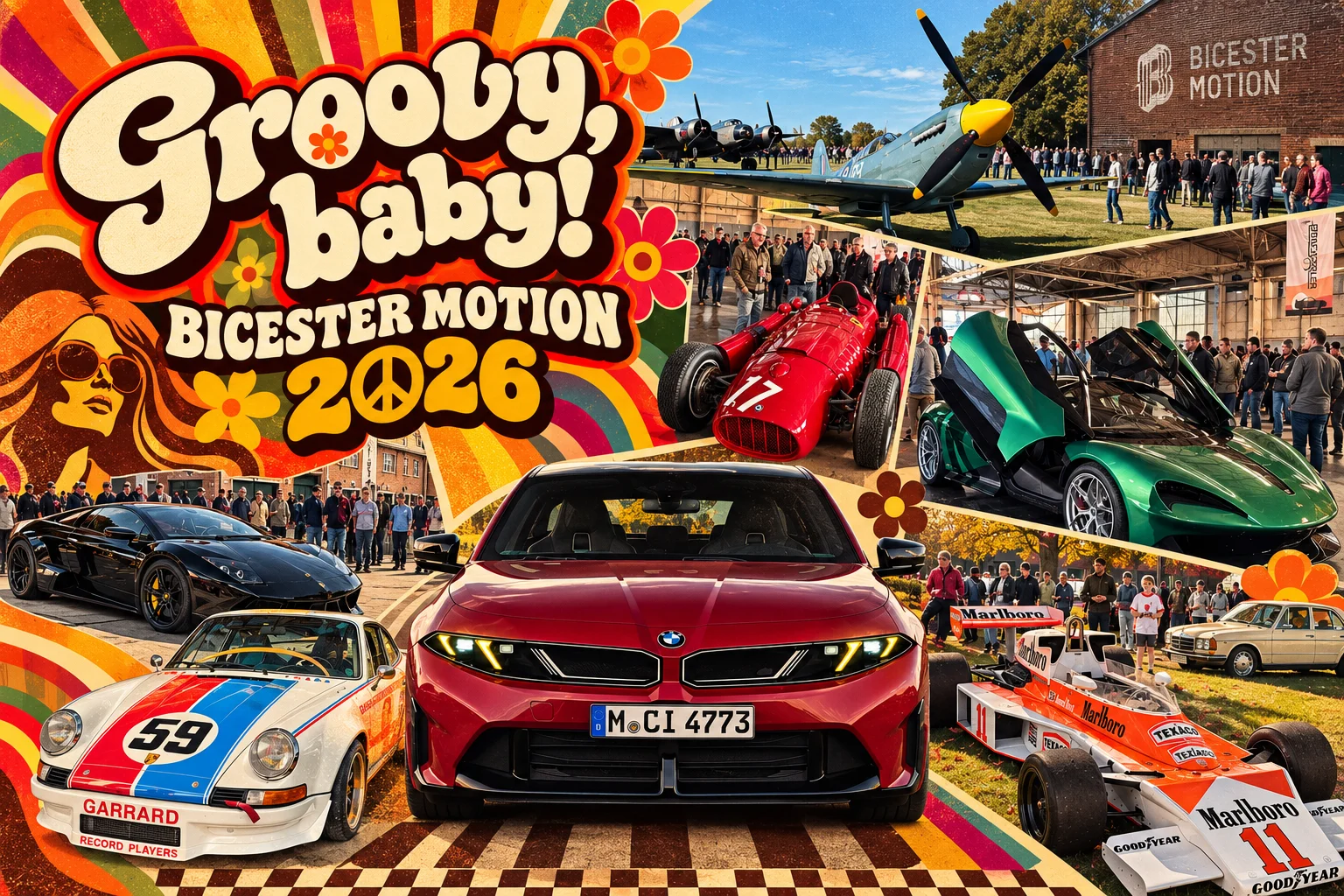
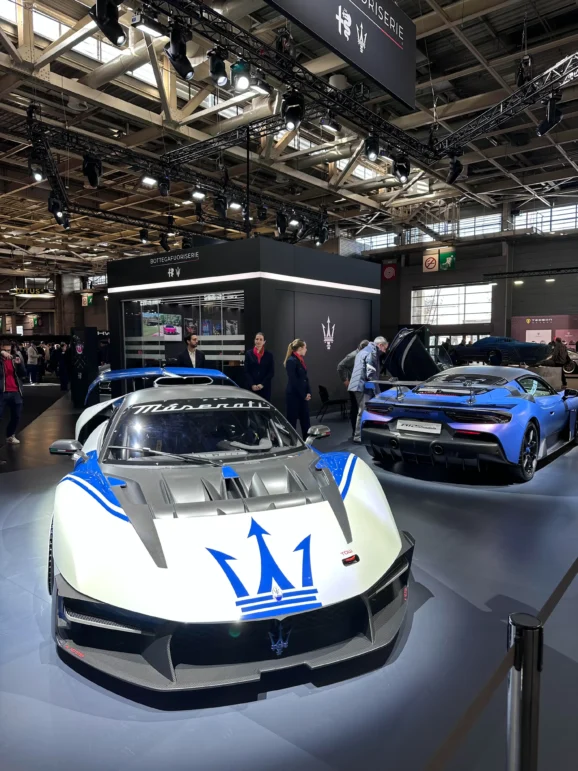
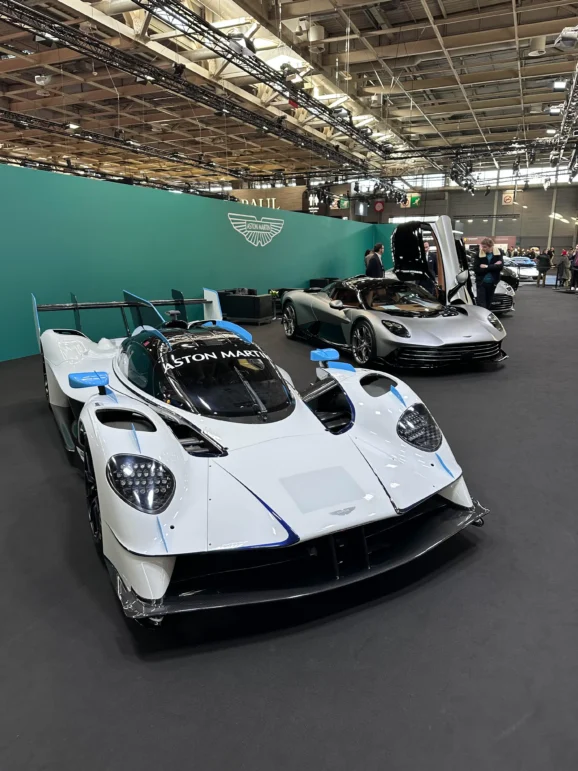
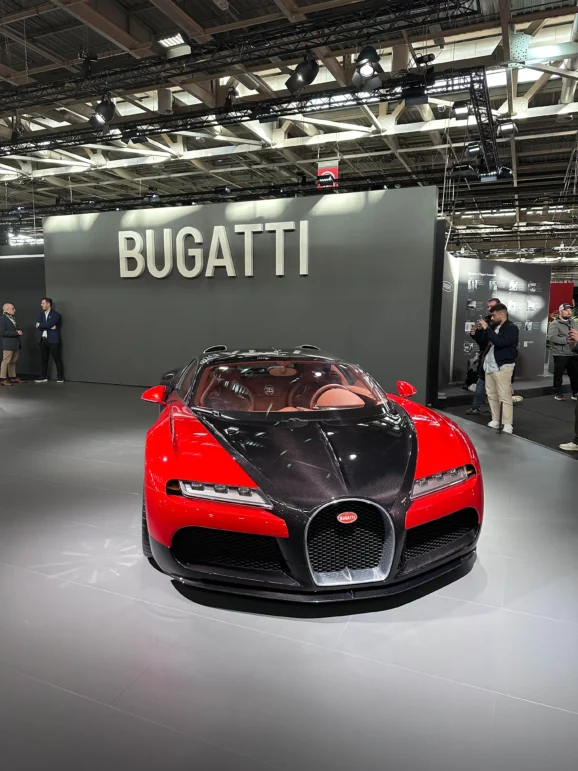
Enter Hall 4 to be welcomed by The Ultimate Supercar Garage display which was indeed punchy with all the major manufacturers from Bugatti, Ferrari, Lamborghini Aston Martin and Bentley vying for attention with the likes of Pagani, Eccentrica and Nardone offering bespoke offers to challenge the mainstream.
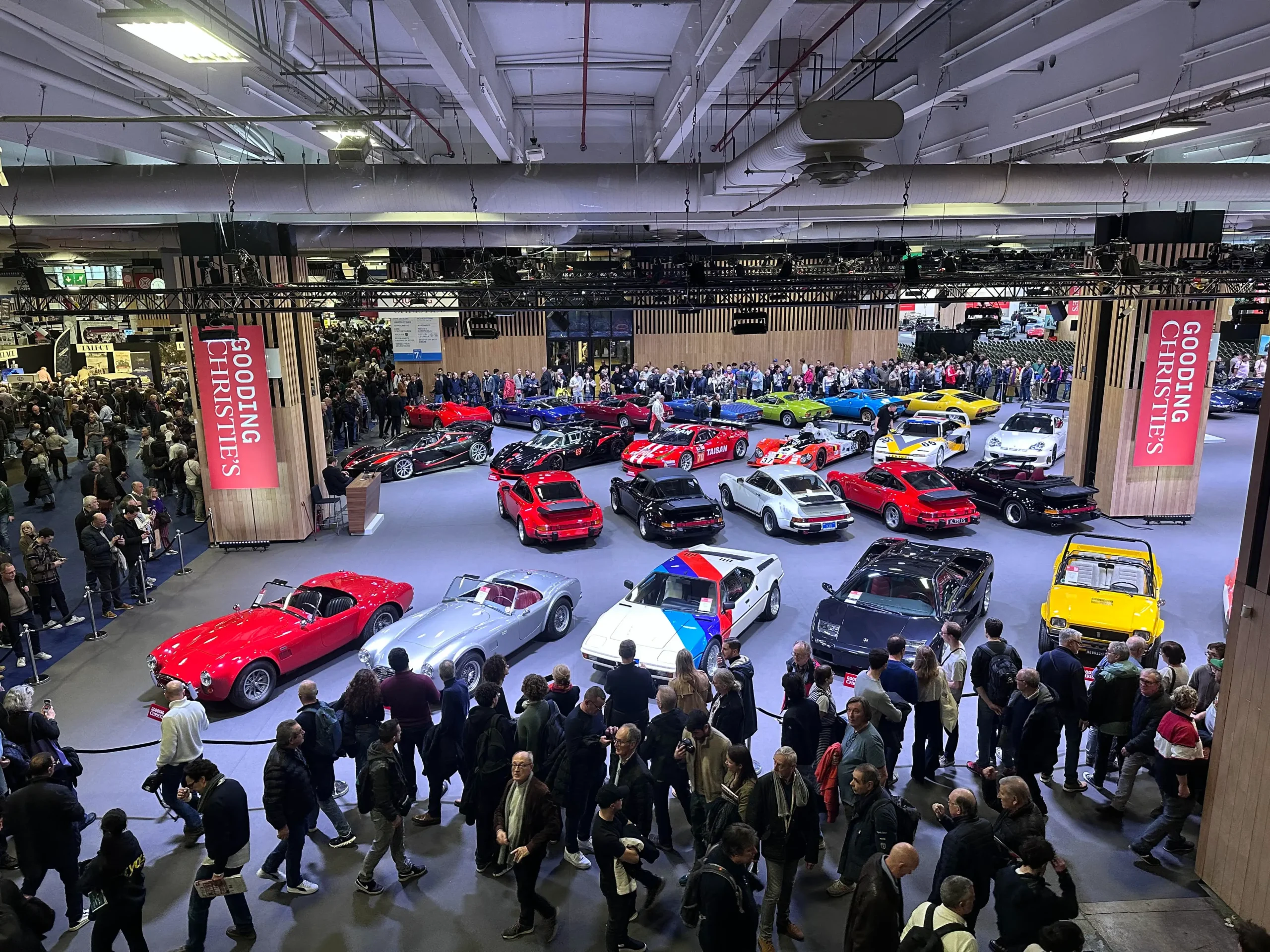
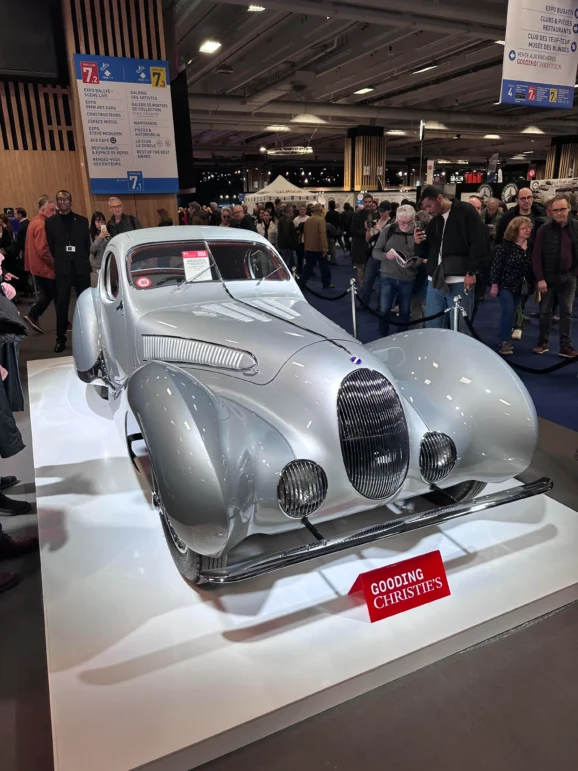
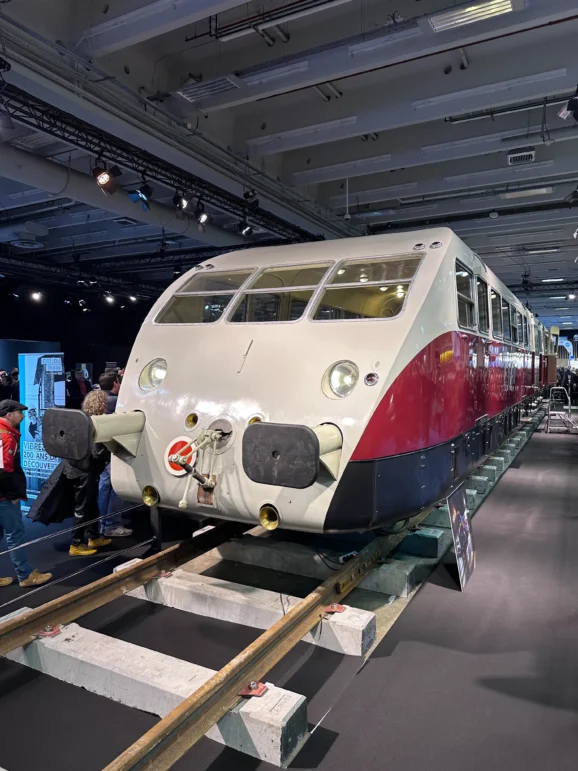
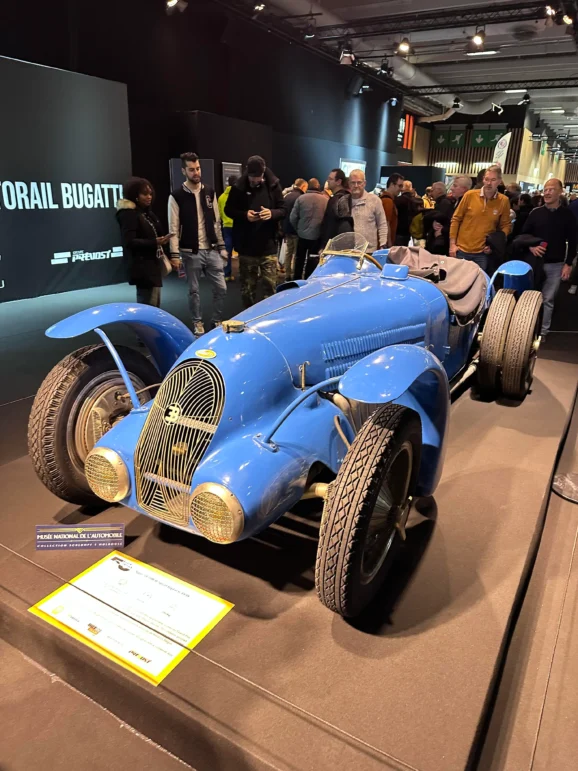
Inside Hall 7, the transformation was immediate. The ground floor, traditionally the domain of traders and specialists, had taken on the energy of a marketplace at the height of a boom cycle. Gooding Christie’s, now the official show auction house, anchored the space with a selection of blue‑chip machinery, including a 1938 Talbot-Lago T150 C-SS Teardrop Coupe that drew a constant crowd. Yet even this jewel was momentarily overshadowed by the Bugatti Railcar, a relic of Ettore Bugatti’s audacious imagination, flanked by 8 Bugatti rarities from the Musée National de l’Automobile. The railcar’s presence was a reminder that automotive history is not merely preserved but staged, and that Retromobile remains its most theatrical setting.
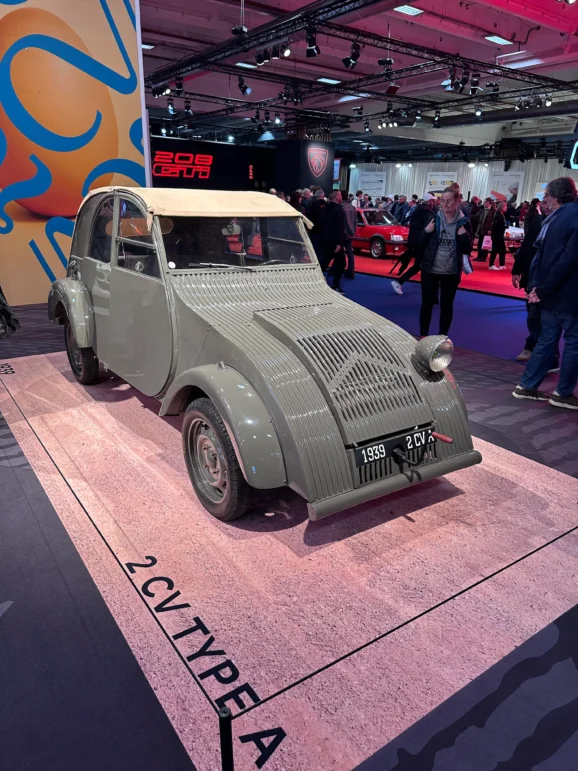
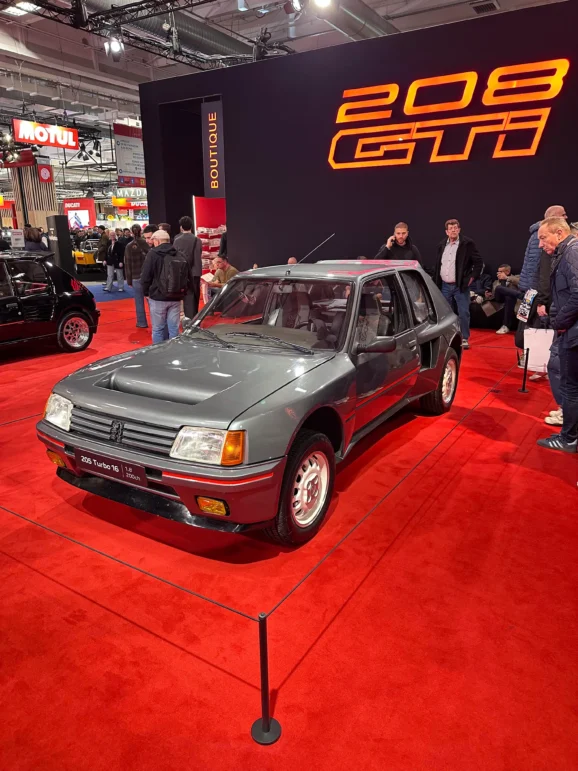
The second level of Hall 7 offered a different kind of spectacle. Here, the manufacturers rolled out their heritage fleets and clubs engaged in a subtle contest of cultural authority. Volkswagen celebrated the 50th anniversary of the GTi with a circular display of models, whilst Peugeot focused on the 205 GTi and its variation from cabriolet to Group B Rally contender.
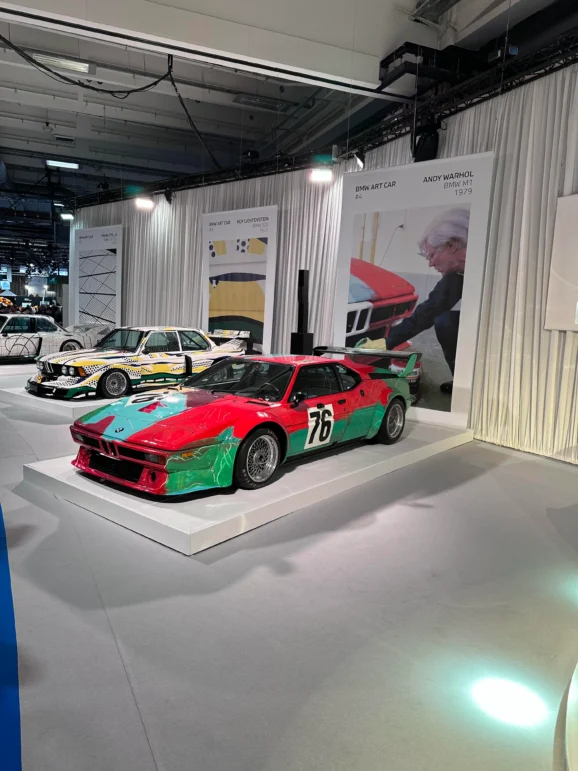
Citroën, with characteristic confidence, presented a series of presidential cars that felt almost mythic in their symbolism. Charles de Gaulle’s DS 21 Pallas stood with the quiet dignity of a national monument. Elsewhere on the floor, Alfa Romeo presented a trio of cars — a Duetto Spider, a 750 Competizione and the exquisite 33/2 Periscopica — that seemed to whisper of Italian summers and mountain passes. BMW, meanwhile, leaned into its artistic heritage with a selection of its legendary Art Cars, including works by Koons, Lichtenstein, Warhol and Stella. The effect was less a manufacturer display and more a pop‑up museum of rolling modernism, a reminder that the automobile has long served as a canvas for artistic expression.
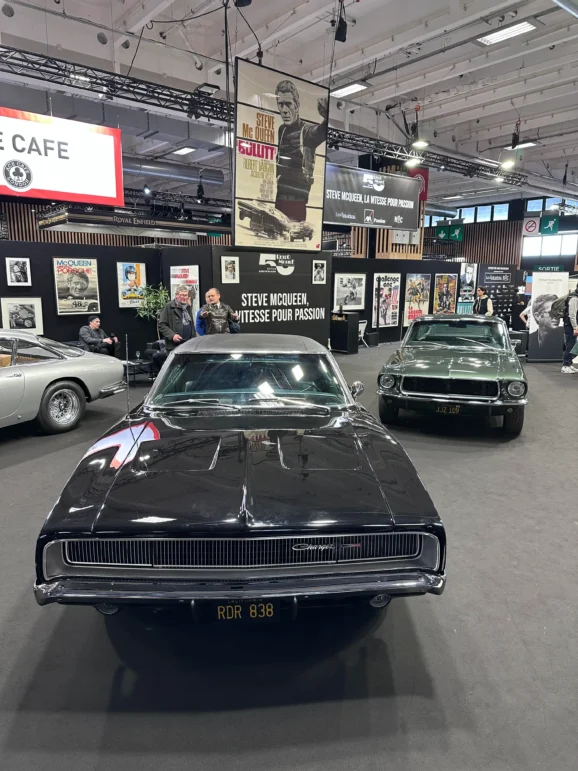
I also enjoyed the Steve McQueen celebration with a range of motorbikes and of course examples of the chase cars from Bullit, which remains one of the edgiest car chases of cinema history.
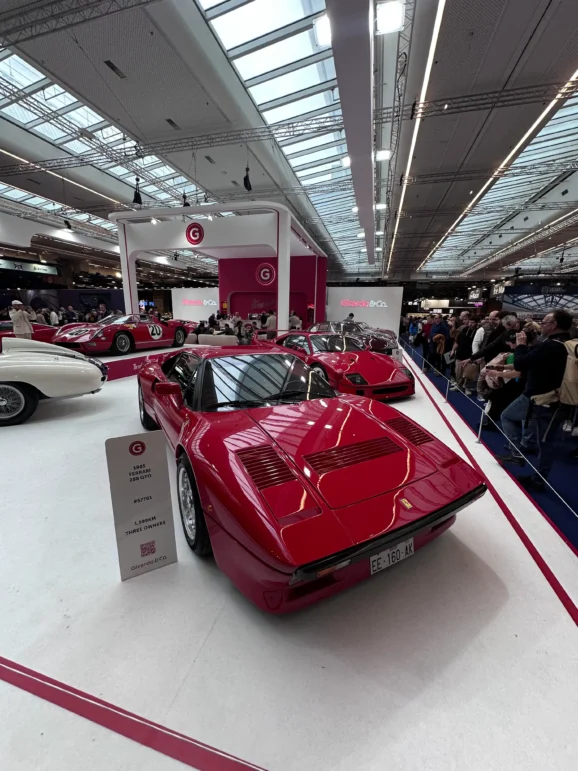
The top floor, Hall 7.3, belonged to the dealers, and the atmosphere there was one of curated opulence. Girardo & Co., Kidston, Fiskens, Lukas Hüni, Joe Macari, Gallery Aaldering, Axel Schuette and others had transformed their stands into miniature museums, each car positioned with the precision of a sculpture. The lighting was deliberate, the sightlines intentional, the narratives carefully constructed. A visitor could move from a pre‑war Alfa Romeo to a Group C prototype to a 1960s Ferrari without ever feeling the jolt of transition. Everything flowed, everything gleamed, everything felt deliberate.
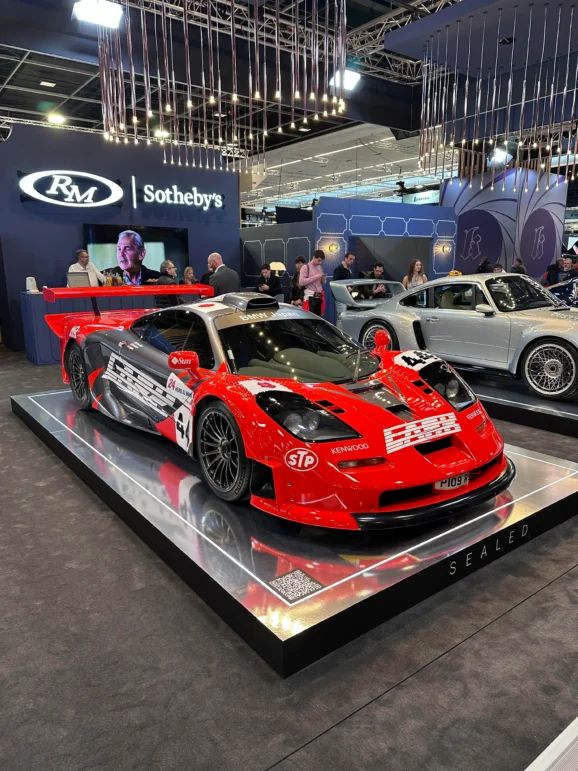
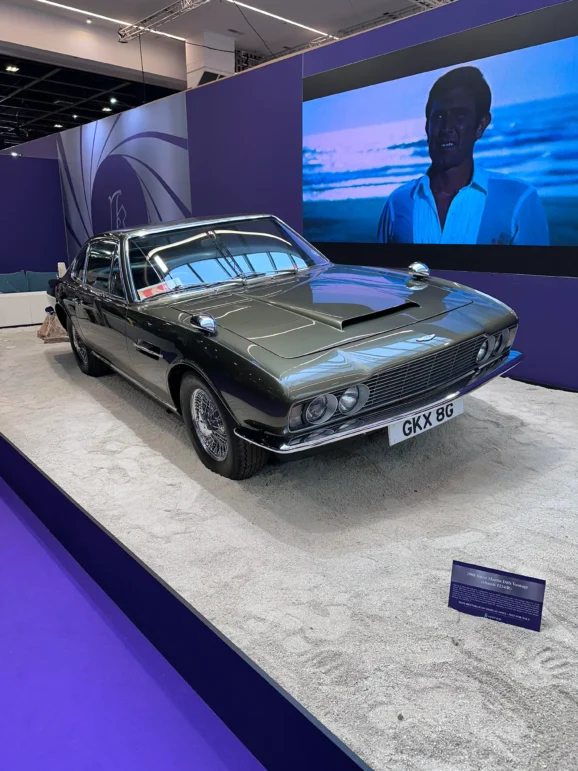
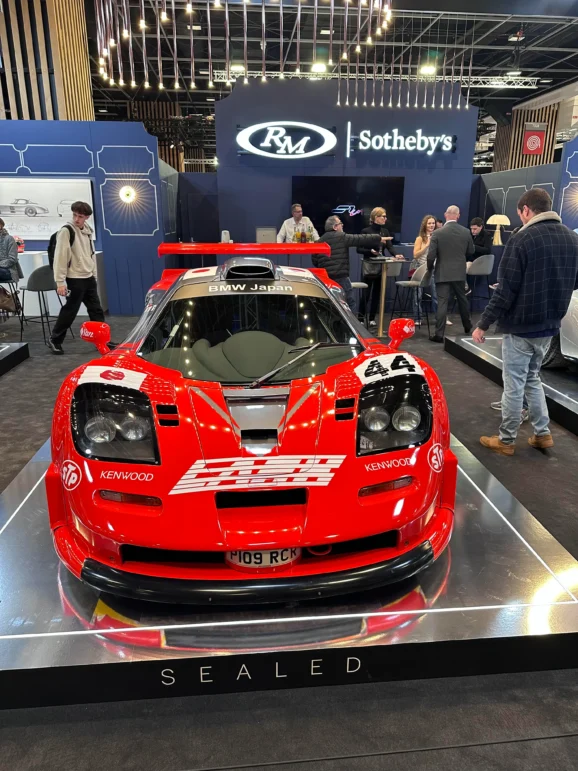
Simon Kidston displayed two McLaren F1s, road car 007 and a GTR Long Tail variant. The Aston Martin DBS from the James Bond film On Her Majesty’s Secret Service was superbly displayed complete with Diana Riggs shoes!
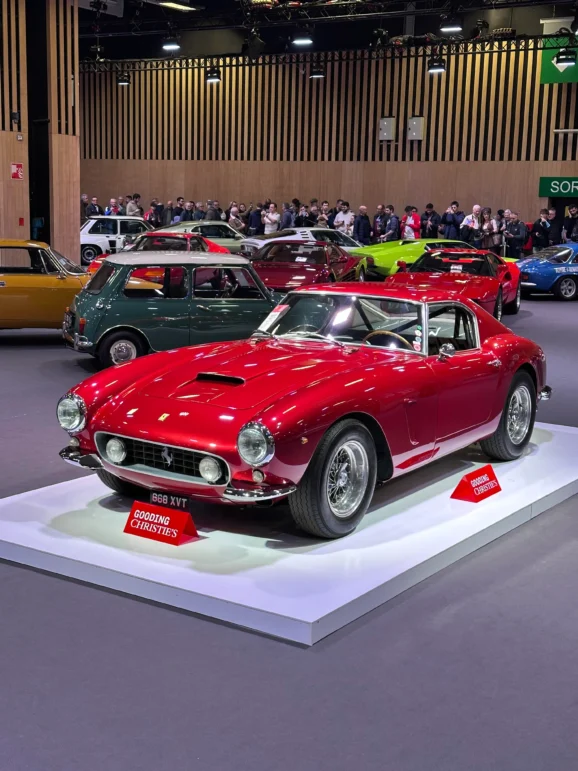
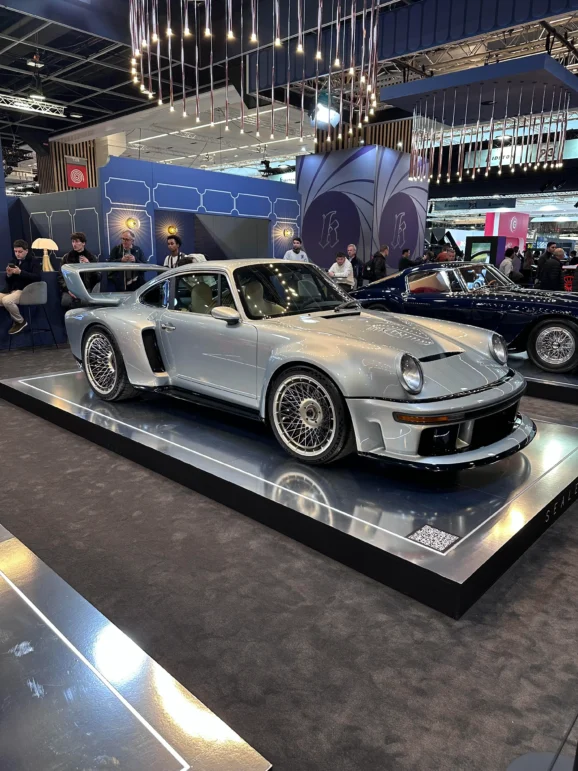
At the centre of the RM Sotheby’s Private Sales stand stood four performance icons worth more than €34 million, forming a kind of automotive altar. Another McLaren F1 GTR Longtail, Ayrton Senna’s Lotus 98T that shimmered like a black‑and‑gold apparition, a 1962 Ferrari 250 GT SWB Berlinetta, restored to a breathtaking standard in Blu Notte Metallizzato over Rosso leather and finally a shimmering sliver Porsche 911 re-imagined by Singer to DLS Turbo status completed the quartet. It was less a display and more a pilgrimage site, a place where collectors, dreamers and historians gathered in quiet awe.
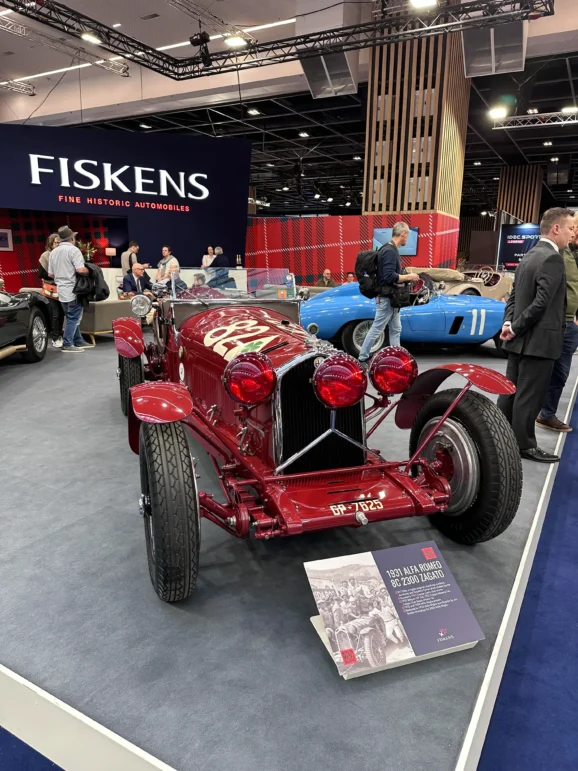
My take away car from the Fiskens stand was the 1931 Alfa Romeo 8C 2300 Zagato that competed in both the 1932 and 1934 Mille Miglia and was driven by legendary driver Tazio Nuvolari to with the Coppa Ciano race in 1931.
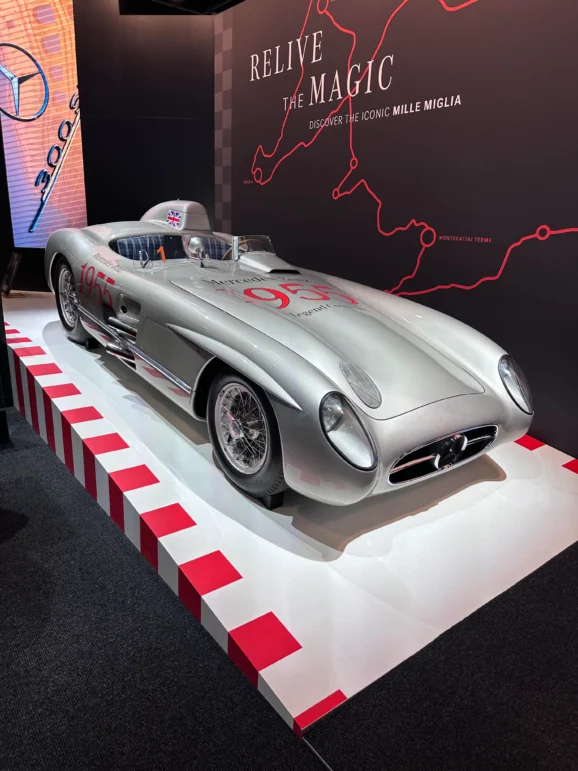
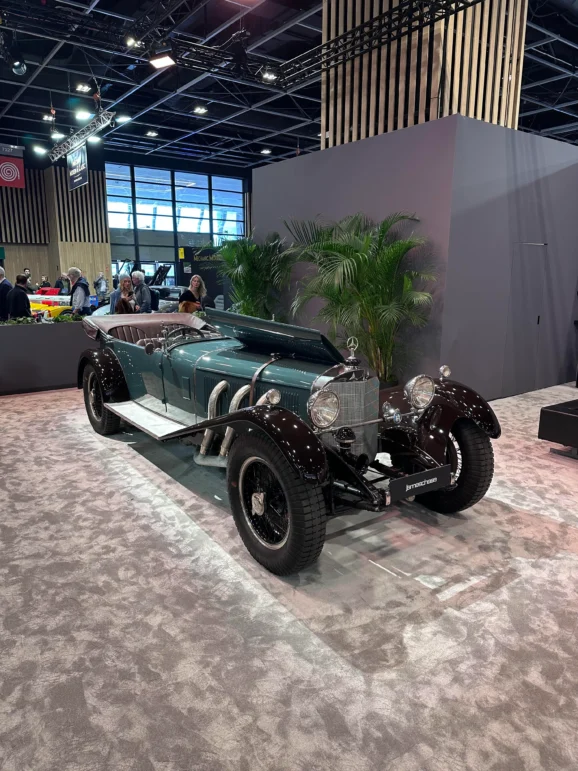
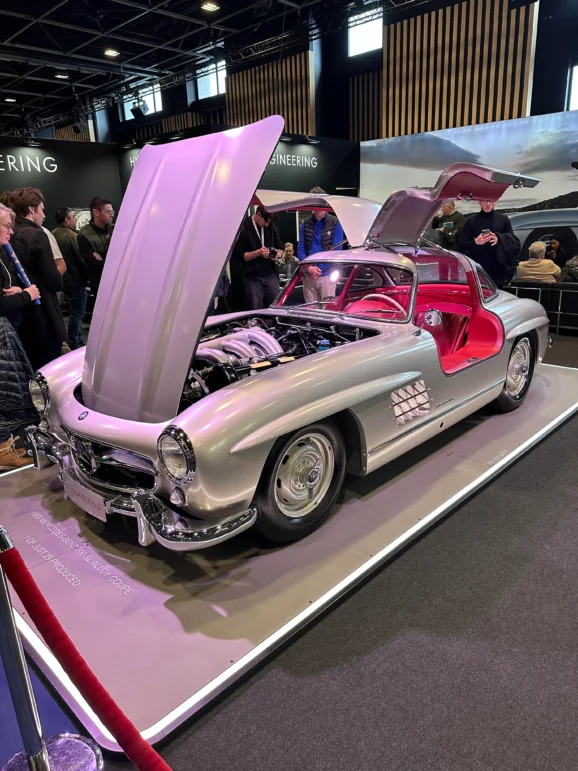
Elsewhere HK-Engineering helped to fix my Mercedes Benz obsession with one of the 19 alloy bodies 300 SL Gullwings – superbly restored. Only the Mercedes Benz Museums stand could surpass this by displaying one of the legendary 1955 300 SLRs that dominated Sports Car racing in the era.
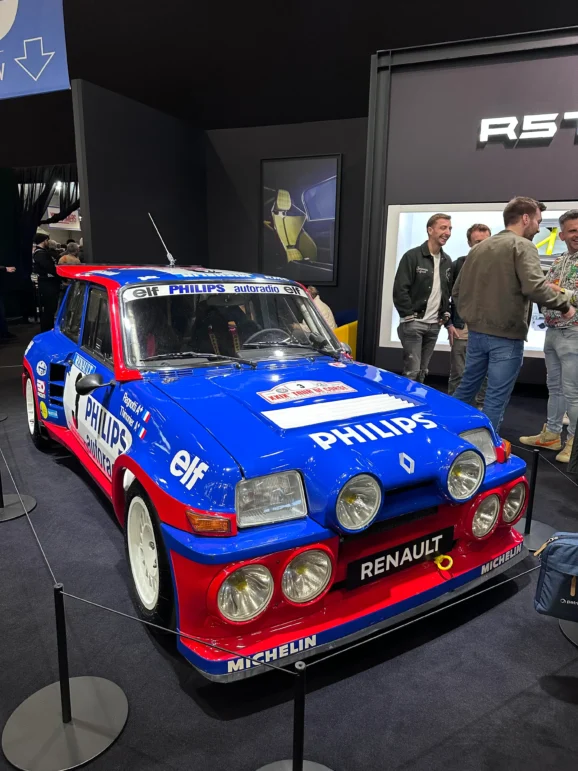
If there was a thematic centre to Rétromobile 2026, it was rallying. The curators had dedicated a vast section to the sport’s evolution, from the 1960s professionalism of the Alpine A110, Mini Cooper S and Ford Cortina Lotus Mk1 to the birth of the World Rally Championship in 1973. But it was the Group B display that drew the most reverence. Even decades later, Group B retains a mythic power — the danger, the speed, the spectacle. Seeing the cars together — the Lancia Stratos, the Fiat 131 Abarth, the fire‑breathing monsters that defined an era — felt like witnessing a reunion of gods.
Rétromobile has always been more than a car show. It is a cultural event, a celebration of movement, design and fast cars! Joe Macari’s stand epitomised this with a superb display of cars covering all of the post war greats, made even more special thanks to the pizza and ice cream served to guests!
Mazda’s celebration of 35 years since its 787B victory at Le Mans was a highlight for anyone who appreciates the strange, beautiful logic of the rotary engine. The display — featuring a Cosmo Sport 110S, a Luce R130, an RX‑7 and the 787B reserve chassis — felt like a love letter to engineering eccentricity. The 787B, even in reserve form, still radiates the energy of its 1991 triumph — the only rotary‑powered car ever to win Le Mans. Its presence was a reminder that innovation often comes from the margins, from those willing to think differently.
If Rétromobile is the cultural heart of Paris Car Week, the auctions are its theatre of desire.
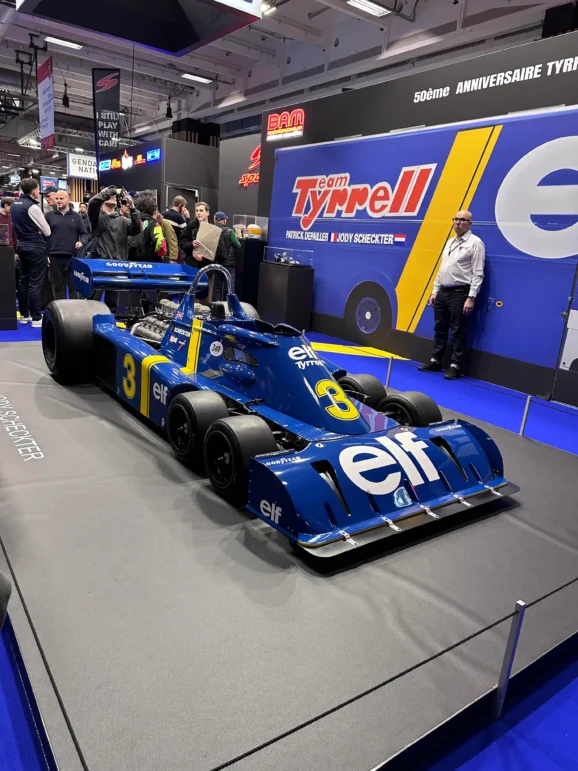
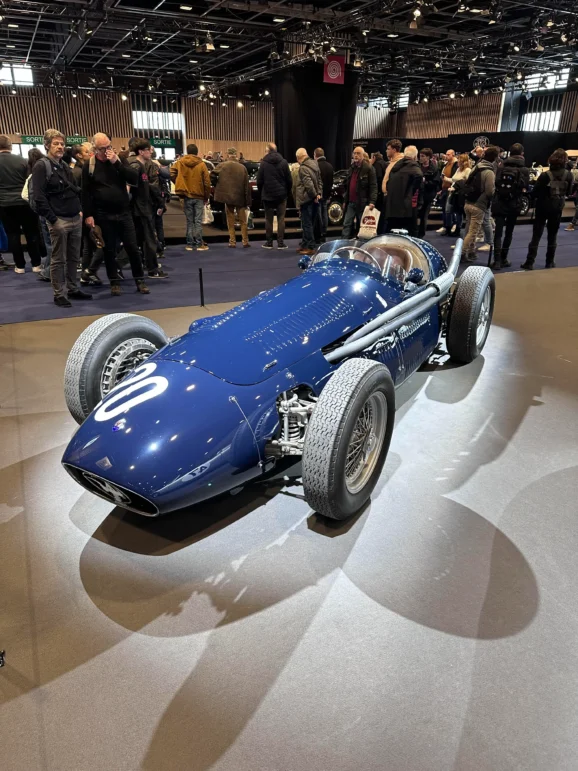
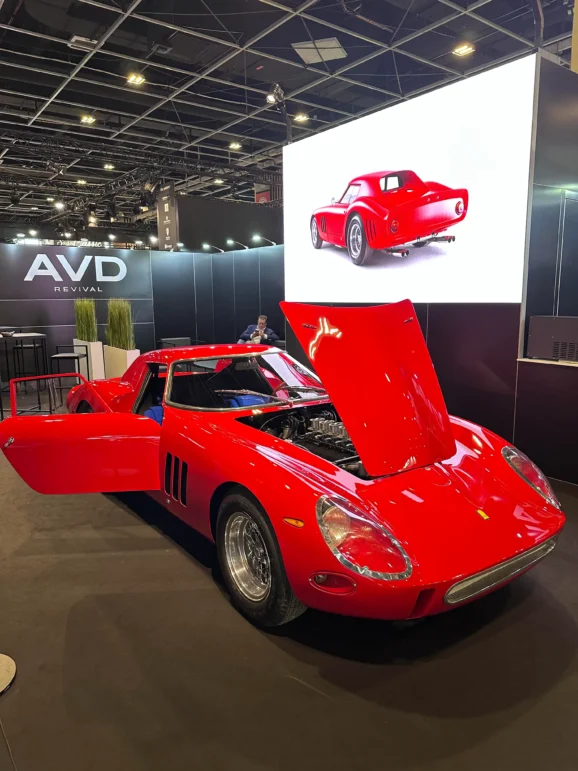
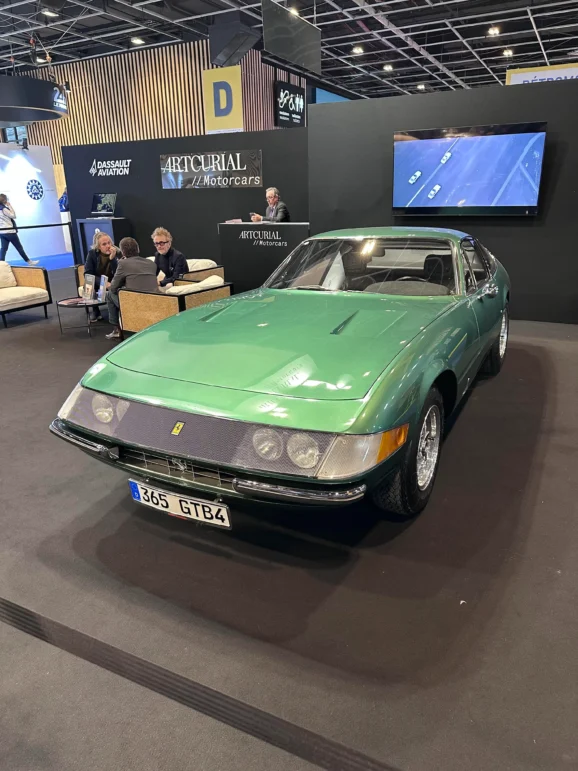
Gooding Christie’s entered the European auction arena with extraordinary momentum by becoming the official Rétromobile auction partner for 2026. The results were emphatic. With 80 lots offered, the sale achieved a total of €50.4 million. With a 79% sell‑through rate, these figures were not merely strong — they were transformative, signalling that Gooding Christie’s had arrived in Paris with both ambition and authority.
The star of the auction and the surprise of the week was a Ferrari 288 GTO, which achieved a new model record of €9,117,500. This example’s exceptional condition and provenance pushed it into new territory. With just over 1,500 km from new and more than 30 years in single‑family ownership, it represented one of the finest surviving GTOs in existence. Its result set the tone for the entire sale.
Gooding Christie’s sale also included several pre‑war and early post‑war European icons, including Bugatti and Talbot‑Lago models, which performed steadily. While these cars did not reach the stratospheric prices of the Ferraris, they reflected the market trends and attracted strong interest from European collectors who value craftsmanship, rarity and provenance.
RM Sotheby’s ensured that the week would be remembered not only for its displays but for its market‑defining results. In the vaulted, museum‑like calm of the Louvre Palace’s Salles du Carrousel, the auction house delivered a performance as dramatic as anything on the show floor, achieving €81 million in total sales — the highest‑grossing European auction in the company’s history.
The sale was dominated — almost inevitably — by Ferrari. The marque’s gravitational pull on the collector market has rarely been stronger, and in Paris it proved irresistible. Leading the charge was the 1960 Ferrari 250 GT SWB California Spider, which achieved €14,067,500, reaffirming its status as one of the most coveted open Ferraris ever built.
A 2004 Ferrari Enzo, preserved in astonishing time‑capsule condition with just 286 kilometres from new, achieved €8,105,000 — a figure that drew murmurs even from seasoned observers. The car’s single‑owner provenance and near‑new presentation made it a unicorn among unicorns.
The 1997 Ferrari F50, the 223rd of 349 examples and accompanied by its rare accessories — hardtop, flight case, roll hoops, toolkit, luggage, and even Tod’s Ferrari F50 driving shoes — brought €7,598,750. Its mere 1,680 kilometres and single‑owner history made it one of the most desirable F50s to reach the market in recent years.
Completing the Ferrari quartet was another Ferrari 288 GTO, which sold for €5,855,000. Approximately the 18th example built and offered from single dedicated ownership, it carried 24,244 kilometres and the aura of a car that had been driven, loved, and preserved with equal devotion.
Artcurial, displaced from its traditional role as the official show sale, set up in the basement of The Peninsula Paris. The lighting was moody, the atmosphere intimate, the cars irresistible. The sale offered 49 motor cars, generating €14 million in total sales with a 49% sell‑through rate reflecting a catalogue that blended accessible classics with high‑value blue‑chip offerings.
A garage‑find Mercedes‑Benz 300 SL Gullwing was the star attraction, delivered new in Paris, the car was ordered with an extraordinary specification, matching the competition‑focused equipment of the aluminium‑bodied Gullwings. It features the rare NSL high‑performance engine, Rudge centre‑lock wheels, and sport suspension and springs — making it one of the most desirable steel‑bodied examples ever built. The sale price of €4,400,000 was yet another world record. At the other end of the spectrum, a 1963 Austin Mini Cooper S — Sold for €33,376, reflecting continued enthusiasm for early performance Minis.
Bonhams, ousted from the Grand Palais by a scheduling clash with Paris Fashion Week, set up at the Polo de Paris — less spectacular, perhaps, but more focused, a venue for serious buyers. A diverse array of 80 vehicles, from classic cars to modern supercars. Again, the headline car was a Mercedes-Benz 300 SL Gullwing that with its gleaming black paint and red leather interior looked good value at €1,299,500.
Away from all the glamour, all the theatre, the most compelling story of 2026 was not confined to the halls of the Porte de Versailles or the vaulted chambers of the Louvre’s Salles du Carrousel. You could argue that the true direction of the collector car market was unfolding on a far larger stage, shaped by forces that stretched from Wall Street to the Gulf, from Beijing to Silicon Valley, from the bullion vaults of Zurich to the trading floors of Singapore. The extraordinary rise in Ferrari supercar values this year — the 288 GTOs setting new benchmarks, the F50s and Enzos climbing into previously uncharted territory, the F40s enjoying a renaissance, and even the LaFerrari and Monza SP1/SP2 finding new momentum — was not an isolated phenomenon. It was the product of a global economic climate that had made rare, culturally resonant, mechanically pure automobiles more desirable than ever.
Over the past three years, the number of ultra‑high‑net‑worth individuals — those with assets exceeding $30 million — has grown dramatically, fuelled by the explosive rise of private equity, record‑breaking corporate exits, the ascent of tech entrepreneurs, the expansion of sovereign wealth funds and the consolidation of capital in the Middle East and Southeast Asia.
These individuals were not merely wealthy; they were liquid, mobile and increasingly global in their tastes. For them, a Ferrari halo car was not just a machine but a cultural artefact, a globally recognised store of value and a symbol of identity. The buyer pool for these cars had never been larger, more diverse or more motivated, whilst supply remains the same.
At the same time, the world has entered a period of profound economic uncertainty. Inflation had eroded the value of cash, real estate markets had softened, equities have swung wildly and bond yields had offered little comfort. In such an environment, investors turned to hard assets — tangible, finite, culturally significant objects that can hold or grow their value regardless of market turbulence.
The price of Gold has surged to historic highs, again a sign of a classic signal of global anxiety, but the ultra‑wealthy had not stopped at bullion. They had diversified into art, watches, rare whisky and increasingly into the uppermost tier of collector cars. Ferrari continues to sit at the apex of this movement. No other marque combined motorsport heritage, design purity, engineering excellence and global brand recognition with such effortless authority.
Furthermore a 288 GTO or F50 isn’t merely a hedge against inflation; it’s a statement of taste, discernment and belonging.
The rise of gold is suggested to have a particularly powerful psychological effect. When gold climbs, collectors who once allocated a small portion of their portfolios to alternative assets start to allocate great proportions, thus, Ferrari supercars become a favourite because they offered something gold could not: emotional resonance. A bar of bullion might be a safe haven, but it did not stir the soul. A 288 GTO, by contrast, is a living, breathing embodiment of mechanical artistry. A piece of history that can be driven, admired and displayed.
Add Geopolitical tensions into the mix, a world that now sees more regional conflicts, shifting alliances and political polarisation, wealthy individuals seek assets that can be discreetly held, easily transported and quickly liquidated. Ferrari supercars, particularly the rarest models, fit this profile perfectly. They are globally recognised, instantly valued and remarkably mobile. A 288 GTO can be moved from Paris to Dubai to Singapore with relative ease. It can be sold in any major market, not tied to a jurisdiction and often with tax benefits. For buyers in regions experiencing instability, a Ferrari is not just a passion purchase; it’s a strategic one!
The electrification of the automotive world is also playing a profound role in reshaping collector psychology. As manufacturers shift toward electric powertrains, the analogue supercars of the 1980s, 1990s and early 2000s have taken on a new significance. The 288 GTO, F40, F50 and Enzo represented the last great chapters of mechanical purity — high‑revving engines, manual gearboxes, unfiltered steering and raw, visceral performance. They are the antithesis of the modern EVs, and that contrast makes them more desirable than ever.
Nostalgia only amplifies this whole mix. The generation that grew up idolising the 288 GTO, F40 and F50, the children of the VHS era, the PlayStation generation, the first wave of digital natives are now entering their peak earning years. For them, these cars are not simply machines; they were symbols of childhood dreams, of posters on bedroom walls, of the first time they heard a twin‑turbo V8 scream or watched an F50’s V12 climb toward its redline. In a world that fells increasingly complex, the simplicity and purity of those dreams carried enormous emotional weight.
This nostalgia has real economic power. It was one of the reasons why the F40 had enjoyed such a dramatic resurgence, why the F50 had finally been recognised as the masterpiece it always was and why the 288 GTO has become the most coveted Ferrari of its era.
The auction landscape itself has changed in ways that favoured record prices. Digital bidding platforms, particularly sealed‑bid formats, has expanded the buyer pool and increased anonymity. In sealed‑bid environments, bidders are not anchored by public increments; they bid what the car was worth to them, and sometimes more. This has also helped to create a new kind of competitive intensity, one that often produced extraordinary results.
The combination of global liquidity, digital accessibility and the emotional pull of these cars has created a perfect environment for exceptional prices. This was why 288 GTOs are rising in value so quickly and setting new benchmarks. The reason why F50s are achieving prices once reserved for 1960s GT royalty, why Enzos are climbing steadily and why F40s continue their renaissance. The market was not irrational. It was responding to the world.
As Paris Car Week drew to a close, the city seemed to exhale. The winter rain returned, coating the pavements in a reflective sheen that made the streetlights glow. Rétromobile 2026 had been a celebration of heritage, yes, but also a meditation on value — cultural, emotional, financial. It revealed something essential about the way people navigate uncertainty, about the objects they choose to anchor themselves to when the world feels unsteady. Ferrari supercars have become more than machines. They have become cultural artefacts, emotional anchors, symbols of permanence in an age defined by flux. And in 2026, that made them more valuable than ever.

Mark G. Whitchurch is a seasoned motoring journalist whose work—covering road tests, launch reports, scenic drives, major races, and event reviews—has appeared in The Observer, Daily Telegraph, Bristol Evening Post, Classic & Sports Car Magazine, Mini Magazine, Classic Car Weekly, AutoCar Magazine, and the Western Daily Press, among others. He won the Tourism Malaysia Regional Travel Writer of the Year in 2003 and is a member of The Guild of Motoring Writers.
READ MORE: ‘The European road test: The Jeep Wrangler Rubicon‘. A battlefield tool turned cultural icon, the Jeep Wrangler still carries the DNA of the 1941 Willys MB that helped shape the modern world. Eighty-five years after its debut, it remains one of the few vehicles built to prioritise capability and character over refinement, discovers Mark G. Whitchurch, who tests the latest £67,000 Rubicon V6.
Do you have news to share or expertise to contribute? The European welcomes insights from business leaders and sector specialists. Get in touch with our editorial team to find out more.