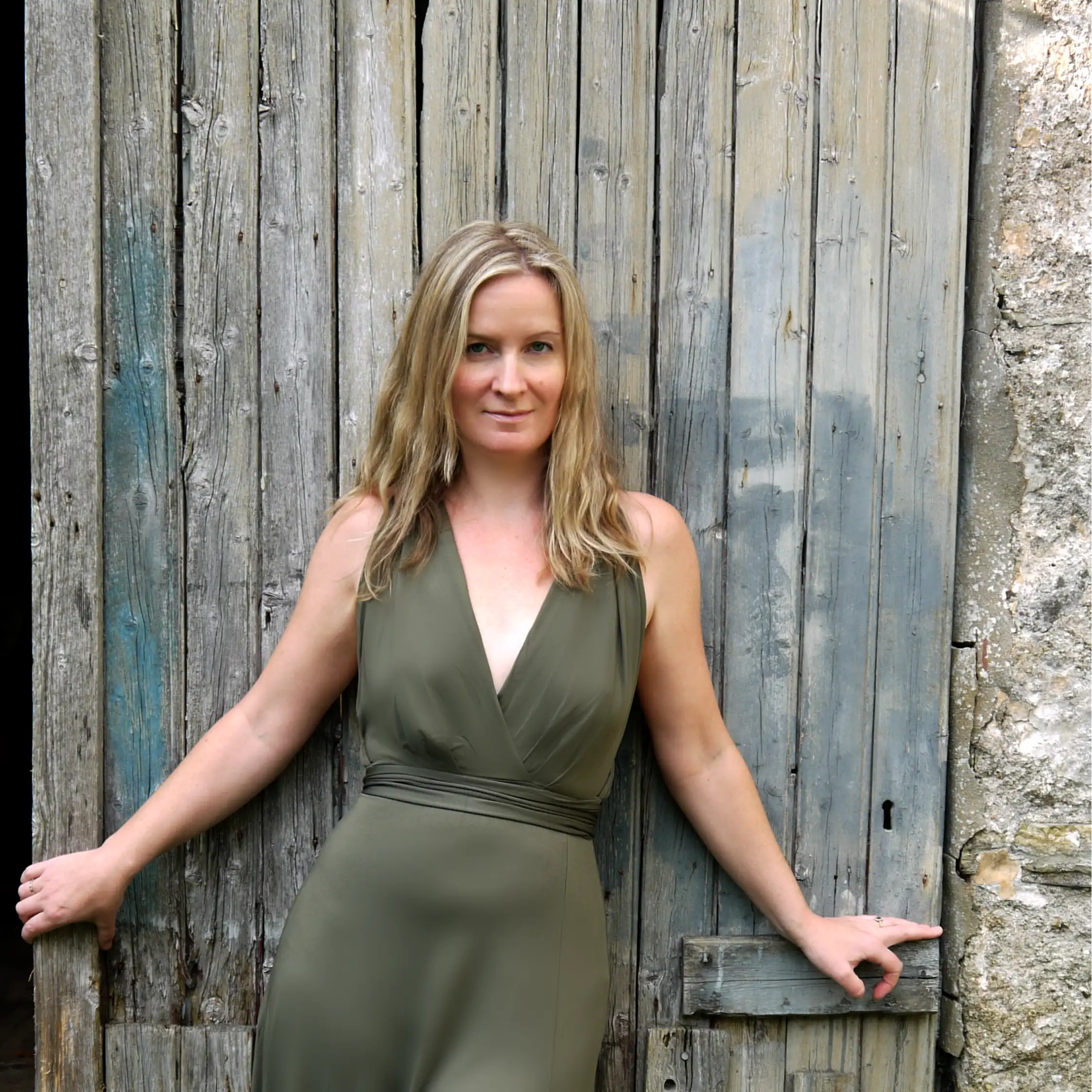
The critically-acclaimed Northern Irish singer and musician speaks to The European about her new anthology A Way with the Fairies and its companion album Supernatural, a project that bridges Irish folklore and European myth, and reflects her conviction that science and the unseen world can sit side by side
Irish singer and musician Bróna McVittie has spent much of her career charting territory few others attempt to map. Born in 1975 in County Down, she is both a musician and a trained biologist whose work blends traditional folk with nature-inspired songwriting and experimental soundscapes. Her music draws on the deep well of Irish folk tradition while reaching outward into electronics, harp and other instruments, and the rhythms of the natural world, creating a sound that feels rooted and exploratory in equal measure.
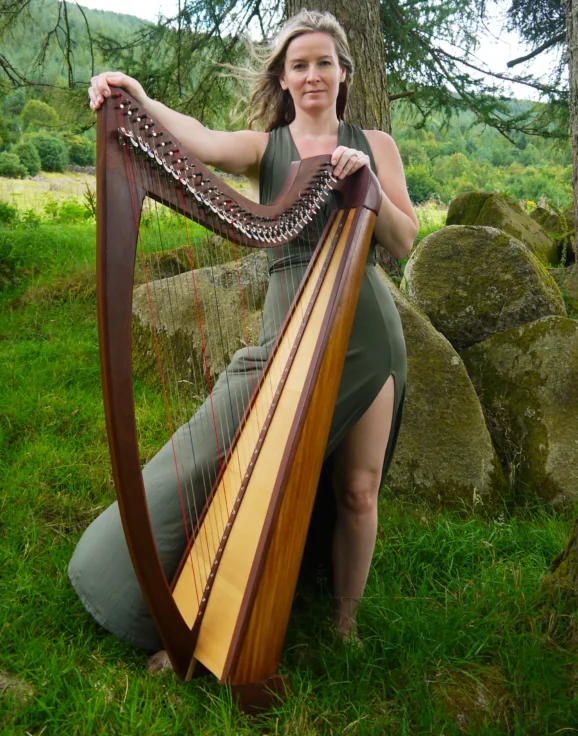
Often described as “cosmic folk”, her compositions combine guitar, electronics and ethnic instruments such as the harp to evoke birdsong, open skies and elemental forces, carried by a clear voice. Drawing on Irish mythology, folklore and landscape, she reimagines traditional ballads while writing original songs shaped by the natural world. Since her solo debut in 2018 she has released three acclaimed albums — We Are the Wildlife, The Man in the Mountain and The Woman in the Moon — each expanding her blend of mythic themes, folk traditions and experimental influences.
Over the past decade, McVittie has built a celebrated body of work that resists easy categorisation, earning a reputation for imaginative composition and intellectual range, with her music praised by major publications and featured at festivals and radio programmes across the UK and Ireland.
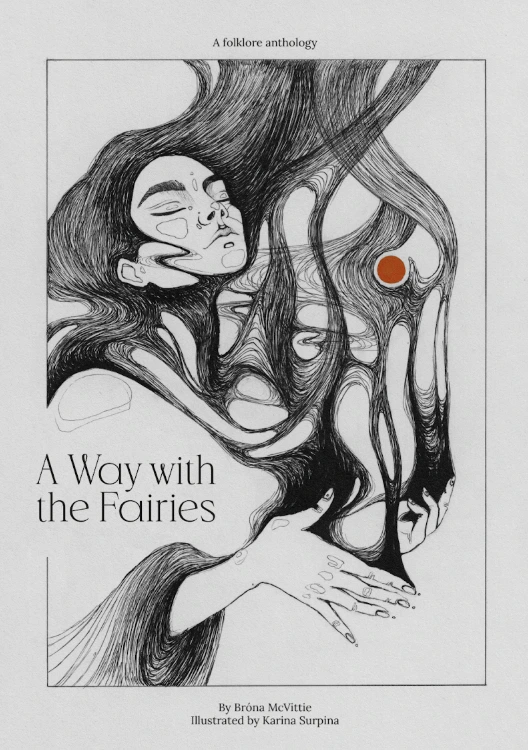
When I meet her in County Down, the landscape of her childhood once again in view, she is preparing to unveil one of her most ambitious undertakings to date: A Way with the Fairies, a folklore anthology accompanied by a forthcoming album, Supernatural.
The project marks a decisive widening of her artistic frame. Rather than treating folklore as ornament or aesthetic reference, McVittie has immersed herself in it as source material, scholarship and lived inheritance. She spent a year reading little else but fairy lore before writing a note of music. What emerged is a collection that moves from Celtic fable to continental myth, interweaving Irish legend with stories gathered through collaborations in Lithuania, Ukraine and Spain. Supported by an International Artists Development Award from the Arts Council of Northern Ireland, she commissioned and recorded songs shaped by local traditions across Europe, folding them into a single narrative arc.
The genesis of the book was disarmingly domestic. A conversation with her mother, her mother-in-law and a visiting friend from San Francisco drifted towards fairies, discussed with such unselfconscious familiarity that their guest was left astonished. His suggestion — half serious, half amused — that she devote her next album to the subject lingered. Within weeks the reading began, and within months the idea had become a structured project spanning literature, composition and fieldwork.
For McVittie, fairies are neither quaint relic nor metaphor alone but part of a cosmology in which science, story and sound “happily coexist”. As she explains, belief in what cannot yet be measured sits comfortably alongside a background in biology. The visible world, she proffers, cannot be the sum of what exists…
A Way with the Fairies brings together folklore, myths and legends from Ireland and across Europe. What led you to look beyond Irish tradition while still keeping those roots at the centre of the project?
I grew up in a rural village on the shores of Carlingford Lough, home to legend myth and mystical beauty. From the youngest age my interest in fairies was combined with a love of nature and a curiosity about the world around me and all its creatures. We always had fairy story books in the house, and illustrations by the likes of Arthur Rackham fired my imagination.
I love to travel and have been fortunate to visit many countries across the world. I’m always struck by the similarities between cultures, particularly in regard to the way we express the particular colour and flavour of our culture through stories; folk stories; fairy stories; mythological poems; traditional songs. While the style and tone differ, the themes and archetypes are very similar. I had the opportunity to invite collaboration with other artists across Europe through an International Artists Development Award from the Arts Council of Northern Ireland. This supported me to commission songs for the album from international colleagues, and to travel to Lithuania, The Netherlands and Spain to record the songs my collaborators composed, inspired by their own choice of song, story or poem from their country.
In regard to the Celtic fables, there were so many more I would have loved to include, which haven’t made it into this anthology. I was spoilt for choice. Once I made my selection, I spent a lot of time translating the fables into musical form. It has been such an enriching experience and I would love to expand on the project. So perhaps this is the beginning of something bigger.
You have been described as a pioneer of cosmic folk, blending guitar, electronic textures and ethnic instruments such as the harp. What does it feel like to be a trailblazer?
Aah, I wouldn’t say I was a trailblazer, but am certainly very happily ploughing my own furrow. I’m a bit of a magpie. I love collecting weird and wonderful instruments and am influenced by such a wealth of amazing music. Every day I give thanks for the deep well of songs to draw upon. Working as an artist in this day and age, we have unlimited possibilities to draw from diverse channels of inspiration. Anything you can conceive of you can create. And making music is easier now – with the diversity of musical tools at our fingertips – than it ever has been. The label ‘cosmic’ actually came from an interview I did with Cerys Matthews on her live at WOMAD show on BBC Radio 6 back in 2019. Another broadcaster had described my work as ‘pastoral folk with a kosmische filter’ and Cerys simplified it to ‘cosmic’ folk, which I thought really fitted as a description, both on account of the inspiration from the natural world, and the blend of instruments I enjoy performing with.
How did you get started in music, and who were your early influences?
I started singing along to Dolly Parton records from a young age, Judy Collins, Elvis. When I was 9, I was the only one in my school that could blow the clarinet and so I took up lessons on that instrument, later taking up saxophone.
As a teenager I recorded tapes from my best friend’s brother’s record collection and became obsessed with Prince. Most of my teenage years were spent devouring his discography. Later my palette expanded into jazz, classical, folk and electronic music. I was influenced by what I heard other people listening to: Led Zeppelin, David Bowie, John Martyn.
I went to South American on a voluntary overseas programme when I was 19 and ended up travelling from Ecuador to Peru and Bolivia. I bought my first guitar in La Paz, Bolivia and started writing my own songs, although I could only play about two chords.
When I moved to England to go to University, I started buying my own records (many of them were second hand from charity shops). I made my own discoveries that way. As a consequence, I’m a huge fan of Beethoven, I love playing saxophone along to Theolonius Monk records, and I can’t get enough of traditional archive recordings and manuscripts, plus I absolutely love the thrill of dancing to Detroit techno.
I took a Diploma in Musical Techniques and Composition at Birkbeck in London, which gave me a fabulous grounding in classical music, and did short courses at Goldsmith’s to improve my technical skills in recording and music production.
Living in London I was spoilt for choice in terms of discovering new music through live performance and was introduced to electronic acts such as Plaid and Mr Scruff. That’s also where I got really into traditional folk, through the London Irish music scene.
What would you like those who read the book and listen to the Supernatural album to take away from them?
Well, I suppose simply to be inspired by the stories, to perhaps find some personal resonance in the songs, and to enjoy the connection of song to story. This is the first album I’m releasing with a book, so I’m very interested to see how it will be received. I hope it will provide greater depth for listeners and for those reading the stories, perhaps encourage them to listen to the songs.
Do any of the poems, songs and stories resonate with you personally, and if so, which ones and why?
The fables are all very personal to me, they all reflect some element of transformation. I see myself in the stories. I’m the piper from The Piper and the Púca who can only play one tune, and then somehow by magic can play any tune he pleases. I’m Étaín traversing worlds, becoming a fly and being banished to the ocean. I’m the hunchback in The Legend of Knockgrafton who sings to the fairies and realises his beauty. I have used the stories to journey musically, to explore different emotional spaces and sonic landscapes, to experiment with lyrical themes and approaches. The songs on the Supernatural album (which is due for release through the Company of Corkbots / State 51 this autumn) are a living, breathing homage to the fables that have inspired them.
You clearly have a fascination with fairies and the supernatural. Is this based on any of your own life experience?
I’ve always believed in what I cannot see. And we’ve always lived in haunted houses! As a child I was taken to church and exposed to bible stories through Sunday school. Now I ask you, what’s more supernatural than God and the stories of Jesus and his many miracles? We used to watch Hammer horror films with my dad and perhaps this appetite for supernatural stories comes in part from that. Be it books, films, or stories from family members, I’ve always had a fascination with the otherworld.
In fact, I don’t think I could imagine living my life with the belief that the visible is all there is to this world. We can’t see atoms, molecules, genes, proteins without special instruments, for example. So, if it’s just a question of using the right instrument, then that really begs the question. What more could we discover in the future? The more we understand scientifically, the more we can explain many mystical and magical phenomena. Science has already unravelled so many mysteries and will continue to do so. Magic is in a sense science unexplained.
Did your parents and / or your grandparents tell you fairy stories?
I think my mother must have read us fairy stories. I don’t actually recall that. My grandparents on my mother’s side would have considered fairy stories as ‘of the devil’, they were so strictly religious, so would definitely not have encouraged the reading of stories. My father’s family are all natural storytellers and we had a lively storytelling environment in the house. Most of these stories would be made up, using made up language. This is definitely something I am channelling in my own creative endeavours.
If you read fairy stories when you were younger, which ones did you read, and which is / was your favourite fairy story?
I love the Grimm’s Fairy Tales; they were probably the first I read before realising we had a wealth of Irish fairy stories. The Frog Prince was a favourite and Little Red Riding Hood. I love the darkness in the original Grimm’s tales. It seems later versions became somewhat sanitised. I remember having a small blue suitcase with tapes and magazines in the 1980s. The series was called Story Teller, created by Marshall Cavendish and you would purchase a magazine with a tape to add to your collection. There was a story about The Great Big Hairy Bogart, which I absolutely loved. It was narrated with a strong Irish accent and really conjured up very vivid imagery in my mind. We had several books in the house, which I would dip into. And then the poetry of WB Yeats was very inspiring. That shaped my idea of the fairy world enormously.
You trained as a biologist, didn’t you?
Yes, I read Biology at St-Hilda’s College, Oxford from 1996-1999 and specialised in microbial biology and plants. Then I worked in science communication for quite a few years afterwards, which kept me abreast of contemporary molecular biological research.
As someone trained in biology, how do you reconcile a scientific background with a belief in fairies?
We’re a strange communion of the beliefs we have held since childhood, and the truth that we uncover in adulthood. It may seem at first glance contradictory, to be a biologist and also a ‘believer’. But if you take the view that so many truths have yet to unfold to us, then that’s the view an open-minded scientist has.
My mother told me that fairies were elemental beings that communed with the flowers and plants around us. As a result, I’ve always considered plants to be sentient, and later my biological studies gave me the certainty of their capability to communicate with their conspecifics. This is borne out in the molecular processes that underlie, for example, the plant’s natural defence system. When wounded plants produce jasmonic acid (among other volatile molecules), which warns neighbouring plants that harm is at hand. Science for me provides the how and can explain the mystery of what was once seen as magic.
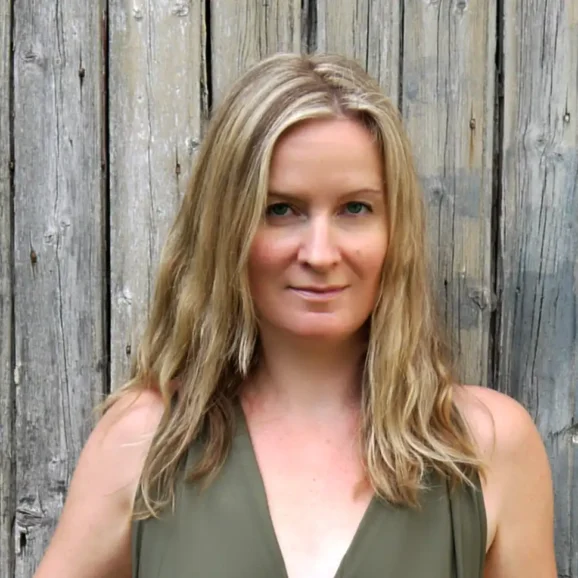
Born in 1975 in County Down, Bróna McVittie is a Northern Irish musician and trained biologist whose work blends traditional folk with nature-inspired songwriting and experimental soundscapes. Drawing on Irish mythology, folklore and landscape, she reimagines traditional ballads while writing original songs shaped by the rhythms of the natural world. Her music has been described as “cosmic folk,” combining guitar, ethnic instruments such as the harp, and electronics to evoke birdsong, open skies and elemental forces, carried by a clear voice. Since her solo debut in 2018 she has released three acclaimed albums—We Are the Wildlife, The Man in the Mountain and The Woman in the Moon—each expanding her blend of mythic themes, folk traditions and experimental influences. Her work has been widely praised by major publications and featured at festivals and radio programmes across the UK and Ireland.
READ MORE: ‘Rivers run deeper than we think‘. Ahead of the International Day of Action for Rivers later this month, Alan Lawson reflects on rivers as dynamic natural systems that shape landscapes, sustain ecosystems and influence how human societies live alongside the natural world.
Do you have news to share or expertise to contribute? The European welcomes insights from business leaders and sector specialists. Get in touch with our editorial team to find out more.
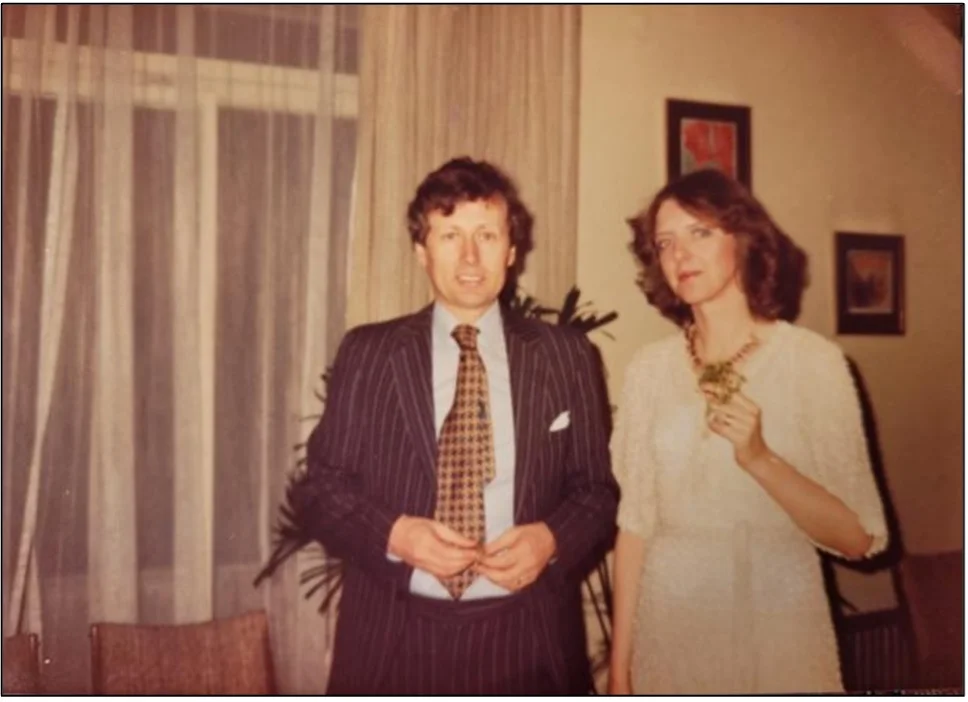
Main image: Describing her sound as cosmic folk, McVittie blends guitar, electronic textures and ethnic instruments such as the harp, to create music that evokes birdsong, open skies and elemental forces. Credit: Beki Corrigan.