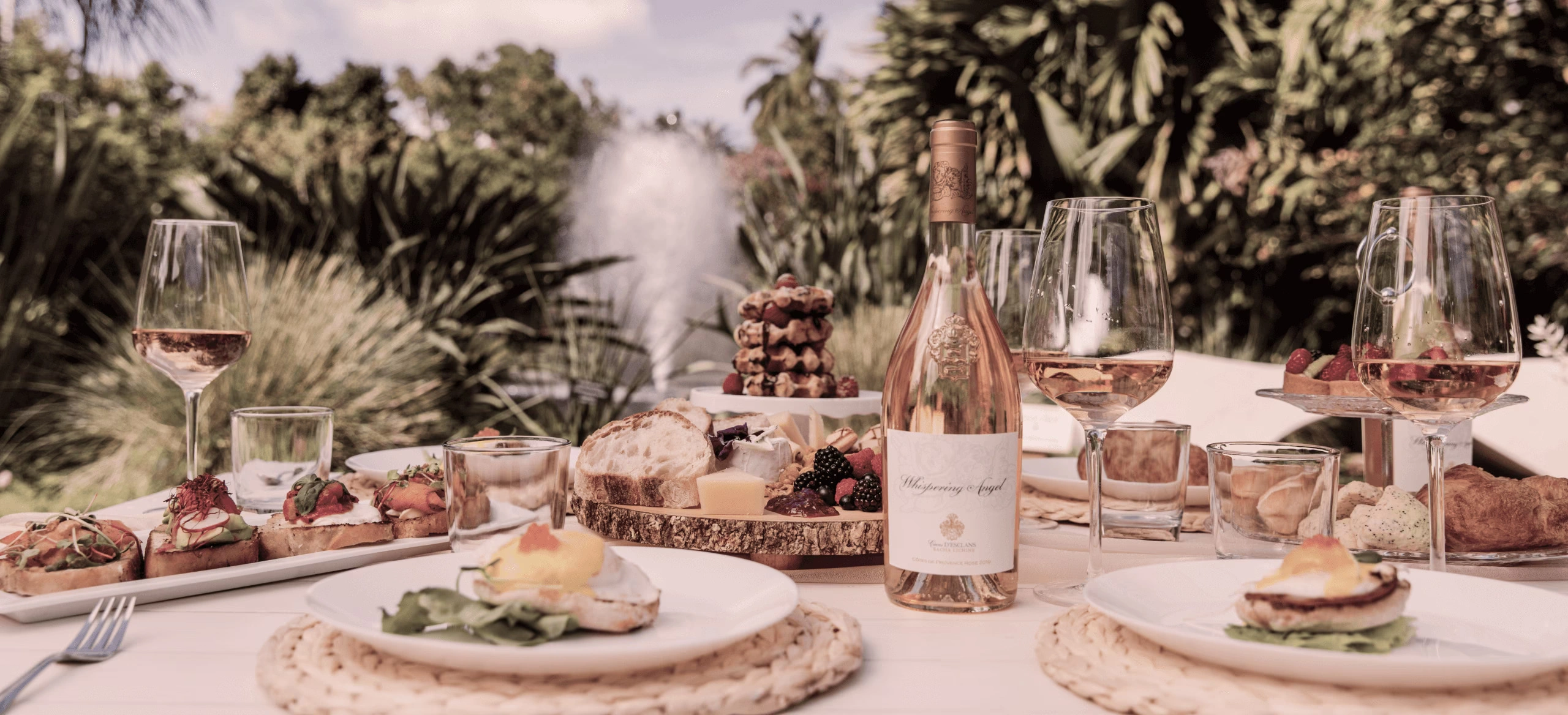
Two decades after Whispering Angel first rewrote the rules of pink wine, Matthew Jukes raises a toast to the bottle that transformed a seasonal curiosity into a global powerhouse, and sets out where serious rosé lovers should look next
I can see you rolling your eyes already — yet another spring rosé piece. Well, stay with me. This year marks a reckoning of sorts. Rather than reheating seasonal clichés, I want to shed proper light on the vast subject of rosé and on the wine that altered its course.
Please do not write off the central actor in this piece simply because tall-poppy syndrome is alive and kicking in the global wine trade. Our principal player is Château d’Esclans, whose monumental reimagining of the category has had vast impact and influence in the wine world. I must categorically state that while Whispering Angel has its detractors — driven, I imagine, by jealousy — in taste terms it is always a spectacular wine. It has become the finest-value, largest-production elite rosé on earth. It confounds expectations every year, raising its own bar while augmenting production, which is traditionally anathema in the wine world. This year marks the twentieth anniversary of this seismically important wine.
Esclans alone encouraged inept winemakers, derelict vineyards and vast swathes of the drinking public to come alive and join the bandwagon, endeavouring to satiate global demand for the most food-friendly, refreshing and universally appealing style of wine. And while you contemplate this, please also take on board that this is a frighteningly easy style of wine to make to an adequate standard. Millions of bottles collectively bore us to tears each year, yet making great rosé is extremely challenging, and there are still only a handful who truly belong to this club.
The skyrocketing fame of Whispering Angel inspired all these wineries. And that is before you delve into the Esclans hierarchy of truly awe-inspiring wines, which hail from the estate itself in La Motte, in the heart of Provence. There are no finer or more age-worthy rosé wines available than the Château cuvée and the two single-vineyard wines, Les Clans and Garrus. These wines — and Whispering itself — were conceived by Sacha Lichine a quarter of a century ago. As Sacha passes the reins to LVMH’s Moët Hennessy this year, he can reflect on not only a job well done, but also the seemingly impossible feat of redefining an entire category of drinks.
You will see Whispering Angel featured everywhere, from Formula 1 to Ascot, British Airways, the European Golf Tour and the Giorgio Armani Tennis Classic at The Hurlingham Club, among many other events. It is easy to slip into the mindset that ubiquity might mean ‘average’ in taste delivery. It certainly does with most other drinks. Not so here, because 2025 Whispering Angel, in its twentieth year, is a stunner.
If you would like to experience wines of similar lofty standards, while avoiding the legions of pretenders and marketing-over-content peddlers, where else should you look if you want to drink brilliant rosé? Several heroic estates have captured the essence of their vineyards, their uniqueness and flavour signatures, while managing to make invigoratingly refreshing wines that will not fall over after six months in bottle.
Aussies Swinney and Willunga 100 have both made the grade for inclusion in my 100 Best Australian Wines Report this year. Nobody in their right mind would think Australia was a go-to destination for rosé. Yet the phenomenal Mourvèdre grapes — think a Down Under version of a French Bandol rosé — from Swinney’s awe-inspiring vineyards in Frankland River, Western Australia, make a superstar wine. In contrast, Willunga 100’s McLaren Vale Grenache rosé (the same grape that underpins all great Provence wines) is nothing short of game-changing. These two are world-class. I recommend them without hesitation, not only because they represent spectacular value for money, but because they belong on every wine list and in every cellar in the world.
If you fancy a genuine cheapie, Ramón Bilbao’s Rosado costs less than a tenner on the High Street and is a delightful example of precision winemaking. Lalomba Finca Lalinde shows that the Bilbao team can make elite pink wines in Rioja, too. Garnacha — Spain’s synonym for Provence’s all-important Grenache — is responsible here, and they utilise a white grape addition (10% Viura), in much the same way Château d’Esclans uses Rolle/Vermentino, to add silkiness, floral notes and cleansing acidity.
Back in Provence, Bandol produces some of the most structured rosé styles, with Tempier, Ott, Terrebrune, Pibarnon and Bégude among the standout performers. Finally, we return to greater Provence and the question of which other widely distributed brands you should add to your armoury if you fancy a change. Start with Whispering’s big brother, Rock Angel, which must be the greatest-value ‘grand’ style of all. I also admire wines from La Mascaronne, selected Mirabeau and Minuty bottlings and, of course, AIX. I tend to favour the estate cuvées, which often represent the finest balance and flavours, rather than the cut-price versions made from bought-in grapes or the prestige wines, which can lean too heavily on oak.
With my other hat on, these wines have inspired me to create my own Jukes 8, an alcohol-free rosé. It uses an apple-cider vinegar maceration with pomegranate, melon, raspberry, cranberry, sour cherry, rhubarb, fennel and pink peppercorn, among many other ingredients, to build a Provençal template of nuances. These are among the most familiar tasting notes for top-flight rosé, so what better way to recreate the flavours we love in a bone-dry, zero-alcohol format? Jukes 8 means I can drink epic rosé day in, day out, alternating between wine and flavours beyond wine.
Life has never been rosier, and we must thank Mr Lichine for sparking the world’s interest in the ultimate pink drinks.
Matthew Jukes is one of the United Kingdom’s most widely read wine writers, with more than thirty-five years’ experience across retail, buying, broadcasting and journalism. A former buyer for Bibendum Restaurant & Oyster Bar and long-standing columnist for the Daily Mail’s Weekend Magazine and MoneyWeek, he has published fourteen books and multiple annual reports, including his Burgundy, Bordeaux, Piemonte and 100 Best Australian Wines reports.
READ MORE: ‘LallaGin lifts the spirits of the European drinks market‘. After cancer ended her music career, Christal Lalla found an unexpected tonic in the world of spirits. Now the artist-turned-distiller is winning awards and shaking up Europe’s premium gin scene with her precision-crafted label, LallaGin.
Do you have news to share or expertise to contribute? The European welcomes insights from business leaders and sector specialists. Get in touch with our editorial team to find out more.
Main image, courtesy esclans.com