Parked electric cars could help power island ferries in German trial

Matthew Burgos
- Published
- News, Sustainability
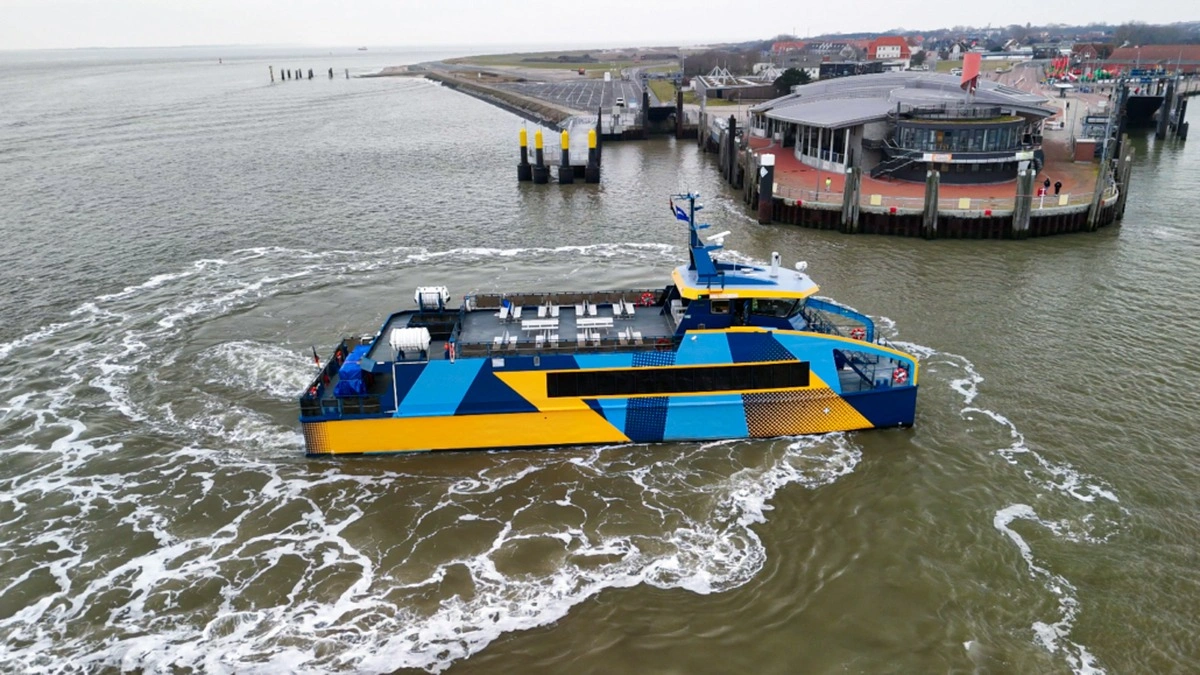
A new research project will test whether EV batteries can feed solar power into ferry charging systems, cutting fossil fuel use and easing pressure on local electricity grids
Parked electric cars could help charge island ferries under a German research project designed to make coastal transport cleaner and reduce pressure on local power grids.
The trial will use electric vehicles left in a ferry terminal car park as temporary batteries, storing solar power during the day and feeding it back when a ferry returns to port.
Osnabrück University of Applied Sciences and the Norden-Frisia shipping company are launching the project on Germany’s North Sea coast, where the operator already runs the region’s first fully electric passenger ferry.
The ferry has been operating since March 2025 between Norddeich Mole and the island of Norderney.
The new project, called Bi-directional Integration of Electric Vehicles, or BIDI-EL, will test whether the same clean power system can be extended beyond the ferry itself.
Electric cars parked at the shipping company’s terminal will be charged from solar panels installed on site. When the ferry arrives back in port and needs to recharge, electricity stored in the vehicles’ batteries can be sent back into the ferry’s charging system, alongside power from the solar panels.
The aim is to turn parked cars into small, decentralised energy stores that help run the ferry while reducing demand from the public electricity grid.
Researchers say the system could increase the amount of locally generated renewable energy used in ferry operations and support the gradual removal of fossil fuels from services to the East Frisian Islands.
Norden-Frisia installed a photovoltaic system with a peak output of 1,700 kilowatts at its premises in 2024, with further expansion planned.
A fixed electrical storage system is already in place in the company’s parking area, and the trial will add the battery capacity of electric vehicles parked there.
The project is being funded by the German Federal Environmental Foundation with €164,894 and will run until January 2027.
Prof Dr Hans-Jürgen Pfisterer, Professor of Electrical Engineering at Osnabrück University of Applied Sciences, is leading the technical side of the project.
He said: “The bidirectional integration of electric vehicles not only offers an environmentally friendly alternative to conventional mobility, but can also significantly contribute to relieving the strain on the energy supply grid.
“By using vehicles as decentralized energy storage units, the share of renewable energy is maximized, the grid is relieved, and the vehicle batteries are kept in a ‘wellness mode’.”
Prof Dr Kai-Michael Griese, Professor of Business Administration, is overseeing the business and sustainability aspects, including climate-adapted business models and the circular economy.
Pfisterer added: “Innovations like bidirectional charging are essential for creating future-proof mobility solutions.”
Griese said: “The goal of the project is to gain insights that go beyond the initial project results and to create the foundation for long-term, sustainable business models and energy supply solutions.”
Olaf Weddermann, managing director of Norden-Frisia, said the project was another step towards fossil-free ferry transport.
He said: “With this project, we are sending a strong signal for the sustainable transformation of our mobility.
“The combination of an electric ferry and bidirectional charging for electric vehicles is an important further step towards achieving a fossil-free future and reducing the environmental impact of our transport services.”
Norden-Frisia has operated ferry services to the East Frisian Islands for more than 140 years.
READ MORE: Electric air taxis take step towards passenger reality after San Francisco Bay flight. A piloted electric aircraft has flown from Oakland International Airport across San Francisco Bay and around the Golden Gate Bridge in a public demonstration of how short urban air taxi journeys could soon operate in some of the world’s most congested cities.
Do you have news to share or expertise to contribute? The European welcomes insights from business leaders and sector specialists. Get in touch with our editorial team to find out more.
Main image: Reederei Norden-Frisia’s fully electric ferry operates between Norddeich Mole and Norderney in the German North Sea, where a new research project will test how electric vehicles in port car parks could help feed power back into the ferry’s charging system. Credit: Reederei Norden-Frisia
TOP STORIES
-
 Britain faces higher winter energy prices as reliance on European electricity imports grows
 -
Andy Burnham to make special Gogglebox appearance for Stand Up To Cancer
-
WPSL Golf targets £120 million valuation as billionaire-backed corporate deals and other commercial deals drive explosive global growth
-
Hackers could bring Britain’s essential services to a standstill, security chief warns after global website shutdowns
-
We're talking to almost twice as many people on the phone as a decade ago, study finds
-
TalkTalk sells majority stake in Telecom Acquisitions as founder Nigel Barnett regains control
-
Company closures soar ahead of tax rises as new Budget looms
-
Russia takes control of more European corporate assets amid Ukraine tensions
-
EU leaders resist calls to delay carbon rules as energy costs soar
-
‘A big step forward’ – PM Andy Burnham hails plans for Great British Railways HQ in Derby
-
UK economy grows just 0.1 per cent as construction falls and services stall
-
Germany risks losing €155bn a year under tighter AI data rules, new study warns
-
Pope Leo XIV diagnosed with lung cancer after surgery in Rome
-
France faces freezer meltdown as hackers strike supermarket chains
-
Bumble shares soar 50% amid $1bn takeover talks
-
China slump drives Volkswagen to sharpest quarterly fall in more than four years
-
Hollywood mega-powerhouse created as Paramount completes Warner Bros Discovery takeover
-
Gamers face gridlock as latest Grand Theft Auto download 'nears two days'
-
Samsung profits soar ninefold to record £61bn amid AI chip boom
-
New Springer books put the UN’s struggling sustainability goals to the real-world test
-
Europe’s solar boom set for two-year slowdown after record growth
-
Let it pea. Musicians turn vegetables into instruments at Beatles' Abbey Road studios
-
Golden naked Trump statue unveiled at European Parliament
-
Jaguar puts controversial rebrand on the road with £130K 1,030PS Type 01
-
Deepfakes and identity fraud drive new wave of post-hire background checks