Top British chefs warn restaurants are fighting for survival as closures hit three-a-day

John E. Kaye
- Published
- News
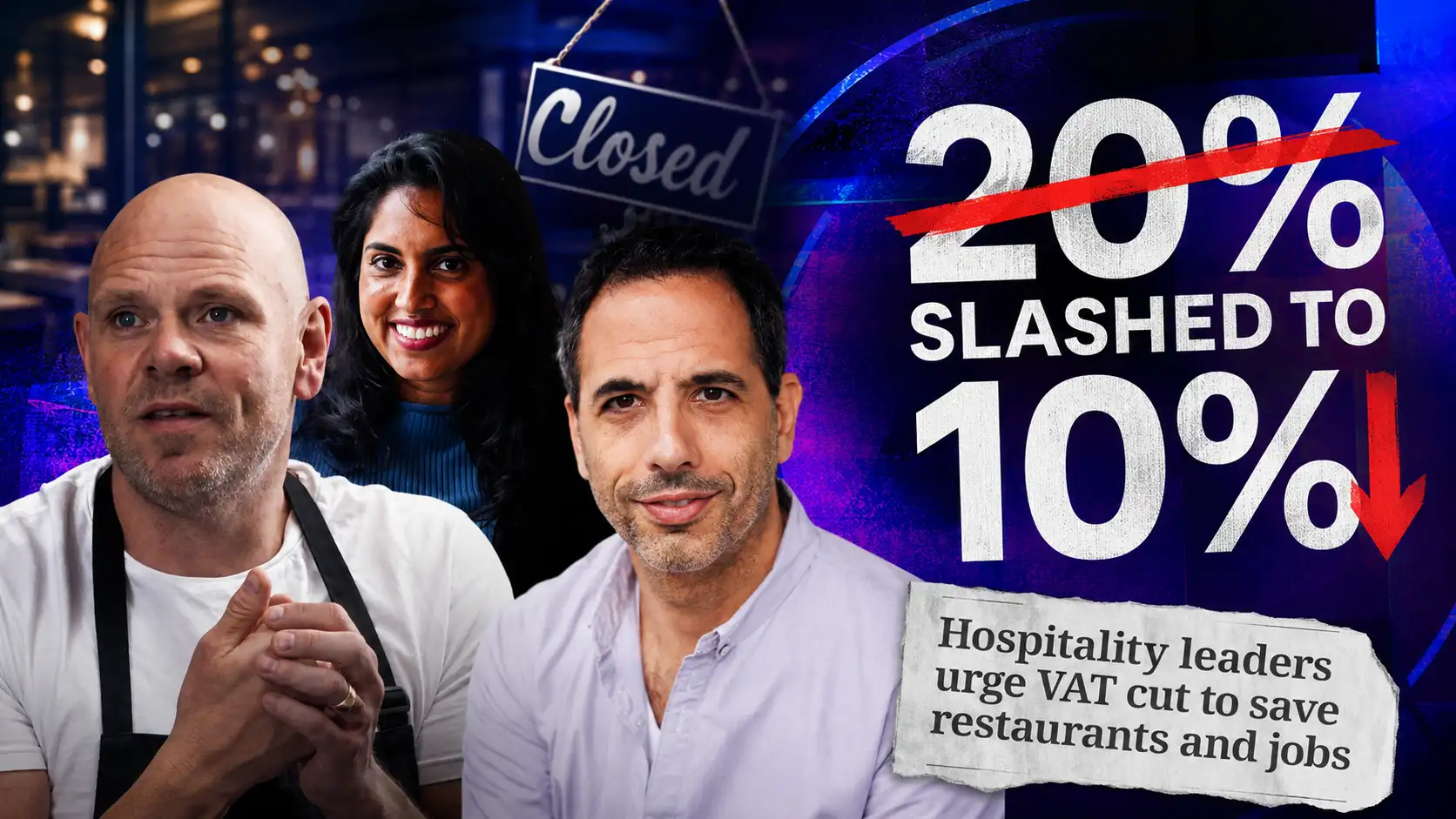
Tom Kerridge, Ravneet Gill, Simon Rogan and Yotam Ottolenghi say VAT, staffing costs, business rates and tax rises are pushing hospitality businesses to breaking point
Some of Britain’s best-known chefs have warned that restaurants, pubs and cafes are fighting for survival as hospitality businesses close at a rate of three a day.
Tom Kerridge, Ravneet Gill, Simon Rogan and Yotam Ottolenghi said the industry was being squeezed by VAT, staffing costs, business rates, National Insurance rises and weaker consumer spending.
Industry body UK Hospitality says three hospitality businesses have gone under every day since the start of 2026.
The warning comes amid growing concern over the impact of restaurant and pub closures on high streets, town centres and job opportunities for young people.
VAT is charged at 20 per cent on UK hospitality businesses, making the rate the second highest in Europe behind Denmark, according to UK Hospitality.
The trade body has repeatedly called for the rate to be cut closer to levels in Germany, Ireland, France, Italy and Spain, where hospitality VAT is lower.
Kerridge, who runs five restaurants and pubs, said the sector had reached a “peak point” where further price rises could no longer simply be passed on to customers.
He told BBC Newsnight there were “so many different factors” driving up costs and eroding margins, including government policy decisions such as higher employer National Insurance, business rates and the minimum wage.
And he warned that pushing prices up further “just doesn’t work because it will stop people coming out.”
Ravneet Gill, the pastry chef and author who opened her first restaurant a year ago, said she “never imagined it would be this tough”, particularly because of the cost of employing people.
Rogan, who has nine Michelin stars across his restaurant group in the UK, Malta and Hong Kong, said VAT was “a killer”.
Kerridge and the other chefs said they supported the rise in the minimum wage, but argued that cutting VAT from 20 per cent to 10 per cent for hospitality would “allow operators to breathe” and reinvest.
He said the issue was “survival” rather than using a VAT cut to offer cheaper prices to customers.
Gill said: “Don’t look at us as having profit is a dirty thing.
“We’re not going on fancy yachts and driving expensive cars. We are doing it so we can regenerate our areas that we’re in, employ more people.”
Chancellor Rachel Reeves last week announced a VAT cut from 20 per cent to 5 per cent on some attractions over the summer holidays, including children’s meals in restaurants and cafes.
Gill criticised the move as a “very poor attempt at trying to offer something to hospitality and quite frankly it will lead to loopholes, fraud, misuse and no genuine good”.
The pressure on hospitality is also being linked to shrinking opportunities for young workers.
Restaurants, cafes and pubs are often the first employers for many young people, with the sector employing 28 per cent of all 18 to 20-year-olds, according to the Institute for Fiscal Studies.
A report by former Labour minister Alan Milburn warned that the UK was “at risk of a lost generation” as job opportunities for young people shrink.
Official figures show more than one million young people are not in education, employment or training, the highest level in more than 12 years.
The government has said it is creating 300,000 work experience and training placements in sectors including construction, health and social care and hospitality.
Treasury minister Torsten Bell told BBC Radio 4’s Today programme that employment rates among 18 to 25-year-olds were “exactly the same as when we took office in 2024”, but admitted higher taxes were affecting hospitality businesses.
Allen Simpson, chief executive of UK Hospitality, said the answer was to reduce the cost of employment.
He said: “The government needs to make it economically beneficial to employ young people once again.”
Rogan said that when “restaurants are under pressure”, investment in young people and sustainability are “the first two things that fall by the wayside.”
Ottolenghi said the closures raised a wider social question about what communities lose when restaurants disappear.
He said: “The risk for me is if those go… we’re just going to kind of become a society where people sit around at home, look at screens and never interact with each other.
“We end up as an industry taking so much of the burden and government lays on more taxes. Those could come down quite easily for us because we employ all these young people and we give them skills.”
The chefs’ warning follows the pandemic-era Eat Out to Help Out scheme and previous VAT relief, which gave the industry a temporary boost but did not remove the long-term pressure on costs.
READ MORE: Ivy and Annabel’s owner agrees £1.4bn sale of hospitality empire to Abu Dhabi-backed buyer. ‘King of Mayfair’ Richard Caring’s majority stake in the business behind The Ivy, Annabel’s and a string of London restaurants and clubs is being sold in a deal that includes a planned £1bn investment.
Do you have news to share or expertise to contribute? The European welcomes insights from business leaders and sector specialists. Get in touch with our editorial team to find out more.
Main image: Composite image illustrating calls by leading hospitality figures for VAT on restaurants, pubs and cafes to be cut from 20 per cent to 10 per cent, as closures put jobs and businesses under pressure. Artwork: Belters News. Credits: Tom Kerridge image by The British Library, CC BY 3.0, via Wikimedia Commons; Yotam Ottolenghi image by Keiko Oikawa, Public Domain, via Wikimedia Commons; Ravneet Gill image: Amazon; closed sign image by Tim Mossholder, via Pexels.
TOP STORIES
-
 Specs appeal: Welsh Parliament bans smart glasses
-
European motoring legends behind Mercedes, BMW and McLaren to enter Hall of Fame
-
Putin 'plotting to break NATO without firing a shot', Latvian military analyst warns
-
British AI chip startup hits £5bn valuation as government backs bid to challenge global tech giants
-
World's biggest military airshow moves to ‘Britain’s Area 51’ after Iran war disruption at RAF Fairford
-
Lisa Nandy threatens crackdown on entertainment industry after David Walliams allegations
-
UK and European experts demand tougher AI laws as Australia considers criminal penalties after OpenAI breach
-
BBC loses bid to throw out Trump's $10bn defamation lawsuit over doctored Panorama speech
-
AI-generated CVs spark hiring crisis as a third of employers lose confidence in job applicants
-
MPs back calls for ‘Black English’ and ‘Asian English’ options on census
-
Nvidia hires top US lawyer to investigate CEO's alleged affair with Chinese spy
-
EXCLUSIVE – Comic Relief confirms David Walliams is no longer an honorary trustee and has ‘no formal association’ with charity
-
Why Airbnb and Uber take off in some cities but flop in others, according to scientists
-
Michael Jackson's Thriller jacket, Princess Diana's dresses and $3m Banksy painting go under the hammer
-
European entrepreneurs trust AI firms more than governments as four-in-10 look beyond Europe
-
Krakow massacre gunman named after hospital death as police officer fights for life
-
British Airways owner warns green fuel rules could ‘kill European aviation’
-
EU to join Ukraine–Russia peace talks as von der Leyen warns of escalating Black Sea attacks
-
Scientists grow world's largest diamond crystal in breakthrough that could stop AI chips overheating
-
China takes on Rolls-Royce with floating £230,000 electric limousine
-
Infront hires Deutsche Börse data expert Jeff Caldwell as AI transforms financial markets
-
US rocket firm plans Scottish launches in bid to revive failed Highland spaceport
-
Job adverts must reveal salaries under new ‘say what you pay’ law
-
Ireland's most wanted jobs for 2027 revealed as employers offer higher salaries to attract talent
-
American firms sign landmark deal to beam solar power from space as Europe faces AI energy crunch