BrewDog collapses into administration as US cannabis group Tilray buys UK business for £33m

John E. Kaye
- Published
- News
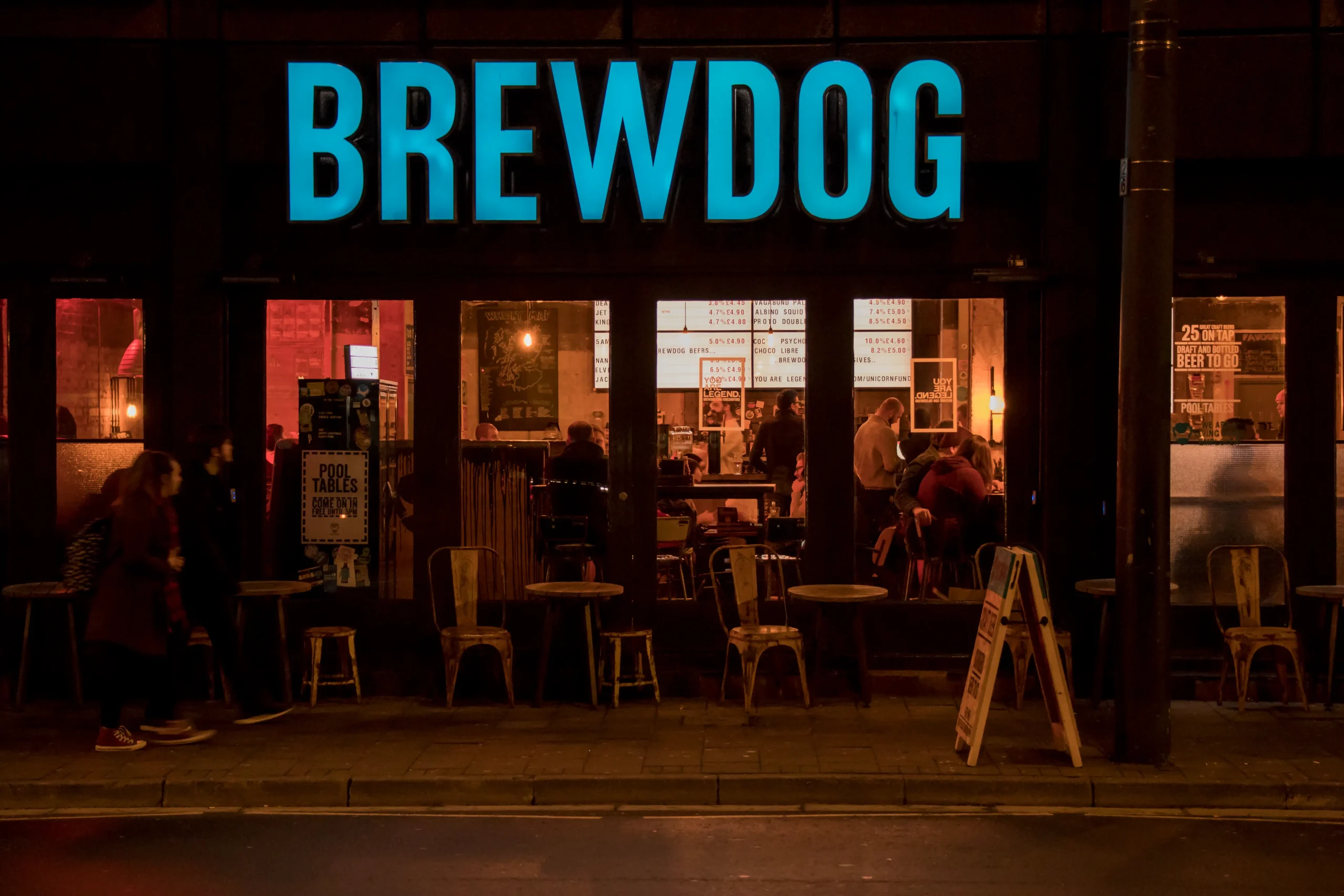
Nearly 500 jobs have been lost and 38 bars closed after the Scottish brewer entered administration, wiping out small investors and marking a dramatic fall from a once-projected £2bn valuation
BrewDog has entered administration, with 484 jobs lost and 38 bars closing immediately after a £33 million deal to sell key UK and Irish assets to the U.S cannabis and drinks group Tilray.
Administrators from AlixPartners confirmed on Monday that Tilray had agreed to buy BrewDog’s brand, intellectual property, UK brewing operations and 11 “strategic” bars, preserving 733 jobs. The remaining sites were not included in the rescue package.
“Regrettably, a total of 38 bars in the UK will close with immediate effect, leading to 484 redundancies,” the administrators said.
No equity holders — including more than 200,000 small investors who backed BrewDog’s crowdfunding scheme — will receive any return, administrators said.
Tilray is also negotiating separately to acquire BrewDog’s U.S and Australian assets, while the company’s German arm, including its Berlin brewery and bar, will be liquidated.
The administration marks a sharp reversal for the Aberdeenshire-founded brewer, which once positioned itself as a rebellious challenger to the corporate beer establishment.
At one stage BrewDog had ambitions of a stock market flotation valuing the company at £2 billion. Instead, the UK and Irish business has now been sold for £33 million.
According to The Guardian, more than 200,000 early-stage “Equity for Punks” investors, many of whom had hoped to benefit from that proposed flotation, will be left empty-handed.
The same report noted that co-founders James Watt and Martin Dickie are thought to have realised around £100 million between them in 2017 when U.S private equity firm TSG Consumer Partners acquired a 22 per cent stake in the business — three times the value of Monday’s sale price.
TSG held preference shares, placing it ahead of ordinary shareholders in any return of capital.
Unite, which represents hospitality workers, described the collapse as a “devastating day”.
Sharon Graham, Unite’s general secretary, said: “BrewDog workers built this brand. They deserved respect. Instead, they were treated as disposable pawns.”
The union added, in comments reported by The Guardian: “A company does not lose 97 per cent of its value in the space of nine years without catastrophic mismanagement.”
BrewDog had failed to return to profitability in recent years and posted a £37 million loss last year. During 2025 it was removed from 2,000 pubs as customers opted for rival brands, according to The Guardian, and had already announced bar closures and job cuts.
All BrewDog bars were closed on Monday to allow staff meetings to take place.
Founded in 2007 in Fraserburgh, the brand expanded rapidly through the 2010s, opening more than 70 bars globally and building a strong retail presence with beers such as Punk IPA, Hazy Jane and Elvis Juice.
In recent years, however, the company faced reputational damage following allegations about workplace culture under Watt’s leadership. Watt stepped down as chief executive in 2024, moving into a new role as “captain and co-founder”.
Tilray, founded in Canada and now headquartered in New York, is known as one of the early corporate players in the legal medicinal and adult-use cannabis sector in North America. It also owns a number of US craft beer brands, including Montauk, Terrapin and Green Flash.
Tilray’s chair and chief executive, Irwin D Simon, said the deal would “refocus BrewDog on the craft beer excellence that made it beloved in the first place and strategically invest to return the operations to profitable growth,” as reported by The Guardian.
The 11 bars included in the deal are located in Birmingham, Dublin, Manchester Peter Street, DogTap Ellon, Edinburgh (DogHouse and Lothian Road), and several London sites including Canary Wharf, Paddington and Waterloo.
READ MORE: ‘Hornby sells iconic British slot-car brand Scalextric for £20m‘. The nearly 70-year-old racing toy brand, a staple of British childhoods since 1957, is being sold by Hornby to a new investment vehicle backed by Purbeck Capital Partners’ Mark Brown.
Do you have news to share or expertise to contribute? The European welcomes insights from business leaders and sector specialists. Get in touch with our editorial team to find out more.
Main image: Jeremy Segrott/CC BY 2.0 via Flickr / Wikimedia Commons
TOP STORIES
-
 Serbia erupts in celebration as student protesters end Vučić’s 14-year grip on power
 -
Two killed as Storm Boelo batters Britain with 85mph winds and leaves 90,000 homes without power
-
Man arrested on suspicion of arson after fire destroys Hitler’s Eagle’s Nest retreat
-
Britain faces higher winter energy prices as reliance on European electricity imports grows
-
Andy Burnham to make special Gogglebox appearance for Stand Up To Cancer
-
WPSL Golf targets £120 million valuation as billionaire-backed corporate deals and other commercial deals drive explosive global growth
-
Hackers could bring Britain’s essential services to a standstill, security chief warns after global website shutdowns
-
We're talking to almost twice as many people on the phone as a decade ago, study finds
-
TalkTalk sells majority stake in Telecom Acquisitions as founder Nigel Barnett regains control
-
Company closures soar ahead of tax rises as new Budget looms
-
An Italian affair – Stanley Johnson takes London’s society set on the Silk Road
-
Himalayan mountainside moved 40cm before avalanche killed 1,451 in Nepal, scientists reveal
-
Scientists and engineers quitting jobs as AI changes roles ‘beyond recognition’, study finds
-
UK profit warnings hit near two-year high as businesses struggle with rising costs
-
Microsoft pulls out of major UK AI data centre project amid power grid delays
-
Russia takes control of more European corporate assets amid Ukraine tensions
-
EU leaders resist calls to delay carbon rules as energy costs soar
-
‘A big step forward’ – PM Andy Burnham hails plans for Great British Railways HQ in Derby
-
UK economy grows just 0.1 per cent as construction falls and services stall
-
Germany risks losing €155bn a year under tighter AI data rules, new study warns
-
Pope Leo XIV diagnosed with lung cancer after surgery in Rome
-
France faces freezer meltdown as hackers strike supermarket chains
-
Bumble shares soar 50% amid $1bn takeover talks
-
China slump drives Volkswagen to sharpest quarterly fall in more than four years
-
Hollywood mega-powerhouse created as Paramount completes Warner Bros Discovery takeover