UK education group signs agreement to operate UN training centre network hub

John E. Kaye
- Published
- News, Sustainability
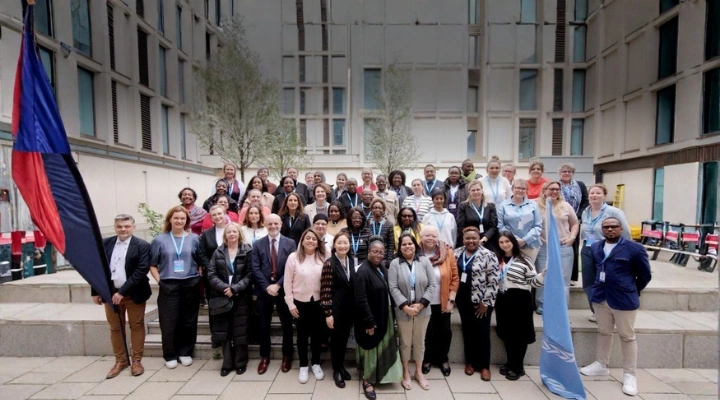
GEDU Global Education strikes agreement with the UN to operate one of its international CIFAL training centres, putting the UK-based group inside a global network that trains government officials and civil society leaders to deliver the UN’s Sustainable Development Goals
UK education provider GEDU Global Education has entered into a formal agreement with the United Nations Institute for Training and Research (UNITAR) to operate a Centre International de Formation des Autorités et Leaders (CIFAL) as part of UNITAR’s global training network.
The agreement was signed during the XXII Annual Steering Committee Meeting of the CIFAL Global Network, held in London from 9 to 11 December. The meeting brought together more than 70 delegates from over 30 countries, including representatives from governments, universities and civil society organisations.
CIFAL centres are specialised training hubs that provide professional education for public officials and civil society leaders, with a focus on supporting implementation of the UN’s 17 Sustainable Development Goals (SDGs), adopted in 2015. UNITAR currently oversees 32 CIFAL centres worldwide.
According to UNITAR, the CIFAL network trained more than 161,000 beneficiaries in 2025. Delegates at the London meeting reviewed the network’s performance and adopted a five-year capacity-building strategy aimed at accelerating progress towards the SDGs.
The agreement brings GEDU into a group of universities and training institutions that host and operate CIFAL centres on UNITAR’s behalf. Many CIFALs are based within higher education institutions, reflecting the UN agency’s reliance on academic partners to deliver professional training at regional and national level.
GEDU operates education institutions in 16 countries across Europe, the Americas, the Middle East, South Asia and the Asia-Pacific region. The group said this geographic spread would support the CIFAL network’s international training activities.
Dr Vishwajeet Rana, GEDU’s chief executive, said: “The partnership means we can push on with our sustainability work hand-in-hand with the United Nations, UNITAR and all of the CIFAL centres around the world.”
The agreement was signed alongside discussions on the future direction of UNITAR’s training programmes, including how the UN’s “UN 2.0” reform agenda and the Pact for the Future are expected to shape development priorities towards 2030.
During the same week, GEDU published its first group-wide sustainability report, which was launched in Parliament at an event hosted by Baroness Verma and attended by the UK Minister for AI and Online Safety, Kanishka Narayan.
GEDU said the report sets out how its institutions contribute to the SDGs across different regions and identifies specific goals that individual institutions have adopted as lead areas of focus within the group.
Alex Mejia, director of UNITAR’s Division for People and Social Development and head of the CIFAL Global Network, said: “This strategic agreement with GEDU is key to build the capacity needed to deliver the UN’s 17 Sustainable Development Goals.”
READ MORE: ‘Redress and UN network call for fashion industry to meet sustainability goals‘. Fashion is under pressure to clean up its supply chains, with campaigners warning that the sector lags behind on climate and social targets. At the UN General Assembly in New York, Redress and the UN Fashion and Lifestyle Network set out how designers are trying to close the gap.
Do you have news to share or expertise to contribute? The European welcomes insights from business leaders and sector specialists. Get in touch with our editorial team to find out more.
Main image: Supplied
TOP STORIES
-
 Russia takes control of more European corporate assets amid Ukraine tensions
 -
EU leaders resist calls to delay carbon rules as energy costs soar
-
‘A big step forward’ – PM Andy Burnham hails plans for Great British Railways HQ in Derby
-
UK economy grows just 0.1 per cent as construction falls and services stall
-
Germany risks losing €155bn a year under tighter AI data rules, new study warns
-
Pope Leo XIV diagnosed with lung cancer after surgery in Rome
-
France faces freezer meltdown as hackers strike supermarket chains
-
Bumble shares soar 50% amid $1bn takeover talks
-
China slump drives Volkswagen to sharpest quarterly fall in more than four years
-
Hollywood mega-powerhouse created as Paramount completes Warner Bros Discovery takeover
-
Gamers face gridlock as latest Grand Theft Auto download 'nears two days'
-
Samsung profits soar ninefold to record £61bn amid AI chip boom
-
New Springer books put the UN’s struggling sustainability goals to the real-world test
-
Europe’s solar boom set for two-year slowdown after record growth
-
Let it pea. Musicians turn vegetables into instruments at Beatles' Abbey Road studios
-
Golden naked Trump statue unveiled at European Parliament
-
Jaguar puts controversial rebrand on the road with £130K 1,030PS Type 01
-
Deepfakes and identity fraud drive new wave of post-hire background checks
-
Spain crowned Europe’s top retirement destination
-
More than half of UK professionals report workplace burnout
-
More than 1.2m English drivers may have eyesight too poor for the road, study finds
-
David Reuben, Britain’s second richest person, leaves London for Monaco
-
UK prisoner release plan faces a major lag as tougher rules risk sending inmates back to jail
-
Brits trust AI with their health but not their money
-
Britain still hungry for Italian food as exports hit €4.56bn despite Brexit