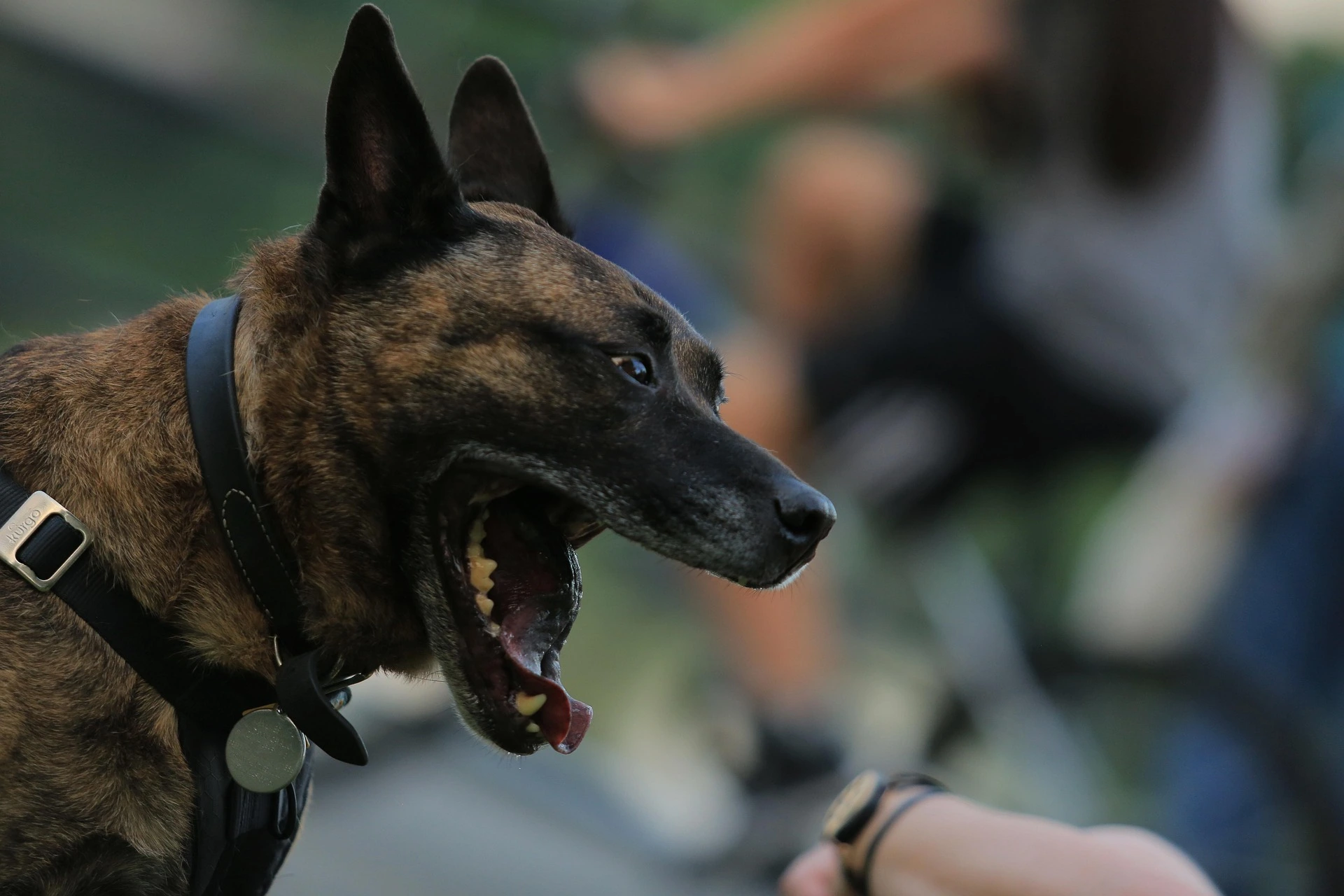
Advertisers and the media have made us believe that a pet dog is an essential part of every happy home — while glossing over the reality that even the most pampered pooches are still ‘modified wolves’, capable of causing serious harm. The result is a rising epidemic of dog attacks, writes Dr Tom Lonsdale
In Britain, dog attacks are spiralling to record levels. Sixteen people died from dog— related injuries in 2023 alone — the highest number ever recorded. Thousands more were hospitalised, putting growing pressure on NHS emergency services.
And the problem is not confined to the UK. In New Zealand, more than 27,000 dog-related injuries are reported every year, with nearly 3,000 involving babies and young children. In Australia, hospitalisations from dog attacks more than doubled between 2013 and 2021. In the United States, according to the Centers for Disease Control and Prevention (CDC), someone is attacked by a dog every 36 seconds.
Closer to home, I have witnessed the trauma personally. At my veterinary clinic, several staff members have been bitten over the years and one student was mauled. I also recall a greyhound trainer and farmer whose life was saved when one of his cows charged to his defence after three greyhounds turned on him unexpectedly. Without that cow’s intervention, he would almost certainly have been killed.
Such incidents are often dismissed as freak occurrences. But they are not. They are symptoms of a deeper societal delusion.Across the English— speaking world, we are subject to relentless cultural conditioning. Advertising, TV programmes, celebrity vets and pet food companies push the comforting image that dogs are a natural, inevitable and indispensable part of a happy home – basically, soft toys with fur. Pets are marketed as status symbols, lifestyle accessories and emotional support props. And nowhere is this more evident than in the UK, where the keeping of pets is promoted to almost religious levels, with a dog considered a normal member of the family.
But this picture, cosy as it is, is a dangerous distortion. We forget – or are encouraged to forget – that dogs are modified wolves: carnivorous, predatory animals with sharp teeth and sharp reflexes, whether for defence or attack, honed by millions of years of evolution. We wouldn’t dream of handling a wolf as we do a dog because we are aware of the danger, but we turn a blind eye to their cousins under our roof.
Pet owners should not be blamed – they have been socially conditioned to see dogs as furry toys – but this means the vast majority of owners simply aren’t prepared or equipped to care for their pets properly. And when dogs’ true needs are neglected, the consequences can be catastrophic. Dogs are social animals yet many are left indoors, alone, sometimes for hours, with little or no human company when their owners go to work. They are also often left unstimulated, without sufficient opportunities to exercise their bodies or minds.
They are denied the chance to chew, rip and tear at raw, meaty bones — the activities they are biologically programmed to need. Instead, they are often fed a steady diet of industrial junk food that leaves them physically weakened and mentally unstable. It’s no wonder that dogs become frustrated, anxious and unbalanced. And the nutritional disaster of a constant ultra-processed diet further impacts their mental balance, reducing impulse control and increasing aggression.
Over time, that mental and physical imbalance can erupt in violence – often unpredictably, and often tragically. The results are plain to see. Blood on the pavement. Headlines about mauled toddlers. Soaring NHS admissions. Yet politicians slap fines on owners, ban a few dog breeds, and proclaim the problem solved. But it is not solved. It will never be solved until we face the reality that our society’s cultural conditioning about pets is a dangerous illusion. Just like it would be a dangerous illusion if we all pretended that crocodiles or poisonous snakes were ‘man’s best friend’!
Ownership of a dog — a modified wolf — is not a right. It is a privilege that demands knowledge, preparation and respect for the animal’s true nature.
Some years back, I made just such a submission to a New South Wales Parliamentary Inquiry: “Community attitudes arise in an environment of relentless junk pet food advertising that depicts pets as little more than furry toys… Owning a dog (modified wolf) or cat (modified desert predator) is seen as a right, not a privilege… The pet food ads glamourise pets as status symbols and fashion statements with little in the way of maintenance needs except the junk products on the supermarket shelf.”
Nothing came of it, unfortunately, which just shows how deep— rooted the myth is embedded in society. But until we finally see beyond the pet propaganda, investigate the real issues, and reform the system from top to bottom, the attacks will continue. A full parliamentary inquiry is needed to examine how pet food marketing, veterinary industry silence, and government inaction have contributed to the dog attack epidemic.
Unless we act, the attacks will continue.

Dr. Tom Lonsdale BVetMed MRCVS is a distinguished veterinary clinician and author with over 50 years of experience. Known internationally as a pioneer and authority on the nutritional and medicinal features of a natural diet for pets. Tom is a vocal advocate against what he perceives as collusion between the veterinary establishment and the pet food industry. He has earned the moniker, ‘The Whistleblower Vet’, for debunking misinformation about pet health.
Featured image, courtesy ttwan/Pixabay