Lidl owner plans €5.6bn data centre as Germany pushes digital independence

John E. Kaye
- Published
- News, Technology
Schwarz Group aims to build a 240MW facility in Mecklenburg-Vorpommern while working with the state on cloud services, digital building permits and secure systems for schools
The owner of Lidl and Kaufland is planning to invest up to €5.6bn in a huge new German data centre as part of a wider push to reduce reliance on foreign cloud and artificial intelligence providers.
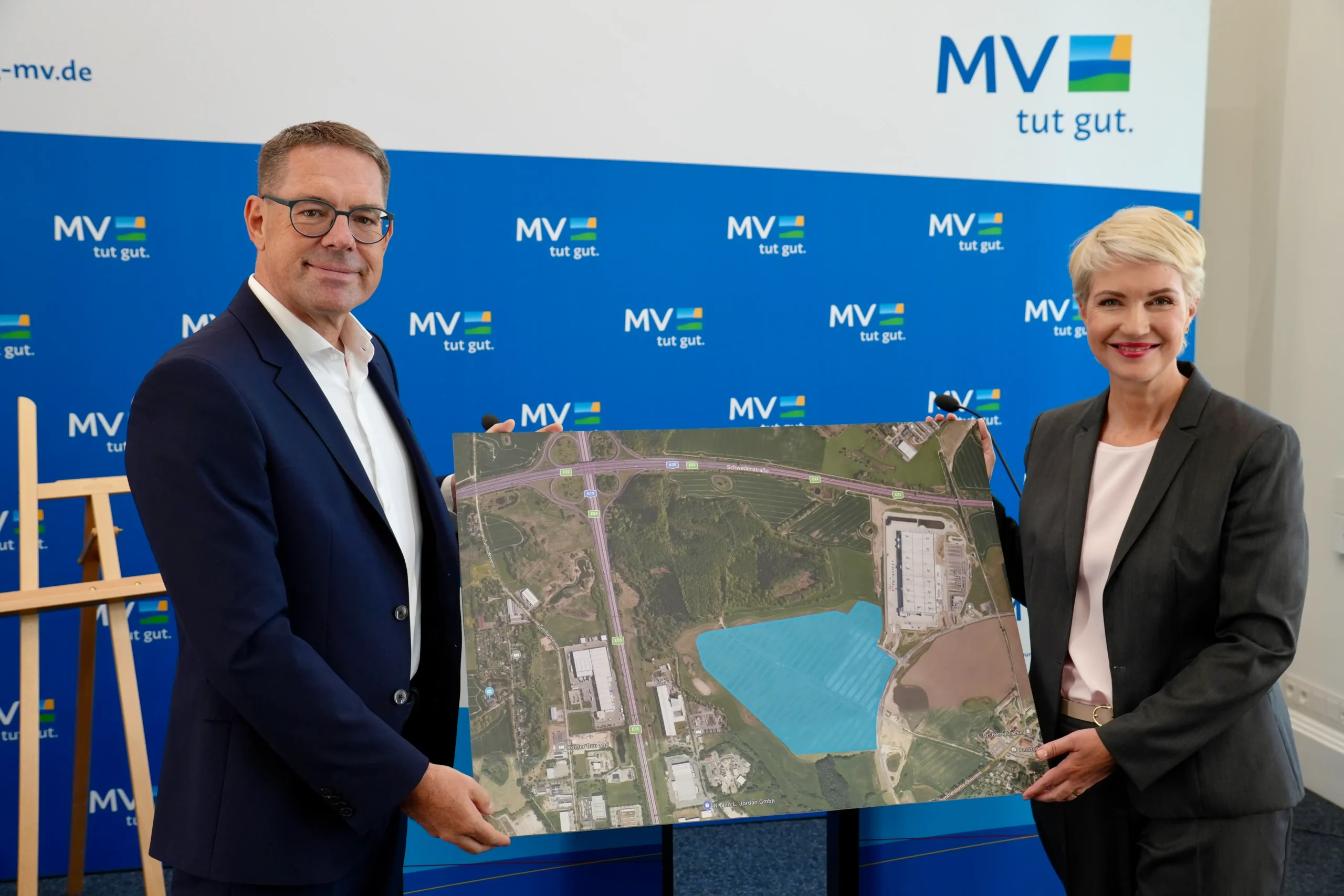
Schwarz Group is considering a site at Dummerstorf in Mecklenburg-Vorpommern for the project, which would have a capacity of 240 megawatts by 2033, subject to the usual approvals.
The facility would support cloud and AI services operated through the group’s digital division, Schwarz Digits, with the company and regional government saying the aim is to develop technology governed by German law and strengthen digital infrastructure in Germany and Europe.
The partnership will also extend directly into public services, with digital building permits hosted on Schwarz Digits’ STACKIT cloud and secure OpenDesk workstations for teachers among the first projects due to be introduced in Mecklenburg-Vorpommern by the end of this year.
Plans for the data centre include using renewable electricity during normal operations and making waste heat available for a district heating network, while its northern German location is expected to allow greater use of outside air for cooling.
The project remains at an early stage and specifications including the precise mix of cloud and AI chips have not yet been decided.
But in the longer term, the companies say the site could potentially support a grid connection of up to one gigawatt by 2045.
Gerd Chrzanowski, Schwarz Group general partner, said: “Digital sovereignty is not created by appeals or speeches. It is created by action, by reliable infrastructure, and by practical applications.
“We are not waiting for others to lead. We are assuming entrepreneurial responsibility and investing sustainably in the future of Germany as an economic location.”
The proposed Dummerstorf site sits in an industrial park with access to northern Germany’s large supplies of renewable electricity, including onshore and offshore wind power.
It could also be connected to the 380-kilovolt extra-high-voltage grid, allowing large amounts of electricity to be supplied to the facility.
Schwarz Group has signed a letter of intent with the Rostock public utility over the use of waste heat from the data centre, with the aim of feeding it into local heating infrastructure.
The company is pursuing a similar approach at another data centre project in Lübbenau, Brandenburg, where agreements have already been signed for a joint district heating scheme.
Alongside the infrastructure investment, Schwarz Digits and the state government want the digital public services developed in Mecklenburg-Vorpommern to provide a model that could later be adopted elsewhere in Germany.
The partners say the building-permit and education projects are intended to be scalable and transferable, potentially providing a model for public administration across the country.
Manuela Schwesig, Mecklenburg-Vorpommern minister-president, added: “The goal of the state government is to become more independent from foreign providers of data centers and cloud and AI applications.
“We therefore view the Schwarz Group’s investment decision as an opportunity for greater independence and increased data security. Our state will benefit from this investment in many ways.”
Schwarz Group operates around 14,500 stores worldwide and generated sales of €185.6bn in its 2025 financial year. Its businesses include Lidl and Kaufland as well as recycling company PreZero and its Schwarz Digits technology division.
READ MORE: NVIDIA teams up with Wall Street giants in $500bn push to fund AI boom. Chipmaker joins forces with Apollo, BlackRock, Blackstone, Brookfield, Goldman Sachs and KKR to finance huge new AI computing centres.
Do you have news to share or expertise to contribute? The European welcomes insights from business leaders and sector specialists. Get in touch with our editorial team to find out more.
Main image: Gerd Chrzanowski, general partner of Schwarz Group, and Mecklenburg-Vorpommern minister-president Manuela Schwesig present the proposed site for a €5.6bn data centre in Dummerstorf. Credit: Schwarz Group / news aktuell
TOP STORIES
-
 Russia takes control of more European corporate assets amid Ukraine tensions
 -
EU leaders resist calls to delay carbon rules as energy costs soar
-
‘A big step forward’ – PM Andy Burnham hails plans for Great British Railways HQ in Derby
-
UK economy grows just 0.1 per cent as construction falls and services stall
-
Germany risks losing €155bn a year under tighter AI data rules, new study warns
-
Pope Leo XIV diagnosed with lung cancer after surgery in Rome
-
France faces freezer meltdown as hackers strike supermarket chains
-
Bumble shares soar 50% amid $1bn takeover talks
-
China slump drives Volkswagen to sharpest quarterly fall in more than four years
-
Hollywood mega-powerhouse created as Paramount completes Warner Bros Discovery takeover
-
Gamers face gridlock as latest Grand Theft Auto download 'nears two days'
-
Samsung profits soar ninefold to record £61bn amid AI chip boom
-
New Springer books put the UN’s struggling sustainability goals to the real-world test
-
Europe’s solar boom set for two-year slowdown after record growth
-
Let it pea. Musicians turn vegetables into instruments at Beatles' Abbey Road studios
-
Golden naked Trump statue unveiled at European Parliament
-
Jaguar puts controversial rebrand on the road with £130K 1,030PS Type 01
-
Deepfakes and identity fraud drive new wave of post-hire background checks
-
Spain crowned Europe’s top retirement destination
-
More than half of UK professionals report workplace burnout
-
More than 1.2m English drivers may have eyesight too poor for the road, study finds
-
David Reuben, Britain’s second richest person, leaves London for Monaco
-
UK prisoner release plan faces a major lag as tougher rules risk sending inmates back to jail
-
Brits trust AI with their health but not their money
-
Britain still hungry for Italian food as exports hit €4.56bn despite Brexit