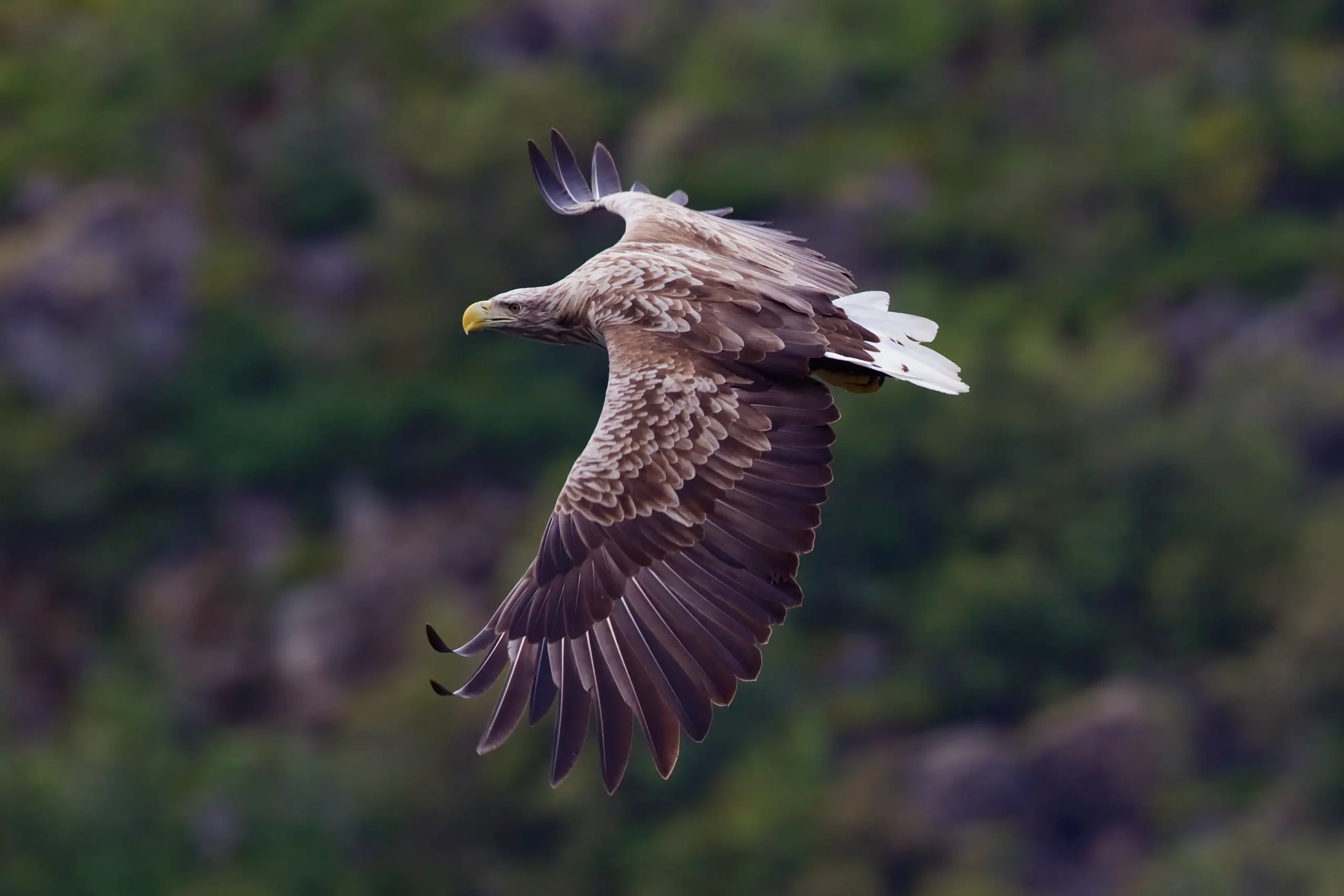
Landmark reintroduction brings white-tailed eagles back to the National Park for the first time since persecution wiped them out more than two centuries ago
Six young white-tailed eagles have been released into the wild on Exmoor in a landmark attempt to return the species to the area after more than 200 years.
The birds, also known as sea eagles, were brought down from the Scottish Highlands before being cared for by conservationists and released in July.
They are the first white-tailed eagles to be reintroduced to Exmoor since persecution drove the species from the area more than two centuries ago.
Each bird has been fitted with a satellite tracker so conservationists can follow its movements as it begins exploring its new surroundings.
The young eagles are expected to range widely across Britain and potentially into Europe before eventually settling and breeding when they are around four or five years old.
Exmoor was chosen as a release site after tracking data showed birds from an existing Isle of Wight reintroduction programme had already visited the area.
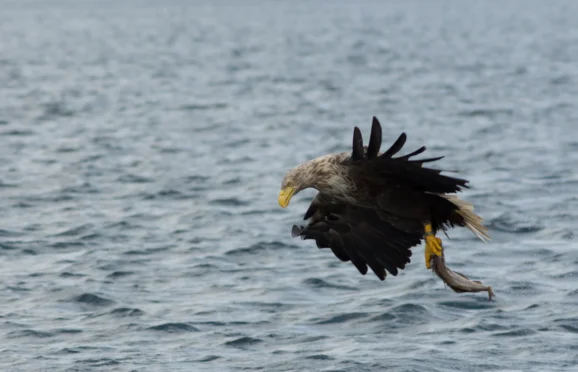
Its mix of coastline, woodland and plentiful fish is considered suitable habitat for the huge birds, which have a wingspan of up to around 2.5 metres.
Under the current licence, as many as 20 young white-tailed eagles could be released on Exmoor over three years as conservationists seek to establish the species across South West England.
The project is being led by Forestry England and the Roy Dennis Wildlife Foundation in partnership with Exmoor National Park Authority.
Conservationists now hope the Exmoor releases will help widen the developing population and eventually restore white-tailed eagles as a permanent presence across the South West.
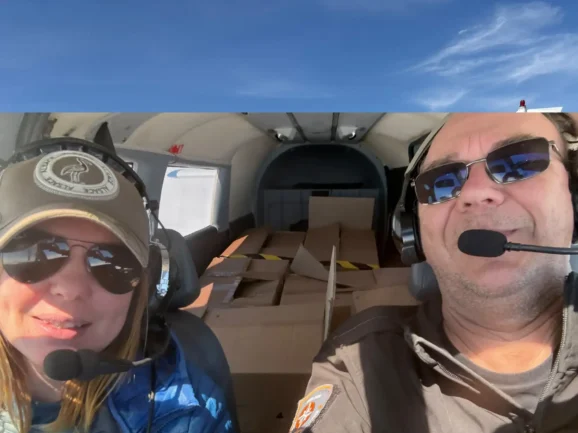
Volunteer aviation charity Civil Air Support flew the birds from Inverness directly to Exmoor in a specially prepared light aircraft, cutting the time they would otherwise have spent travelling by road.
The rear seats of the PA-32-300 were removed to make room for the six eagle chicks and a representative of the Roy Dennis Wildlife Foundation.
Civil Air Support pilot and operations manager Graham Mountford flew from Turweston to Inverness before carrying the birds south to a private landing site on Exmoor.
The entire operation involved just over seven hours of flying.
The shorter journey was intended to reduce the amount of time the young birds spent in transit before they were handed directly to the conservation team waiting for them.
Mountford said: “Transporting these young eagles safely from the Highlands to Exmoor was a privilege. Missions like this show how volunteer aviation can solve a practical transport challenge while making a direct contribution to an ambitious conservation programme.
“Everyone involved understood that the welfare of the birds came first, and it was extremely rewarding to see the careful planning come together.”
Civil Air Support previously helped transport another group of young eagles from Scotland to the Isle of Wight in 2025.
Releases there began in 2019 and have since resulted in birds establishing territories and breeding in the wild.
READ MORE: China’s Yancheng sets a global benchmark for conservation and climate action. From endangered cranes to reintroduced deer, Yancheng’s wetlands on China’s Yellow Sea coast have become both a World Heritage sanctuary and a stage for global climate debate. Reporting from the World Coastal Forum, our editor-at-large, Stanley Johnson, reflects on theregion’s extraordinary biodiversity — and the political will driving its protection.
Do you have news to share or expertise to contribute? The European welcomes insights from business leaders and sector specialists. Get in touch with our editorial team to find out more.
Main image: An adult white-tailed eagle in flight over Svolvær, Norway, showing the species’ broad wings and distinctive white tail. Six young birds have now been released on Exmoor as part of efforts to restore the species to South West England. Credit: Yathin S Krishnappa / Wikimedia Commons / CC BY-SA 3.0