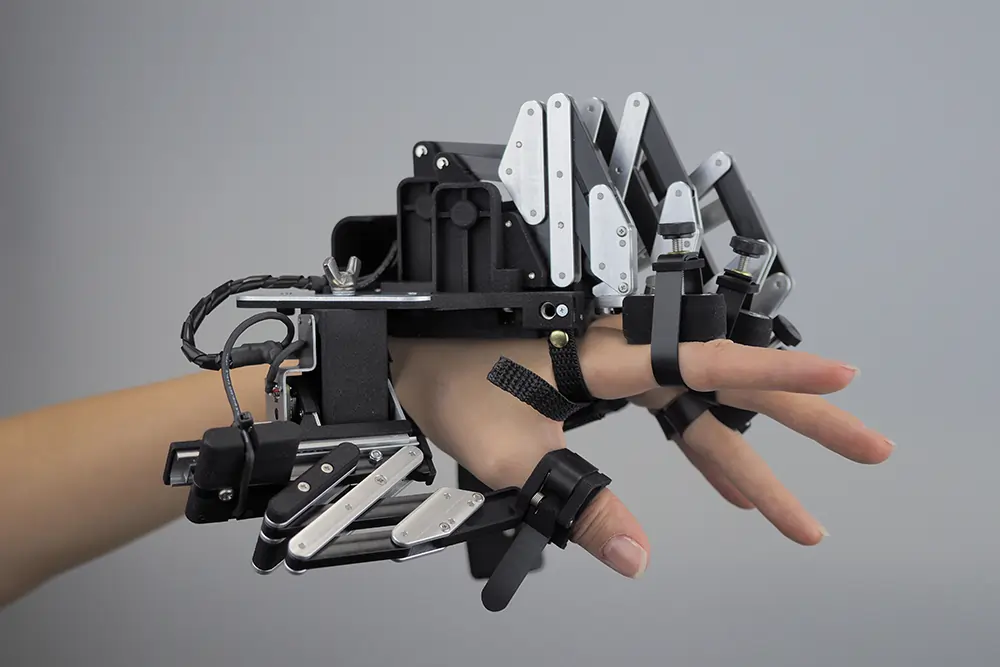
Japanese researchers have created a robotic hand exoskeleton to help pianists play faster and more complex music
The device uses a motor at the base of each digit to move the wearer’s five fingers at speeds they could not reach themselves.
This stimulates the player’s brain and motor cortex, allowing them to execute the same swift hand movements even after removing it.
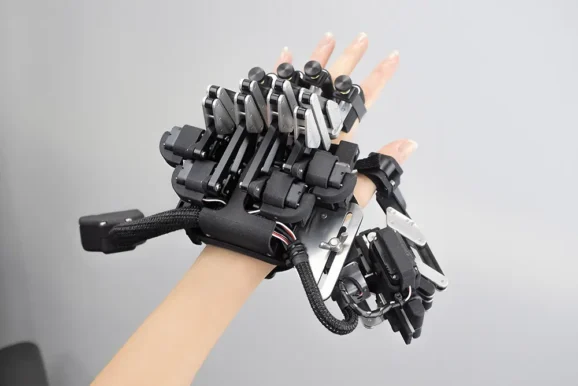
Experts at Tokyo’s Sony Computer Science Laboratories (Sony CSL) found that after using the exoskeleton, seasoned pianists were able to play music with a faster tempo – known as presto and prestissimo – than they could before.
Lead researcher Shinichi Furuya created the device to help musicians push past the “ceiling effect” – a player’s natural limit that cannot normally be improved on no matter how much they practise.
Until now, attempting to break through the ceiling can lead to repetitive strain-type injuries.
But training with the exoskeleton prevents physical damage because the musician is not using their own muscles to strike the keys.
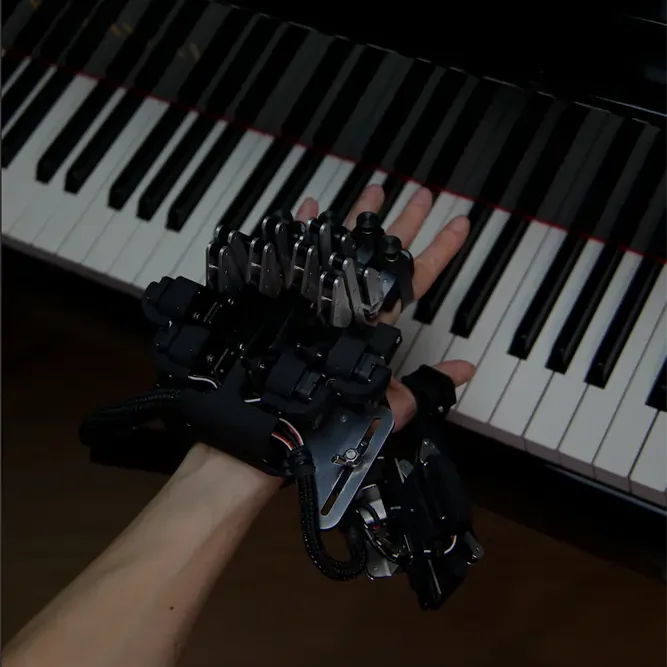
The device could also help surgeons, e-sport gamers, and participants in other pursuits requiring dextrous, fast hand movements, Sony CSL said.
Their findings were published in the journal Science Robotics last month.
“Sony CSL has discovered that a new training method using an exoskeleton robot that moves individual fingers independently and at high speeds stably for long periods of time can break through the ceiling effect on the motor skills of a pianist’s fingers,” it said in a statement.
“The skilled subjects that the research team trained were highly skilled pianists wearing an exoskeleton robot to experience high-speed and complex finger movements that would be impossible to perform on their own.
“As a result, the trained pianists broke through the limits of performance skills that had plateaued under previous practicing and were able execute complex skills even more quickly.
“Moreover, skill improvement was also observed in the opposite hand, which had not received any exoskeleton robot training. These results appeared when the pianists played after the exoskeleton robot was removed, suggesting that the pianists’ own skills had improved.”
Pictures & video: © Sony Computer Science Laboratories, Inc.