
A dram good investment: Investors turning to whisky casks and gold

John E. Kaye
- Published
- Banking & Finance, Business, News, Videos
As markets fluctuate, an increasing number of investors are turning to a different kind of liquid asset. Cap Group International founder Aaron Dolan explains why whisky casks – alongside gold coins – are becoming a strategic addition for portfolios seeking diversification
Investors unsettled by volatility in traditional markets are increasingly turning to tangible assets such as whisky casks and gold coins as an alternative to stocks, bonds and other conventional investments, it has emerged.
Unlike conventional financial products, assets such as whisky casks are bought directly and physically owned by the investor, with returns typically generated through long-term maturation and resale rather than dividends or market trading.
The sector has historically existed largely outside mainstream investment markets and was once dominated by wealthy collectors and private buyers.
But in recent years, specialist firms have begun offering structured access to the market for high-net-worth and experienced investors.
Cap Group International, a UK and Ireland-based investment firm, specialises in tax-efficient tangible assets including Irish whisky casks and UK gold coins.
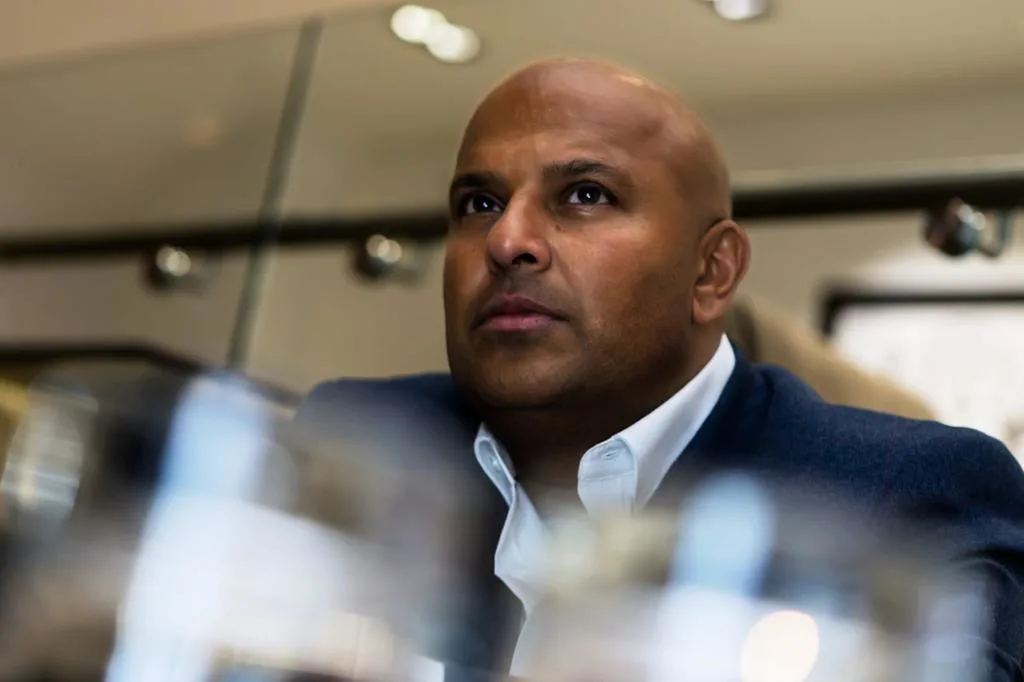
Speaking in an interview with The European’s Juliette Foster this week, its founder Aaron Dolan said whisky had long been traded as an investment asset but was historically limited to a small circle of buyers.
“When you invest in something tangible, you own that asset outright,” he said. “So there’s no way that can get lost on the stock market.”
Cap Group was founded after Dolan came across a 26-year-old whisky cask selling for about £250,000 at auction and began researching the sector.
He said the discovery revealed a long-established but relatively little-known investment market.
Irish whiskey exports had exceeded £1 billion, which he cited as evidence of growing global demand for the spirit.
“I realised that it’s been an investable product for a long time, just not a mainstream one,” he added.
After establishing itself in whisky cask investments, the company later diversified into gold, focusing primarily on UK-minted gold coins. Dolan said the move was intended to keep investors within the same tax-efficient investment category.
“We predominantly deal within gold coins and the reason being is UK gold coins are tax-free as well,” he said.
a “wasting asset” under UK tax rules because they had a lifespan of less than 50 yearsHe said whisky casks were classed as , while the business also focused on UK gold coins because of their tax treatment.
“It’s deemed as a wasting asset, so that means the CGT is not applicable to something in the asset class,” he said.
The company predominantly works with high-net-worth and sophisticated investors, although experienced retail investors are sometimes accepted.
Dolan said the firm generally avoids onboarding clients whose only savings would be tied up in a single investment, preferring people with previous investing experience and an understanding of risk.
“If you was to come to me and say, ‘Look, I’ve just saved up £5,000 – it’s the only £5,000 I’ve got,’ we’d probably decline the offer politely,” he said.
Cap Group works directly with distilleries, carrying out due diligence before offering casks to clients. The process includes assessing the financial stability of the distillery, its production capacity and its long-term funding model.
Dolan said the firm was offered around 15 different whiskies every few months but accepted only a small number of partnerships after reviewing each distillery’s financial backing, production capacity and industry track record.
The company accepted just one new distillery partnership last year.
As part of its investor engagement, Cap Group flies clients to Ireland free of charge to visit distilleries, meet master distillers and see their casks, typically in groups of around 15 to 20 investors.
Dolan said education was a key part of the process, particularly because many investors were unfamiliar with whisky as an asset class.
“We educate clients from the moment they first speak to us until the day we sell the asset,” he said.
Looking ahead, Dolan said tangible alternative assets were unlikely ever to replace mainstream investments, but could become a more widely recognised part of a diversified portfolio.
“I think with this sector, it’s never going to be stocks and shares… but it will hold a place in someone’s portfolio, maybe 10 to 20 per cent of their net worth,” he said.
Watch the full interview with Cap Group International founder Aaron Dolan on The European’s YouTube channel.
WATCH MORE: ‘European MBAs adapt to AI as Aalto overhauls executive education‘. Finland’s Aalto University has updated its MBA and EMBA programmes with data, AI and modular learning pathways to meet demand for technology-focused executive upskilling. Professor Max Finne, its associate dean of MBA education, outlined the changes in an interview with The European.
TOP STORIES
-
 North Korean agents are infiltrating Western businesses by posing as employees, security chief warns
 -
 Route 66 turns 100 next month – and there’s never been a better excuse for Europeans to hit the road
 -
Serbia erupts in celebration as student protesters end Vučić’s 14-year grip on power
-
Two killed as Storm Boelo batters Britain with 85mph winds and leaves 90,000 homes without power
-
Man arrested on suspicion of arson after fire destroys Hitler’s Eagle’s Nest retreat
-
Britain faces higher winter energy prices as reliance on European electricity imports grows
-
Andy Burnham to make special Gogglebox appearance for Stand Up To Cancer
-
WPSL Golf targets £120 million valuation as billionaire-backed corporate deals and other commercial deals drive explosive global growth
-
Hackers could bring Britain’s essential services to a standstill, security chief warns after global website shutdowns
-
We’re talking to almost twice as many people on the phone as a decade ago, study finds
-
TalkTalk sells majority stake in Telecom Acquisitions as founder Nigel Barnett regains control
-
Company closures soar ahead of tax rises as new Budget looms
-
An Italian affair – Stanley Johnson takes London’s society set on the Silk Road
-
Himalayan mountainside moved 40cm before avalanche killed 1,451 in Nepal, scientists reveal
-
Scientists and engineers quitting jobs as AI changes roles ‘beyond recognition’, study finds
-
UK profit warnings hit near two-year high as businesses struggle with rising costs
-
Microsoft pulls out of major UK AI data centre project amid power grid delays
-
Russia takes control of more European corporate assets amid Ukraine tensions
-
EU leaders resist calls to delay carbon rules as energy costs soar
-
‘A big step forward’ – PM Andy Burnham hails plans for Great British Railways HQ in Derby
-
UK economy grows just 0.1 per cent as construction falls and services stall
-
Hackers exploiting wars ‘to develop cyberattacks in minutes’
-
Germany risks losing €155bn a year under tighter AI data rules, new study warns
-
Pope Leo XIV diagnosed with lung cancer after surgery in Rome
-
France faces freezer meltdown as hackers strike supermarket chains























A dram good investment: Investors turning to whisky casks and gold
John E. Kaye
- Published
- Banking & Finance, Business, News, Videos
TOP STORIES
-
North Korean agents are infiltrating Western businesses by posing as employees, security chief warns
-
Route 66 turns 100 next month – and there’s never been a better excuse for Europeans to hit the road
-
Serbia erupts in celebration as student protesters end Vučić’s 14-year grip on power
-
Two killed as Storm Boelo batters Britain with 85mph winds and leaves 90,000 homes without power
-
Man arrested on suspicion of arson after fire destroys Hitler’s Eagle’s Nest retreat
-
Britain faces higher winter energy prices as reliance on European electricity imports grows
-
Andy Burnham to make special Gogglebox appearance for Stand Up To Cancer
-
WPSL Golf targets £120 million valuation as billionaire-backed corporate deals and other commercial deals drive explosive global growth
-
Hackers could bring Britain’s essential services to a standstill, security chief warns after global website shutdowns
-
We’re talking to almost twice as many people on the phone as a decade ago, study finds
-
TalkTalk sells majority stake in Telecom Acquisitions as founder Nigel Barnett regains control
-
Company closures soar ahead of tax rises as new Budget looms
-
An Italian affair – Stanley Johnson takes London’s society set on the Silk Road
-
Himalayan mountainside moved 40cm before avalanche killed 1,451 in Nepal, scientists reveal
-
Scientists and engineers quitting jobs as AI changes roles ‘beyond recognition’, study finds
-
UK profit warnings hit near two-year high as businesses struggle with rising costs
-
Microsoft pulls out of major UK AI data centre project amid power grid delays
-
Russia takes control of more European corporate assets amid Ukraine tensions
-
EU leaders resist calls to delay carbon rules as energy costs soar
-
‘A big step forward’ – PM Andy Burnham hails plans for Great British Railways HQ in Derby
-
UK economy grows just 0.1 per cent as construction falls and services stall
-
Hackers exploiting wars ‘to develop cyberattacks in minutes’
-
Germany risks losing €155bn a year under tighter AI data rules, new study warns
-
Pope Leo XIV diagnosed with lung cancer after surgery in Rome
-
France faces freezer meltdown as hackers strike supermarket chains



