As midnight approaches, cities across the world are loading their biggest fireworks of the year, with road closures, packed waterfronts and disrupted transport already in place. This guide highlights five destinations planning major New Year’s Eve displays, showing where the night’s largest crowds and most ambitious shows are expected as 2026 arrives
Huge firework displays will light up the skies of major cities tonight, as the world welcomes in 2026 with a bang. This year’s celebrations include some of the most ambitious shows ever announced, and the five below have confirmed the largest New Year’s Eve fireworks anywhere on the planet.
In the United Arab Emirates, a colossal multi-emirate operation is preparing to dominate the night, with Abu Dhabi planning a 62-minute barrage backed by 6,500 drones, Ras Al Khaimah lining six kilometres of coastline for one of the longest continuous displays announced globally, and Dubai readying simultaneous eruptions from the Burj Khalifa, Palm Jumeirah and Bluewaters as citywide closures come into force.
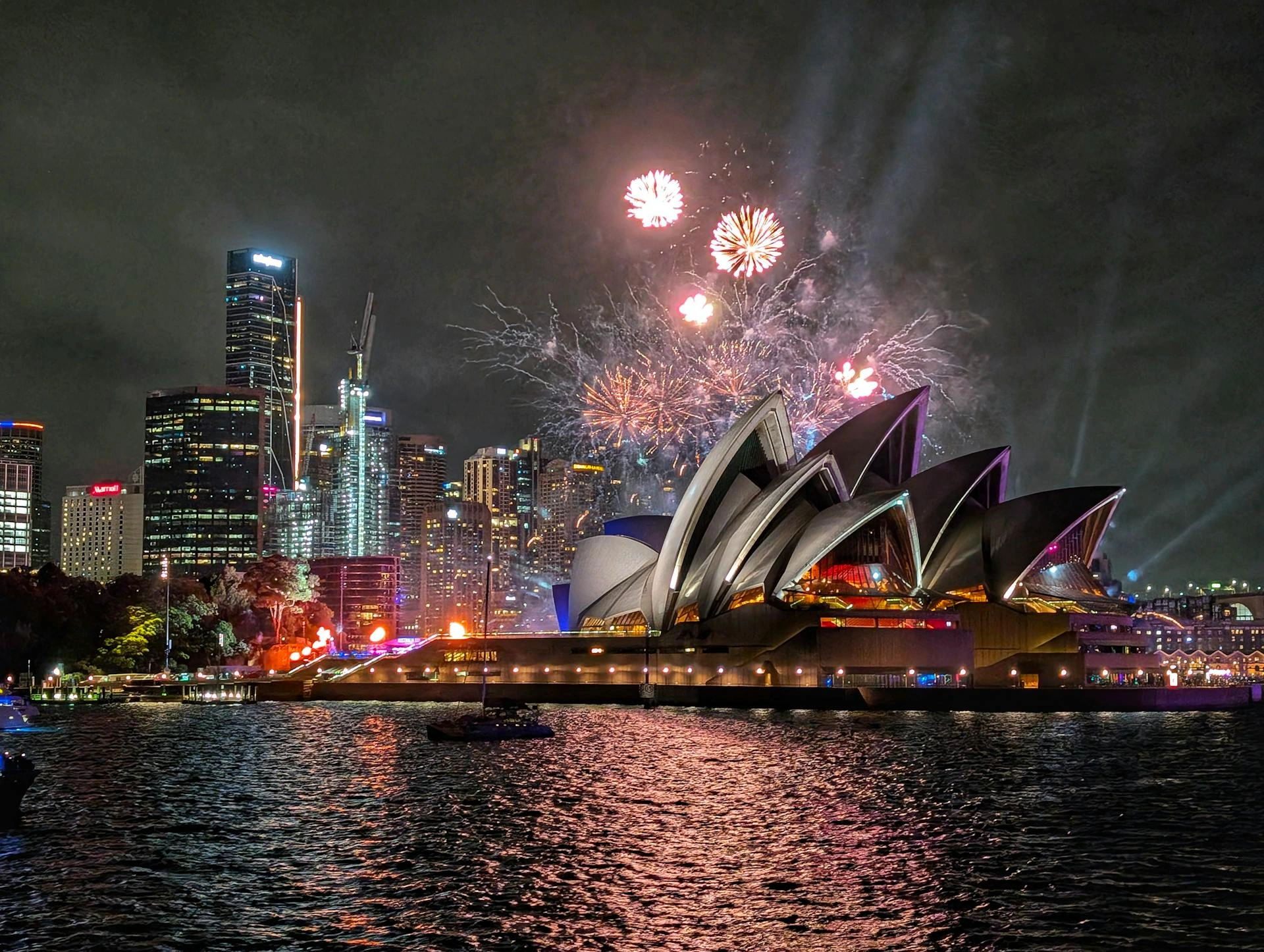
Sydney will be among the earliest major capitals to welcome the new year, with fireworks set to explode across the harbour as more than a million people gather for a broadcast-led spectacle framed by the Opera House and Harbour Bridge.
London will follow with its river-centred countdown over the Thames, Rio de Janeiro will return with its record-breaking Copacabana gathering, and New York will close the global relay with the Times Square Ball Drop and its citywide celebrations.
United Arab Emirates
A multi-emirate New Year’s Eve built around marathon fireworks and large-scale drone shows

The largest New Year’s Eve fireworks planned anywhere in the world this year are reportedly set to take place in the United Arab Emirates, where multiple emirates will stage large-scale displays on the same night, led by Abu Dhabi and Ras Al Khaimah. According to reports, the UAE is preparing the longest fireworks duration, the highest number of drones, and the widest physical coverage announced for 31 December.
In Abu Dhabi, the Sheikh Zayed Festival at Al Wathba is scheduled to host a New Year’s Eve fireworks programme planned to run for 62 minutes, which would make it the longest continuous fireworks display announced for the night. The fireworks are set to be accompanied by a 20-minute drone show involving 6,500 drones, forming large images in the sky and synchronised with music, fireworks and a digital countdown. Festival organisers have confirmed that five Guinness World Records will be attempted during the programme. The display is planned to unfold in multiple stages across the evening rather than being limited to a short midnight sequence.
The event is expected to operate as a capacity-managed site designed to hold large crowds over several hours. Organisers have announced expanded entry and exit points, widened pedestrian walkways, and increased safety and medical support. Alongside the fireworks and drone show, the festival programme is scheduled to include traditional Emirati performances, international music acts, parades, children’s entertainment and cultural activities running throughout the night.
In Ras Al Khaimah, a separate New Year’s Eve display is planned along six kilometres of coastline, creating one of the longest continuous waterfront fireworks zones announced globally. The programme is set to include fireworks launched from multiple offshore points and a coordinated drone display involving more than 2,300 drones operating over Marjan Island and Al Hamra. Organisers have also announced plans to attempt the launch of the largest single firework ever fired as part of the countdown.
Dubai is scheduled to add further scale through the number of simultaneous displays planned across the city. Fireworks and laser shows are expected to centre on the Burj Khalifa, with additional displays announced at locations including Palm Jumeirah, Atlantis The Palm, Bluewaters, JBR, Dubai Festival City and Al Seef. City authorities have confirmed road closures, public transport changes and crowd-management plans designed to support large visitor numbers across multiple sites.
Sydney
A harbour-wide New Year’s Eve shaped by early arrivals, long waits and global broadcast
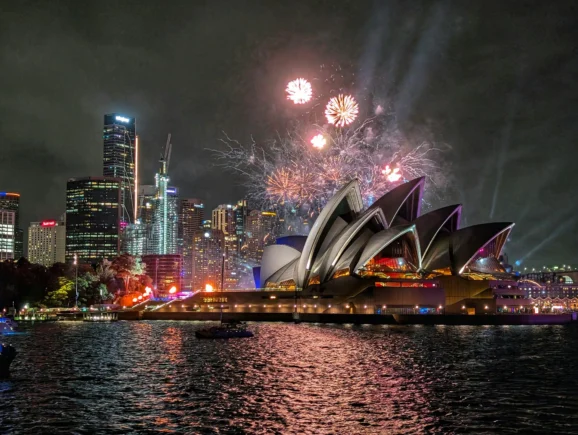
Sydney is preparing to stage one of the most closely watched New Year’s Eve fireworks displays in the world, with more than one million people expected to line the harbour foreshore and surrounding vantage points as the city becomes one of the first major destinations to welcome 2026. The fireworks will unfold across Sydney Harbour, with the Harbour Bridge and Opera House forming the central visual anchors of a display designed to be legible across long distances and broadcast globally.
Demand for public viewing space is expected to peak early, with major harbour locations such as Mrs Macquaries Point, Hickson Road Reserve, Barangaroo Reserve, Campbells Cove and Circular Quay typically reaching capacity by early afternoon on the day itself. Many attendees are expected to arrive in the morning or earlier to secure positions, with some remaining in place for more than twelve hours ahead of the midnight display. Authorities advise visitors to monitor official capacity updates throughout the day, as free gathering sites close once limits are reached.
The fireworks programme will include early evening displays ahead of the main midnight sequence, with major transport surges expected following the earlier show and again after midnight. Public transport services are scheduled to increase significantly, with extended Metro operations and additional trains and buses running throughout the night to manage departures from the city centre. Roads around Circular Quay, The Rocks and Barangaroo are expected to close well in advance, and visitors are advised to rely on public transport and walking routes rather than private vehicles.
This year’s event will include a scheduled pause during the programme, with the Sydney Harbour Bridge set to display a dove and illuminate in white as a symbol of peace and unity, followed by a moment of silence. A menorah will be displayed on the bridge pylon ahead of midnight, and attendees will be invited to participate in a coordinated gesture of solidarity using mobile phone lights. The bridge will also illuminate in recognition of the event’s official charity partner, Beyond Blue, which provides mental health support services.
London
A river-centred New Year’s Eve organised around ticketed zones and citywide viewing
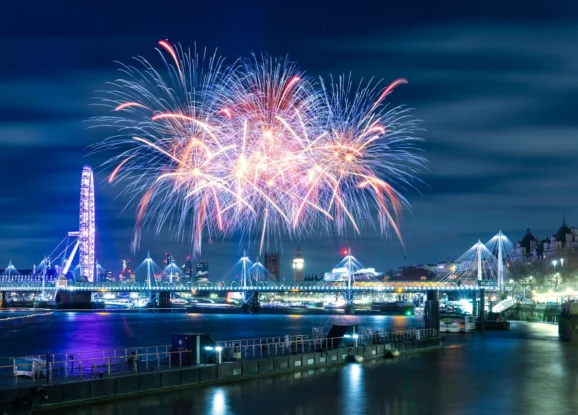
London is preparing to welcome 2026 with its annual New Year’s Eve fireworks over the River Thames, with the London Eye and Big Ben forming the visual centre of a display that remains one of the most widely watched countdowns in the world. The fireworks are scheduled to be launched from the South Bank and timed precisely to midnight, rising high above the river so they can be seen well beyond the immediate viewing zones and broadcast live across the UK and internationally.
Access to the official viewing areas along the Thames is fully ticketed and strictly controlled, with large sections of Westminster closed to the public on the night. Tickets for these areas sell out well in advance, which means that a significant proportion of people watching the fireworks in person will do so from alternative locations across the city rather than from the riverbank itself. This structure has shaped how Londoners and visitors plan the night, placing emphasis on elevation, distance and pre-booked indoor venues.
For those seeking managed views without official tickets, a large number of bars, restaurants and rooftops across central London are planning New Year’s Eve events timed around the fireworks. Venues such as Sky Garden, the View from the Shard, rooftop spaces at Battersea Power Station, London Bridge, Shoreditch and the West End are offering ticketed evenings that combine food, drinks and music with sightlines towards the Thames. These events tend to prioritise warmth, shelter and guaranteed views, though prices reflect demand and capacity is limited.
Free viewing remains possible across the city, though it requires planning and an acceptance of distance. Elevated open spaces such as Parliament Hill on Hampstead Heath, Alexandra Palace, Telegraph Hill and Hilly Fields offer wide views across central London, allowing fireworks from the South Bank and other parts of the city to be seen from above. These locations attract large crowds and operate on a first-come basis, with visitors advised to arrive early, dress for cold weather and expect limited facilities. Primrose Hill will be closed to the public on the night, reducing options closer to the West End.
Transport planning is central to the experience. Roads around the river and city centre will close well before midnight, and large numbers of additional public transport services are scheduled to run through the night. Major surges are expected immediately after the fireworks, with authorities advising people to walk further from the river before attempting to board trains or buses.
Rio de Janeiro
A beach-based New Year’s Eve defined by mass participation and free public concerts
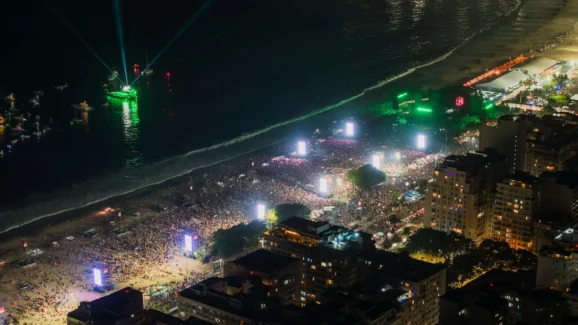
Rio de Janeiro is preparing to host the largest New Year’s Eve public celebration in the world, following confirmation that its Copacabana Beach event has been awarded the Guinness World Record for the biggest New Year’s Eve celebration ever staged by a city. The record was granted after drone footage verified the attendance of 2.5 million people at last year’s free concert and fireworks event on Copacabana, a figure unmatched by any other New Year celebration globally.
The award was based on multiple criteria, including the number of participants, the scale of the artistic programme, the physical size of the event area and its cultural significance. The record was formally presented to Rio’s mayor ahead of this year’s celebrations, which are scheduled to return to Copacabana with an expanded programme of concerts and fireworks spread across the city.
For the upcoming New Year’s Eve, organisers have announced 12 minutes of fireworks accompanied by a 1,200-drone display, launched offshore so that the entire length of Copacabana Beach can see the show simultaneously. Fireworks will be visible both from the sand and from the water, where boats and floating platforms typically gather in large numbers. Thirteen stages are scheduled across the city for free concerts, including three major stages along Copacabana itself, creating a continuous programme of live music before and after midnight.
More than 3,500 police officers are expected to be deployed across Copacabana and surrounding districts, with transport, road closures and pedestrian flow managed to allow constant movement along the beachfront rather than forcing people into fixed viewing zones. There is no ticketing system, no fenced perimeter and no single focal point, which means the celebration operates as a moving crowd rather than a static audience.
The experience for visitors is shaped by tradition and scale rather than precision viewing. Attendees typically arrive throughout the afternoon and evening, dressed in white in line with local custom, and move freely between stages, beach areas and nearby streets as the night progresses. Midnight does not mark an end point but a transition, with celebrations continuing along the beachfront into the early hours.
New York City
A countdown-led New Year’s Eve built around Times Square and citywide viewing
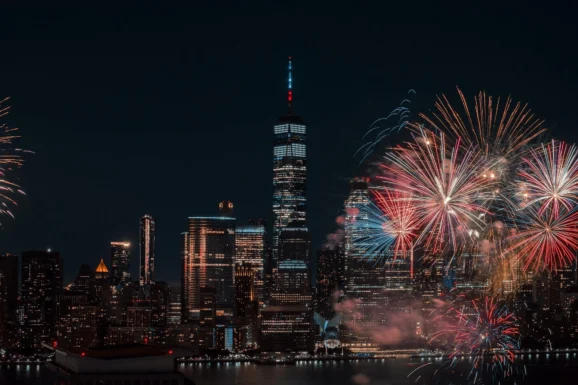
New York is preparing to welcome 2026 with its annual New Year’s Eve celebrations centred on the Times Square Ball Drop, which remains one of the most watched countdown events in the world and the defining feature of the city’s night. While fireworks are traditionally part of New York’s New Year programme, the structure of the event places greater emphasis on the countdown itself, supported by fireworks at selected locations across the city.
As of the latest updates, the only confirmed fireworks display for New Year’s Eve is scheduled at Prospect Park in Brooklyn, with launches planned near Grand Army Plaza. Fireworks traditionally begin at midnight, timed to coincide with the moment the year changes. Additional fireworks displays in Times Square and Central Park have not yet been confirmed but are typically announced closer to the date, with full schedules released in the final weeks of December. Times Square celebrations and any associated fireworks are expected to be livestreamed, allowing the countdown to reach a global audience.
Tens of thousands of people are expected to arrive hours before midnight to secure positions within tightly controlled viewing pens, with limited movement once access is granted. Attendees should expect long waits, heavy security screening and a standing-only experience lasting much of the evening. The reward is proximity to the countdown itself rather than to fireworks, which are secondary to the televised moment.
For visitors who prefer distance or flexibility, New York offers alternatives that operate alongside the headline event. Brooklyn’s Prospect Park provides a traditional fireworks viewing experience with more space and movement than Times Square, while rooftop venues, ticketed parties and restaurants across Manhattan and Brooklyn offer managed environments timed around midnight. These options allow visitors to avoid extended outdoor waits while still participating in the citywide celebration.
READ MORE: ‘2026 is looking up: a happy new year written in the stars‘. Continuing her monthly guide to the night sky, Omara Williams turns to January, when the Winter Hexagon and Orion dominate the heavens, marking the opening of the year with some of the most striking and accessible stargazing of the winter season.
Do you have news to share or expertise to contribute? The European welcomes insights from business leaders and sector specialists. Get in touch with our editorial team to find out more.