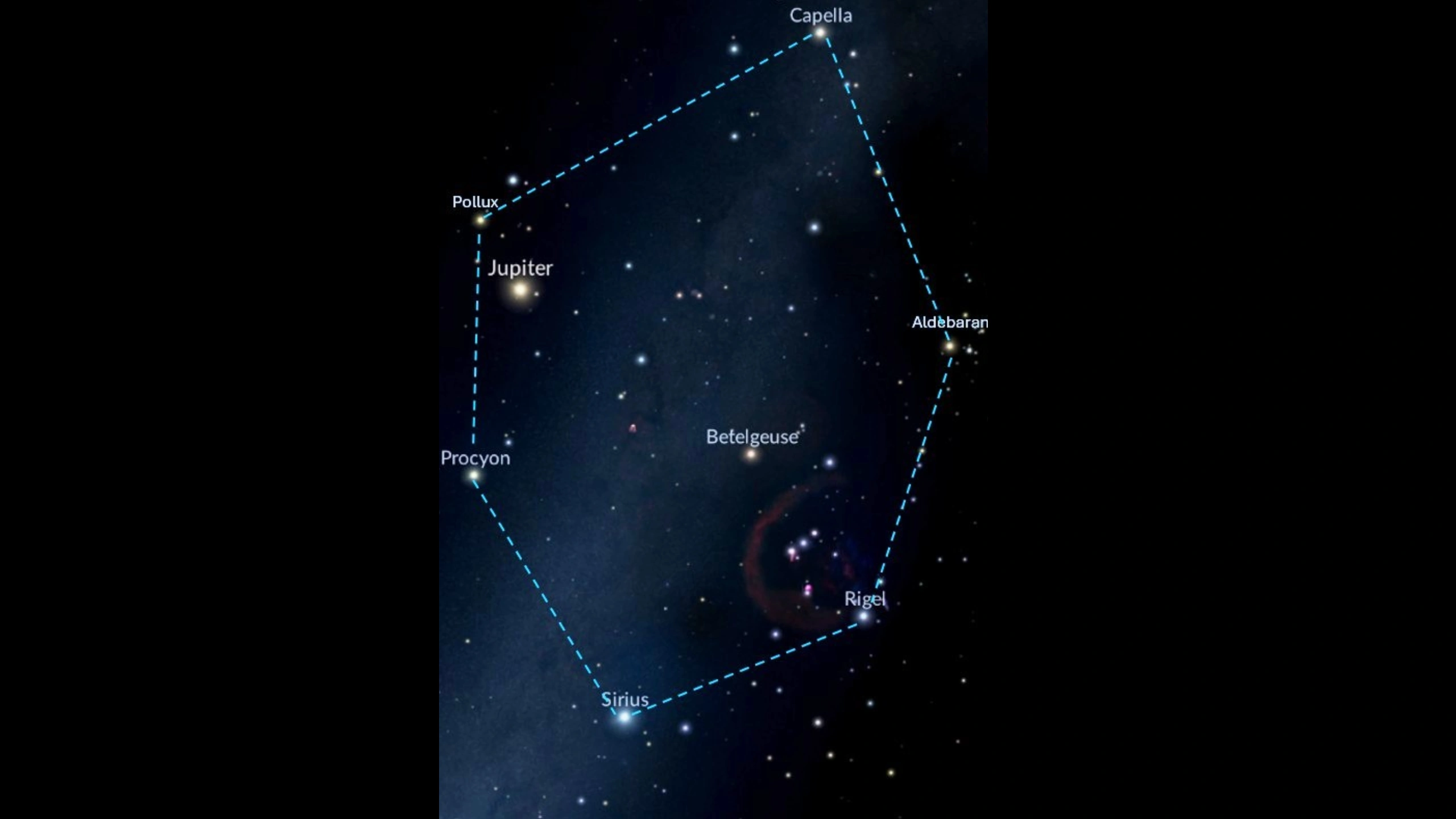
Continuing her monthly guide to the night sky, Omara Williams turns to January, when the Winter Hexagon and Orion dominate the heavens, marking the opening of the year with some of the most striking and accessible stargazing of the winter season
The New Year is full of resolutions that rarely last beyond January, but this is one that costs nothing and requires no expertise. If you have never tried stargazing before, there is no better time to begin than now. This month offers some of the clearest and brightest night skies of the year, with many of the winter’s most famous stars visible at once and easy to find with the naked eye.
Orion dominates the southern sky with Rigel and Betelgeuse, Aldebaran marks the eye of Taurus above, Sirius blazes in Canis Major, Procyon shines nearby in Canis Minor, and Capella sits high overhead in Auriga. Throughout the month, Jupiter adds to the spectacle beneath the twin stars Castor and Pollux in Gemini. These bright stars form simple patterns such as the Winter Hexagon and the Winter Triangle, making the sky easier to navigate than at almost any other time of year. On clear, cold nights with minimal light pollution, a New Year’s decision to step outside and look up can quickly become a lasting way of reconnecting with the wider cosmos.
The Winter Hexagon
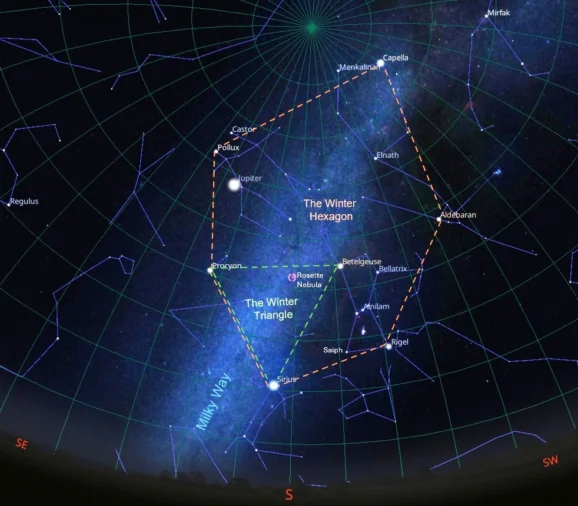
The Winter Hexagon is a prominent asterism (a pattern of stars) formed by six of the brightest stars in the winter sky. Spanning several constellations, it invites you to explore the night sky’s most remarkable features, with Orion the Hunter shining brightly within it. To visualise the Winter Hexagon on the stellar canvas, look high towards the southwestern sky and locate the bright star Capella. Then connect the dots of the brightest stars in clockwise order as follows:
1. Capella – In Auriga (the Charioteer). A quadruple star system of two primary yellow giants and two fainter red dwarfs 43 light-years away. It is the sixth-brightest star in the night sky.
2. Aldebaran – In Taurus (the Bull). An orange giant star that, at a distance of only 65 light-years, is one of the nearest giants to our solar system. It is the fourteenth-brightest star in the night sky.
3. Rigel – In Orion (the Hunter). A blue superluminous supergiant, 870 light-years away. It is the seventh-brightest star in the night sky.
4. Sirius – In Canis Major (the Great Dog). A massive white star just 8.6 light-years away from Earth, one of our nearest stellar neighbours. It is the brightest star in the entire night sky.
5. Procyon – In Canis Minor (the Little Dog). A binary system formed by a luminous white star and a much fainter white dwarf, orbiting each other 11.4 light-years away. It is the eighth-brightest star in the night sky.
6. Pollux – In Gemini (the Twins). A massive yellow-orange star, 34 light-years away, making it the closest giant star to the Sun. It is the seventeenth-brightest star in the night sky.
The Winter Hexagon serves as your map to the brightest stars and the most remarkable wonders of the winter night sky. It showcases the most brilliant collection of stars observable at any one time of year, covering a large area of the sky. Together, these six stars not only illuminate the cold winter nights but also offer an extraordinary glimpse into the vast diversity and complexity of stellar types within our galaxy.
Within the hexagon lies a treasure trove of deep-sky wonders visible to the naked eye:
1. The Constellation Orion: With its flagship stars Betelgeuse, Rigel, Bellatrix and Saiph.
2. The Orion’s Belt: A perfect diagonal alignment of three stars born from the same stellar nursery.
3. The Great Orion Nebula (M42): A vast stellar nursery, visible as a fuzzy patch below Orion’s Belt.
4. The Winter Triangle: A smaller asterism formed by the brilliant stars Betelgeuse, Procyon and Sirius.
5. The Winter Milky Way: Runs through the hexagon, though fainter than the Summer Milky Way.
Furthermore, if you have binoculars or telescopes at your disposal, the Milky Way presents a wealth of open clusters and nebulae that are easy to locate within the Winter Hexagon, with the Rosette Nebula being one of the most renowned.
The Rosette Nebula’s open star cluster (NGC 2244)
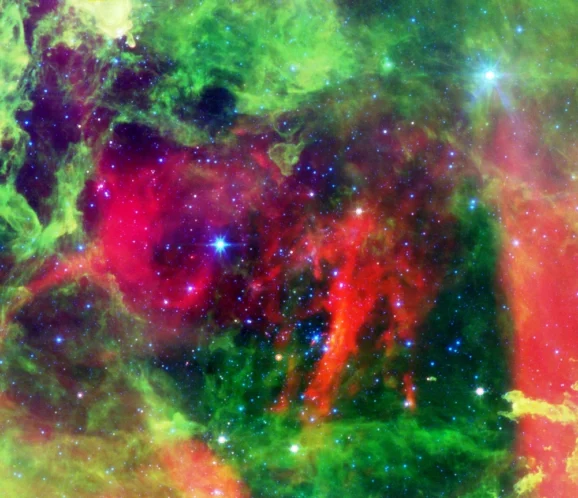
The Rosette Nebula is a large emission nebula located within the Winter Hexagon and the Winter Triangle, to the left of the red supergiant Betelgeuse. It appears roughly the size of five full moons, but its faint glow makes it challenging to see with the naked eye. Using binoculars or a small telescope under dark skies can reveal the stunning view of its central star cluster NGC 2244.
The nebula is a vast, beautiful stellar nursery where a central cluster of hot, young stars has sculpted the surrounding gas cloud into a cosmic flower, making it one of the most iconic and photogenic objects in our galaxy.
Within the confines of NGC 2244, the massive stars burn brightly but have fleeting lifespans, typically lasting only a few million years. They will eventually end their lives in spectacular supernova explosions, further reshaping the nebula and triggering new waves of star formation in the surrounding material.
Throughout the vast expanse of the cosmos, we are captivated by the perpetual cycle of birth, death, and rebirth. Stars ignite with dazzling brilliance, only to eventually fade or explode into the void, giving rise to new celestial bodies. This breathtaking dance of existence unfolds endlessly, a testament to nature’s resilience and creativity in an ever-evolving universe.
Night Sky Events in January
The first month of 2026 offers an exciting night sky experience. It features the year’s first Supermoon, surprising meteor showers, and Jupiter shining at its brightest. Additionally, the Moon will showcase excellent celestial pairings, inviting stargazers to marvel at the beauty of our cosmic neighbourhood.
January 3 – Full Moon (Wolf Moon)
This January Full Moon is the first of three Supermoons this year, appearing bigger and brighter than usual, as it is at its closest to Earth. The next two Supermoons won’t happen until November and December this year. Look towards the northeastern sky after 3:45 p.m.
January 4 – Peak of the Quadrantid Meteor Shower.
Producing up to 120 meteors per hour, it is considered one of the best annual meteor showers, along with the Perseids in August and the Geminids in December. Unfortunately, this year, the full Moon will interfere with the visibility of the Quadrantids. To get the best view, find a location that blocks moonlight and look towards the northeast in the early hours. Aim below the handle of the Big Dipper and to the left of the bright star Arcturus in the Boötes constellation.
January 5 – The Moon near the Beehive Cluster and bright star Regulus
The waning crescent Moon shines below and to the left of the open cluster M44, also known as The Beehive, in the Cancer constellation. This cluster, known for its striking appearance through binoculars or a small telescope, contains thousands of stars. Just below the Moon, the brilliant star Regulus shines brightly in the constellation Leo, marking the heart of the lion.
January 10 – Jupiter is at its brightest.
The magnificent giant of our solar system, Jupiter, reigns supreme in the night sky. With its bright luminosity, because of its position directly opposite our Sun, it captures the attention of even the most casual stargazers. Throughout the night, Jupiter gracefully moves across the heavens within the Winter Hexagon, its vibrant hues contrasting beautifully with the dazzling star Pollux, which shines brightly above.
January 19 – Peak of the Ursa Minorid meteor shower.
This meteor shower is relatively minor, with a peak rate of only three meteors per hour. However, because the peak coincides with the New Moon this year, it offers an excellent opportunity to observe these few meteors. To see them, look towards the northeastern sky in the early hours, just to the right of the bowl of the Little Dipper.
January 23 – The Moon near Saturn and Neptune.
The waxing crescent Moon shines above Saturn in the southwest after 6 p.m. You can spot this celestial pair shining brightly beneath the prominent asterism known as The Great Square of Pegasus. Between them lies our most distant major planet, Neptune, its distinctive blue disc visible only through a telescope.
January 27 – The Moon near The Pleiades.
This evening, as the Sun sets, the waxing Moon will grace the southern sky, accompanied by the dazzling open cluster known as the Pleiades. Look up after 6 p.m. to witness this stunning celestial encounter, where the silvery glow of the Moon will contrast beautifully with the shimmering blue stars of the Pleiades, creating a breathtaking sight for stargazers.
January 31 – The Moon near Jupiter.
The waxing Moon and Jupiter will shine together in the southeastern sky after 6 p.m., below the two bright stars Castor and Pollux in the constellation Gemini. This stunning celestial display, marked by the brightness of the nearly full Moon alongside the shining stars of the Winter Hexagon and the brilliant Jupiter, provides an excellent opportunity to appreciate the beauty of the cosmos and experience the extraordinary splendour of the night sky.

Omara Williams is a nuclear and software engineer whose multi-award-winning debut science-fiction novel, The Space Traveller’s Lover, shot to international bestseller status. Outside of her literary pursuits, she enjoys stargazing and chasing total solar eclipses.
READ MORE: Explore more from Omara Williams: Catch up on the full Stargazing with Omara Williams series here and discover what to watch in every month’s night sky.
Do you have news to share or expertise to contribute? The European welcomes insights from business leaders and sector specialists. Get in touch with our editorial team to find out more.
Main image: The January night sky showcases its brightest jewels, inspiring wonder and curiosity in all who look up and admire the winter stars, igniting a sense of awe and connection with the cosmos. Credit: Omara Williams